
Home labelling makes energy use visible. Like a nutritional label, a home label increases awareness. Home labels inform homeowners, renters, builders, and institutions about home energy performance and how to improve energy efficiency. Home labelling can also help contribute to lower energy bills, improved comfort, reduced emissions, and better climate resiliency.
How home labels can help you

Home energy labels provide you with information that helps you understand a home’s energy efficiency, and where it can be improved. Energy efficient homes offer many benefits. They are more affordable, comfortable and healthier. They also produce fewer greenhouse gas emissions.
There are many ways to make your home more energy efficient. Home energy labels are a great first step to understand how to improve the energy efficiency and comfort of your home, whether you are a homeowner, a homebuyer, or a renter.
Learn more about what an energy efficient home is, and how you can make your home energy efficient.
What information is shared on home labels
The information from home labels can help you to better understand how your home uses energy. It can also help you to choose renovation upgrades that could lower your energy consumption and reduce your energy bills, which can add value to your home.
Home labels can:
- Provide you with a summary of your home’s characteristics (for example, its square footage, type of heating system, type of windows, amount of insulation, etc.)
- Help you understand your home’s energy performance, where your home uses the most energy, and estimate your home’s energy costs
- Offer information on renovations that could improve your home’s energy efficiency, climate resiliency, emissions, affordability, and comfort.
There are different kinds of home labels available to you. The most common types are EnerGuide home energy labels and virtual home energy labels. EnerGuide home energy labels support the construction of new homes and the assessment of existing homes. Virtual home energy labels are intended for existing homes only and are not suitable for new home construction at this time.
The National Approach to Home Labelling (NAHL) is supporting a suite of complementary home labelling services that can be used to inform and guide improvements to energy efficiency, emissions and climate resiliency. EnerGuide and virtual home labelling approaches have different strengths and limitations.
EnerGuide home energy labels
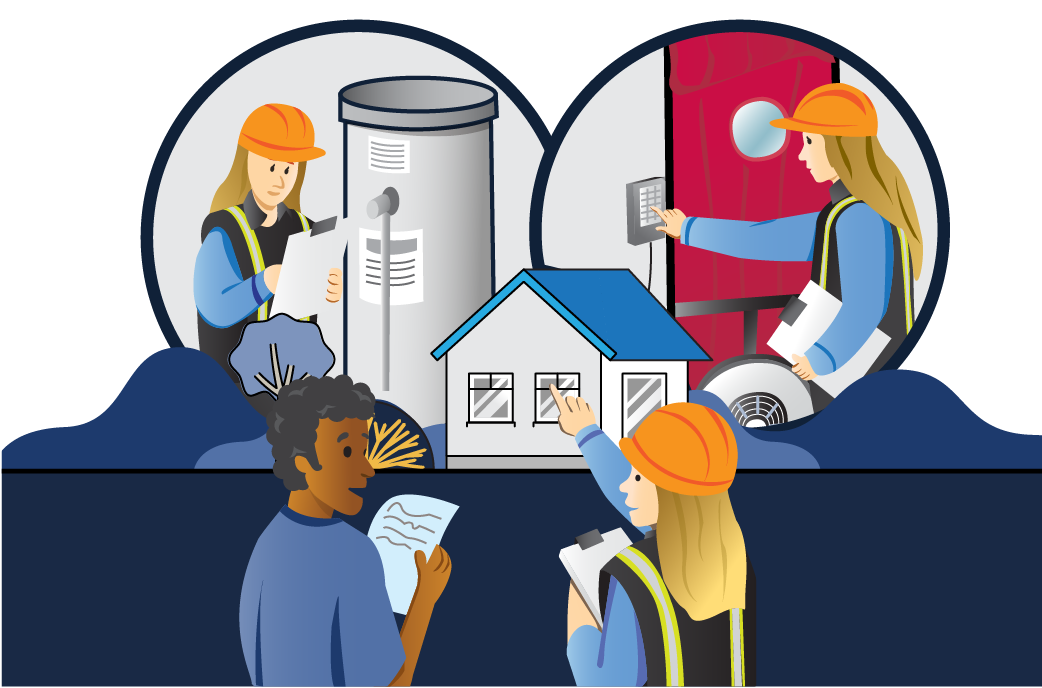
EnerGuide home labels provide an in-depth review of your home’s energy performance and a personalized roadmap of renovation upgrades to improve your home’s energy efficiency. They are typically delivered in a few weeks and costs vary, depending on your region.
What is the process to get an EnerGuide home label?
You can get an EnerGuide home label as part of an EnerGuide energy efficiency home evaluation, which involves an on-site assessment of your home by an energy advisor who is registered with Natural Resources Canada (NRCan). EnerGuide is Canada’s national home energy labelling system. The Government of Canada developed EnerGuide and oversees the process to get an EnerGuide home label.
What will you receive?
You will receive an EnerGuide rating and label, a Homeowner Information Sheet, and a Renovation Upgrade Report. You can also receive labels and reports for EnerGuide-rated new homes.
How is the information on an EnerGuide home label produced?
The EnerGuide label and reports are generated from information about your home that is collected during an on-site EnerGuide assessment by an NRCan registered energy advisor, which includes detailed diagnostic tests that provide insight into your home’s energy use and emissions.
EnerGuide Rating System for homes
The EnerGuide Rating System is the nationally recognized home energy rating procedure in Canada for on-site assessments. While other types of on-site assessments are available in some parts of the country, EnerGuide is the one offered by the federal government.
EnerGuide has been used to label over 2.6 million low-rise residential buildings in Canada since it was launched in 1998.
EnerGuide follows federal standards and procedures for data collection and energy modelling. NRCan administers EnerGuide by providing: technical support through the energy simulation modelling software that is used to generate energy performance ratings, ongoing quality assurance to validate the ratings, licensing for service organizations to deliver EnerGuide, and registration for energy advisors who meet NRCan qualifications.
EnerGuide home labels for new homes:
- Energy advisors work with builders and developers during the design and planning phases to incorporate energy-efficient design features that meet or exceed the applicable building code requirements, and then use HOT2000 energy modelling software to determine the home’s projected energy use. Once construction is complete, energy advisors conduct an assessment to verify that the home that was built matches the specifications of the proposed model.
- EnerGuide also enables the measurement of energy efficiency for NRCan’s high-efficiency new home labelling program, ENERGY STAR® for New Homes.
EnerGuide home labels for existing homes:
- Energy advisors assess a home from top to bottom and conduct a blower door test to assess the air tightness as part of the EnerGuide evaluation. HOT2000 energy modelling software is used to calculate a rating of energy performance. Energy advisors give homeowners an EnerGuide rating and energy efficiency report that will help guide decisions about possible improvements.
Virtual home energy labels
Virtual home labels offer a quick overview of your home’s energy efficiency. They are a great start to learning about your home’s energy performance, and possible steps you can take to upgrade your home. They offer the fastest delivery and lowest cost home label for your household.
What is the process to get a virtual home label?
The process to receive a virtual home label is virtual from start to finish. These labels are being delivered as part of initiatives to label homes in some provincial, territorial and municipal jurisdictions. In some cases, you will be asked to answer questions about your home using your computer or phone.
What will you receive?
You will receive a virtual home label that gives you a report on your home’s energy use and emissions. A virtual home label may suggest renovation upgrades for your home.
How is the information on a virtual home label produced?
The information on a virtual home label is generated using energy performance information from databases of houses with characteristics similar to yours. This information may not reflect the exact characteristics of your home, as no one will visit your home to verify. For example, a virtual home label will make assumptions on items in your home, such as the type of heating system. The information may also not reflect renovations you have done.
Guidelines for Virtual Home Labelling
Virtual home labelling is a technology that is being developed by industry and adopted by some provincial, territorial and municipal home labelling programs.
Virtual energy assessments are completed predominately using artificial intelligence techniques and pre-existing data (such as property assessment records). Some virtual home labelling services allow homeowners to update information about their home and/or knowledgeable professionals to confirm details about a home using video or photo inspection techniques.
NRCan has developed voluntary Guidelines for Virtual Home Labelling to support program authorities and service providers in the delivery of virtual energy assessments and virtual home labels to Canadian households.
The Guidelines for Virtual Home Labelling aim to:
- Align virtual energy assessments within Canada’s broader approach to home labelling
- Encourage consistent outcomes between different virtual energy assessment approaches and providers
- Inform organizations that are seeking to procure virtual energy assessments
- Discourage ineffective tools and approaches from entering the home labelling marketplace.
How you can get a home label
Home labels are available for most new and existing homes and low-rise residential buildings that are three storeys or less. Both virtual home labels and EnerGuide labels can help you understand your home’s energy efficiency and how it can be improved.
Home builders can use EnerGuide to support the design and construction of your new home to improve its energy performance. If you are looking at buying an energy efficient new home, an EnerGuide home label can help you make important decisions.
Home labelling programs for existing homes are available across Canada. To get an EnerGuide evaluation of an existing home, you can consult a list of service organizations in your community and book your EnerGuide evaluation through them.
Several provinces, territories and municipalities offer programs that will help cover the cost of an EnerGuide home energy label or provide a virtual home label.