
Project description
Split Hydrocarbon Processing for Industry and Power Generation (SHCP) aims to investigate an array of industrial processes that could utilize both the hydrogen and carbon produced through the decomposition of hydrocarbon fuels, such as, the natural gas pyrolysis process. In this fashion, the energy potential of the fuel can be maximized while minimizing the emissions through carbon capture and storage (CCS) pathways.
With this methodology, SHCP has the potential to be an enabling technology for a future hydrogen economy by transforming large industrial thermal processes into hydrogen co-producing ones. A simplified process schematic example is shown in Figure 1. The produced hydrogen can be utilized as feed stock, clean fuel (without the requirement of CCS) or sold to market, while the solid carbon can be processed as feed stock or fuel with CCS, providing a pathway to reduce the cost of both hydrogen production and CCS.
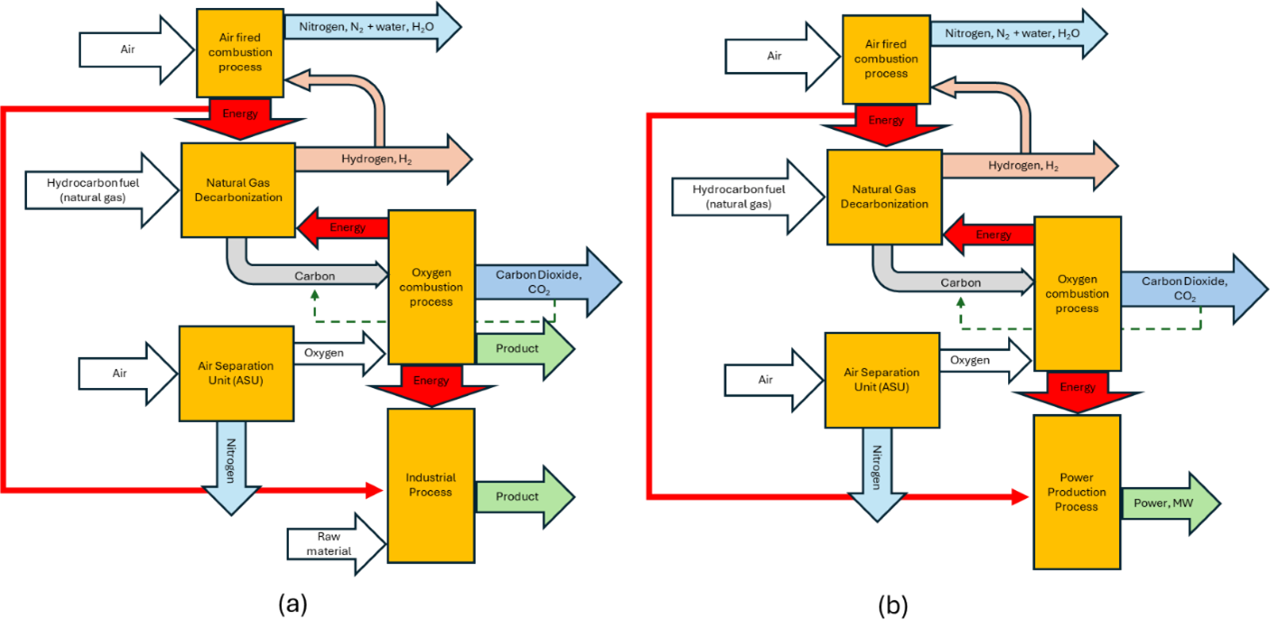
Figure 1: Concept of (a) industrial process and (b) power generation process using split hydrocarbon processing for hydrogen production and CO2 capture
In this project, we examine energy intensive processes where SHCP can be applied, especially those hard-to-abate sectors, or processes that are hardest to decarbonize, where CCS is viewed as the front runner to reduce or eliminate CO2 emissions. The focus will be on processes, such as hydrogen production and lime and cement, where the transition is not straight forward because they lack the technology, or its costs remain prohibitive.
The key research questions the project seeks to answer are as follows:
- which industrial processes can benefit from SHCP.
- what are the technical, economic and environmental benefits of deploying SHCP across these industries,
- identify technical barriers associated with the thermal processing of solid carbon under a variety of operating modes including air-and oxy-fired combustion at various process pressures, as well as under gasification conditions, and
- de-risking key aspects of technology through laboratory and pilot scale testing at CanmetEnergy Ottawa’s high-pressure oxygen fired (HiPrOx) facility, Figure 2.
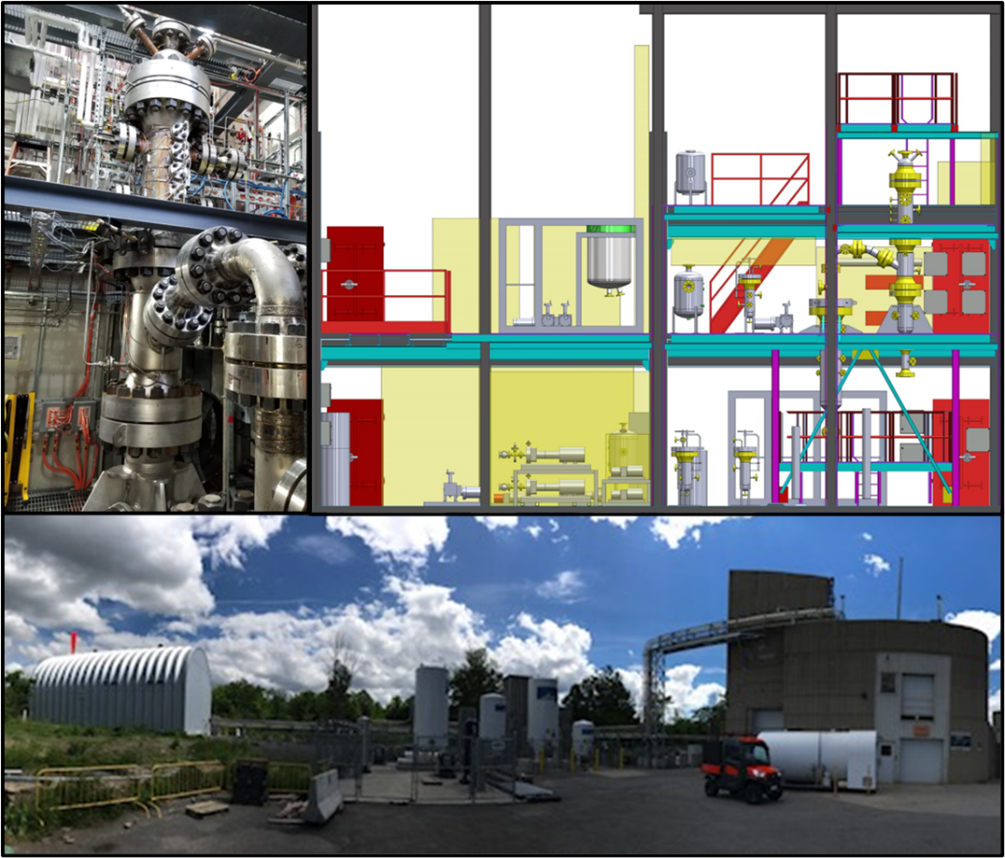
Figure 2: CanmetENERGY Ottawa’s high pressure oxygen fired (HiPrOx) facility