
Project location: CanmetENERGY Ottawa, Ottawa, ON.
Timeline: 5 years (2023 to 2028)
Program: Industry and CCUS
Project description
This project aims to further develop and demonstrate in-house patented technologies relating to key industrial sectors including lime and cement manufacturing, iron and steel making and steam and hot water generation. The key technologies being considered within this project are:
- Carbon Capture Enabled Lime Manufacturing – utilizing one of two arrangements in which either oxy-fired flue gas with a high CO2 content or pure CO2 recycled from the effluent stream of the calcination zone is heated to 1000 degrees Celsius and used as the primary heat source to drive the thermal decomposition. This produces an off gas of sufficiently high CO2 content to make purification and transportation economically feasible within the lime and cement industry.
- Flash Metallization – utilizing high reducing gas pressure combined with a specific system arrangement to maximize gas-solid interactions allows for short residence time reduction of iron ore concentrate in either the solid or liquid phase to minimize reactor size and material hold-up. The resulting product is a metallized liquid iron suitable for direct casting or a metallized slag containing powder that is suitable for briquetting.
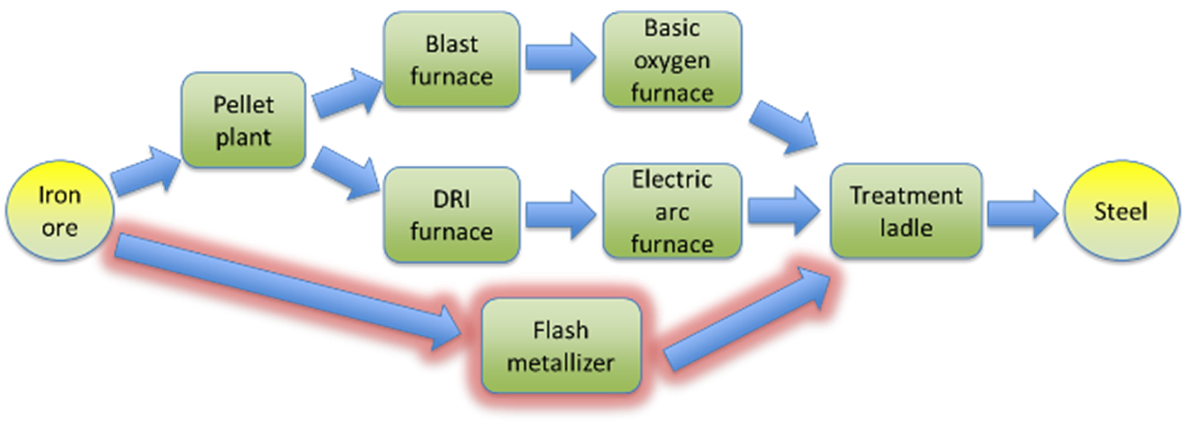
Figure 1: Steelmaking pathways with primary steps shown.
- Thermal Water Remediation – utilizing direct contact steam generation (DCSG) or direct contact hot water production (DCHW) to thermally process waste-water while meeting the parent facility’s thermal heating demands through steam and hot water production. The aim is to assess a waste-water source’s suitability for thermal processing to be used as a source of steam or hot water that would otherwise be generated with clean water. This improves overall process efficiency by matching the energy input for waste-water treatment with that of the facility’s heating demands. This technology was originally developed for oil and gas and is now being looked at for similar improvements in other sectors such as mining and agriculture.
Core objectives
The core objective is to assess the suitability of the in-house patented technologies to improve overall process efficiency in key Canadian industrial sectors that are associated with high emissions and have proven difficult to decarbonize (namely cement, steel and oil & gas/mining). This will hopefully be achieved through the demonstration of pilot facilities and bench scale demonstrations of portions of the process that require specific investigation to determine operating conditions for further scaling. These activities will also provide the process information needed to scale up to the desired output capacity (e.g. 2 million tonnes of casted steel per year for Flash Metallization or 500 million barrels of cold-water equivalent per year for Direct Contact Steam Generation) and determine capital and operating costs to assess the economic viability of the technologies under different circumstances such as carbon taxes or varying material input and product prices.
Impact and benefits
Our novel, in-house developed technologies are being assessed for their capacity to improve efficiency, integrate carbon capture and reduce equipment size and complexity. While some of the technologies are still in early technology readiness levels (e.g. TRL 2-3 for Flash Metallization), our aim is to leverage existing facilities to demonstrate and derisk the scaling process to eventually allow for end-users to be able to implement the technologies in their own facilities with reliability and with a predictable performance.
Our efforts aim to support the development of emissions cutting technologies in critical sectors that are increasingly being asked to meet stringent targets while also trying to remain competitive with global markets. This support hopefully will help key Canadian industries remain competitive while maintaining Canada’s leadership role in environmental stewardship.
Key innovations
This project boasts multiple patents surrounding the technologies central to it:
- Low Carbon Lime & Cement: Patent currently being drafted for submission
- Flash Metallization: CA2979698C (https://patents.google.com/patent/CA2979698C/en), US11208706B2 (https://patents.google.com/patent/US11208706B2/en)
- Thermal Water Remediation: US 20110232545A1 (https://patents.google.com/patent/US20110232545A1/en?oq=US+20110232545A1), CA3133905A1(https://patents.google.com/patent/CA3133905A1/en), US20230115790A1 (https://patents.google.com/patent/US20230115790A1/en)
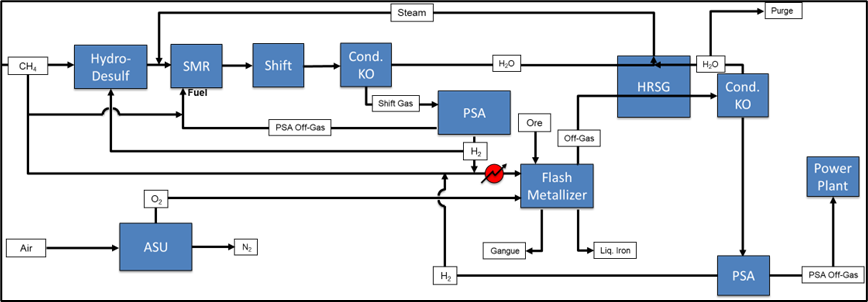
Figure 2: Block flow diagram of CE-O’s novel high pressure oxy-fired flash metallization steelmaking process.
Facilities
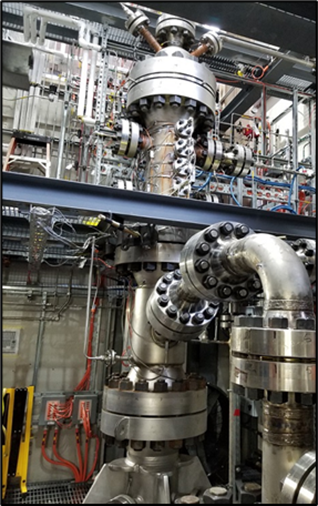
Figure 3: CE-O’s High pressure oxy-fired entrained flow reactor.
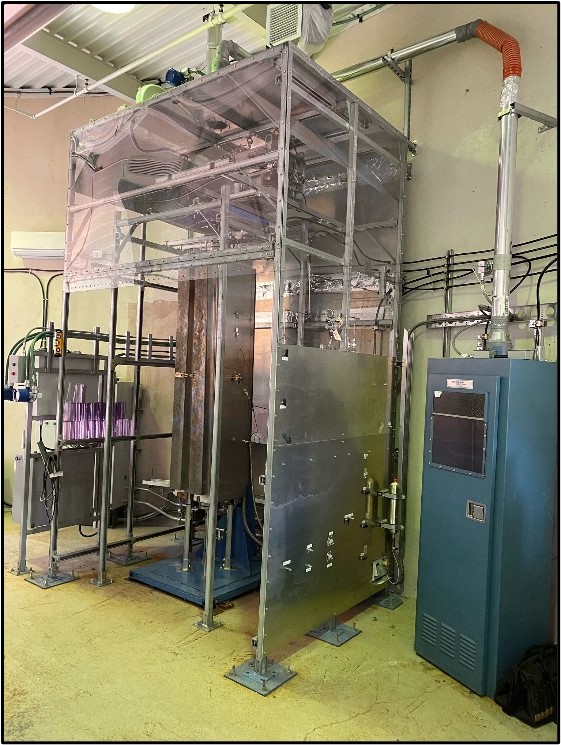
Figure 4: CE-O’s High temperature entrained flow drop tube furnace.
Contact CanmetENERGY in Ottawa
To learn more about this project, email our Office of Research Partnership and External Relations.
Find out more