
Project location: CanmetENERGY Ottawa, Ottawa, ON
Timeline: 5 years (2023 to 2028)
Program: PERD/EIP
Project description
Direct carbon fuel cells (DCFCs) may provide a means to reduce the cost of hydrogen production. An emerging hydrogen production process involves thermal cracking of natural gas or biogas to produce hydrogen and a carbonaceous byproduct. This solid byproduct could be used by a DCFC to produce valuable electricity, thereby lowering the cost of the hydrogen production process overall. As it is well-suited for CO2 sequestration this polygeneration concept would also lower overall emissions below those of established options such as steam methane reforming with amine-based CO2 capture.
The DCFC is an emerging technology which electrochemically converts carbonaceous fuel’s chemical energy to electricity and CO2 directly without any intermediate steps and ideally does not require expensive catalysts such as platinum for this conversion.
Although the DCFC has been proven at the bench-scale, questions surrounding the practicality and feasibility of this concept are being addressed in this research study. It is critical to determine if DCFCs are suitable for long term operation, if they can be configured to support continuous conversion of fuel to electricity, and if they can be stacked in a manner which provides sufficient power per unit area. Many of these components have not yet been demonstrated.
The CanmetENERGY Ottawa team is collaborating with other research groups who are working on natural gas decarbonization technologies (to provide fuel feedstocks and contribute to technoeconomic and life cycle analyses), as well as material research centres within Canada to identify components suitable for use in the DCFC system.
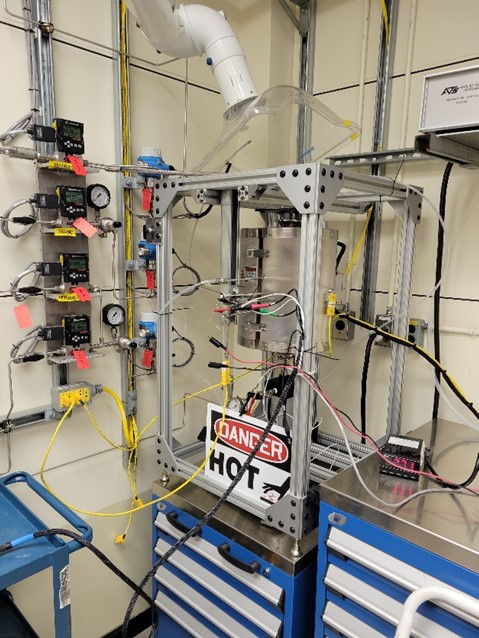
Figure 1: A recently commissioned test platform for single-cell stacks at CanmetENERGY Ottawa.
Some of the team’s recent and relevant publications include:
- Kouchachvili, L., Hataley, B., Geddis, P., Chen, S., McCready, A., Zhuang, Q., Clements, B., and Entchev, E. Modification of carbon black fuel to improve the performance of a direct carbon fuel cell. International Journal of Hydrogen Energy, 52, 1153–1160. https://doi.org/10.1016/j.ijhydene.2023.01.074
- Kouchachvili, L., Geddis, P., and Zhuang, Q. Direct carbon fuel cell design for continuous operation. International Journal of Hydrogen Energy, 46, 6792-6802. https://doi.org/10.1016/j.ijhydene.2020.11.179
- Zhuang, Q., Geddis, P., Runstedtler, A., and Clements, B. An integrated natural gas power cycle using hydrogen and carbon fuel cells. 209, 76-84. https://doi.org/10.1016/j.fuel.2017.07.080
- Zhuang, Q., Geddis, P., Runstedtler, A., and Clements, B. A power cycle of natural gas decarbonization and dual fuel cells with inherent 100% carbon capture. International Journal of Hydrogen Energy. 43, 18444-18451. https://doi.org/10.1016/j.ijhydene.2018.08.005