
Oils make their way into Arctic ecosystems via natural seepage and spills of various sizes. However, for medium and large-scale spills, remote communities may have less capacity to respond, and it takes time for additional support to mobilize. As such, spilled oil may migrate and be deposited in shallow waters or on shorelines (beaches) depending upon local conditions. These events may impact wildlife and ecosystems, both in the hours and weeks following an accidental spill and in the long term.
Our areas of focus
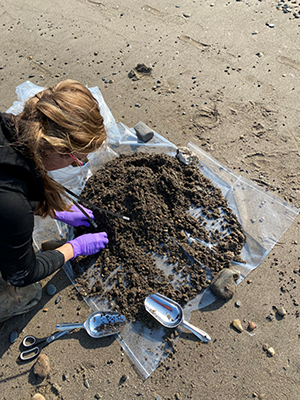
Collection of Beaufort Sea beach sediments in the Tuktoyaktuk area for experimental oil spill simulations.
This program targets three field areas across the Canadian Arctic to study the behaviour and fate of oils spilled into cold water environments. Of specific interest is the interaction of oiled sediments with Arctic marine waters, the degradation of oils (through volatile evaporation, solar degradation, and biodegradation), and their induced aquatic and sediment toxicity over time. This research program leverages our expertise in oil and hazardous and noxious substances (HNS) spill science.
Contact information
For information about our team, research, or to work with us, please contact:
James Brydie PhD. P.Geo., Director - Upstream and Environment
james.brydie@nrcan-rncan.gc.ca
(587) 337 2536