
Project location: CanmetENERGY Ottawa
Timeline: 2023 - 2028
Program: Carbon Management
Project description
This project aims to develop a methodology to evaluate pathways for the conservation, conversion, and utilization of flare and vent gas in the oil and gas sector. The team evaluates the technical and environmental performance, and economic feasibility, of existing and emerging technologies or practices that will mitigate emissions and how they might be implemented to support existing or emerging policies and regulations. Examples of mitigation include:
- Conversion technologies: gas-to-power, hydrogen production, and gas-to-liquids
- Conservation technologies: pipeline tie-ins
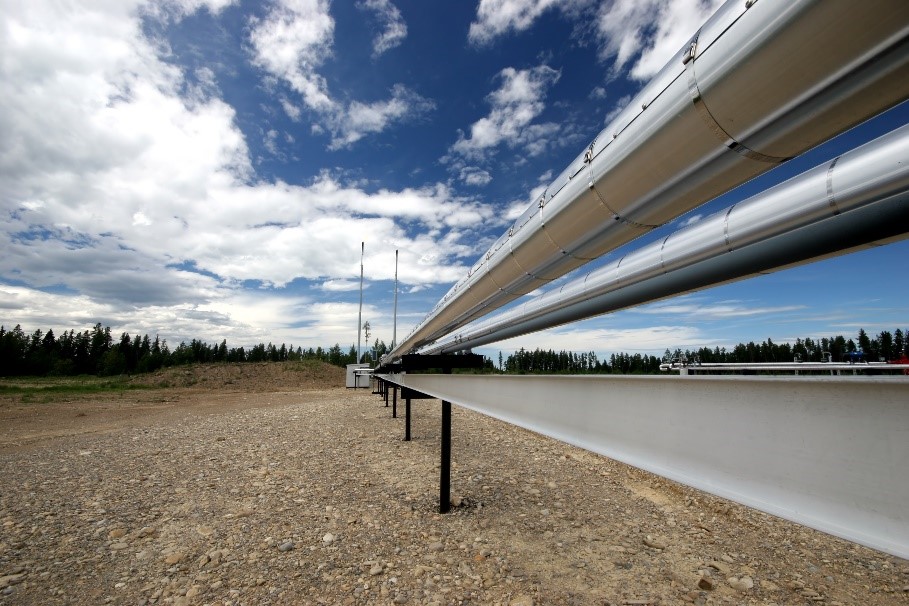
Conservation Technology: oil and gas production conservation via pipeline tie-in
The produced data and models will support policymakers and regulators. They inform new policies and regulatory impact assessments for emerging regulations directed towards zero routine venting and flaring. Canada’s goal is a 75% methane cut by 2030 as it works toward net zero emissions by 2050.
This goal is achieved through process simulations, technoeconomic assessments, and lifecycle assessments (LCAs) of mitigation technologies that are modular, scalable, and deployable. The analysis considers that:
- Flaring and venting volumes at upstream oil and gas infrastructure are distributed and diverse.
- Variable gas compositions, periods of inactivity, and production decline rates result in challenges when evaluating mitigation pathways and technologies.
- There is no “one-size-fits-all” solution for eliminating routing venting and flaring in the upstream oil and gas sector.
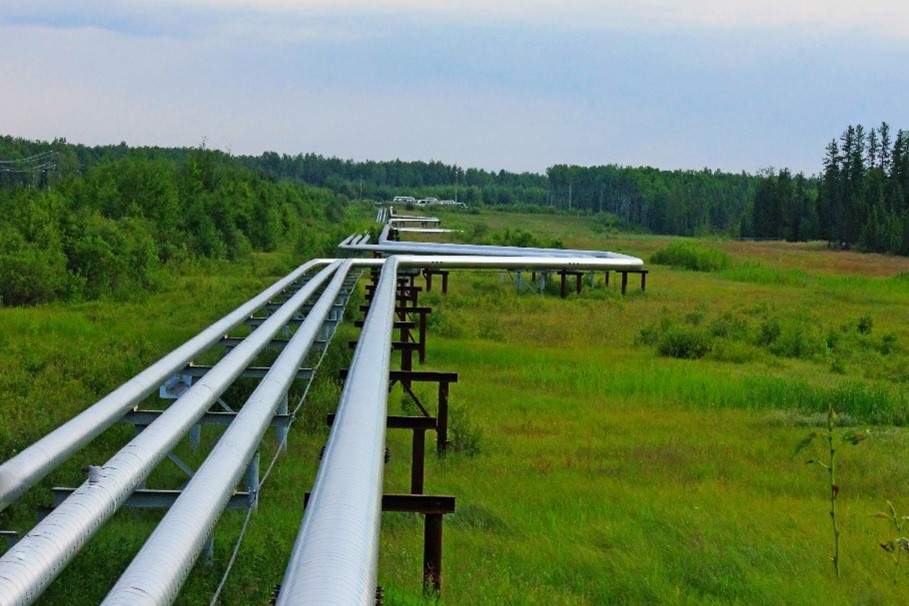
Conservation Technology: oil and gas production conservation via pipeline tie-in
In the first project phase, the team will compile the datasets required to develop models and conduct analyses. These datasets include spatially and temporally resolved production volumes, fluid compositions, and detailed infrastructure data. The team will merge these datasets to create a local database for our research.
In the second project phase, the team will strategically develop a set of representative facilities within a digital environment, which will allow us to carry out our analysis on a manageable sample size of facilities. We will digitally apply process simulation models to the representative facilities and integrate mitigation technologies at the required scale(s). Technology performance and conversion data will be taken from available literature. We will create a technoeconomic assessment model to compare the project economics of each mitigation technology at the various scales.
In the third phase of the project, lifecycle assessments will be conducted to determine the environmental impacts of the mitigation technologies, and these assessment results will be integrated with the technoeconomic assessment findings. This will help identify the most strategic combination of mitigation technologies towards achieving zero routing venting and flaring.
In the final project phase, the team will communicate its findings with policymakers and regulators and aim to publish the methods and results. To broaden the potential impact of this work, direct access to the data and methods created from this project will be provided.