
Project location: CanmetENERGY Ottawa
Timeline: 5 years (2023-2028)
Program: Carbon Management
Project description
This project supports the development of tools to measure emissions in the energy sector in real time, focusing on:
- Volatile compounds emitted from fuel storage tanks
- Methane released from equipment, tanks, and recycled water streams
- Methane, carbon dioxide, and other compounds released from wells and reservoirs
- Black carbon and other pollutants from gas flares
The primary objective of the program is to deliver reliable data, tools, and methods to inform Canadian decision-makers in achieving a 75% reduction in methane emissions by 2030, with a net-zero emissions target by 2050.
The project consists of several distinct sub-projects, described below.
Volatile compounds in storage tanks
The team is enhancing methods for measuring emissions from storage tanks across the energy sector using advanced tools and techniques developed at laboratories in Ottawa, ON and Devon, AB. These tools monitor volatile organic compound (VOC) emissions under real-world conditions. The research will inform new models to better estimate VOC emissions from fixed-roof storage tanks.
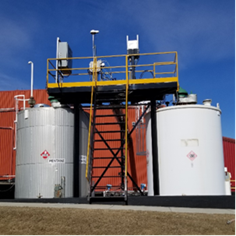
Figure 1: Instrumented liquids storage tanks at CanmetENERGY-Devon
This work will contribute to improved regulations on vapour control in energy storage tanks. Between 2023 and 2025, the team will focus on updating the AP-42 model for VOC emissions, measuring factors such as air turnover, headspace saturation, temperature, and weather conditions. Continuous monitoring over four seasons will provide reliable data on VOC losses due to environmental factors.
From 2025 to 2026, the team will develop a national inventory of VOC emissions from tanks across Canada, particularly those lacking vapor control technologies. Satellite imagery and public databases will be used to count tanks and gather data. Weather, production, and activity data will be incorporated to produce accurate VOC emission factors and updated national estimates.
Methane released by equipment including storage tanks
The project aims to develop a low-cost, accessible method for measuring methane emissions from storage tanks, casing vents, and pressurized fluid streams to support effective policy development.
Between 2023 and 2025, the team will study how various hydrocarbon liquids retain natural gas and review current methods for analyzing dissolved gases. A small-scale lab setup will be designed in Ottawa to simulate flashing of fluid mixtures under pressure, enabling controlled testing of gas loss measurement methods.
From 2024 to 2026, consultations with industry experts will inform a review of separator types commonly used in Canada. The team will examine sources of flash gas and current handling practices, initiate simulations, and prepare the flash gas analysis system for experiments.
Between 2025 and 2027, experiments will be conducted to validate existing flash gas measurement methods. Affordable devices will be tested for compatibility with current techniques and real-time gas measurement tools will be assessed.
In 2027–2028, additional factors such as gas absorption in recycled liquids and vortex effects in separators will be explored. Findings will be published during this phase.
Source location for emitted gases
The goal is to improve real-time measurement methods for methane, CO₂, and VOC emissions from small or diffuse sources, which are difficult to detect using current surveys. Tools will be designed for wells and reservoirs but will remain adaptable to other sources.
Three methods will be tested: underground probes, ground-level flux chambers, and atmospheric sensors. The team will evaluate how these methods work together to detect and measure emissions.
In 2023-2024, existing research will be reviewed and equipment, including probes, flux chambers, an eddy covariance mast, and a spectrometer will be acquired. A controlled outdoor site will be established to simulate emissions at various depths. Site construction and testing will begin in late 2023 and continue through 2024.
From 2025 to 2026, testing will commence at the controlled-release site. Data on weather, ground, and air conditions will be used to refine the method for field deployment.
Between 2027 and 2028, field tests will be conducted at sites across Canada, including wells and reservoirs in Quebec and Southwestern Ontario, with additional exploration in Saskatchewan and Alberta. Final results and methodologies will be shared with scientific and regulatory bodies to improve emission models and inform future policy and research.
Emission of short-lived climate pollutants from gas flares
Canada has committed to ending routine gas flaring at oil sites. Between 2023 and 2025, the team will utilize the boundary layer wind tunnel at the University of Western Ontario and collaborate with Canadian universities through the FlareNet network to collect data supporting new flaring regulations.
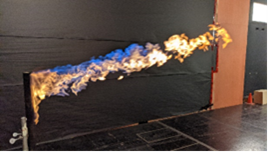
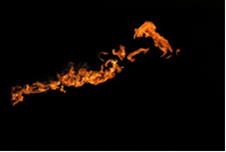
During this period, measurements will be taken for black carbon, VOCs, heat release, and flame profiles to assess the impact of current flaring operations. The data will support new models for black carbon and VOC emissions and improve national emission estimates. Safety and engineering protocols will be followed, including the safe introduction of low benzene levels for realistic testing.
Key research findings will be shared with Environment and Climate Change Canada (ECCC) and published to guide policy and industry practices.