
Leadership in clean energy research and innovation
CanmetENERGY Devon brings together scientists, engineers, and technologists in a well and uniquely equipped research and development facility. This research centre provides fundamental knowledge and innovative solutions for conventional and clean energy technology development. Located outside of Edmonton, Alberta, CanmetENERGY Devon strengthens energy partnerships with industry, government, academic institutions, and Indigenous partners.
With our dedicated team of scientists, engineers, technologists, managers, and support staff, CanmetENERGY Devon:
- generates knowledge to provide solutions to industry and advice to government policymakers and regulators
- provides Canadians with relevant technical information on conventional and clean energy development, decarbonization, and reducing environmental impacts
- collaborates with industry, provincial and territorial governments, academic institutions, Indigenous organizations, and both national and international organizations to develop and demonstrate new clean energy technologies
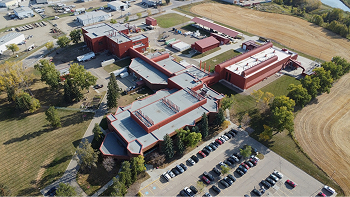
CanmetENERGY at the Devon Research Centre
Our research and development (R&D) programs

Downstream and Renewables
The Downstream and Renewables team’s main R&D subjects include:
- developing novel clean energy technologies and innovative solutions with focuses on producing biofuels and other low-carbon transportation fuels from conventional and emerging energy sources
- exploring new catalysts and catalytic processes for the production of green hydrogen and E-fuels
- advancing the development of novel processes and materials for carbon capture, utilization, and storage (CCUS)
- deepening the fundamental understanding of fuels chemistry by developing advanced characterization and analytical methods
- performing life cycle analysis (LCA) on greenhouse gas (GHG) emissions and techno-economic analysis (TEA) on emerging clean energy processes and technologies
Projects

Upstream and Environment
The Upstream and Environment team’s R&D consists of simulating real world contaminant scenarios relevant to impacts encountered during natural resource development and transport. Impacts typically affect surface waters, groundwater, soils and ecosystems. In order to understand and resolve impacts, we physically and numerically simulate key processes from bench- through pilot- to field scale with the goal of detecting, monitoring and remediating environmental contaminants and affected ecosystems. Focus areas include:
- oil and hazardous and noxious substance spills from ships, rail, road and pipelines
- tailings and process water management
- geological carbon dioxide (CO2) and hydrogen storage.
We also develop novel technologies for critical mineral extraction and validate pre-commercial sensors.
Projects

Carbon Capture, Utilization, and Storage (CCUS)
CCUS is a complex research area intended to capture industrial CO2 emissions and to either sequester emissions or utilize the CO2 in industrial processes. At CanmetENERGY Devon, both our Downstream and Renewables and Upstream and Environment teams have projects supporting CCUS.
Projects
- Assessing novel carbon dioxide capture materials and accelerated discovery of carbon dioxide capture materials and carbon dioxide conversion catalysts
- Advanced materials and processes for carbon dioxide capture
- Utilizing carbon dioxide within an aqueous process that purifies lithium carbonate
- Carbon dioxide conversion to high value chemicals
- Geochemical monitoring of shallow carbon dioxide injection and migration
- Fluid-rock interactions during and post-carbon dioxide injection under in situ conditions

Hydrogen
Our hydrogen-related research supports Canada’s hydrogen strategy as we work on processes for clean hydrogen production, underground hydrogen storage, and hydrogen transportation. Both our Downstream and Renewables and Upstream and Environment teams have projects in hydrogen research.
Projects

Facilities and Capabilities
CanmetENERGY Devon has a wide range of analytical capabilities to support energy technology innovation research. We also house a range of pilot plants to test various processes and conditions for both batch and continuous operations.
Services

Multi-Partner Research Initiative
The Multi-Partner Research Initiative (MPRI) was created under the Oceans Protection Plan to foster international research collaborations to advance knowledge and technology in support of effective and informed oil spill response and remediation in Canada.
Contact us
CanmetENERGY Devon business office
Email: dg_devon-dg_devon@nrcan-rncan.gc.ca
Toll-free number: 1-844-987-8600
This toll-free number allows incoming callers to select the official language of their choice