
Insects, fungi, forests and renewal after wildfire
May 2026
By Nicole Simmons
This is Part 1 of a two-part Simply Science series exploring how life returns to Canadian forests after wildfire. This story looks at nature’s first responders, such as beetles and fungi and how they work together to transform fire-charred landscapes into new ecosystems.
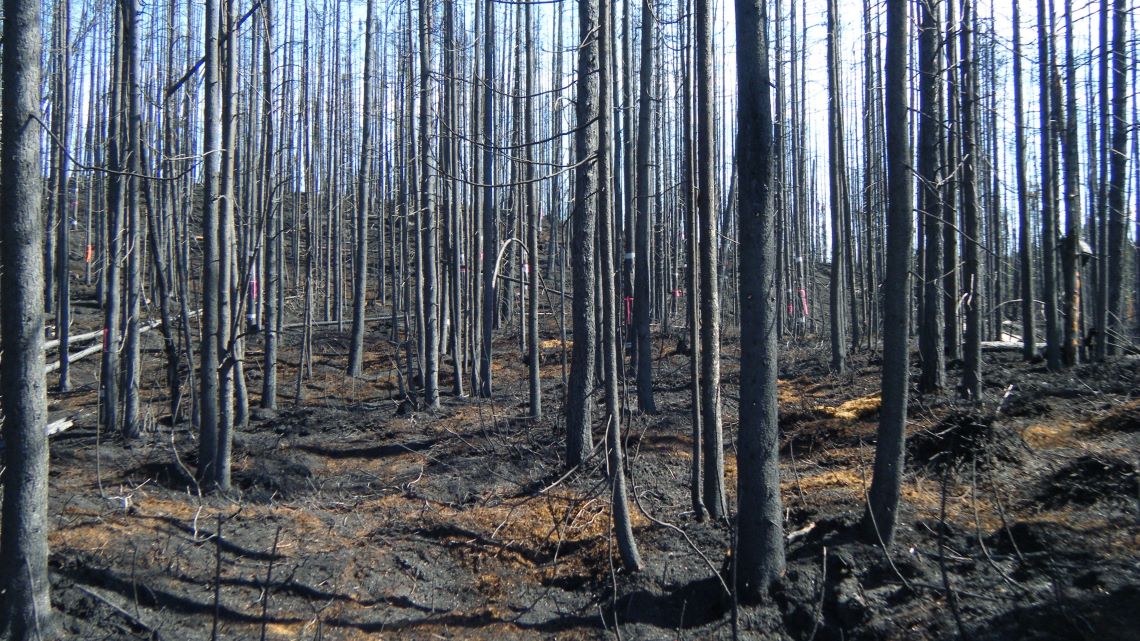
Post-fire forests are resilient — sometimes the flames aren’t yet extinguished before new signs of life move in. Insects and fungi are the first to arrive, setting the stage for wildlife to come.
A natural and necessary disturbance
Every year, wildland fires scorch and burn vast areas of Canada’s forests, leaving behind blackened tree trunks, smoke-hazed skies and the crackling sound of smouldering wood. But although fire can be destructive and costly, it’s also a natural and even a necessary ally for our environment, playing a crucial role in shaping and reshaping forest ecosystems for millions of years.
As the embers of burned forests die down, new opportunities for growth are opened up. After a fire, vegetative fuels like trees, grass and brush are transformed into mineral-rich ash that nourishes the soil, creating ideal conditions for the new growth of diverse plants and vegetation. This cycle of renewal is particularly important in fire-adapted ecosystems.
In the aftermath of a fire, burned areas stir with diverse species working together to restore life to Canada’s forests. Post-fire ecology is a story of resilience — of life springing from the ashes. It’s an intricate recovery process of ecological succession. Insects and fungi are the first to arrive, rapidly colonizing burned areas and setting the stage for the return of the forest ecosystem.
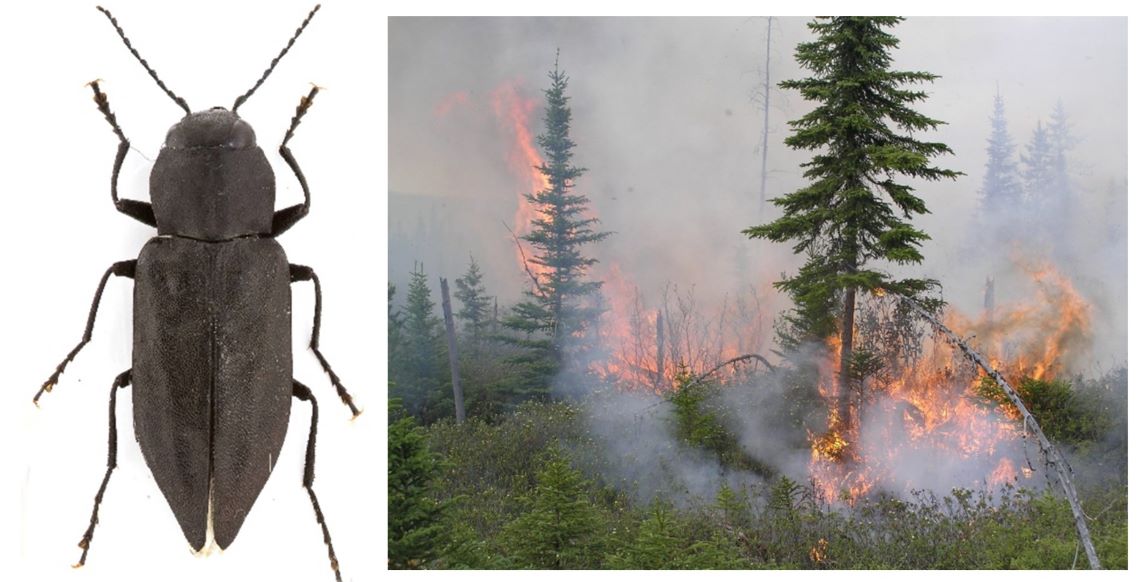
Fires attract creatures such as the black fire beetle, which is said to be able to detect fires from several kilometres away.
Nature’s first responders: Fire-flocking beetles
Not all living creatures flee from fire — some flock toward it — and sometimes the flames haven’t even died down before new life moves in. Among the earliest arrivals are some of nature’s first responders: beetles, many species of which are pyrophilic, meaning “fire-loving.”
Beetles play essential ecological roles after wildfire. They help to break down dead trees, kickstart fungal networks and recycle nutrients in the landscape.
The first on the scene is often the black fire beetle (Melanophila acuminata).
“I saw clouds of thousands of black fire beetles flying toward an active fire in 2002 in the James Bay area in Quebec,” says Yan Boulanger, forest ecologist with the Canadian Forest Service (CFS). “I first thought it was ashes in the sky.”
These beetles are well suited to finding and inhabiting forest burn sites. “Black fire beetles are equipped with highly sensitive infrared sensors that allow them to detect fires from kilometres away,” says Christian Hébert, research scientist with the CFS. “They have small pit organs located on their thorax — between their middle legs — that sense heat and respond to the chemical signatures of smoke and charred wood, so they’re able to navigate to recently burned, or even still burning, forested areas.”
Black fire beetles are extremely thermophilic, meaning they can tolerate high temperatures. This ability makes them one of the most opportunistic insects. In fact, they rely on high heat to enable reproduction, finding just the right spot to land, mate and lay eggs. Once their larvae hatch, they enjoy an undisturbed, all-you-can-eat buffet: dead trees no longer able to resist insect activity with reduced competition from other, non-heat-tolerant insects and very few predators like birds and spiders, which have fled or perished in the fire.
The trees themselves create much of this welcoming environment.
“When a healthy tree is attacked, it can produce chemical resistances — such as toxic resins, sap and other volatile organic compounds — to repel wood-feeding insects or to be used by predators to locate potential prey,” says Yan. “Dead trees don’t put up these same resistances to insect activity, making it an easy meal for insects like black fire beetles.”
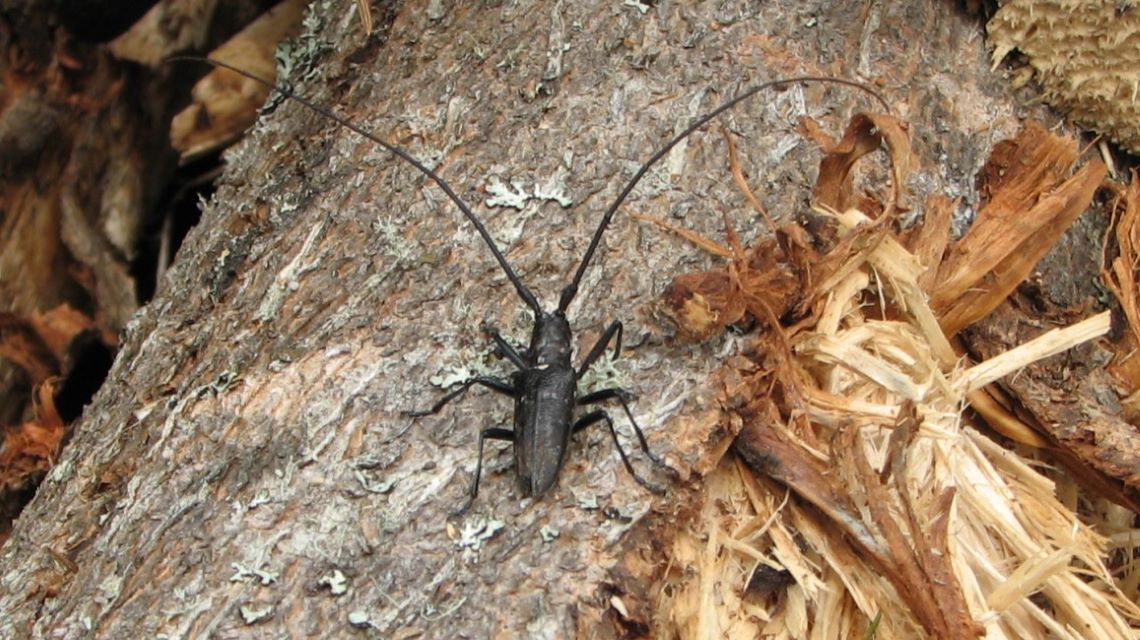
Whitespotted sawyer beetles are crucial for recovery. They help in the decomposition of wood debris, preparing it for fungi and other organisms.
As fire-flocking beetles continue to thrive in the ashes, another beetle can be heard moving in. It’s the Monochamus scutellatus, commonly known as the whitespotted sawyer beetle. These longhorn beetles get their name from the distinctive sawing sound they make while burrowing through the wood of freshly cut, dying or stressed coniferous trees. Unlike the heat-sensitive black fire beetles, which have sensory organs on their thorax, sawyer beetles have receptors on their antennae that can detect chemicals released by burning wood and carried in smoke.
As they tunnel and feed, sawyer beetle larvae begin breaking down the wood, opening pathways for fungi and other organisms that will recycle nutrients back into the soil. Over time, other new insect communities emerge, including ants.
“These insects, known as saproxylic because they rely on dead wood, are crucial for ecosystem recovery,” says Christian. “Their activity prepares the soil for fungi, plants and eventually new trees to regrow.”
The colonization of burned forests advances in stages. After the first wave of fire-specialist beetles, other insects like wood-feeding (xylophagous) beetles and fungus-feeding (mycophagous) beetles aren’t far behind.
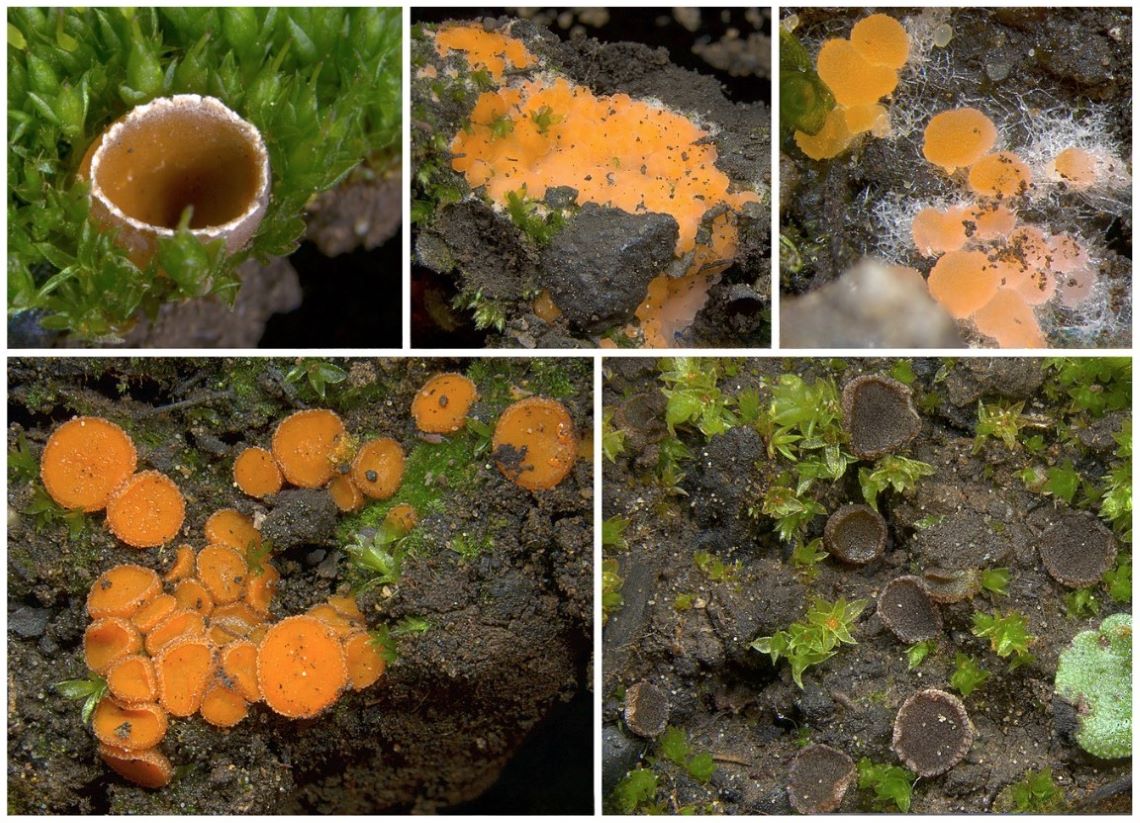
Fungi are important for rebuilding forests from the ashes after wildfire.
Working together: Symbiotic partnerships in forest ecosystems
Where beetles go, fungi soon follow. Within weeks after a wildfire, fungi like the burn-tolerant genus pyronema carpet the charred soil with bright orange, cup-shaped fruiting bodies, releasing so many spores that it can look like the ground is still smoking.
“Prized edible morels are among the first mushrooms to reappear after wildfires, drawing Canadians into the woods each spring to harvest them for food and profit,” says Joey Tanney, research scientist with the CFS. “These fungi break down fire-altered organic matter including charred leaf litter, partially burned woody debris and charcoal-rich soils — accelerating nutrient release during early forest recovery.”
Many of these fungi form symbiotic partnerships with tree roots, meaning both parties benefit. The fungi help tree seedlings absorb water and minerals, while the fungi receive sugars from the trees in return.
By supporting new plant growth and stabilizing soil, many of these pyrophilic pioneers play a crucial role in rebuilding forests from the ashes. And once they’re established, they’re ready to spring into action again and again. The fungi re-emerge the next time they’re needed and then return to dormant spores, lying unseen in the soil for decades, or possibly even centuries, until the next fire.
Together, beetles, plants and fungal life provide the foundation of a new ecological network. They remove dead wood, facilitate decomposition and provide food sources for the return of birds, mammals and other forest inhabitants, transforming the seemingly lifeless, blackened forest into one teeming with activity.
From there, birds, mammals and fungi all continue to play their parts in rebuilding the ecosystem, proving that even after wildfire, the forest’s recovery begins with its smallest inhabitants.
In Part 2 of this story, we follow the renewal process even further, showcasing how plants and trees take root and the forest continues its long return.