

Coal is an organically derived material formed from the remains of decayed plant material that were compacted into a solid form through millions of years of chemical changes, pressure and heat.
The rich carbon content of coal gives it most of its energy, which is released as heat when burned in the presence of air or oxygen. This energy can then be converted into other forms of useful energy, such as electricity. Coal used for electricity generation is commonly referred to as thermal coal. Higher carbon and lower moisture coal is often used to make steel. Coal used for steelmaking is commonly referred to as metallurgical or coking coal.
Key facts
- Coal is used mostly for generating electricity, however, notable amounts are also used for manufacturing steel.
- Canadian mines produced 42.6 million tonnes of coal in 2024, 67% of which was metallurgical coal.
- Canada’s coal production decreased by 31% over the past decade, with thermal coal accounting for almost three quarters of the decline.
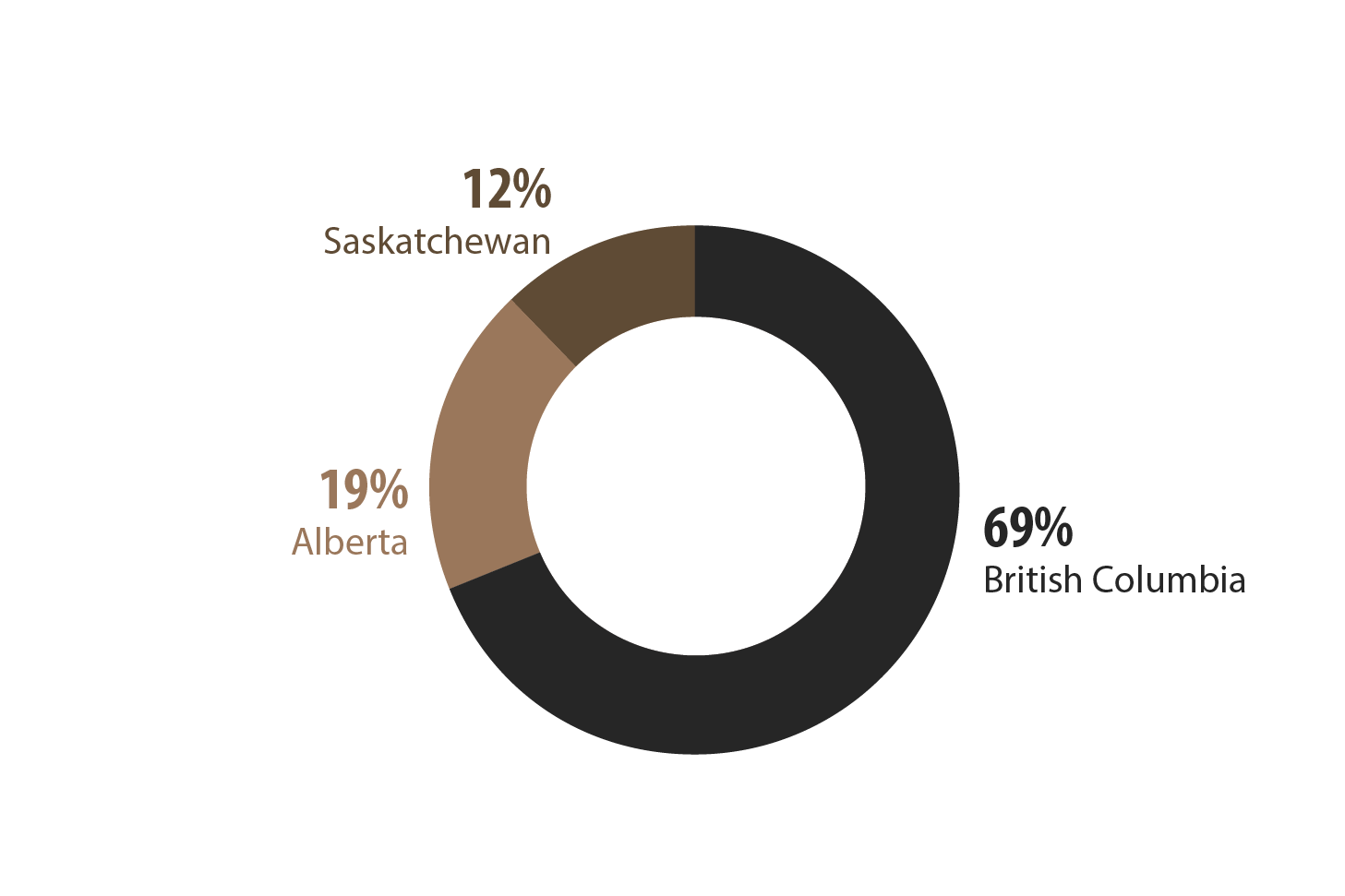
- British Columbia (69%) accounts for most of the coal tonnage mined in Canada, followed by Alberta (19%) and Saskatchewan (11%).
- The Government of Canada remains committed to phasing out unabated coal-fired electricity generation by 2030.
Learn more about coal
 International context
 Uses
Uses
Coal is used for generating electricity, manufacturing steel and cement, and for various industrial and residential applications.
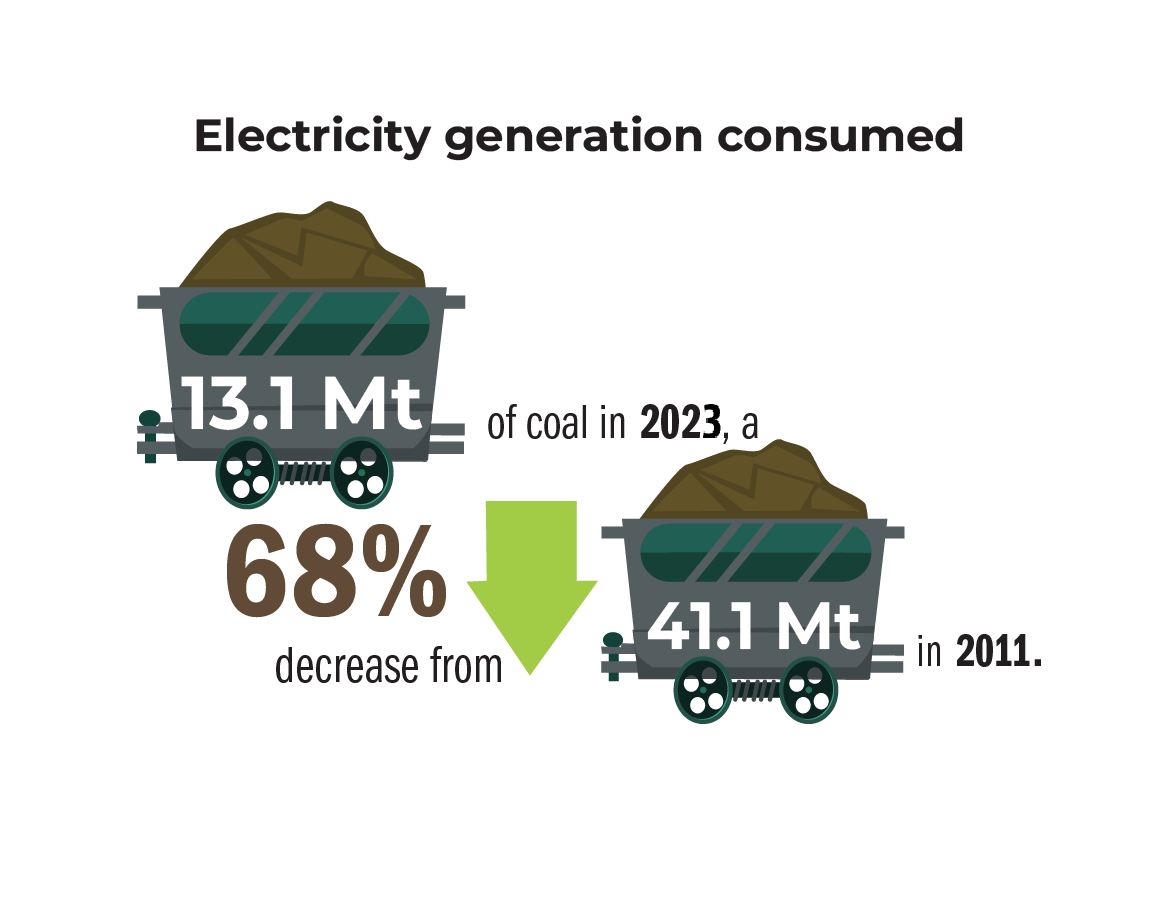
Coal supplies just over a third of global electricity generation. In Canada, 6% of the electricity was generated with coal in 2023, consuming 13.1 Mt of coal, which is down 68% from 41.1 Mt in 2011.
The Government of Canada has regulations in place that would effectively phase-out unabated coal-fired electricity generation by 2030.
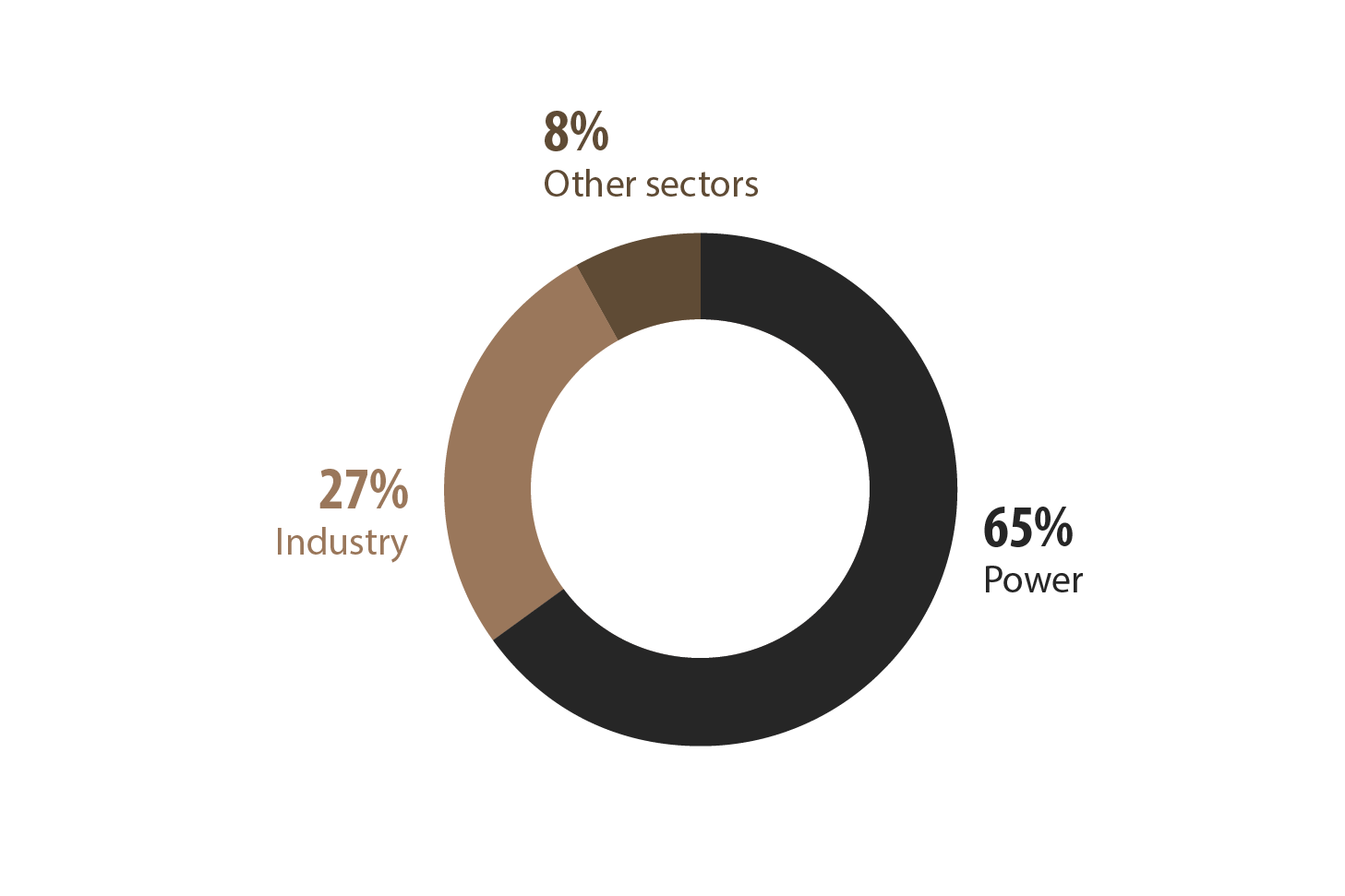
Global coal demand, by sector, 2023
Text version
This circular chart shows the major global sources of demand for coal in percentages in 2023. The largest share of coal was used in power (65%), followed by industry (27%) and other sectors (8%).
 Canadian production
Canada produced 42.6 Mt of coal in 2024, of which 67% was metallurgical coal used for manufacturing steel and 33% was thermal coal used for generating electricity.
Some power-generating companies not only use coal to generate electricity but they also own coal mines or are involved in coal production themselves. Other companies buy coal to generate electricity.
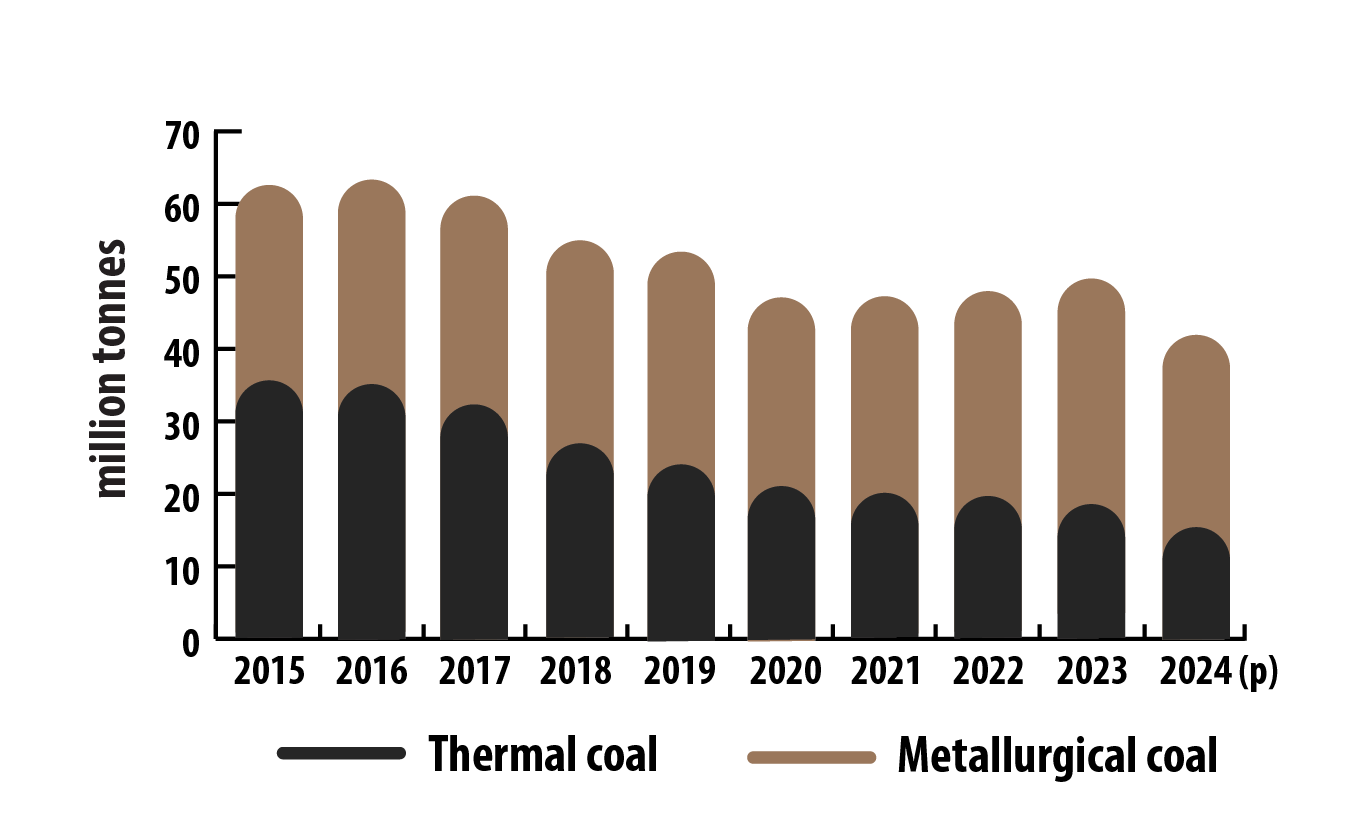
Canada’s coal production decreased by 31% over the past decade, with thermal coal accounting for three quarters of the decline.
Canadian coal production, 2015–2024 (p)
Text version
This bar chart shows Canada’s annual mine production of coal from 2015 to 2024. Production was 61.8 million tonnes in 2015, falling to a decade low of 45.9 million tonnes in 2020. It then rose slightly from 46.3 million tonnes in 2021 to 48.7 million tonnes in 2023, before declining to 42.6 million tonnes in 2024.
Thermal coal production was estimated to be 35.9 million tonnes in 2015 and decreased to a decade low of 14.1 million tonnes in 2024.
Metallurgical coal production was estimated to be 25.9 million tonnes in 2015 and decreased to a decade low of 25.2 million tonnes in 2020. From 2021 to 2024, metallurgical coal production increased from 26.2 million tonnes to 28.5 million tonnes.
Coal production by province, 2024
Text version
This circular chart shows coal production by province, with British Columbia accounting for 69%, Alberta 19% and Saskatchewan 12%.
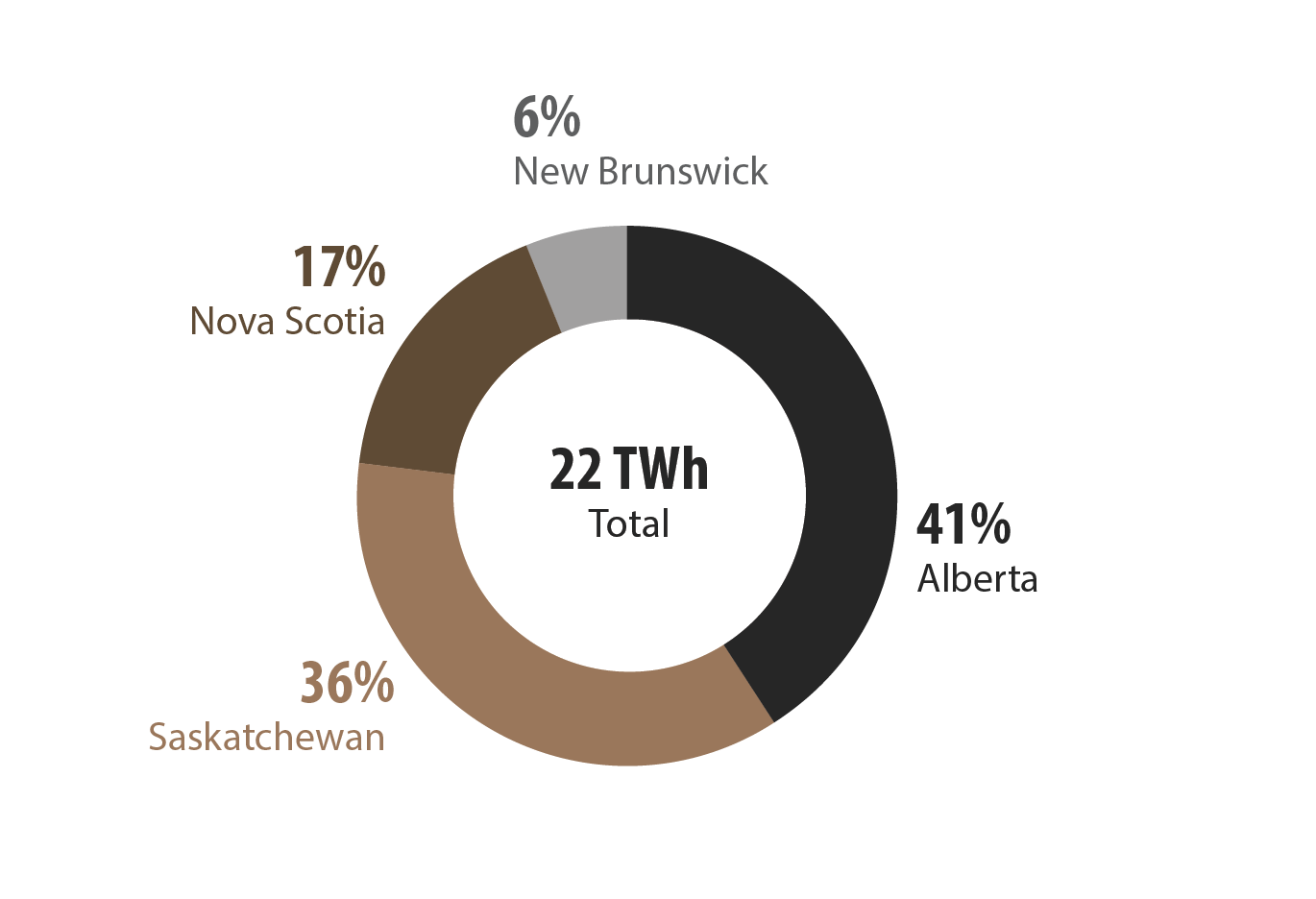
Electric power generation from coal, by province, 2023
Text version
This circular chart shows electric power generation from coal by province. Alberta and Saskatchewan consumed the most coal for generating electric power in Canada in 2023, with 41% and 36%, respectively. They are followed by Nova Scotia (17%) and New Brunswick (6%).
Coal used for electricity generation, 2023
Text version
Electricity generation consumed 13.1 Mt of coal in 2023, which is a 68% decrease from 41.1 Mt in 2011.
International context
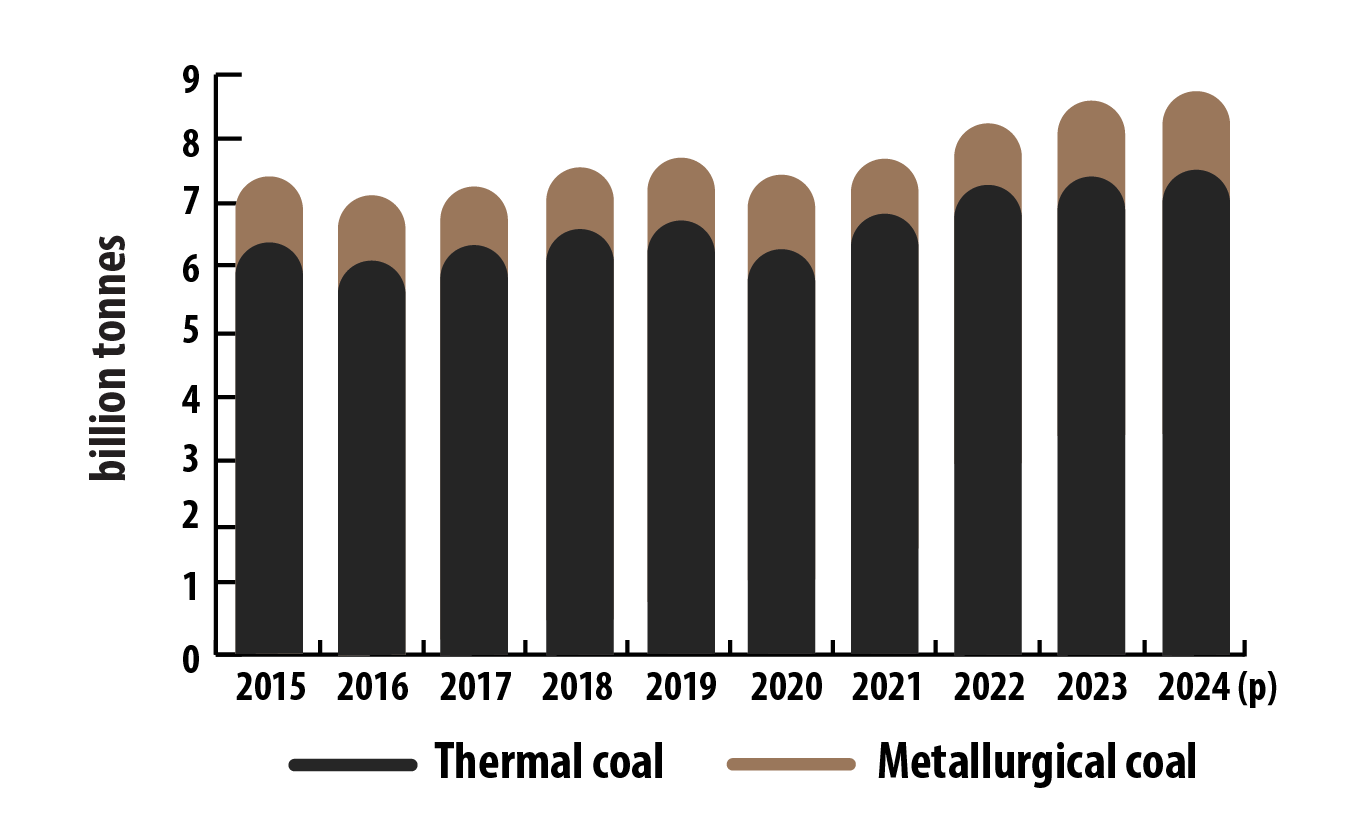
Global coal production was estimated to be 8.8 billion tonnes in 2024, up 1% compared to 2023. The top five producing countries (China, India, Indonesia, Australia and the United States) accounted for 82% of the world's coal production.
World coal production, 2015–2024 (p)
Text version
This bar chart shows the world’s annual coal production from 2015 to 2024. Total coal production was 7.4 billion tonnes in 2015 and gradually rose to 7.6 billion tonnes by 2019. It then decreased to 7.3 billion tonnes in 2020 before rebounding to 7.7 billion tonnes in 2021 and climbing steadily to 8.8 billion tonnes by 2024.
Thermal coal production was 6.4 billion tonnes in 2015, declining slightly to 6.3 billion tonnes in 2017. It rose to 6.6 billion tonnes in 2019 before falling back to 6.3 billion tonnes in 2020. Thermal coal increased after 2020, reaching 7.5 and 7.7 billion tonnes in 2023 and 2024, respectively.
In contrast, metallurgical coal production has remained stable at around 1 billion tonnes per year from 2015 to 2024.
See how Canada’s coal ranks on an international scale:
World production
| Rank | Country | Million tonnes | Percentage of total |
|---|---|---|---|
| 1 | China | 4,403 | 49.9% |
| 2 | India | 1,083 | 12.3% |
| 3 | Indonesia | 836 | 9.5% |
| 4 | Australia | 468 | 5.3% |
| 5 | United States | 461 | 5.2% |
| 14 | Canada | 43 | 0.5% |
| - | Other countries | 1,524 | 17.3% |
| - | Total | 8,821 | 100.0% |
| Rank | Country | Million tonnes | Percentage of total |
|---|---|---|---|
| 1 | China | 3,884 | 50.5% |
| 2 | India | 1,023 | 13.3% |
| 3 | Indonesia | 829 | 10.8% |
| 4 | United States | 394 | 5.1% |
| 5 | Australia | 336 | 4.4% |
| 19 | Canada | 14 | 0.2% |
| - | Other countries | 1,207 | 15.7% |
| - | Total | 7,687 | 100.0% |
| Rank | Country | Million tonnes | Percentage of total |
|---|---|---|---|
| 1 | China | 519 | 45.8% |
| 2 | Russia | 134 | 11.9% |
| 3 | Australia | 131 | 11.6% |
| 4 | Mongolia | 76 | 6.7% |
| 5 | United States | 67 | 5.9% |
| 6 | India | 60 | 5.3% |
| 7 | Vietnam | 45 | 4.0% |
| 8 | Canada | 29 | 2.5% |
| - | Other countries | 73 | 6.4% |
| - | Total | 1,134 | 100.0% |
World exports
| Rank | Country | Million tonnes | Percentage of total |
| 1 | Indonesia | 555 | 37.0% |
| 2 | Australia | 356 | 23.7% |
| 3 | Russia | 182 | 12.1% |
| 4 | United States | 98 | 6.5% |
| 5 | South Africa | 70 | 4.7% |
| 6 | Canada | 36 | 2.4% |
| - | Other countries | 204 | 13.6% |
| - | Total | 1,500 | 100.0% |
| Rank | Country | Million tonnes | Percentage of total |
|---|---|---|---|
| 1 | Australia | 151 | 41.5% |
| 2 | Russia | 56 | 15.4% |
| 3 | United States | 52 | 14.4% |
| 4 | Mongolia | 48 | 13.3% |
| 5 | Canada | 29 | 7.9% |
| - | Other countries | 27 | 7.5% |
| - | Total | 363 | 100.0% |
| Rank | Country | Million tonnes | Percentage of total |
|---|---|---|---|
| 1 | Indonesia | 549 | 48.3% |
| 2 | Australia | 205 | 18.0% |
| 3 | Russia | 126 | 11.1% |
| 4 | South Africa | 68 | 6.0% |
| 5 | Colombia | 59 | 5.2% |
| 10 | Canada | 7 | 0.6% |
| - | Other countries | 123 | 10.9% |
| - | Total | 1,137 | 100.0% |
World imports
| Rank | Country | Million tonnes | Percentage of total |
|---|---|---|---|
| 1 | China | 543 | 35.2% |
| 2 | India | 233 | 15.1% |
| 3 | Japan | 161 | 10.5% |
| 4 | South Korea | 116 | 7.5% |
| 5 | Vietnam | 57 | 3.7% |
| - | Other countries | 433 | 28.1% |
| - | Total | 1,543 | 100.0% |
| Rank | Country | Million tonnes | Percentage of total |
|---|---|---|---|
| 1 | China | 406 | 34.6% |
| 2 | India | 178 | 15.1% |
| 3 | Japan | 120 | 10.2% |
| 4 | South Korea | 86 | 7.3% |
| 5 | Taiwan | 51 | 4.3% |
| - | Other countries | 334 | 28.4% |
| - | Total | 1,175 | 100.0% |
| Rank | Country | Million tonnes | Percentage of total |
|---|---|---|---|
| 1 | China | 137 | 37.1% |
| 2 | India | 55 | 14.9% |
| 3 | Japan | 42 | 11.3% |
| 4 | South Korea | 30 | 8.1% |
| 5 | Vietnam | 19 | 5.3% |
| - | Other countries | 86 | 23.4% |
| - | Total | 369 | 100.0% |
World proven reserves
| Rank | Country | Million tonnes | Percentage of total |
|---|---|---|---|
| 1 | United States | 248,941 | 23.2% |
| 2 | Russia | 162,166 | 15.1% |
| 3 | Australia | 150,227 | 14.0% |
| 4 | China | 143,197 | 13.3% |
| 5 | India | 111,052 | 10.3% |
| 16 | Canada | 6,582 | 0.6% |
| - | Other countries | 251,943 | 23.5% |
| - | Total | 1,074,108 | 100.0% |
 Trade
Trade
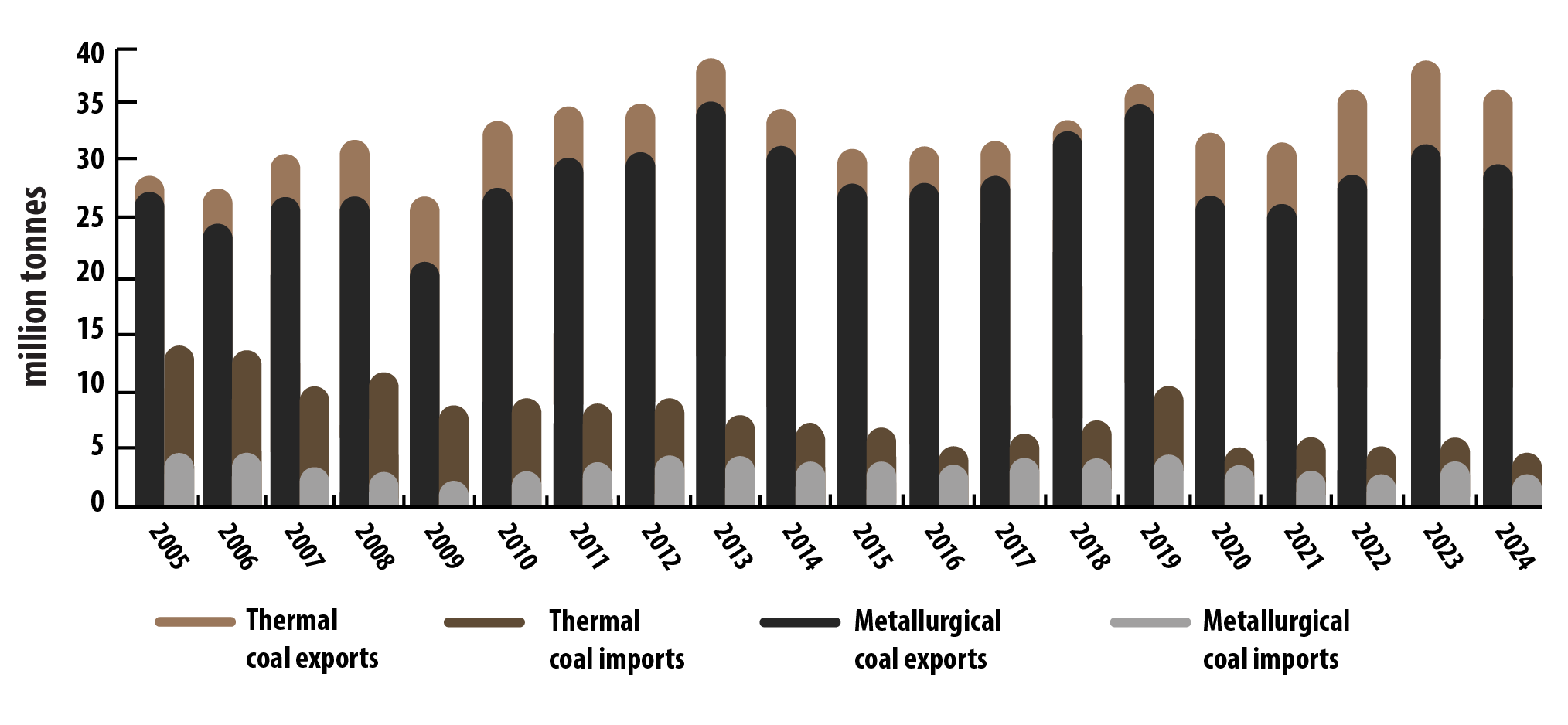
Canada's imports of coal have decreased for over a decade, while exports have fluctuated. Canada exported nearly two thirds of its production on average over the past 10 years. Most of Canada's coal exports go to Asia.
Canadian coal trade, 2005–2024
Text version
From 2005 to 2013, Canada’s coal exports rose from 28 million tonnes to 39 million tonnes before stabilizing at around 30 million tonnes between 2015 and 2017. Exports increased to 37 million tonnes in 2019, fell to 32 million tonnes in 2021, and recovered to 36 million tonnes in 2024. Over the same period, coal imports declined from 13 million tonnes to 5 million tonnes.
Metallurgical coal exports dropped from 27 million tonnes in 2005 to a low of 21 million tonnes in 2009, then rebounded to 35 million tonnes by 2013. After falling to 28 million tonnes in 2016, they rose to 35 million tonnes in 2019 before declining to 26 million tonnes in 2021. By 2024, exports recovered to 29 million tonnes.
Thermal coal exports grew from 1.5 million tonnes in 2005 to 6 million tonnes in 2009, held steady until 2011, then fell to just 1 million tonnes by 2018. From 2019 to 2024, they rebounded sharply, reaching 6.9 million tonnes in 2024.
Metallurgical coal imports remained stable from 2005 to 2024, averaging 3.6 million tonnes annually. Thermal coal imports, by contrast, fell from 9 million tonnes in 2005 to 2 million tonnes in 2024.
In 2024, Canada exported 36 million tonnes of coal globally while importing 5 million tonnes, mostly from the United States. Exports to the United States accounted for 3% of Canada’s total coal exports, while Canada represented 40% of total United States coal imports. Metallurgical coal made up 88% of Canada’s coal exports.
Canadian exports and imports of coal, 2024
Text version
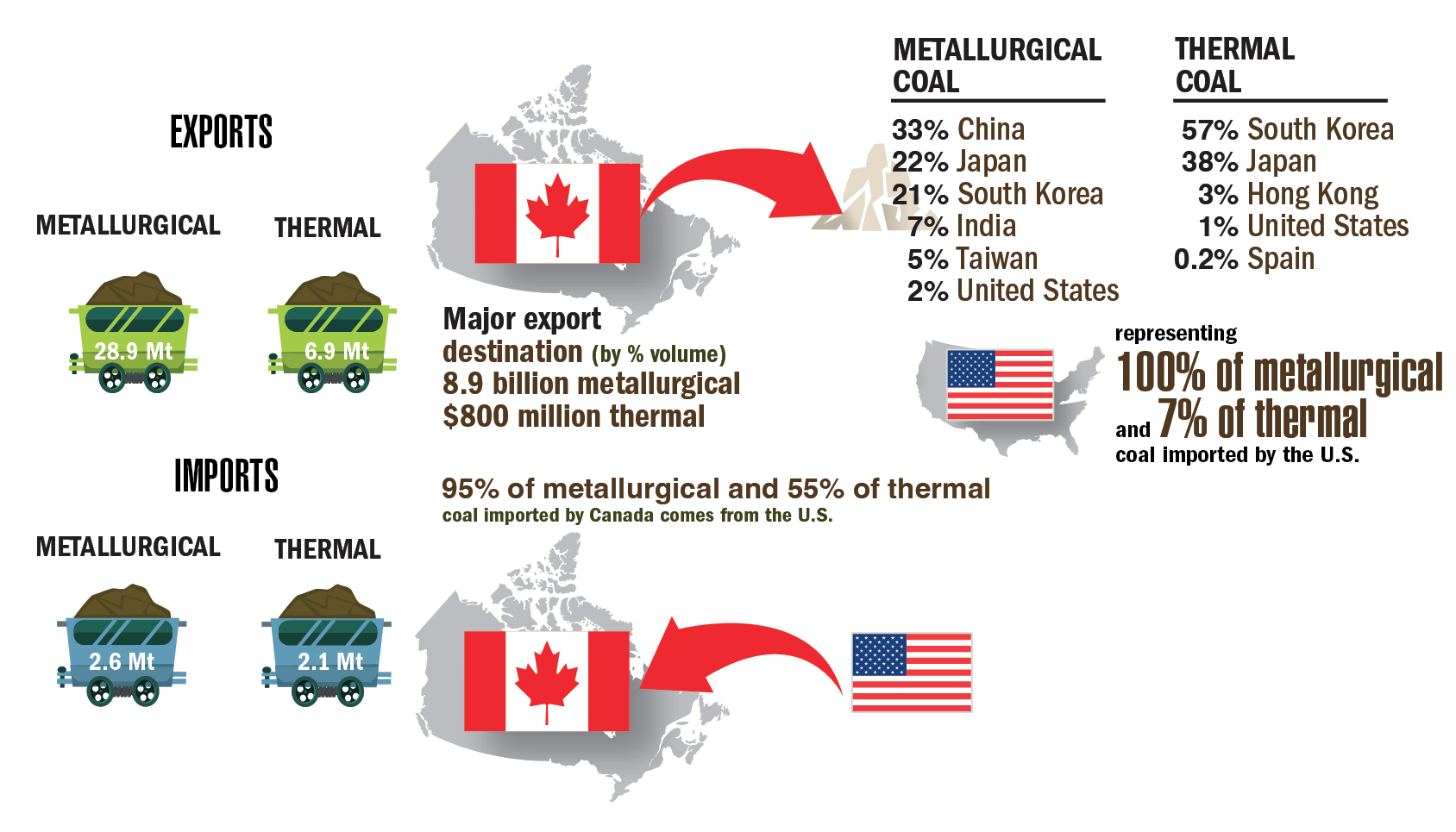
In 2024, Canadian metallurgical and thermal coal exports were valued at $8.9 billion and $800 million, respectively. The major destinations for metallurgical coal exports were China (33%), Japan (22%) and South Korea (21%).
About 2% of Canada's exports of metallurgical coal are to the United States, and Canada is the sole source for that type of coal. In contrast, 1% of Canada’s exports of thermal coal are to the United States, but that is only 7% of the amount that the United States imports.
Canadian metallurgical and thermal coal imports, 95% and 55%, respectively, come from the United States. More than half of this imported coal is used for manufacturing steel, the rest is for generating electricity.
 Prices
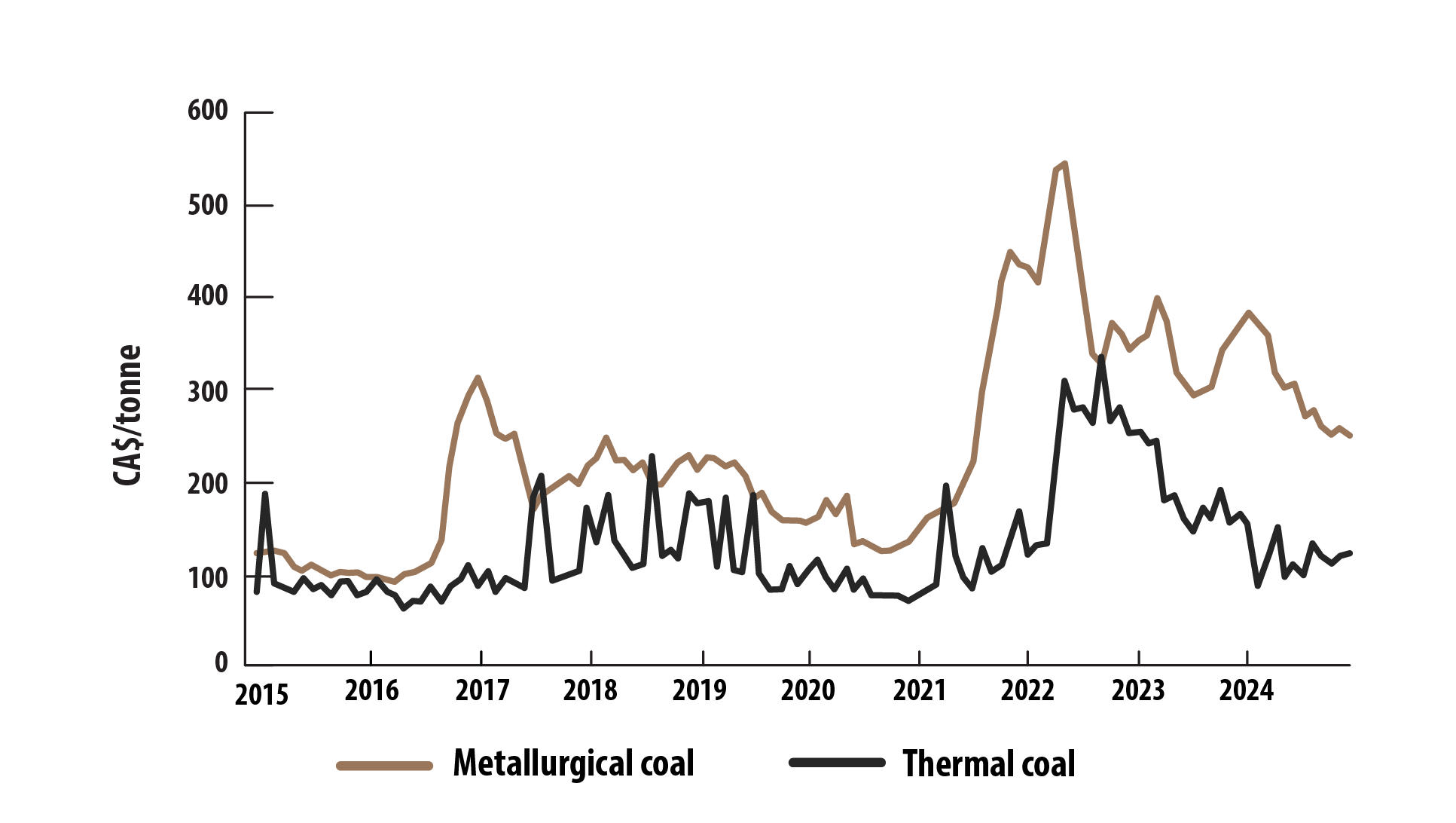
In mid-2022, the price of Canada’s metallurgical coal exports surged to $554 per tonne, the highest level in a decade. Although prices have since decreased, they remain historically elevated. Thermal coal export prices followed a similar pattern.
Coal and other energy commodity markets were heavily disrupted during this period by the Russian invasion of Ukraine. By 2023, trade flows had largely realigned, which led thermal coal prices to decline steadily.
In 2024 and 2025, thermal coal prices continued to decrease as demand softened and natural gas and renewables regained market share. Meanwhile, metallurgical coal prices held steady, near $250 per tonne, supported by strong Indian steel demand and reduced Australian supply.
Prices of exported Canadian coal, 2015–2024
Text version
This graph shows the monthly prices of Canadian coal exports from 2015 to 2024, in Canadian dollars per tonne. In 2015, both thermal and metallurgical coal were priced near $100 per tonne. Thermal coal prices fluctuated slightly in the following years before climbing steadily through 2022, then declining in late 2022 and early 2023 to near $125 per tonne. Metallurgical coal prices, in contrast, rose sharply in mid-2016, stabilized near $200 per tonne, and surged again in 2021 and 2022 before settling near $250 per tonne.
Find out more about minerals and metals facts
Notes and sources
Numbers may not add to totals because of rounding.
(p) preliminary
For Canadian coal prices, anthracite is not included.
For Canadian domestic exports and imports, anthracite is included as thermal.
Coal reserves data are for 2020 because that’s the latest data available.
Uses
- Global coal demand, by sector, 2023
- Electric power generation from coal, 2023
- Statistics Canada tables 25-10-0017-01 and 25-10-0084-01
Canadian production
- Canadian coal production, 2015–2024 (p)
- Statistics Canada tables 25-10-0030-01 and 25-10-0046-01
- Natural Resources Canada
- Coal production, by province, 2024
- Statistics Canada Table 25-10-0030-01
- Natural Resources Canada and provincial reports
- Electric power generation from coal, by province, 2023
- Statistics Canada Table 25-10-0084-01
- Coal used for electricity generation, 2023
- Statistics Canada Table 25-10-0017-01
International context
- World coal production, 2015–2024 (p)
- [tbd]
- World production
- Statistics Canada Table 25-10-0030-01
- World exports
- World imports
- World proven reserves
Trade
- Canadian coal trade, 2005–2024
- Canadian exports and imports of coal, 2024
- United States imports
Prices
- Prices of exported Canadian coal, 2015–2024