
Details
- Author(s)
Natural Resources Canada - ISBN
978-0-660-79853-0 - Catalogue number
M34-44/2025E-PDF
Message From the Director General
I am pleased to present the CanmetMINING Integrated Business Plan to 2027. This plan represents a blueprint for transformation and provides the overall vision, strategic priorities and objectives of CanmetMINING. Designed to better position CanmetMINING to address the evolving needs and challenges associated with mineral resource development in Canada, the plan includes:
- Mandate, mission and vision
- Strategic operating context
- Current 5-year research plan
- Current operating environment and related plans for the future
The plan also describes a vision for the future for a renewed CanmetMINING taking into consideration the need for new programming, facilities, and skills to address the needs related to Canadian mineral resource development.
The Canadian minerals and metals industry continues to evolve, and Canada must compete globally for the financial and human resources needed to ensure that Canadians continue to benefit from their mineral resource endowment. New clean technologies, advances in digital technologies, artificial intelligence, robotics, battery- electric vehicles and alternative energy all represent an opportunity and a challenge for the industry of the future. The industry must adapt, and CanmetMINING, as the premier national research and development institution for mining in Canada, must adapt as well.
CanmetMINING continues to pursue its research priorities and provide specialized services to meet the current and future needs of Canadians. Green Mining Innovation represents the overarching theme behind our three research priorities and will continue to guide us moving forward. Working in collaboration with other institutions, CanmetMINING will continue to advance its strategic scientific research agenda and is well positioned to take advantage of the new frontiers in mineral resource development.
I am confident that CanmetMINING will rise to the challenge, building on over 115 years of excellence in mining science and technology development in Canada.
Magdi Habib, Ph.D.
Director General,
CanmetMINING
Executive Summary
The CanmetMINING branch of Natural Resources Canada (NRCan) developed this five-year integrated business plan to guide its research, development and innovation (R&D&I) over the next five years (2022–2027) and to explain the outcomes of this work in the context of departmental priorities, industry needs, and the financial and human resource capacity of the branch.
Under the banner of Green Mining Innovation (GMI), CanmetMINING is focusing its research in areas to reduce environmental impacts and to improve the economic competitiveness of mining in Canada. The Government of Canada is working to ensure that the Canadian resource sector remains a source of jobs, prosperity and opportunity within a context of a world that increasingly values sustainable practices and low-carbon processes. In 2022, the Government of Canada released its Critical Minerals Strategy with a vision to increase the supply of responsibly sourced critical minerals and support the development of domestic and global value chains for the green and digital economy. The CanmetMINING research agenda is closely aligned with these government priorities and reflects the policy drivers of the Government of Canada with respect to the Canadian Minerals and Metals Plan, the Critical Minerals Strategy, the Hydrogen Strategy, and the National Adaptation Strategy on climate change.
CanmetMINING identified three priorities for its research plan, based on engagement with its stakeholders on key industry issues and its own knowledge and expertise:
- Critical minerals research and development
- Efficient mining practices
- Climate-resilient mining research and development
The research activities related to these priorities will address the Government of Canada’s agenda, including action on climate change, investing in clean technologies and enhancing watershed protection, while also increasing the competitiveness of mine operations.
Through the GMI program, CanmetMINING will continue to work with stakeholders to develop and deploy green technologies that will increase energy efficiency, reduce greenhouse gas (GHG) emissions, minimize wastes and increase productivity. The GMI also equips Canada to manage ecosystem risks and to craft and implement sound, science-based regulations and provides the mining industry with a range of specialized services, such as certified reference materials, diesel engine certification, and geodynamics to support underground excavations.
CanmetMINING will receive about $132 million in direct funding over this five-year plan. In addition to the research priorities, the plan recognizes the need to invest in research enablers, including both capital equipment and infrastructure, as well as the human capital required to deliver quality research to Canadians. New skills and equipment will be required to keep pace with changing requirements for the mines of the future. The plan recognizes the needs for new approaches to research and new collaborative partnerships to address the emerging trends for the mine of the future that will incorporate more information technologies, big data analytics, and robotics to improve efficiencies, reduce waste and enhance overall competitiveness of the industry. CanmetMINING is transforming its operating environment to better address these challenges and deliver new approaches, green technologies, and scientific information for decision-making.
The Present: CanmetMINING Strategic Overview
In this section
- Strategic Context
- Alignment With Government Priorities & Global Competitiveness
- Innovation Imperative
- Enhanced Collaboration
- Science-policy Integration
- Operating Environment and Demographics
Strategic Context
Current challenges and opportunities
Alignment With Government Priorities
Unlocking the mineral resource potential to ensure that mining is a source of jobs, prosperity and opportunity without creating environmental liabilities
Innovation Imperative
Adoption of new clean technologies and best practices to transform resources into useful products for society
Global Competitiveness
Improving the productivity of the Canadian mineral resource sector, lowering costs and attracting investment
Enhanced Collaboration
Promote collaboration to reduce duplication of effort, leverage both human and financial resources, and accelerate technology adoption
Science-policy Integration
Strengthen the integration of science and policy to better understand and address emerging and increasingly complex issues
Operating Environment and Demographics
Renewal of infrastructure and equipment, changing internal demographics and recognizing the need for new skills to address the technology challenges of the future
CanmetMINING approach to support the mine of the future
CanmetMINING has the mandate to work collaboratively with mining stakeholders and other industries to de-risk and optimize technologies and generate science-based knowledge to increase adoption of green mining technologies and to inform regulations for sound decision-making.
CanmetMINING uses the brand “Green Mining Innovation” to communicate about the following work.
Vision
Mineral resource development in Canada will be zero- carbon footprint, economically competitive, environmentally and socially responsible, and contribute to the prosperity of Canadians for generations to come
Mission
To drive Green Mining Innovation and application of digital technologies to generate economic and environmental benefits for the mining industry
Alignment With Government Priorities and Global Competitiveness
Unlocking Canada’s mineral resource potential to ensure that mining is a source of jobs, prosperity and opportunity without creating environmental liabilities is a key priority of the Green Mining Innovation program agenda. This integrated business plan is designed to ensure that the ongoing activities of CanmetMINING will address the Government of Canada’s agenda, including research and innovation to build a competitive critical minerals value chain in Canada, taking action to address climate change, investing in clean technologies and enhancing watershed protection, while at the same time increasing the competitiveness of mining operations.
Minerals and metals are essential for modern society, but access to the raw material inputs for the products we use every day has become more challenging over the years as high-grade and readily accessible resources become more difficult to locate and extract. Canada has considerable resource potential thanks to an abundance and wide variety of favourable geology. This endowment of minerals and metals provides Canada with significant opportunities to supply both domestic and international demand for a wide range of mineral and metal commodities. Canada has the knowledge and expertise to develop these resources and to play a leadership role in the development of tomorrow’s global mineral industry. Canada’s economy derives significant benefits from the development of its mineral resources.
For Canada to remain at the forefront of mining and maintain its leadership position globally, the Canadian mining industry will need to adopt new technologies to meet the challenges of accessing, extracting and transforming Canada’s mineral resource potential into useful products in a cost-effective and environmentally friendly manner. Investments into new technologies and innovative solutions are needed to reduce costs and to help to reduce the risks to human health and to the environment associated with mineral resource development.
In 2023
711,000
Canadians were employed both directly and indirectly by the minerals and metals sector.
Over 60 minerals commodities were produced, worth over $72 billion
Over $150 billion
of domestic exports of mineral and metal products were produced
Innovation Imperative
The global economy is moving toward a greener future, and Canada is working to keep pace. NRCan aims to increase the creation and adoption of clean technologies in key sectors of the Canadian economy, including mining. The Government of Canada is working to ensure that the Canadian resource sector remains a source of jobs, prosperity and opportunity within a context of a world that increasingly values sustainable practices and low-carbon processes.
In 2022, the Government of Canada released its Critical Minerals Strategy with a vision to increase the supply of responsibly sourced critical minerals and support the development of domestic and global value chains for the green and digital economy.
The Critical Minerals Strategy addresses five core objectives.
- Supporting economic growth, competitiveness and job creation
- Promoting climate action and environmental protection
- Advancing reconciliation with Indigenous Peoples
- Fostering diverse and inclusive workforces and communities
- Enhancing global security and partnerships with allies
These objectives will be achieved by focusing on six areas of focus:
- driving research, innovation, and exploration;
- accelerating project development;
- building sustainable infrastructure;
- advancing reconciliation with Indigenous Peoples;
- growing a diverse workforce and prosperous communities; and
- strengthening global leadership and security.
Did you know that Canada updated its critical minerals list in 2024 to include 3 additional minerals – high-purity iron ore, phosphorus and silicon metal - to bring the total to 34? Together the critical minerals list comprises the essential building blocks for the green and digital economy of the future.
Current CanmetMINING research priorities, developed in partnership with a wide range of stakeholders, align well with the Government of Canada’s overall innovation agenda for the future of resource development and the critical minerals agenda. Moving forward, CanmetMINING will continue to innovate and respond to the challenges of mineral resource development in Canada.
Budget commitments from 2021 and 2022 cover different aspects of the critical minerals value chain, from exploration to processing and refining, to more advanced products.
Research and development commitments include
For targeted upstream critical mineral R&D through Canada’s research
For critical mineral research and development and the deployment of technologies and materials to support critical mineral development for upstream and midstream segments of the value chain
Did you know that CanmetMINING has offices and laboratories located across Canada? Headquartered in Ottawa, the branch has laboratories in Ottawa and Sudbury, Ontario, as well as Val-d’Or, Quebec.
Positioning for the Future
New and emerging technologies are changing the way mining operates. Digitalization and advanced automation, artificial intelligence and new tools and techniques from innovation in genomics all have the potential to disrupt the way mining currently operates in Canada. CanmetMINING is transforming the way it operates to keep pace with these changes and to be in a position to support the application of new technologies and best practices in the future. In 2023, CanmetMINING implemented a new structure to align with the vision and mandate of the branch, balance workload distribution, create an organizational structure independent of funding programs and to foster collaboration across divisions.
Did you know that the acronym CANMET was first introduced in 1975 for the Canada Centre for Mineral and Energy Technology to reflect the increasing importance of technology to the mandate of the original Mines Branch that was launched in 1907?
Enhanced Collaboration
By working in partnership and by maintaining an ongoing dialogue with others, CanmetMINING ensures an integrated approach to innovation that addresses both the competitiveness and environmental performance of the industry. Such an approach to innovation allows CanmetMINING to:
- Enhance and accelerate R&D and the adoption of green mining technologies and practices
- Provide science to policymakers and regulators
- Align research objectives with industry, innovation-driven organizations and academia through formal and informal agreements, advisory committees, technical committees, and working groups, etc.
- Work with the provinces and territories through intergovernmental working groups to develop sound science for policy
- Engage with other institutions globally to seek innovations that can be applied in Canada and to promote Canadian innovation abroad
-
Planning workshops
- External process
- Insights
-
Committee meetings
- Reports
-
Work plans
- Expert advice
- Feedback
-
Meeting and reporting results
CanmetMINING has created and participated in a number of mechanisms and platforms to guide its work and to report on outcomes:
- Green Mining Innovation Advisory Committee (GMIAC)
- Green Mining Innovation Intergovernmental Working Group (GMI-IGWG)
- Steering and technical committees at the program and project levels
- Participation on advisory boards and committees
- Organization of technical workshops and national conferences
This approach to foster innovation allows CanmetMINING to:
- Enhance and accelerate R&D and the adoption of green mining technologies and practices
- Align research objectives with industry, innovation-driven organizations and academia through formal and informal agreements, advisory committees, technical committees, and working groups
- Work with provinces and territories through intergovernmental working groups (GMI-IGWG) to develop sound science for policy
- Engage with institutions globally to seek innovations that can be applied in Canada and to promote Canadian innovation abroad (Global Partnerships Initiative).
Science-policy Integration
CanmetMINING science and innovation activities are aligned with Canadian priorities and government policies.
The Canadian Minerals and Metals Plan
Natural Resources Canada launched the Canadian Minerals and Metals Plan (CMMP) in 2019 in collaboration with provinces and territories to solidify Canada’s position as a global mining leader and to lay the foundation for lasting success at home and abroad. The plan will include a series of specific and coordinated actions in six key areas: economic development and competitiveness, advancing the participation of Indigenous Peoples, the environment, science, technology and innovation, communities and global leadership.
The research agenda of CanmetMINING moving forward will be informed by the CMMP and will work to address key milestones identified in the plan:
- By 2020: A Pan-Canadian Mining Value From Waste research program established
- Increased adoption of best available technologies to demonstrate environmental leadership by 2025
- A Pan-Canadian data strategy that reflects transformative technologies by 2022
- De-risking new technologies, adapting to meet new frontiers and new technology challenges
Departmental Priorities
CanmetMINING research aligns with the Natural Resources Canada departmental priorities in three core areas of responsibility.
Natural Resource Science and Risk Mitigation
- Increase climate change resiliency in natural resources sectors and the communities that depend on them.
- Support the implementation of the National Adaptation Strategy
Innovative and Sustainable Resource Development
- Advance the commercial readiness of emerging mineral processing operations and technologies
- Advance hydrogen in mining operations
- Develop critical minerals processing
- Develop scientific information to support decision-making
Globally Competitive Natural Resources Sectors
- Position Canada as supplier of choice for critical minerals/materials and improve supply chain resilience
- Lead and implement the Canadian Critical Minerals Strategy
- Lead and implement the Canadian Minerals and Metals Plan
Operating Environment and Demographics
Infrastructure
Unique and specialized facilities and pieces of equipment, including:
- State-of-the-art laboratories to determine rock properties for geo-mechanics and rock mass characterization
- Production of certified reference materials for mineral analysis
- Dynamometer-equipped, staffed and accredited to perform specialized testing services and certification of diesel engines
- Facilities for radioactive waste stabilization
- Mineral liberation analyzer, electron probe analyzer, X-ray microscope and microtomography instrument and reducing atmosphere continuous furnace
6 Research laboratories and offices in Ottawa, Sudbury and Val-d’Or
New infrastructure to address challenges that Canadians are facing today
Several CanmetMINING buildings are antiquated and do not meet today’s basic standards. The Federal Science and Technology Infrastructure Initiative announced in 2018 will provide modernized labs and equipment and create new synergies with other departments through the sharing of new common spaces to enhance research on critical issues. The TerraCanada hub will energize collaboration by establishing a multi-partner network with facilities in the National Capital Area and in five other regions across the country.
Financial assets
Financial Effort over five Years
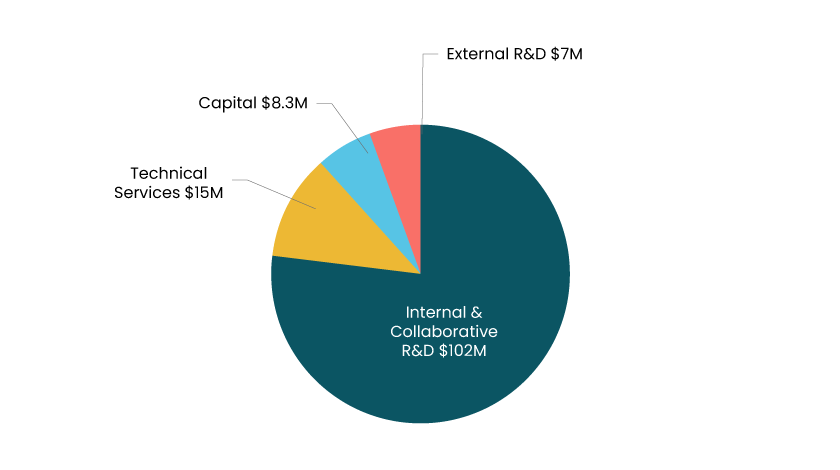
Text description
| Budget Area | Budget ($M) |
|---|---|
| Internal & Collaborative R&D | 102 |
| Technical Services | 15 |
| Capital | 8.3 |
| External R&D | 7 |
Budget/Revenues By Categories 2022-2027
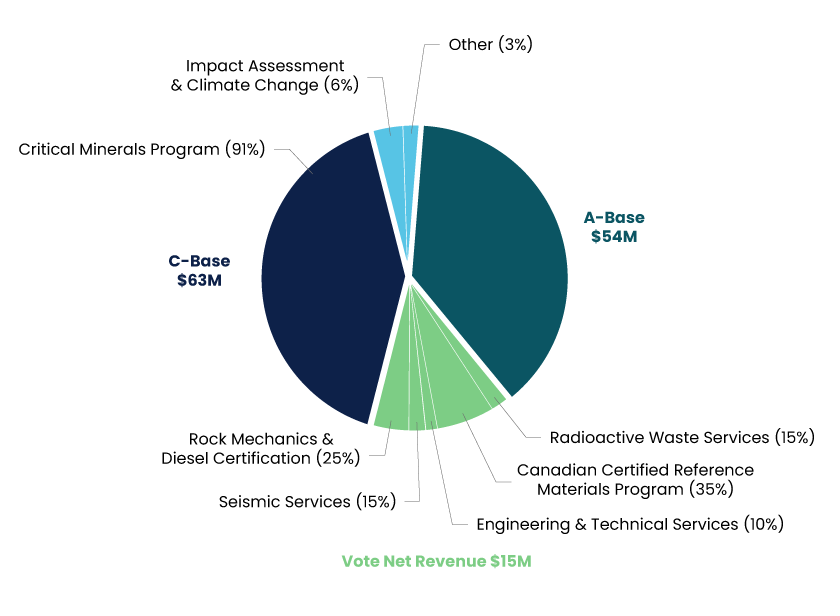
Text description
| Program | Budget/Revenues By Categories 2022-2027 |
|---|---|
| A-Base | $54M |
| Vote Net Revenue | $15M |
| Radioactive Waste Services | 15% |
| Canadian Certified Reference Materials Program | 35% |
| Engineering & Technical Services | 10% |
| Seismic Services | 15% |
| Rock Mechanics & Diesel Certification | 25% |
| C Base | $63M |
| Critical Minerals Program | 91% |
| Impact Assessment & Climte Change | 6% |
| Other | 3% |
Demographics
CanmetMINING has a highly skilled workforce with specialized expertise that allows it to deliver on its R&D plan. Science and technical skills represent almost 80% of the population, with 20% consisting of overhead (management, administration, information technology, etc.).
Age Profile in S&T Divisions
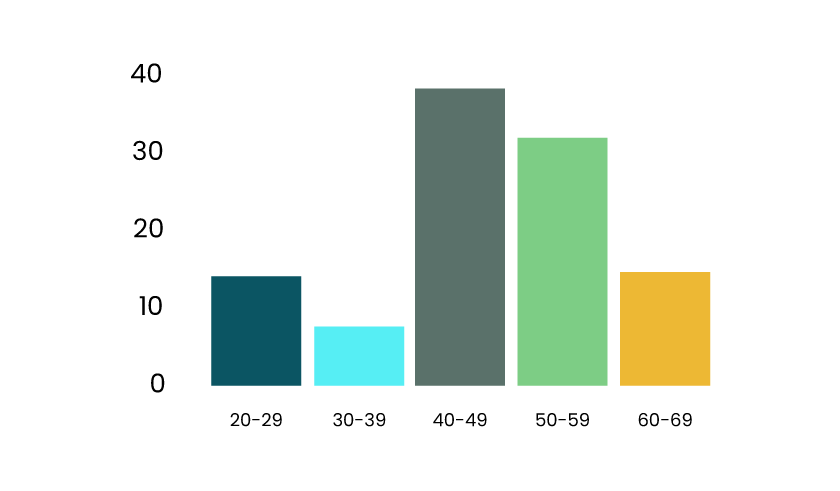
Text description
| Age range | Number of Employees |
|---|---|
| 20-29 | 15 |
| 30-39 | 8 |
| 40-49 | 38 |
| 50-59 | 30 |
| 60-69 | 15 |
Declaration by First Official Language
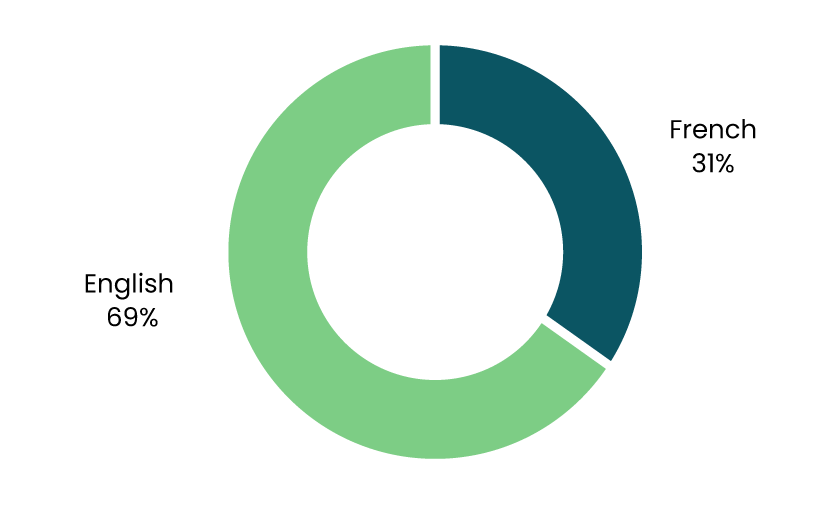
Text description
Demographic analysis projects that 20% of indeterminate employees will be eligible for retirement within the next four years, with the highest number of retirees being concentrated in the technical expertise group (70%).
Projected retirement
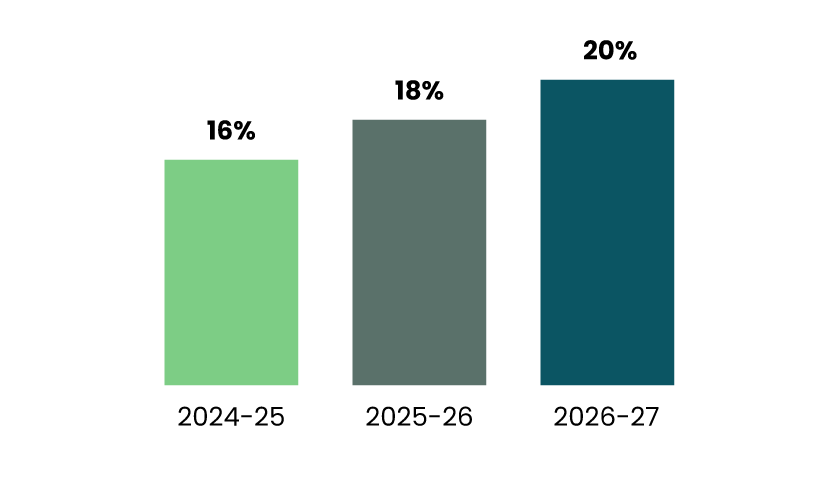
Text description
| Fiscal year | Employees retired (%) |
|---|---|
| 2024-2025 | 16 |
| 2025-2026 | 18 |
| 2026-2027 | 20 |
Demographic of retirees
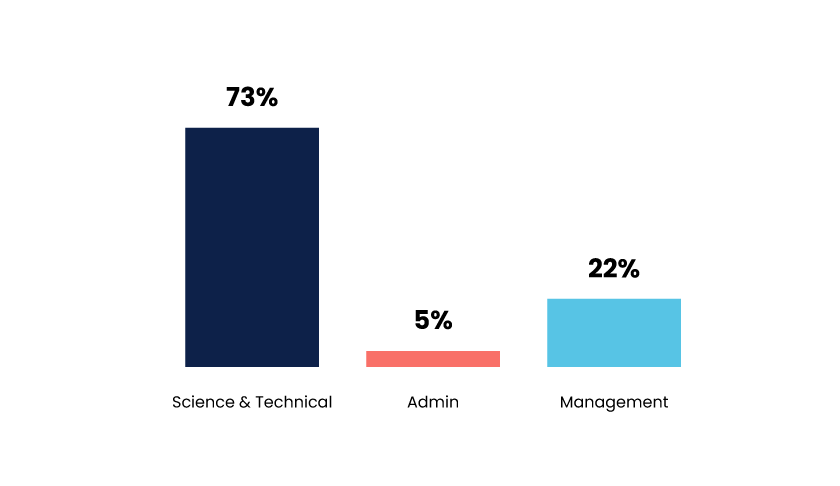
Text description
| Role | Retired employees (%) |
|---|---|
| Science & Technical | 73 |
| Admin | 5 |
| Management | 22 |
Skills and training
Shift to transformative technologies related to digitalization, artificial intelligence applications, deep mining and critical metals
67 key positions identified to build and maintain core competencies
Skills gaps identified for the coming 5 years
- Skills for key senior management positions and data analysts
- Expertise in metallurgy and mineral processing
- Expertise on specific elements of critical Minerals and alternative sources of energy
Science and technical skills by classification
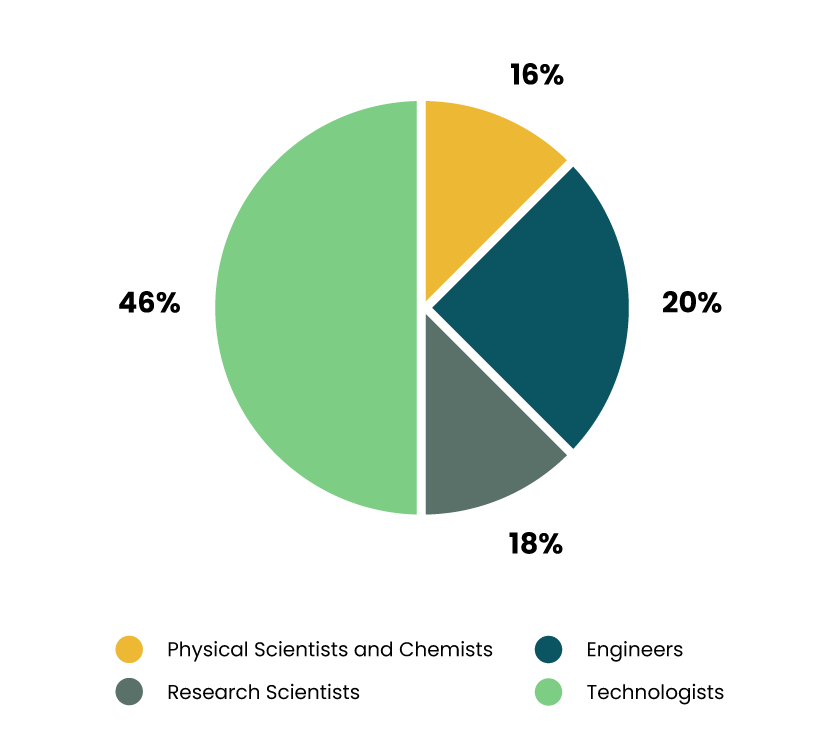
Text description
| Work classification | Employees (%) |
|---|---|
| Physical scientists and chemists | 16 |
| Engineers | 20 |
| Research Scientists | 18 |
| Technologists | 46 |
CanmetMINING IM/IT strategy
CanmetMINING will need to improve its data management to help its employees efficiently retrieve and store information and enable the effective utilization of data to create digital platforms that drive innovation in the mining industry. The branch must expand the capacity of the IM/IT team by hiring data scientists to work with science projects on standardizing their data structure, storage and developing digital platforms.
The branch also needs a strong and flexible IT infrastructure to enhance and facilitate collaborations with stakeholders and to address the needs for digital and green mining technologies research and development.
The CanmetMINING IM/IT Strategy employs the following principles.
- Data Management and analysis
To reduce time spent in storing, retrieving and analyzing data, CanmetMINING must support a data management structure that can generate, analyze and collect a large volume of data and provide accessible short- and long-term data storage. - Powerful Network Infrastructure
CanmetMINING will require access to a powerful network with a high- speed bandwidth to facilitate diverse and dynamic collaborations with governments, academia, industry, and national and international organizations, within the framework of the policy on government security. - Adaptable Processing Capacity
The CanmetMINING IM/IT strategy will be adaptable for scaling up and surge capacity to respond to the evolving and critical needs in hardware, software and IT support services required by its scientists.
Capital and equipment
CanmetMINING hosts high-end experimental facilities critical to the delivery of the R&D plan and is continuously acquiring new equipment to keep its laboratories at the leading edge of mining innovation. These include:
- high-temperature capabilities reaching up to 1,800°C in air and measurable controlled atmospheres for pyrometallurgical applications, crystal growth, and glass melting in order to simulate and monitor novel extraction routes (r.c. $1.5 million)
- a state-of-the-art 3D X-ray microscope and microtomography instrument that provides non-destructive imaging and visualization of interiors of minerals and materials to define the optimum extractive methods of critical minerals from ores (r.c. $2 million)
The acquisition of the CanmetMINING current capital equipment is estimated at $22 million, of which more than 70% have reached a depreciated value of zero (2015 and older). In addition to investments required to maintain current capacity, CanmetMINING is currently involved through Labs Canada in a whole-of-government approach to sharing, managing, and procuring scientific equipment to provide scientists the tools they need to support collaboration and evidence-based decision making.
CanmetMINING Research Priorities and Specialized Services
In this section
- Research Priorities and Specialized Services
- Critical Minerals Research and Development Priority
- Efficient Mining Practices Priority
- Climate-resilient Mining Priority
Research Priorities and Specialized Services
The CanmetMINING five-year research and development plan addresses mining sector challenges and helps position Canada as a world leader in green mining innovation.



Specialized Services
CanmetMINING delivers specialized services and expertise to support a wide range of mining-related activities for the industry and government in the following areas:
- Specialized expertise – R&D for radioactive waste stabilization
- Certified reference materials
- Proficiency testing program for mineral analysis laboratories
- Geo-mechanics and rock mass characterization for mining
- Geo-dynamics for static and dynamic support of underground excavations
- Micro-seismic monitoring and analysis
- Diesel particulate matter control, sampling and analysis
- Diesel engine and electric motor certification for use in underground mines
Critical Minerals Research and Development Priority
- $48M/5 years
- 4 Fields of Research ↔ 7 Project Areas
- ~60 External Collaborators
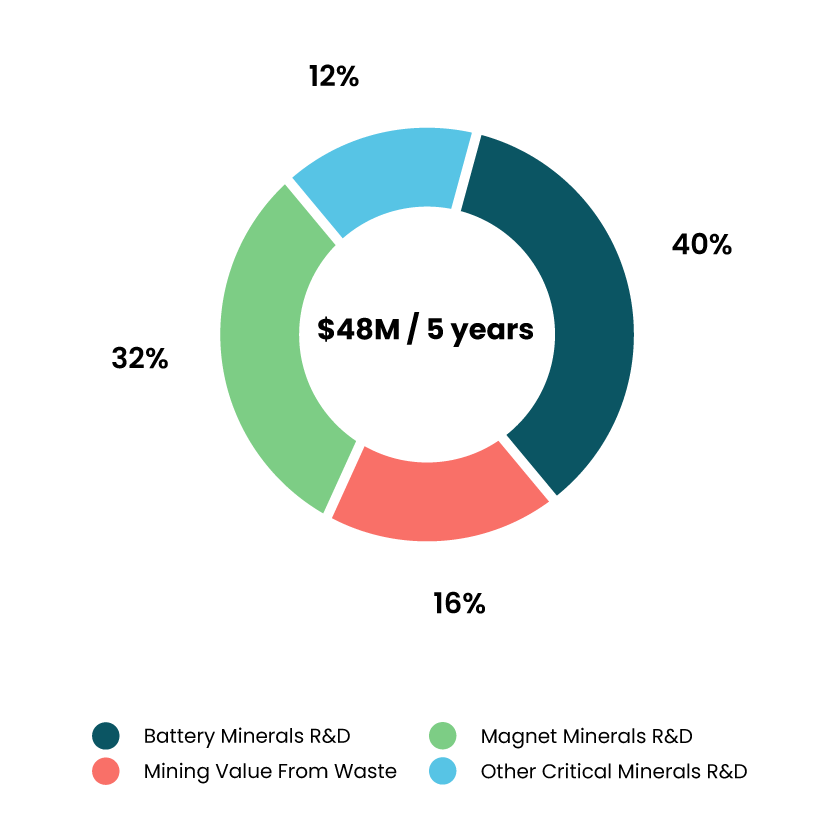
Text description
| Field of research | Percentage of budget |
|---|---|
| Battery Minerals R&D | 40% |
| Mining Value From Waste | 16% |
| Magnet Minerals R&D | 32% |
| Other Critical Minerals R&D | 12% |
CanmetMINING Focus
Unlocking Canada’s critical minerals resource potential:
- battery minerals
- mining value from waste
- magnet minerals R&D
- other critical minerals R&D
- directed research and G&Cs
Goals
To build battery and critical mineral value chains in Canada:
- More than 25% of critical minerals-related mining technologies developed by NRCan and federal labs to be ready for commercial use
- Stimulate new investments in critical mineral production in Canada
- 3 chemical technologies related to battery electric vehicles advance beyond the laboratory bench scale
Battery Minerals R&D
- Decomposition and refinement of refractory lithium minerals for battery precursors
- Optimized methods for the direct extraction of lithium from brines
- Bench- and pilot-scale clean graphite purification systems
Mining Value From Waste
- Inventory of critical minerals potential in mine tailings, including sampling strategies for resource definition and a demonstrated tailings sampling program
- Methods for recovery of selected metals from mine wastes
Magnet Minerals R&D
- Improved mineral processing approaches for rare earth elements
- Toxicity testing to support environmental regulatory development
- Processing of rare earth elements using electrodialysis-assisted SX and super-critical fluids
Other Critical Minerals R&D
- Direct reduction of chromite
- New technologies for the treatment of selenium from mine- affected waters
Did you know the following projects are led by CanmetMINING?
Battery Minerals R&D
Lithium from hard rock and brines
- Producing the dissolved lithium from western Canadian brines represents a significant potential source of this battery mineral, but doing so economically remains a challenge.
- CanmetMINING is seeking to de-risk and advance novel separation technologies to extract lithium hard rock, developing the process in pre-commercial stages, and building a robust critical minerals chain.
Mining Value from Waste
- Production of EV battery precursor nickel and cobalt-sulphate salts from pyrrhotite-rich tailings. CanmetMINING is advancing novel bioleaching technology and processes by addressing major cost drivers and expanding beyond the pilot scale to recover an estimated $8 to 10 billion in nickel from Sudbury tailings.
- Canadian Mine Tailings Inventory. CanmetMINING is developing a national mine tailings inventory to assess critical mineral potential in Canadian mine tailings and is advancing tailings sampling and characterization methods to demonstrate critical mineral potential from alternative sources and link these sources with downstream processing R&D within CanmetMINING programs.
Magnet Minerals R&D
New processes for refining rare earth elements
- CanmetMINING is testing new approaches to the processing and separation of rare earth elements.
- CanmetMINING completed ecotoxicology data generation that has led to the development of rare earth element water quality guidelines.
- CanmetMINING has been supporting the development of super critical fluid extraction technology for more economical extraction of rare earth elements.
Efficient Mining Practices Priority
- $11.5M/5 years
- 3 Fields of Research ↔ 8 Project Areas
- >26 External Collaborators
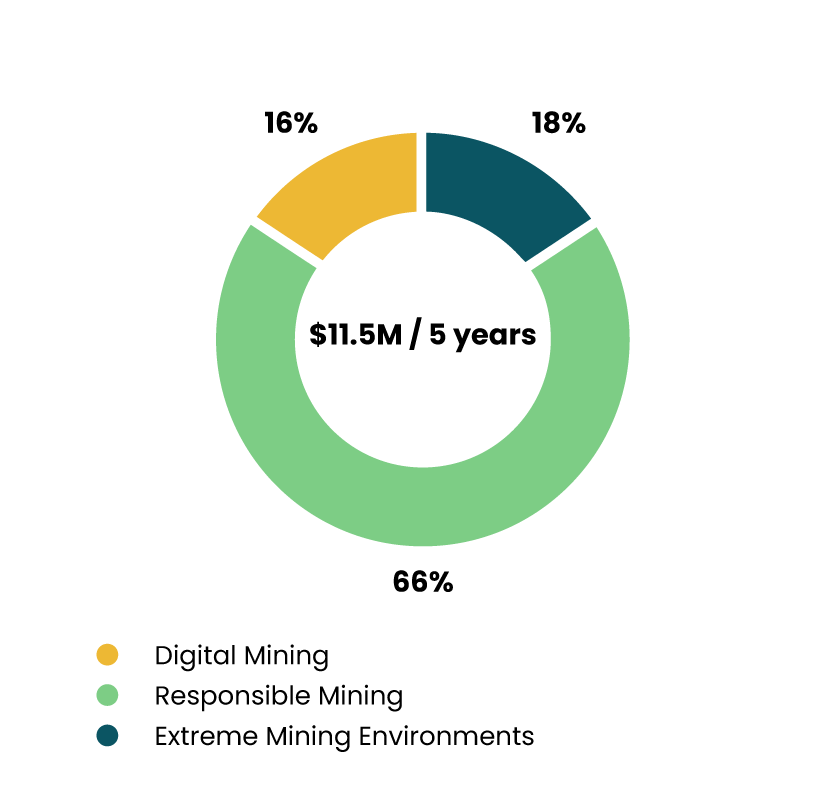
Text description
| Field of research | Percentage of budget |
|---|---|
| Digital Mining | 18% |
| Responsible Mining | 66% |
| Extreme Mining Environments | 16% |
CanmetMINING Focus
New mining technologies and best practices:
- digital mining
- responsible mining
- extreme mining environments
Goals
De-risking technologies and informing best practices:
- Two remote sensor systems to monitor mine waste performance to be ready for deployment
- Jurisdictions be ready to implement a digital tool to reduce the time it takes to navigate the mine regulatory process
- At least 2 pilot-scale effluent treatment technologies be developed that can remove 95% of metal contaminants
Digital Mining
- Digital tools for navigating the mine permitting process
- Easier access to information for decision-makers, planners, and the public
- Real-time monitoring systems of environmental contaminants
Responsible Mining
- Return of mining lands to functioning ecosystems for potential economic, environmental and community benefits
- Improved information for more effective regulations and for use in environmental impact assessments
- Better selenium regulations based on sound science and reduced risk of selenium release from mining
Extreme Mining Environments
- Ground support systems for the digital age
- Better ground support for deep mines to allow access to otherwise inaccessible ore
- Assisting with hoist guide inspections through novel preventative maintenance practices
Did you know the following projects are led by CanmetMINING?
Digital Mining
SIMPLER Project
- In line with industry needs, CanmetMINING has developed the mining activity planning (MAP) tool as a proof-of-concept tool to act as a virtual concierge designed to assist mine development proponents seeking guidance on the federal regulatory approvals process.
Responsible Mining
Adaptation Mechanism of Pioneer Trees in Mine Tailings
- This project focuses on enhancing green mine waste management and land reclamation in response to climate change through genomics research.
- CanmetMINING is conducting research on plant genotypes to identify which species respond better to climate change and the harsh environment of mine tailings in land reclamation efforts.
Extreme Mining Environments
Hoist Guide Inspection Technology (CanGUIDE)
- A need for automated preventative maintenance in deep mine hoisting resulted in the development of a prototype tool to assist with hoist guide inspections — potentially reducing downtime related to manual inspections and to improve mine productivity and safety.
- A demonstration prototype was tested at an underground mine, and patents were granted in Canada and the United States. An R&D agreement was signed in 2023 with a Canadian-based company to help commercialize the technology with the option to license in the future.
Climate-Resilient Mining Priority
- $7M /5 years
- 2 Fields of Research ↔ 6 Project Areas
- >22 External Collaborators
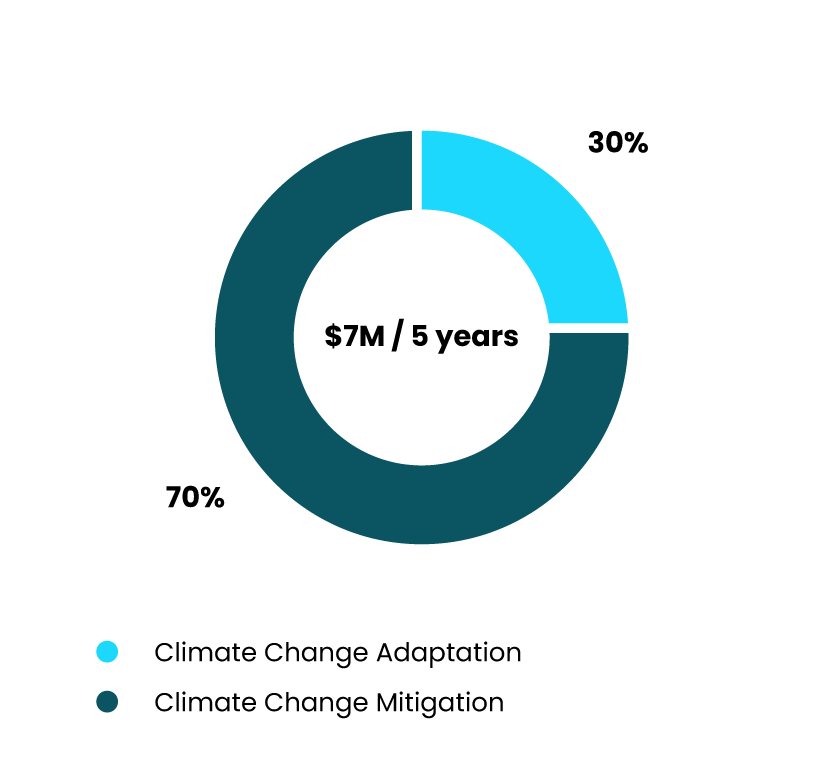
Text description
| Field of research | Percentage of budget |
|---|---|
| Climate Change Adaptation | 30% |
| Climate Change Mitigation | 70% |
CanmetMINING Focus
Adaptable and carbon-neutral mining:
- climate change adaptation
- climate change mitigation
Goals
Develop new standards, methods and tools to:
- Reduce the seasonal variabilities in copper and zinc recoveries and climate-resilient organic cover strategies for mine tailings
- Measure and monitor fugitive mine dust at sites in the North
- Provide support for at least 1 carbon sequestration project
- At least 1 hydrogen technology prototype implemented in Canadian mining
Climate Change Adaptation
- More robust environmental performance of organic covers for mine site reclamation
- Better predictive tools and databases to assist with environmental assessments for new mine projects
- Better dust monitoring methods and improved predictive models for mine dust management
Climate Change Mitigation
- New tools for decision-making related to hydrogen applications in mining
- New decision-support knowledge related to electric equipment as alternatives to diesel
- New tools and standards for alternatives to diesel vehicles
- Novel test methods and advanced geomechanical support to characterize the physical, mechanical and hydraulic properties of reservoir and caprock formations for carbon capture potential
Did you know the following projects are led by CanmetMINING?
Climate Change Adaptation
Fugitive Mine Dust Research in Northern Canada
- Working in collaboration with Indigenous partners and industry, CanmetMINING is developing a robust mine dust monitoring program in Nunavut to address community concerns related to mine dusts exacerbated by climate change.
Climate Change Mitigation
Alternative Fuels in Underground Mining Vehicles
- CanmetMINING is supporting the transition from diesel to cleaner alternatives in underground mining vehicles.
- Under the Hydrogen Mine Initiative, CanmetMINING is developing standards to advance mining regulations and testing technologies to use underground.
- CanmetMINING has also developed a standardized methodology to assess battery electric vehicle performance and is working to develop CSA safety standards for electric vehicles in mining
Moving Forward: What to expect in the years to come
In this section
- The Mine of the Future
- New Frontiers
- CanmetMINING: Positioning for the Future
- Timeline for Transformation
Mine of the Future
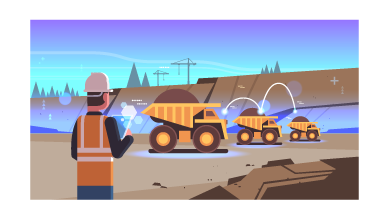
Technological advances in the areas of artificial intelligence, automation, sensor technology, quantum computing, and augmented virtual reality are beginning to shape how mining will look in the future. While perhaps difficult to imagine today, the mine of the future will ultimately be one where only the valuable materials are extracted and processed, waste will no long need to be stored in large tailings ponds, releases to water and air will be history, and mining will leave no trace behind once completed.
The Vision of the Future of Mines in Canada
The mineral development will be zero footprint, economically competitive, and environmentally and socially sensitive to contribute to prosperity for Canadians for generations to come
Mining Trends
Digitalization and Automation
The application of digital technologies, big data analytics and automation could transform mining making it safer, more productive, energy-efficient, and sustainable. Increasing costs and lower grades together with increased pressure to reduce or eliminate the environmental footprint are driving the need for the mining industry to innovate and find new ways to extract the valuable mineral resources required for the low-carbon economy of the future.
Mine automation, coupled with digitalization, offers a promising way forward to transform high-cost and current inefficient manual and mechanical processes into digital ones. New computer-driven technology can enable mining companies to collect large data sets about their operations, both remotely and in real time, through internet-connected sensors. This data can then be used to monitor performance, react to changes and inform decision-making, thereby improving efficiency at the site from anywhere in the world.

Smart Mines and Artificial Intelligence
With the incorporation of more sensor technology and computerized systems, there is an opportunity to use the data generated and collected to build intelligent automated systems that can operate within a pre-determined mine plan but also incorporate elements of machine learning to adapt to conditions automatically. The application of artificial intelligence offers the potential to find, extract and process mined materials, quicker, cheaper and at a better rate per tonne.
Not only will the mining systems of the future be themselves intelligent and connected, but the value chain from extraction, to processing, refining and delivery, to the end users are connected as well. Mine production can be planned and managed to meet the demand and adapt to changes in commodity prices. Artificial intelligence can make decisions on production rates and the best routes to market, informed by learning from connected global trends and the real-time capabilities of the mines within the control of the mining company.
Zero Footprint
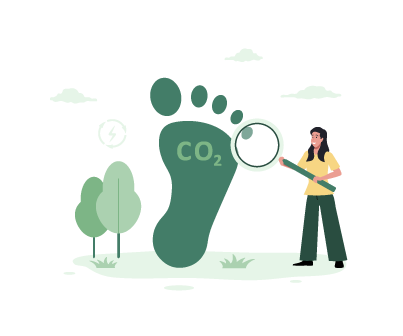
The mine of the future will require more integrated planning for all stages of mine development through to mine closure and rehabilitation. Building a new mine with the objective of achieving a zero footprint requires a new way of looking at mineral resource extraction such that all aspects of potential environmental effects are built into the design and operation of the mine. Such an approach will require new ways of developing, extracting and processing, coupled with strategies to minimize and eliminate waste and ultimately eliminate any long-term liabilities either to the company or to governments and society. The “invisible mine,” where the surface footprint is greatly reduced, will require new systems and technologies that require consideration of:
- Underground rather than open pit design,
- Reprocessing of tailings and storage of waste back underground,
- Improved ore sorting and separation before bringing material to surface, and
- In situ systems such as leaching, solution mining or gasification.
The future mine may also look to ways to recover and process valuable mineral resources from the deep sea and, in the longer term, potentially employ technologies that can economically recover mineral resources from beyond the Earth on asteroids, the moon, and other planets in our solar system.
Quantum Computing
Quantum computers could enhance the ability to analyze vast amounts of geological data more efficiently, helping companies discover new mineral deposits or locate natural resources more quickly and more accurately. Quantum algorithms might optimize the way that geological models are built, leading to more precise mapping and exploration of new mining sites.
Energy Optimization: Quantum algorithms could optimize energy usage in mining operations, which are energy-intensive. This includes optimizing extraction processes, minimizing energy consumption in drilling, and improving the efficiency of processing facilities.
Supply Chain Optimization: The mining industry has complex and often global supply chains. Quantum computing could help with optimization and logistics, ensuring resources move efficiently from extraction to production. Quantum algorithms might help with better scheduling, inventory management, and risk mitigation in the supply chain.
New Frontiers
New priorities in mining

Clean Technology Adoption
The global economy is evolving, and demand for responsibly produced materials and clean technologies is increasing. Canada’s minerals and metals sector is competing with other countries and industries for investment and highly skilled workers. Canada’s competitors are challenging our position as a top destination for mineral investment, and the minerals and metals sector faces significant skilled labour supply challenges
Areas for action
- Develop a green certification scheme for clean technologies
- Create a program focused on de-risking clean technology adoption in Canadian operations
Outcomes
- Position Canada as a source of responsibly produced mineral and metal products and as a clean- tech solutions provider
- Address gaps in the technology commercialization process

Deep and In Situ Mining
Deep, ultra-deep and in situ mining provide options to access mineral resources with a much smaller footprint than with open pit/surface mining methods. These approaches can also reduce the cost of operations, supply Canada’s landlocked smelters, maintain jobs and support the growing Canadian middle class.
Areas for action
- Develop national and international networks to further the research, policy development and science and innovation for mining at depth
- Establish an in situ mining program for non-conventional resources
Outcomes
- Provide the necessary tools, technologies, policies and regulations to mine in ultra-deep conditions
- Reduce the environmental, economic and social footprint for mining at depth
- Safer, greener and more efficient mineral resource extraction at depth

Mining Value from Waste
Waste from mining activities is a long-term liability issue. Reprocessing tailings represents an opportunity to reduce the environmental impact of mines and contribute to a green economy. It is estimated that Canada has about $10 billion in total metal value in gold mine waste. Successes to date have been limited in Canada and elsewhere because of complexities related to science and technology, materials handling, as well as policy and regulations.
Areas for action
- Foster initiatives, such as the Mining Value from Waste program that develop tools, technologies, and policies to de-risk and accelerate demonstration and full-scale waste
Outcomes
- Reduce by 20% the volume of surface tailings storage in Canada by 2030
- Provide a suite of technologies to reduce/eliminate surface tailings disposal, repurposing options for tailings.
Critical Minerals and Battery Metals Program
One important element to the effective delivery of clean energy is the development of efficient storage capabilities. Advancement in high-performance batteries is required for a successful transition to hybrid/electric vehicles (EVs, HEVs) as well as for large-scale energy storage. A rapid growth in the implementation of efficient energy- storage devices such as LiBs and VRFBs can have a dramatic impact on the demand for a number of critical metals, including Li, graphite (carbon), V, Mn, Ni and Co.
Areas for action
- Develop a program that will explore battery mineral chemistry, real earth elements and chromite processing, environmental management, and technology development and demonstration
Outcomes
- Address the R&D gap to bring critical and battery mineral resources to market
Hydrogen in Mining
Hydrogen is both an innovation and deployment story in parallel. Many commercial technologies exist that use hydrogen (e.g. fuel cells in transport). Canada has clean energy in abundance (in the form of clean electricity) and is also a significant producer of hydrogen from natural gas. Hydrogen can be stored for long periods and produces no emissions when used, and it can be a key enabler of green mining – mines that require heavy-duty vehicles and operate in enclosed spaces. Hydrogen is the only energy carrier that can meet the energy demands with no emissions.
Areas for action
- Support technology transfer projects (training, feasibility study, infrastructure, distribution, vehicle design)
- Establish a regulatory framework to enhance hydrogen technology adoption
Outcomes
- Reduce by 25% the GHG footprint of an underground mine
- Improve workplace health (clean air, noise, temperature)

Digital Mining
Digital technology is quickly being adapted in mining. The industry is experiencing great change, mainly driven by the rapid evolution of technology. The key to successful adoption is to make sure the programs are user-friendly and reliable at all stages of mining, and at any depth, especially as mines go deeper and the cost of operations increases. Digital mining technologies could include visualization, analytics and dynamic scheduling, digital twins, and integrated automation and neural networks.
Areas for action
- Foster partnerships and collaboration with governments, industry, academia and NGOs to exchange expertise and knowledge
- Develop a platform to facilitate the adoption and maximize the benefits of digital technologies in mining
- Establish a framework to introduce AI in mining operation
Outcomes
- Optimize safety, environmental stewardship and operational efficiencies in mining operations
CanmetMINING: Positioning for the Future
CanmetMINING is transforming its operating environment to better address:
- Financial funding pressures
- Demographics
- Infrastructure and equipment
- The demand for new skills and training to address the shift to transformative technologies
2022 – 2027 Renewed CanmetMINING Green Mining Innovation Agenda
New 5-year Research Plan
- Emphasis on key priorities and alignment with transformation in the industry and new programming
- Seek opportunities to expand strategic partnerships both domestically and internationally to leverage capacity with others
New Programming for New Frontiers Research
Renewed investment in mining innovation through a combination of A-base and C-base funding to address key priorities:
- Technology adoption
- Battery/critical minerals
- Mining value from waste
- Digital mining
- Mining certification
- Deep and in situ mining
TerraCanada NCA implementation
- Provide scientists with leading-edge, multi-purpose, sustainable and collaborative facilities to advance Canada’s sustainable land and resource development and the transition to a low- carbon economy while ensuring the health and safety of Canadians
IM/IT and Capital Investment
Improved data management and flexible IT structure through:
- High performance computing services
- Cloud computing
- Specialized hardware, operating systems and software
- Capital plan to continuously maintain and replace equipment and identify equipment needs to deliver on new frontiers research
HR Planning
- Designed to ensure research can continue with the right people with the right skill sets needed for future priorities and programming
- Strengthen capacity in the fields of engineering, data analytics and related transformational technologies.
- Renewed investment in training and learning, 5% of the budget
CMMP and Collaboration
- Realize the goals and milestones outlined in the Canadian Minerals and Metals Plan related to mining innovation
- Strengthen collaboration and linkages within the mining innovation ecosystem in Canada with links to global markets
Timeline for Transformation
-
2016
5-year Research Plan
Launch of the CanmetMINING 5-year research plan and renewed logic model
-
2017
National Collaboration Strategy
Ministers endorse a strategy to strengthen collaboration
-
2018
Organizational Restructure
A new structure was introduced at CanmetMINING to better align research priorities and to build science policy capacity.
-
2019
CMMP Launch
A framework for a pan-Canadian vision to position mining in Canada for the future
-
2022
CanmetMINING Renewal
Infrastructure plan implementation (Terra-Canada), CMMP action planning, the launch of the Critical Minerals Strategy, and programming and development of the next CanmetMINING 5-year research plan
Critical Minerals Strategy Launch
Essential for ensuring the sustainable supply of resources vital for technological innovation and energy transition
-
2022-2027
Research Plan Delivery
The completion of the original 5-year plan, the launch of the next research plan, and the TerraCanada implementation
Summary and Conclusion
CanmetMINING: Delivering results for Canadians
Over the course of the next five years, CanmetMINING will continue to align its research and development activities to align with Government of Canada priorities and the needs of the Canadian minerals and mining industry to reduce the overall environmental impacts and to improve the economic competitiveness of mining in Canada.
The increasing demand for critical mineral resources required to support of the transition to a net-zero carbon future is driving CanmetMINING research to find new, more efficient and environmentally responsible and sustainable ways to extract, process and produce Canada's mineral resources. This will require investments in our people, our equipment and our facilities to ensure that the financial and human resources are ready to deliver results for Canadians to help build the mines of the future. This integrated business plan will act as the blueprint for that transformation over the next five years to 2027.