
Canada has what the world wants, and our natural resource projects are benefiting communities at home and abroad.
Canada’s natural resources create opportunities that reach far beyond the communities where they are located. From opening new international markets for Canadian exports to creating local jobs, strengthening infrastructure, supporting Indigenous partnerships and fostering innovation, these projects help build stronger communities while connecting Canada’s resources to the world.
Explore stories that show how global trade impacts Canadians from coast to coast to coast.
Browse by topic
Discover stories from across Canada

Forest products
Canada’s forests are a growing opportunity - CHAR Technologies
Thorold, Ontario
Wasting less and finding uses for forest industry byproducts, like wood waste, are important parts of sustainability. In Thorold, Ontario, CHAR Technologies is building a first-of-its-kind facility that takes leftover wood, a byproduct that is often underutilized, and transforms it into high-value biocarbon and renewable gas for domestic use and export. These products offer a cleaner alternative to coal and oil, positioning Canada to meet growing global demand for low-carbon industrial inputs while helping domestic industries like steel mills and mines reduce their own carbon footprint.
This new facility not only is an example of innovation in action but also demonstrates how Canada is turning natural resources into the clean solutions the world is looking for. Biochar and biocarbon products are internationally traded materials used in industries like filtration, agriculture, and soil management; demand for these products is growing as countries look to decarbonize. Canada is well positioned to lead, with abundant forest resources, strong environmental standards, and advanced technologies already in place. In addition to the potential for trade, a strong forest industry creates good, local jobs in communities across Canada: from harvesting lumber to mills, refining, and the transportation of forest products. By investing in innovation and sustainable practices, our forest sector will continue to drive exports, create jobs, and deliver the low-carbon solutions the world wants.

From forest residues into renewable fuel oil - AE Côte-Nord
Port-Cartier, Quebec
Canadian innovation is helping turn wood waste into energy solutions that reduce emissions and support one of our key exports—our forest products.
AE Côte‑Nord Canada Bioenergy has built a first-of-its-kind facility that converts forest residues into renewable fuel oil (RFO). Its processing plant can produce about 40 million litres each year, using leftover wood from nearby sawmills. RFO is used as a cleaner substitute for traditional fossil fuels in industrial and heating applications. It reduces greenhouse gas emissions, uses materials that are often underutilized like wood residues, and helps industries decarbonize without making major equipment changes.
This project supports jobs and economic activity in Port‑Cartier, Quebec, a remote, forest-dependent region. It has created good jobs at the facility, and by using existing port and rail infrastructure, it is also making the local economy stronger.
Forest‑based biofuels are traded worldwide, with growing demand in regions looking for more options for their energy sources and to improve energy security. Projects like AE Côte‑Nord show how Canada is taking a leading role in the responsible development of our natural resources. By connecting forestry and clean energy, Canada is creating good, stable jobs; supporting exports; and delivering the lower‑carbon solutions the world wants.
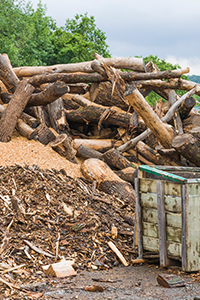
Turning wood waste into valuable products - Carrot River Biorefinery
Carrot River, Saskatchewan
In Canada, we manage our forests responsibly, using science to balance economic growth with conservation. Our country is home to nearly nine percent of the world’s total forests. The raw materials they provide are transformed by our mills into a variety of wood and paper products that are used every day. As global demand grows for cleaner materials and better carbon management, Canadian companies are turning wood waste into valuable products that can be used in agriculture and environmental technologies.
In Carrot River, Saskatchewan, BioLesna Carbon Technologies is building a new biorefinery at an existing sawmill. The facility will convert leftover forest biomass—low-grade wood that is often underutilized—into products like biochar, bio‑oil, wood vinegar, and pyrolysis gas. This project will bring new opportunities to a rural forestry community, creating good jobs for residents and helping diversify the forest sector beyond traditional harvesting and milling.
Biochar and related products have a wide range of uses. They can improve soil health, filter water, and even replace fossil‑based carbon in certain industrial processes. These materials are already traded internationally, with growing demand in markets focused on clean technology and industrial decarbonization.
Projects like the Carrot River biorefinery show how Canada is taking a leading role in responsible resource development. By turning our forest residues into advanced carbon products, we are not only creating jobs but also strengthening exports to our allies. Through trade, we can fund the infrastructure and public services that Canadians rely on from coast to coast to coast.

Critical Minerals
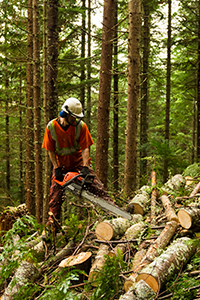
Strengthening Canada’s role as a provider of critical minerals – Fireweed Metals’ Mactung Project
Selwyn Basin, Yukon and Northwest Territories
The growing demand for critical minerals, like tungsten, is creating new opportunities for workers and communities in Canada. Tungsten is used to make strong, heat-resistant materials found in tools, electronics, and clean energy technologies. Today, most of the world’s tungsten supply comes from outside North America, which can create supply chain risks for the Canadian industries that depend on it.
On the border of Yukon and the Northwest Territories, Fireweed Metals is advancing the Mactung Project to develop what is believed to be the largest high-grade tungsten deposit in the world. This discovery will help set Canada up as a secure supplier for our allies, supplying industries that produce everything from mining equipment and aircraft components to advanced manufacturing tools. Copper and gold will also be produced here as byproducts, adding further economic value.
This project is expected to bring investment and opportunities to northern and Indigenous communities. Located in the remote Selwyn Mountains region near the traditional territories of several First Nations, the project will create skilled jobs in construction, operations, and transportation while also improving roads and energy access in the region. Local businesses and residents will benefit from enhancements to the area’s infrastructure.
As global demand for critical minerals rises, work like the Mactung Project show how Canada can turn our natural resources into long-term economic growth. By supplying materials that the world wants, we are meeting global demand while creating good jobs that help support our communities from coast to coast to coast.
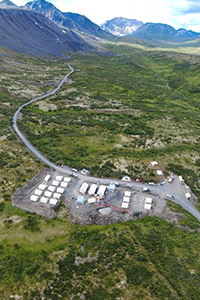
The world's first net-zero copper mine – The McIlvenna Bay Project
McIlvenna Bay, Saskatchewan
Shifting to clean energy means an increased demand for critical minerals like copper and zinc: materials used in electric vehicles, power grids and modern technology. In Creighton, Saskatchewan, Eldorado Gold’s McIlvenna Bay project is designed to be the world’s first carbon-neutral copper and zinc mine, along with gold and silver as secondary products.
The McIlvenna Bay project is expected to create nearly 400 permanent jobs, along with hundreds more during construction. The proximity to Flin Flon, Manitoba, means the project will benefit workers and businesses in that region as well by creating good jobs for local workers and by seeking local companies for equipment and services. The mine will also work closely with the Cree Nation, creating training, employment and business opportunities for local and Indigenous communities.
This project is an example of how Canada can produce materials the world wants while also reducing the environmental impact. By using hydroelectric power, electric vehicles and water recycling systems, the mine aims to lower its emissions and serve as a model for future mining projects.
Countries around the world are looking for reliable and responsible sources of critical minerals, and Canada is ready to deliver. By investing in new mining technologies, like those used in the McIlvenna Bay Project, we are building an industry that supports economic growth right here at home while helping power a cleaner future.
This Project is supported by the Major Projects Office – Learn more: McIlvenna Bay Foran Copper Mine Project – Major Projects Office – Canada.ca
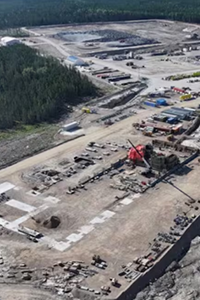
Creating new opportunities and industries in New Brunswick – The Sisson Project
Fredericton, New Brunswick
Critical minerals like tungsten and molybdenum are valuable resources used to build multiple products and applications, from strong industrial tools to defence technologies. Tungsten is known for its strength and heat resistance, making it essential for cutting tools, electronics and lighting, while molybdenum is used to create durable steel for infrastructure, energy and manufacturing.
Near Fredericton, New Brunswick, the Sisson project is developing a proposed mine that, once operational, will process about 30,000 tonnes of ore per day. Owned by Northcliff Resources, the mine will produce both tungsten and molybdenum concentrates at its on-site facility
The Sisson project represents a major economic opportunity for multiple communities in New Brunswick, like Stanley, Millville, Juniper and Napadogan. The mine is expected to create up to 500 jobs during construction and about 300 long-term positions. The project will also support local businesses, helping strengthen the regional economy over the long term.
Beyond its local impact, the Sisson project will play an important role in strengthening Canada’s position in global supply chains, demonstrating how we can responsibly turn our natural resources into lasting economic benefits. Tungsten and molybdenum are in high demand worldwide, opening the door to exports in North America, Europe and Asia. Trade agreements with our allies help fund the public services and infrastructure Canadians rely on from coast to coast to coast, like roads and health care.
This Project is supported by the Major Projects Office – Learn more: Northcliff Resources’ Sisson Mine – Major Projects Office – Canada.ca

Fuels
Unlocking offshore energy potential and supporting Canada’s future – Bay du Nord
Flemish Pass Basin, Newfoundland and Labrador
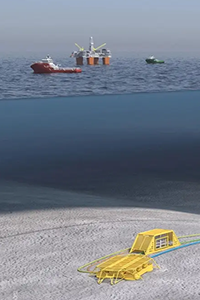
Canada’s offshore energy resources play an important role in supporting our country’s economic growth. The Bay du Nord Development project, led by Equinor and BP, is a proposed deepwater project in the Flemish Pass Basin located northeast of St. John’s, Newfoundland and Labrador. If the project moves forward, it would be Canada’s first project in a remote deepwater basin with ocean depths reaching up to 1,200 metres, an example of offshore innovation and technical expertise.
Once operational, Bay du Nord will be one of the most advanced offshore oil developments in Canada, capable of producing between 160,000 and 175,000 barrels of oil per day. Offshore development supports thousands of high-quality jobs in communities across Atlantic Canada, particularly in Newfoundland and Labrador, from engineering and fabrication to supply chain services and transportation. Local businesses and Indigenous communities will also benefit through procurement opportunities and long-term partnerships.
As global demand for responsibly produced energy continues, Canada is well positioned to deliver. With strong environmental standards, skilled workers, and decades of offshore experience, projects like Bay du Nord show how Canada can responsibly develop its natural resources while supporting innovation and economic growth.
Connecting Canadian energy to global markets – LNG Canada
Kitimat, British Columbia
In June 2025, the first liquefied natural gas (LNG) carrier departed from the LNG Canada terminal in Kitimat, British Columbia, bound for South Korea. This marked a major milestone for Canada as a new exporter of LNG. Across Western Canada, there are multiple projects to bring Canadian energy to the world and create more opportunities for people in Canada. The Haisla Nation, on whose territory LNG Canada operates, is also the majority owner of Cedar LNG, an innovative, Indigenous-led project that is expected to begin exporting later this decade.
Supplied by natural gas produced in Western Canada and transported to the coast by pipeline, the LNG terminal transforms this resource into a liquid form that can be safely shipped overseas. Canadian LNG offers a reliable, lower-emissions alternative for countries transitioning away from higher-carbon fuels like coal, which can produce nearly twice the emissions of natural gas. Canada’s methane regulations; access to abundant, clean hydroelectricity; and a cooler climate requiring less energy for liquefaction help make our LNG produce among the lowest emissions in the world.
These LNG developments support thousands of good jobs across Canada, from natural gas production and pipeline transportation to construction, operations and maritime shipping. They generate revenue that helps fund the public services and infrastructure Canadians rely on. With our abundant natural gas resources, strong environmental standards and increasing Indigenous leadership, Canada is well positioned to expand our role as a trusted supplier of lower carbon-intensity energy.
Phase 2 expansion is supported by the Major Projects Office – Learn more: LNG Canada Phase 2 – Major Projects Office

Nuclear energy
Nuclear energy benefiting Canadians and the world – Cameco and India’s Department of Atomic Energy
Saskatoon, Saskatchewan
The demand for nuclear products and technology creates and protects thousands of well-paying jobs that support families in communities across Canada. A recent $2.6-billion agreement to supply uranium to India was signed between Saskatchewan’s Cameco and India’s Department of Atomic Energy, supporting India’s clean energy transition.
Cameco employs over 2,600 northern Saskatchewan residents and Indigenous Peoples in the province at locations including Cigar Lake, McArthur River, and Key Lake, along with their head office in Saskatoon. These trade deals do more than create good jobs that benefit local economies: the national revenue benefits all Canadians by funding our services and infrastructure. This means roads and ports that support our resource economy—and a world-leading nuclear industry that turns those strengths into life-saving medical isotopes for patients in Canada and around the world.
Nuclear energy is part of Canada’s history and future—powering innovation, jobs, communities, and a low-carbon future from coast to coast to coast.
New reactors to power Canada’s clean energy future – Darlington New Nuclear Project
Bowmanville, Ontario
The Darlington Nuclear Station is reshaping how we power our homes and industries. Its New Nuclear Project involves the construction of four small modular reactors (SMRs) and will help reduce our country’s greenhouse gas emissions. When all four SMRs are operational, they will generate enough electricity to power about 1.2 million homes while reducing our carbon emissions.
Beyond providing energy, the Darlington New Nuclear Project positions Canada as a global leader in low-carbon technology, highlighting our expertise and innovation while creating thousands of good jobs. During construction, up to 18,000 jobs will be supported in Bowmanville, Ontario, and 2,500 jobs will be sustained each year over the life of the project. This will benefit residents, nearby communities and local businesses.
As one of the first large-scale SMR deployments in the world, this is a project that other countries can follow, opening new opportunities for our exports and expertise. Canada is innovating while strengthening our power grid to build a cleaner, more secure energy future.
This Project is supported by the Major Projects Office – Learn more: Darlington New Nuclear Project – Major Projects Office – Canada.ca

Collaborating with global allies on clean energy innovation – Kinectrics H3AT Tritium Loop
Greater Toronto Area, Ontario
Building new sources of clean energy means working across borders and technologies. In Toronto, Kinectrics Inc., an engineering consultancy, has partnered with the United Kingdom Atomic Energy Authority and Eni, a global energy company, to develop the H3AT (or “HEAT”) Tritium Loop Facility in the United Kingdom. This project is expected to be the world’s largest and most advanced facility of its kind once fully operational in 2030.
Tritium is a key fuel needed for future clean energy fusion power. Canada is a global leader in tritium production, with essentially all commercial tritium production tied to CANDU nuclear power generation in Ontario. This material has the potential to provide safe, reliable, and low-carbon energy for generations to come.
This project will support jobs in the Greater Toronto Area and create opportunities across the broader supply chain, including for Canadian companies in manufacturing, materials, skilled trades, and specialized equipment. It is also supporting Canadian innovation by connecting research institutions, engineers, and clean energy companies.
This collaboration on the Tritium Loop Facility is an example of how Canada is contributing to the next generation of global energy solutions while creating real benefits for Canadians. As investment in fusion energy grows worldwide, projects like “HEAT” position Canada as a trusted global partner and supplier of advanced nuclear technologies, building on our existing strengths in nuclear science and engineering.


Clean energy innovation
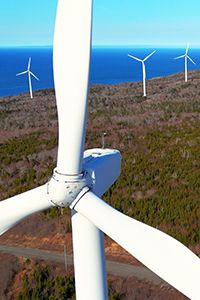
Powering clean energy from Nova Scotia’s winds – Higgins Mountain Wind Farm
Higgins Mountain, Nova Scotia
To meet growing demand for clean electricity, wind energy will play an important role in our future.
The Higgins Mountain Wind Farm, located between Colchester and Cumberland counties, is helping reduce emissions while supporting reliable power and economic growth in the community. The large onshore wind project includes 17 wind turbines and is expected to generate about 100 megawatts of electricity. That’s enough energy to power more than 35,000 homes.
The project will bring multiple benefits to the region by supplying stable, low-cost electricity for homes and industries on Nova Scotia’s grid. It is expected to create approximately 100 jobs during construction, along with long-term roles in operations and maintenance. The project includes partnership and training opportunities for Sipekne’katik First Nation, helping to build skills and support Indigenous participation in the clean energy economy. Local businesses will also benefit through contracts and higher demand for services.
Higgins Mountain is proof of how we can use our natural geography to produce clean energy. By working with local and Indigenous partners, we are delivering renewable power, strengthening our economy, and creating new job opportunities in our communities.
A gift from the sun that is powering communities – Salay Prayzaan Solar Project
Métis Crossing, Alberta
Canada’s shift to clean energy is creating new opportunities for communities to take a leading role in their own energy future. Across the country, Indigenous‑led projects are helping supply clean power to the grid while supporting local economies and taking action to address climate change. In Smoky Lake County, the Otipemisiwak Métis Government has developed the Salay Prayzaan Solar Project at Métis Crossing. The solar facility’s name means “gift from the sun.”
The solar project delivers strong benefits to the local community, currently generating enough electricity to power nearly 700 homes. Solar energy produced at Salay Prayzaan helps reduce emissions by about 2,604 tonnes each year, the equivalent of taking hundreds of vehicles off the road. Profits are being reinvested into social and economic development programs, benefiting Métis citizens across the province. By generating clean electricity locally, the project is helping strengthen Alberta’s overall energy mix.
Projects like Salay Prayzaan demonstrate the amazing potential of clean energy, economic development, and Indigenous leadership. By building locally owned energy systems, Indigenous communities are creating good jobs and positioning Canada as a leader in a lower‑carbon future.

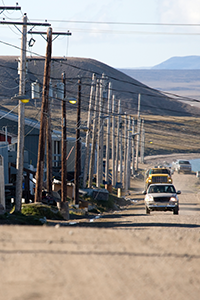
Clean power generation in Canada’s North – Iqaluit Nukkiksautiit Project
Iqaluit, Nunavut
Canada is taking steps to strengthen our energy security while lowering emissions, and innovative clean power projects, like the Iqaluit Nukkiksautiit Project, are becoming even more important. In remote regions like Nunavut, replacing diesel with renewable energy is an opportunity to lower costs and build long‑term economic resilience for our northern communities.
Developed by the Nunavut Nukkiksautiit Corporation, a 100-percent Inuit‑owned company, this proposed hydroelectric facility located near Iqaluit, Nunavut, will generate between 15 and 30 megawatts of electricity using water from the Kuugaaluk River. Once complete, it is expected to replace the city’s reliance on diesel‑generated electricity.
The project will benefit the local community by creating good jobs during construction and operations while also supporting local businesses in the region. Hydroelectric power from the project will replace up to 15 million litres of imported diesel each year, stabilizing energy costs in the territory.
Canada is investing in clean energy while strengthening our presence in the Arctic. By supporting Inuit leadership, creating new job opportunities and building reliable infrastructure, our country is taking steps toward a more secure, sustainable energy future from coast to coast to coast.
This Project is supported by the Major Projects Office – Learn more: Iqaluit Nukkiksautiit Hydro Project – Major Projects Office – Canada.ca
Our global initiatives and partnerships
Diversifying markets for Canada’s natural resources through international agreements and commitments helps strengthen Canada’s economic security and expand opportunities across Canada.