
Details
- Publication date
- Author(s)
- ISBN
978-0-662-35889-3
Date Approved by Deputy Minister
April 23, 2026
On this page
Executive summary
Introduction
Engagement objectives and methods
Findings
Engagement and communication
Governance and delivery
Program design
Oversight and reporting
Conclusions
Appendix A - Engagement sub-objectives and criteria
Appendix B – Summary of CFFP criteria by stream
Appendix C: Program logic model
Appendix D: Engagement methodology
Appendix E: Joint project team
Executive summary
About the engagement
This report presents the findings, conclusions and recommendations from the joint audit and evaluation of the Clean Fuels Fund Program (CFFP). Announced in 2020 as part of the federal government’s Strengthened Climate Plan, the CFFP aimed to drive investment and growth in Canada’s clean fuel sector by increasing incentives for the development and adoption of clean fuels and technologies and processes. Budget 2021 provided $1.5 billion in program funding for Low-carbon and zero-emissions Fuels Fund to increase the production and use of low-carbon fuels (e.g., hydrogen, biocrude, renewable natural gas (RNG) and diesel, cellulosic ethanol). Budget 2024 announced the retooling of the program (CFFP 2.0) and its extension to March 31, 2030.
The joint engagement examined relevance, effectiveness and efficiency of the CFFP from fiscal years 2021-22 to 2024-25. The engagement team also considered results and context beyond the scope where relevant. The objectives of the joint engagement were to:
- assess the CFFP’s relevance and the extent to which its design and delivery support the effective and efficient achievement of intended outcomes, including identifying areas for improvement, best practices and lessons learned.
- assess the overall adequacy and effectiveness of oversight mechanisms and management processes in place to support the operations of the CFFP.
The joint engagement was completed during a time of considerable policy change. Budget 2025 announced additional changes to program resources that were still in progress at the time of writing.
In my professional judgement as Chief Audit and Evaluation Executive, the engagement conforms with the Government of Canada’s (GoC) Policy on Results, the Policy on Internal Audit, and the Institute of Internal Auditors' Global Internal Audit Standard, as supported by the results of engagement supervision and the Quality Assurance and Improvement Program.
What the engagement found
Overall, the joint engagement found that the CFFP is relevant and has made progress towards its immediate outcomes from fiscal years 2021-22 to 2024-25. Areas for improvement were identified and additional details regarding these findings as well as recommendations are outlined below.
Relevance
The evaluation found that the CFFP’s three production streams and its codes and standards work are well aligned with NRCan and Government of Canada objectives and priorities. There remains a clear need to increase production capacity for low-carbon fuels in Canada and to advance the development of codes and standards, particularly for emerging fuels such as hydrogen. The CFFP plays an important and complementary role alongside other federal and provincial initiatives in addressing these needs and supporting the growth of the low-carbon fuel sector.
Effectiveness
Oversight mechanisms
Oversight mechanisms are generally in place to support the CFFP’s objectives; however, changes are needed to enhance their effectiveness. Despite mechanisms to track activities and results, gaps in monitoring can limit the program’s ability to assess progress and support informed decision-making, such as the absence of consolidated financial information, structured reporting of contribution agreements, and a formal risk-based recipient audit plan.
Overall program administration
Processes are generally in place to support the administration of the CFFP; however, opportunities exist to enhance their effectiveness. While standardized tools guide program delivery, improvements are needed in updating program tools, documenting conflict-of-interest declarations and in monitoring and meeting service standards, specifically:
- The CFFP has generally defined, documented, and communicated roles and responsibilities, and internal communication mechanisms are in place to share relevant information.
- Processes were established to evaluate proponents against set criteria in a consistent and transparent manner, though timeliness was a challenge.
- Funding agreements and payments were made in accordance with program Terms and Conditions and the Financial Administration Act, but there are areas of improvement to better address areas where delays occurred.
- While resource and implementation challenges, along with gaps in program planning and design, presented obstacles to performance, the program has taken steps to address these issues.
- While important elements of due diligence such as committee structures were in place, opportunities exist to improve the documentation of the member selection process and obtaining conflict of interest declarations for all individuals participating in the proposal assessments.
CFFP results
The Program has made progress towards most of its immediate outcomes since its launch. The CFFP established communication processes to provide updates, enable feedback, and maintain ongoing engagement with proponents, and its outreach activities effectively reached a broad range of stakeholders. There has been a high level of interest in the program, with the CFFP receiving a significantly larger number of applications following initial launch than originally anticipated.
The CFFP has made good progress towards the establishment of new biomass hubs and the diversification of Canadian clean fuel feedstocks and is expected to achieve about 86% of its target in both areas. The program is on track to exceed its target to support new or expanded production facilities for non-hydrogen low-carbon fuels. However, while the CFFP target is focused on liquid fuels, most capital projects supported by the program target gaseous fuels (RNG). As a result, it is not expected to achieve its production capacity targets for liquid fuels. Despite some progress, the CFFP is also far from meeting its hydrogen production facility or production capacity targets. Since 2025, in response to the Clean Hydrogen Investment Tax Credit, eligibility criteria under CFFP 2.0 restricts funding for hydrogen projects and will limit the program’s ability to fund additional hydrogen projects moving forward. As a result, the program is not expected to achieve hydrogen-related facility or production capacity targets.
GBA+ considerations were integrated into program design to improve participation and reduce administrative burden for underrepresented groups, resulting in a number of contribution agreements for projects with a high percentage of Indigenous ownership (mostly feasibility and FEED studies). However, evidence suggests that the program’s design parameters and challenges in proponent capacity may have limited further uptake. Data limitations hindered further impact assessment in this area.
The CFFP’s Codes and Standards Program exceeded its target by developing and publishing 74 standards between 2022–23 and 2024–25, averaging 25 per year, and has contributed to the increased adoption of clean fuel standards in Canada. However, tracking adoption of standards remains challenging as uptake among provinces and territories (PTs) is voluntary. Further, standards generally only become enforceable when referenced in legislation, regulations or other authoritative requirements. Despite these challenges, program data shows that at least seven hydrogen-related codes and standards funded by NRCan have been referenced in regulations or guidelines at federal, provincial/territorial, and municipal levels.
Beyond its planned indicators and outcomes, the program supported clean fuels research and development initiatives, with roughly two-thirds of funded projects focusing on feasibility and FEED studies that can potentially inform future investment in low carbon fuel development.
Factors limiting progress
Evidence points to factors that may have limited the CFFP’s progress in the achievement of some expected results:
- First, changing policy, economic and market conditions domestically and abroad during the CFFP’s implementation led to significant challenges for the low carbon fuel sector in Canada, including some program applicants and funded projects.
- Second, evidence suggests that some CFFP design elements were not adequately aligned with the needs of large-scale production projects which were critical to achieving the program’s high fuel production targets. Maximum project funding levels under CFFP 1.0, which were reduced under CFFP 2.0, were viewed as insufficient to supporting the construction of large-scale facilities. Also, the commissioning deadline under CFFP 1.0 was described as a barrier as it did not provide enough flexibility to accommodate significant shifts or delays in timelines that often come with large, complex infrastructure projects. There is evidence of CFFP applications being withdrawn and projects terminated due to the inability to meet the facility commissioning deadline.
- Third, the CFFP’s fuel eligibility criteria were open to a wide range of liquid and gaseous fuels. A more strategic or targeted approach to fuel eligibility could have enabled the CFFP to direct limited program resources to those fuels that a) are experiencing strong and sustained growth in market demand due to federal and provincial clean fuel mandates or b) that were expected to deliver intended program results, specifically increased production capacity for liquid biofuels and hydrogen. Overall, most production capacity projects funded under the CFFP were targeting RNG and early evidence under CFFP 2.0 indicates that this remains the area with the most demand for program funding. While the program does not currently have targets specific to this fuel, it should be noted that RNG plays an important role in federal decarbonization objectives.
Efficiency
Between 2021 and 2025, the program spent approximately 21% of its initial allocation of $1.1 billion. Underspending led to significant lapses of CFFP funds, with the program lapsing 42% of its initial funding allocation (or $473.2 million). To mitigate lapses of Grants and Contributions funds, the program took actions such as lowering projects’ evaluation threshold from 70% to 60% and reprofiling program funding to support CFFP 2.0.
The program also underspent in salary and operations and maintenance (O&M) budgets, using 56% of its budgeted salary and O&M funding, and that is reflected in the staffing shortages and constraints experienced by the program. The largest gap occurred in year one, with only 38% of the budget spent, though expenditures increased in year two and thereafter. Budget 2025 announced that $175.2 million will be repurposed from the CFFP to help establish the Biofuels Production Incentive, a $372 million incentive over two years starting 2026-27.
External factors during program implementation, particularly the above noted evolving economic and policy conditions both domestically and internationally, affected program effectiveness by influencing uptake, project timelines, costs, and overall viability. Internally, the program faced staffing challenges and had to build a new team during the COVID-19 pandemic, all while working within compressed timelines to designing and launching the CFFP. The unexpected surge in applications during the program’s initial launch created additional operational pressures and contributed to extended timelines during implementation.
Lessons learned
CFFP underwent a redesign in 2024 which was informed by lessons learned from the program’s initial implementation, though it is too early to assess the impact of these changes.
| Recommendations | Management response |
|---|---|
1. The ADM of Fuels Sector (FS) should enhance communication and operational practices to support consistent and timely program administration by:
|
Management agrees. The program is working on ensuring alignment with department service standards. Tracking is occurring through work planning tools, such as Salesforce, AMI (to ensure accurate payment information is captured), M365 Planner, and recorded in the program’s implementation tracker.
Date to achieve: May 1, 2026 |
| 2. The ADM of FS should enhance program governance by formalizing and documenting the process for selecting committee members, including obtaining, documenting, and retaining conflict-of-interest declarations for all individuals involved in the assessment of proposals. This process should be applied to any future assessments or program iterations. | Management agrees. The program has updated the Terms of Reference for the evaluation and investment committees, adding that all members will complete conflict-of-interest declarations prior to joining. In addition, the Terms of Reference will be updated to document the process for selecting committee members. Position Responsible: Deputy Director, CFDD Date to achieve: October 31, 2026 |
3. The ADM of FS should enhance program monitoring by:
|
Management agrees. The program tracks all project and program level information using a combination of an implementation tracker (Excel), AMI, and Salesforce. These tools track project and program level information (including, for example expenditures, agreement status, and budget commitments), across all program streams.
Date to achieve: May 1, 2026 |
4. The ADM of FS should revise the CFFP’s performance measurement framework. The revisions should:
|
Management agrees.
Date to achieve: March 31, 2027 |
Introduction
This report presents the findings, conclusions and recommendations for the joint audit and evaluation of the Clean Fuels Fund Program (CFFP). The engagement examined the design and delivery of the CFFP from FY 2021-22 to 2024-25, including updates from the program’s redesign in 2024. This is the first audit and evaluation of the CFFP since the program’s launch in 2021.
Program description
The CFFP was first announced in the Government of Canada’s 2020 Strengthened Climate Plan, which included a commitment to invest $1.5 billion in a low-carbon and zero-emissions Fuels Fund to increase the production and use of low-carbon fuels.Footnote 1
In its original design, the Clean Fuels Fund aimed to de-risk the capital investment required to build new or expand existing clean fuel production facilities (including facility conversions). Support was also available for feasibility and front-end engineering and design (FEED) studies, and the establishment of biomass supply chains to improve logistics for the collection, supply, and distribution of biomass materials (e.g., forest residues, animal and municipal solid waste, and agriculture crop residues) as a feedstock in clean fuel production facilities.
Recognizing the opportunities clean fuels offer Indigenous businesses and communities, the CFFP promotes Indigenous participation across all projects. It includes a dedicated process with measures to increase funding of Indigenous-led clean production capacity projects in Canada. Indigenous-led projects are eligible for two types of contributions to support new clean fuel production facilities or retrofit or expand existing ones in Canada: 1) conditionally repayable contributions and 2) non-repayable contributions for organizations that can demonstrate Indigenous ownership that is greater than 50%. Additionally, the fund provides non-repayable funding for feasibility studies, basic engineering studies and detailed front-end engineering studies for new facilities, expansions or conversions of existing facilities.
To address gaps and misalignment in codes, standards and regulations related to the production, distribution and end-use of clean fuels, $51 million of the CFFP’s total funding was allocated to the following two programs: (1) the Clean Fuels Codes and Standards Program which aims to support the adoption of low carbon fuels, though focused on hydrogen as a new fuel with the largest gaps, (2) the Energy Innovation Program (EIP), that conducts research and development (R&D) work to support code and standard development.
Program redesign
Following sector engagement and economic analysis to assess challenges and support needs within the domestic biofuels industry, NRCan announced a redesigned CFFP in Budget 2024. The update included a reprofile of program funding and program extension to 2030. Subsequent stakeholder consultations in September 2024 informed design and delivery refinements, leading to a new request for proposals launched in February 2025. The redesigned CFFP continues to support the de-risking of capital investments and studies that expand Canada’s clean fuel production capacity, as well as activities related to clean fuels codes and standards.
Budget 2025 recently announced that $175.2 million will be repurposed from the CFFP to help establish the Biofuels Production Incentive, a $372 million incentive over two years starting 2026-27.Footnote 2 It is too early at this stage to assess the implications of this change on the CFFP.
Governance and accountabilities
The three components of the CFFP are administered by two different sectors at NRCan. The Clean Fuels Fund and the Codes and Standards Program fall under the responsibility of the Assistant Deputy Minister (ADM) of the Fuels Sector (FS). The R&D work in support of code and standard development conducted under the EIP falls under the responsibility of the ADM of the Energy Efficiency and Technology Sector (EETS).
Expected results
Appendix D presents the CFFP’s logic model, including expected outcomes as described in program foundational documents. Overall, by supporting new or expanded capacity and distribution networks, the CFFP aims to increase the production of clean fuels in Canada, contributing to sustainable development while enhancing Canada’s energy security and competitiveness, while also aiming to create opportunities for Indigenous communities and underrepresented groups to participate in and benefit from the clean fuels economy. In addition, the program develops and maintains codes and standards intended to ensure the reliable, efficient, and effective production, distribution, and use of clean fuels, while maintaining compatibility across domestic and international jurisdictions to support increased clean fuels demand and use.
Engagement objectives and methods
This joint engagement was included in the AEB’s planned Audit and Evaluation coverage from 2024-25 to 2028-29.Footnote 3 Further, the AEB was required to conduct an evaluation of the CFFP in response to requirements under section 42.1 of the Financial Administration Act (FAA) and the TB Policy on Results. The Evaluation Division led this engagement, in collaboration with the Audit Operations Division. Where relevant, the approach for this joint engagement also followed the Institute of Internal Auditors’ International Standards for the Professional Practice of Internal Auditing (IIA Standards) and the TB Policy on Internal Audit.
These standards and policies required that the project be planned and performed in such a way as to obtain reasonable assurance that engagement objectives are achieved. The engagement included tests considered necessary to provide such assurance.
The objectives of the joint engagement were to assess:
- the CFFP’s relevance and the extent to which its design and delivery support the effective and efficient achievement of intended outcomes, including identifying areas for improvement, best practices and lessons learned.
- the overall adequacy and effectiveness of oversight mechanisms and management processes in place to support the operations of the CFFP.
The scope of the engagement included the CFFP’s design and delivery from its launch in 2021 to FY 2024-25, including updates from the program’s redesign in 2024.
The engagement’s scope excludes CFFP-funded activities conducted by the EIP, which will be covered in a separate evaluation.
The following engagement questions that guided the joint audit and evaluation, as well as additional information on engagement sub-objectives and criteria are included in Appendix C.
Engagement methods
The joint engagement limits the duplication of effort that would be required to conduct separate audit and evaluation projects. The engagement was carried out in a manner that ensures the team’s neutrality and objectivity, as per respective professional requirements and standards, and ensures that observations and conclusions are evidence-based.
The joint engagement used five data collection methods, including key informant interviews, document review, file review, administrative data review, and jurisdictional scan. The methodology was designed to ensure the validity of the information collected and allow for the triangulation of evidence. Additional details regarding the engagement’s methodology are included in Appendix E.
Engagement limitations and considerations
The engagement employed multiple lines of evidence to mitigate against any limitations associated with any individual methods. The triangulation of results across all lines of evidence was completed to identify valid findings and conclusions for each of the engagement’s questions. Nevertheless, the following limitations should be considered when reviewing the findings from this engagement:
- Timing of the engagement: Data collection for this engagement occurred while most CFFP funded projects were still ongoing. Further, some capital projects, like those funded by the CFFP, will have impacts that extend for many years beyond the project lifespan; and the achievement of some of the program’s long-term outcomes is expected by 2030. As a result, the engagement focused primarily on CFFP activities and outputs and assessing the program’s progress in the achievement of immediate results.
- Attribution: For many projects, especially capital projects, the CFFP is one of many funders that contributed to the results of funding recipients. This makes it difficult to directly attribute impact to the funding provided by the CFFP.
- Gaps in program performance measurement framework and data collection: At the time of the engagement, the CFFP had not set targets and/or baselines for some intermediate and long-term outcomes, making it challenging to assess the program’s progress in relation to these expected results. Further, the program is not collecting data to measure some intermediate and long-term outcomes. To help mitigate this limitation, interview data was used to provide context on perceived progress towards program expected results.
- Data reliability: The engagement identified inconsistencies in the data reported by proponents as part of their reporting requirements to the CFFP, specifically data regarding workforce diversity and job creation. Proponents self-report performance information for their projects in progress and in completion reports. To help mitigate this limitation, interviews were conducted with proponents to validate and contextualize project information.
Additional limitations and considerations are identified where relevant throughout this report.
Findings
Relevance
The engagement assessed the extent to which the CFFP is aligned with, and responsive to needs and priorities in the clean fuels sector, including those of the Government of Canada.
Alignment with government of Canada objectives and priorities
The CFFP supports and contributes to multiple federal climate and energy priorities. It operationalizes commitments under the Strengthened Climate Plan (2020), to accelerate the production and adoption of low-carbon and zero-emission fuels. The CFFP supports the Hydrogen Strategy for Canada (2020) by enabling hydrogen production and fostering the development of codes and standards critical to building a low-carbon hydrogen economy. The program also directly contributes to the 2030 Emissions Reduction Plan (2022),Footnote 4 which targets a 40% reduction in greenhouse gas (GHG) emissions below 2005 levels by 2030 and net-zero by 2050. Low-carbon fuels are essential for decarbonizing hard-to-abate sectors such as aviation, shipping, and heavy-duty transportation. It also aligns with Canada’s Aviation Climate Action Plan (2022),Footnote 5 which sets a pathway to net-zero emissions by 2050 and includes a target of 10% sustainable aviation fuel (SAF) use by 2030. Complementing these efforts, the CFFP supports compliance with the Clean Fuel Regulations (2022).
The federal government reaffirmed federal support for biofuels in Budget 2024 by extending the CFFP to 2029–30, and Budget 2025 announced repurposing of CFFP funds to help establish the Biofuels Production Incentive, thereby strengthening Canada’s commitment to supporting the global clean fuels market.
Alignment with NRCan objectives and priorities
The CFFP supports NRCan’s departmental result of ensuring Canada’s natural resources are sustainable.Footnote 6 As part of the Program Inventory for Lower Carbon Transportation, the program’s objectives align with NRCan’s Departmental Results Framework under Core Responsibility 2: Innovative and Sustainable Natural Resources Development. CFFP thus supports key departmental goals and priorities including accelerating the development and adoption of clean technologies to build a resilient economy and achieve net-zero emissions by 2050. The program helps create and maintain market access while improving competitiveness for Canada’s resource sectors.
In addition, CFFP advances reconciliation by strengthening relationships, increasing engagement, and sharing economic benefits with Indigenous Peoples; and promotes equity, diversity, and inclusion while supporting resource communities to thrive in a net-zero carbon economy.
Alignment with Canadian market demands
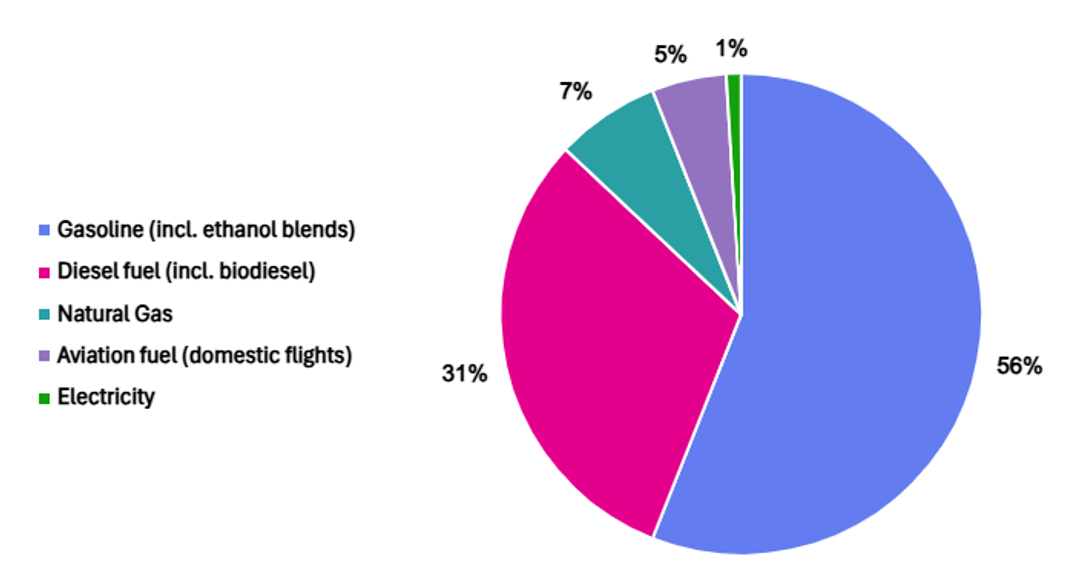
The decarbonization of the transport sector has become a key strategic priority for federal and PT governments that the CFFP aims to support. In 2023, Canada’s transportation sector was the second largest source of its total carbon emissions, accounting for 28% of the total GHG emissions.Footnote 7 Overall, gasoline (including ethanol blends) represents 55% of transport energy, followed by diesel fuel (including biodiesel) at 31% (see Figure 1). Fossil fuels emissions from transportation also contribute to increased air pollution which in turn can increase the risk of adverse health and environmental impacts.Footnote 8
Figure 1: Energy used in transport by fuel/energy carrier
Text version
This pie chart shows the share of different energy by fuel/energy carrier used in transport. Each slice represents one fuel type and its percentage of total transport fuel use. The largest slice is “Gasoline (including ethanol blends”, accounting for 56% of energy use. The next largest category is "Diesel fuel (including biodiesel” at 31%, followed by “Natural Gas” at 7%. Smaller shares include "Aviation fuel (domestic flights) at 5% and “Electricity” at 1%.
Beyond transportation, uses for clean fuels are quite diverse because clean fuels (such as RNG, hydrogen, biofuels, and synthetic fuels) can replace fossil fuels in many sectors, such as:
- Process Heat: Clean fuels can provide high-temperature heat for industries like steel, cement, glass, and chemicals.
- Feedstock: Hydrogen and bio-based fuels can serve as raw materials for producing chemicals, plastics, and fertilizers.
- Power Generation: Clean fuels can be used to power turbines or fuel cells to generate residential and commercial electricity or produce heat.
The engagement found evidence that the CFFP is aligned with broad market needs to support increased domestic clean fuels production. The demand for renewable fuels in Canada, particularly liquid renewable fuels, has seen a significant and steady increase over the last 10 years. This growth in demand has been driven primarily by federal and provincial clean fuel mandates.
At the federal level, two related regulations have been introduced since 2010. From 2010-2022, theRenewable Fuels Regulations (RFR) required minimum renewable fuel content of 5% in gasoline and 2% in diesel. In 2022, this was repealed and replaced by the Clean Fuel Regulations (CFR) which maintains the minimum renewable fuel content in fossil fuels set under the RFR and further requires that liquid fuel producers and importers progressively reduce the carbon intensity (CI) of gasoline and diesel sold in Canada.
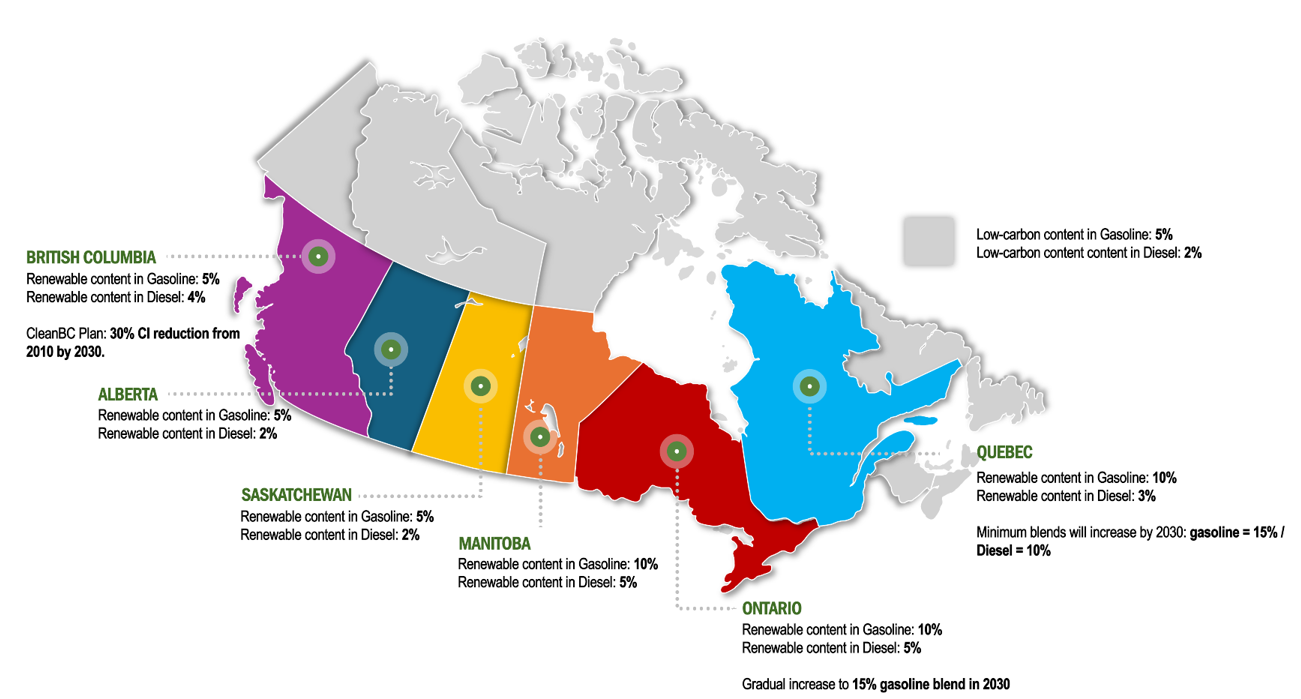
Several provinces (e.g., British Columbia, Alberta, Saskatchewan, Manitoba, Ontario and Quebec) have set minimum renewable content requirements for liquid fossil fuels (see Figure 2) Footnote 9, specifically that companies that supply diesel, gasoline and jet fuel must include eligible renewables fuels in their fuel pool each year. Additionally, British Columbia’s Low Carbon Fuel Standard (LCFS) requires that renewable fuels for gasoline and diesel must be produced in Canada and sets targets for SAF of 1% by 2028 and 3% by 2030.Footnote 10
Figure 2: Provincial Clean Fuels Policies
Text version
| Province/Territory | Percentage of renewable content in Gasoline | Percentage of renewable content in Diesel |
|---|---|---|
| Alberta | 5% | 2% |
| British Columbia1 | 5% | 4% |
| Manitoba | 10% | 5% |
| Ontario2 | 10% | 5% |
| Quebec3 | 10% | 3% |
| Saskatchewan | 5% | 2% |
| New Brunswick, Newfoundland & Labrador, Northwest Territory, Nova Scotia, Nunavut, Prince Edward Island, and Yukon | 5% | 2% |
- British Columbia’s CleanBC Plan aims for 30% Carbon Intensity reductions for gasoline and diesel from 2010 by 2030.
- Ontario plans to gradually increase to 15% gasoline renewable blend in 2030.
- Quebec plans to increase minimum blend requirements by 2030 for gasoline to 15% and diesel to 10%.
These policies helped drive an increase in the consumption of liquid biofuels in Canada, from an estimated 3.7 billion litres in 2021Footnote 11 to 5.1 billion litres in 2024.Footnote 12 Furthermore, as federal Carbon Intensity (CI)Footnote 13 requirements and provincial fuel blending requirements become more stringent, the demand for liquid renewable fuels is expected to increase. Data shows that the domestic demand is expected to increase for:
- ethanol from 4.4 billion litres in 2025 to over 6 billion litres in 2030; and
- biodiesel and renewable diesel from 3.2 billion litres in 2025 to 5.6 billion litres in 2030.Footnote 14
In terms of gaseous fuels, some jurisdictions like QuebecFootnote 15 and British ColumbiaFootnote 16 have introduced blending mandates for the inclusion of RNG in natural gas distribution, including setting a minimum renewable fuel content for distributors of natural gas. Further, some natural gas suppliers have introduced voluntary opt-in programs, providing customers with the choice to pay additional costs to include renewable content in their natural gas, e.g., Fortis BCFootnote 17, EnbridgeFootnote 18 in Ontario and ÉnergirFootnote 19 in Quebec. Federally, Canada does not have a mandate or CFR inclusion for renewable gases like RNG and biogas.
Overall, the adoption of federal and provincial fuel policies and blending mandates have led to the increased use of low carbon fuels, particularly liquid fuels for use in the transportation sector and to a lesser extent gaseous fuels for use in the residential sector.
Canadian liquid renewable fuel production capacity
One challenge is that Canada’s production capacity of renewable fuels has not kept pace with the steep rise in demand. To meet the increased domestic demand for renewable liquid fuels, Canada has relied on imports, particularly from the US. For example, in 2024, domestic production of ethanol accounted for approximately 43% of domestic demand. Further, despite an increase in demand from 2.95 billion litres in 2021Footnote 20 to 4.1 billion litres in 2024Footnote 21, domestic ethanol production remained flat during this period. While domestic production of biodiesel and renewable diesel accounted for most of domestic demand in 2024, Canada still imported a greater volume of these fuels than it produced.Footnote 22 Prior to 2024 imports accounted for the majority of domestic demand. For example, in 2023, domestic biodiesel and renewable diesel production only accounted for 42% of demand.Footnote 23 Further, data shows that 73% of credits generated under the CFR in 2024 for low-carbon intensity fuel supply came from imports, mostly from the US.Footnote 24 As clean fuel domestic blending requirements tighten and demand grows, domestic production will need to increase to further reduce reliance on imports.
Support for the development of codes and standards for low carbon fuels
As the demand for and use of clean fuels increases, particularly hydrogen as an emerging fuel, codes and standards are needed to:
- ensure reliable, safe, and effective production, distribution, storage and end-use of low carbon fuels and associated technologies and infrastructure;
- facilitate the broader adoption of clean fuels; and
- improve the competitiveness of Canadian products and enable trade and access to export markets, especially when standards align with practices and standards in other jurisdictions.Footnote 25,Footnote 26
The engagement found that the Clean Fuels Codes and Standards Program was the only program in Canada that is providing Gs&Cs funding for the development of codes and standards for low carbon fuels during the majority of the program’s implementation. Further, evidence indicates that the federal government plays an important role in supporting the development and adoption of codes and standards by:
- Setting policy directions and priorities, e.g., supporting the development of the Hydrogen Codes and Standards Roadmap which is a key activity in the implementation of the Hydrogen Strategy for Canada
- Providing funding to accredited standard development organizations (SDOs) for the development of standards for hydrogen and other alternative fuels via G&Cs
- Representing Canada in international fora and ensuring alignment of domestic standards with international standards and best practices, e.g., participating in the International Partnership for Hydrogen and Fuel Cells in the Economy (IPHE)
The Hydrogen Strategy for Canada (2020) put forward recommendations that aimed to harmonize and address gaps in hydrogen codes and standards. The development of the Canadian Hydrogen Codes and Standards Roadmap (“Roadmap”) was co-led by staff from the Clean Fuels Codes and Standards Program and from the Standards Council of Canada (SCC) and was a key activity in addressing these recommendations. The Roadmap identifies and prioritizes gaps in codes and standards along the hydrogen value chain, from production, delivery and storage to end-use. The overall objective of the Roadmap is to foster hydrogen adoption and deployment in Canada.Footnote 27
Alignment with other federal and provincial programs
According to many key informants, the CFFP complements initiatives like the Canada Infrastructure Bank (CIB), the Strategic Innovation Fund, Canada Growth Fund, Net-Zero Accelerator Initiative, the Low Carbon Economy Fund in their support for the clean fuels production sector and related infrastructure. At the provincial level, it complements programs like Alberta’s Technology Innovation and Emissions Reduction Regulation Program and Quebec’s Programme de soutien à la production de gaz naturel renouvelable.
The jurisdictional scan shows that there are many other programs at the federal and provincial levels that support the transition to low carbon fuels and provide funding to projects that aim to increase the production capacity of these fuels. The CFFP is distinct from other provincial and territorial clean fuel initiatives because it sets a strict Carbon Intensity (CI) threshold, whereas many other provincial and territorial clean fuel initiatives do not. The CFFP is also somewhat unique in terms of design and implementation within the federal government. The CFFP was redesigned following Budget 2024 to avoid any overlap with the Clean Hydrogen Investment Tax Credit (ITC) introduced in 2023.Footnote 28 The program can now only provide funding for hydrogen projects that are not eligible for the hydrogen ITC. Further, foundational documents note that the CFFP was expected to complement the CFR by specifically supporting increased liquid low carbon fuel production.
NRCan’s Agreement Modules Interfaces (AMI), an internal application system used to manage grants and contributions data, shows that other federal departments and agencies and provincial governments were major contributors to Production Stream projects. For example, funding was provided by:
- Federal departments and agencies, including the Canada Infrastructure Bank, Agriculture and Agri-Food Canada (AAFC), Environment and Climate Change Canada (ECCC) and Innovation, Science and Economic Development (ISED).
- Provincial governments, including the Governments of Quebec, Manitoba and British Columbia.
Interviews noted that funding for early-stage projects such as feasibility and front-end engineering design (FEED) studies is limited and that the CFFP plays a key role in this area. Some of the proponents who received funding for feasibility / FEED studies indicated that they may not have undertaken the project without program support as funding is not readily available for this type of activity. Although the engagement found evidence of the CIB providing loans for feasibility / FEED studies related to clean fuel productionFootnote 29, grants and contributions are perceived to be a better option by proponents, particularly when the likelihood of such studies leading to a production facility is not guaranteed.
Engagement and communication
External communication
The engagement examined whether mechanisms are established to provide timely updates, feedback, and ongoing communication with proponents.
Through a review of documentation and interviews with key stakeholders, the engagement team found that the program communicated with, and supported proponents through various mechanisms throughout program implementation, including FAQs, information sessions, workshops, a dedicated program mailbox, and ongoing correspondence. In addition, several targeted outreach and engagement activities were conducted, including:
- Virtual pre- and post-launch information and Q&A sessions (in English and French) to clarify eligibility requirements and the application process;
- Engagement sessions held prior to the launch of applications for the three CFFP streams, to share information and gather feedback on program design;
- Collaboration with NRCan’s Canadian Forestry Service (CFS) and other government departments (OGDs - AAFC, ISED, Statistics Canada, Prairies Economic Development Canada (PrairiesCan), ECCC, Federal Economic Development Agency for Southern Ontario (FedDev Ontario) to refine the Biomass Stream’s design under CFFP 1.0;
- A Request for Information (RFI) process launched in summer 2021 to collect input from Indigenous partners to assess project readiness and gauge interest in a call for proposals; and
- Five engagement sessions held in September 2024 during the CFFP redesign process, involving more than 600 stakeholders to gather feedback on program design changes.
The engagement team also found that program service standards were established and communicated to proponents. These service standards were published on NRCan’s external website to inform proponents. However, no service standard had been established for acknowledging receipt of applications, as per NRCan’s Transfer Payment Standard Operating Procedures (SOPs). Although this service standard was not formally established nor communicated to proponents in advance, program management informed the engagement team that, in practice, applicants received an acknowledgement of receipt within 48 hours. For CFFP 2.0, the acknowledgement of receipt process was automated through a grants management solution system.
The engagement team further observed that the program’s target is to meet its service standards at least 80% of the time. In contrast, the Transfer Payment SOPs require a 90–95% adherence rate to core service standards, with any deviation requiring justification. No documentation was found to explain the program’s lower target.
In addition, the engagement team expected that service standards would be monitored for adherence. Evidence of monitoring, however, was limited to the service standard for claim payments. This standard was tracked for fiscal years 2023–24 and 2024–25 through a documented program tracker. The engagement found, however, that the performance metrics being tracked did not align with the established service standard. The service standard specifies that payments are to be issued within 30 business days of receiving a duly completed and documented payment claim, whereas the program’s tracking measured the time elapsed between receipt of a completed claim and its internal submission to the NRCan Finance group for payment processing.
Engagement activities
The joint audit and evaluation examined the extent to which engagement activities conducted by the CFFP were effective in reaching a broad range of stakeholders to share program information and gather feedback.
Interviews noted that engagement activities like information webinars were effective in identifying changes and gathering feedback. Stakeholders appreciated the clear framework for discussions. A few suggested in-person workshops for more effective dialogue. Interviewees also suggested that the program undertake more targeted engagement by fuel type. Some stakeholders explicitly stated that they felt their feedback was considered and sufficiently reflected in the program’s second launch. While the program managed to reach a broad range of stakeholders to share information on the program application process and requirements, evidence suggests that there may have been a lack of clarity regarding some program requirements and processes. For example:
- Program process timelines: Although service standards were communicated, stakeholder feedback indicated delays in the application process and in finalizing Contribution Agreements (CAs). Unclear response times from the program also contributed to uncertainty regarding program processes. To improve clarity during the application process, stakeholders recommended that the program should provide timely and transparent communication whenever delays occur.
- Program reporting requirements: A few proponents noted that there was a lack of clarity regarding expectations for project reporting. The CFFP 1.0 applicant guide provide a general outline of reporting requirements for proponents but does not provide details on the frequency of reporting or templates / sample reports. Proponents also described a lack of consistency in reporting templates used by the program, noting that templates and the types of information requested underwent frequent changes over the course of their projects. Further, proponents also described the program’s reporting requirements as burdensome.
Progress towards the achievement of results
Overall, the engagement found that the CFFP made progress in the achievement of most of its immediate outcomes and some intermediate outcomes. However, it should be noted that nearly half of CFFP projects (48%, n=29) have an expected completion date of March 31, 2026 (the deadline set for projects to be completed under CFFP 1.0), leaving no flexibility for shifts in project timelines and putting some projects at risk of not meeting program requirements. Program data identified three of these projects as at risk of being delayed, which may impact program results. However, given the extension of the CFFP and recent changes to its Ts&Cs, the program now has the authority to extend project timelines, with some being extended beyond March 31, 2026. The remaining 52% of CFFP projects are expected to be completed or have been completed prior to the March 31, 2026, deadline. These numbers are subject to change as the program works with proponents to enable successful project completion.
With respect to targets for hydrogen production, program managers indicated that these were known from the outset to be ambitious given the current conditions in this sector.
| Outcome | Indicator | Target | Status | Date established | Date to achieve |
|---|---|---|---|---|---|
| Clean Fuels production capacity | |||||
|
Number of new or expanded clean fuel production facilities | Minimum of 10 hydrogen production facilities | 2 ongoing capital projects. Expected to achieve 20% of target |
April 2021 | By March 31 2026 |
| Number of new or expanded clean fuel production facilities | 6 – 8 production facilities for other low carbon fuels | 12 completed and ongoing projects:
|
April 2021 | By March 31 2026 | |
|
Clean fuels production capacity in billions of litres (BL), gigajoules (GJ) or megatonnes (MT) | i. Hydrogen Facilities:
6 – 8 projects, 2.5 – 3.0 BL new annual capacity |
i. Hydrogen Facilities:
Expected to achieve 3% of production capacity target ii. Other Clean Fuels Facilities:
|
April 2021 | By March 31 2026 |
| Biomass | |||||
|
Number of biomass hubs established in Canada | 7 biomass hubs | 6 ongoing capital projects Expected to achieve 86% of target | April 2021 | By March 31 2028 |
|
i. Increase (%) in the availability (i.e. tonnage) of clean fuel feedstocks ii. Increase (number) in the number of feedstocks (i.e. diversity) being used for clean fuel production | i. 10% increase (or 473,200 tonnes, based on baseline) ii. 2 additional types of feedstocks are added by the end of the program | i. 409,130 tonnes in expected production
Expected to achieve 86% of target ii. Funded projects expected to use one or a combination of the following feedstocks: used cooking oil, agricultural and crop residues, and animal and organic waste Achieved target |
April 2021 | Throughout program duration (until 2025/26), starting in year 2 |
| Increased active participation | |||||
|
Active participation (% increase) of Indigenous Peoples and underrepresented groups on clean fuel projects offered by the program | Up 50% increase at the end of the program | Unknown | April 2021 | By March 31 2026 |
| Codes and Standards | |||||
|
Number of new and/or revised published bi-national (where possible) codes and standards for alternative fuels, vehicles or infrastructure based on workplan/priority list developed | 8 – 10 per year by 2024 | 77 total standards published between 2021 to 2025, an average of 26 standards published annually Exceeded target | April 2021 | By 2024 |
Contributing to the increased production capacity of low carbon fuels in Canada
New or expanded production (excluding hydrogen) facilities, as of March 2026
| Capital Projects | Total |
|---|---|
| New Production Capacity Stream | |
| Ethanol | 1 |
| Renewable Diesel | 1 |
| Renewable Natural Gas | 9 |
| Indigenous-led Stream | |
| Renewable Natural Gas | 1 |
| Grand Total | 12 |
CFFP is on track to exceed its target 6 – 8 new or expanded production facilities for non-hydrogen low-carbon fuels by March 2026, with 13 completed or active production capacity projects (see Table 2).
At the time of writing, 11 of 13 capital projects have an expected completion date of March 31, 2026 under both the Production and Indigenous-led Streams. Two capital projects under the Production Stream were identified in program data as at risk of being delayed. However, as noted previously, given the extension of the CFFP and recent changes to its Ts&Cs, the program now has the authority to extend project timelines beyond March 31, 2026.
Production capacity
The program’s target for its new or expanded clean fuels production facilities outcome was to have 6 to 8 liquid fuel production capital projects collectively producing 2.5 to 3 billion litres of clean fuel annually March 2026. As of August 2025, the program is expected to partially achieve its target. The program has supported two liquid fuel production capital projects expected to produce a combined ~1.2 billion litres of biofuels annually, representing approximately 48% of the CFFP’s production capacity target:
- One facility with an expected production capacity of 220 million litres of ethanol annually.
- Another completed facility with a production capacity of approximately 1 billion litres of renewable diesel annually.
However, the engagement identified factors that have and may continue to limit the program’s progress in the achievement of these outcomes as follows:
- While the target is focused on liquid fuels, most capital projects supported by the program under CFFP 1.0 are targeting gaseous fuels, mainly RNG. Further, nearly all applications received under CFFP 2.0 as of June 2025 were targeting RNG.
- Evolving market and economic conditions impacting the clean fuels sector in Canada, including CFFP projects. For example, one CFFP completed project – a renewable diesel production refinery – initiated a temporary shutdown in January 2025 resulting from lower-than-normal margins and the discontinuation of some US clean fuel subsidies at the end of 2024. The facility resumed operations in June 2025. Further, documents point to at least three CFFP Production Stream projects that were terminated in part due to challenging market conditions.
Contributing to the increased production capacity of hydrogen
New or expanded hydrogen production facilities
The program is not expected to achieve its target of 10 hydrogen production projects, with 0.5 – 0.7 megatonnes (MT) in annual production capacity, by March 2026. As of August 2025, the program supported two hydrogen capital projects with an expected combined production capacity of 13,073 tonnes of hydrogen annually (or 0.013 MT), representing approximately 3% of the CFFP’s production capacity target:
- A facility with an expected production capacity of 90 MW, producing an estimated 11,000 tonnes of hydrogen annually.
- Another facility with an expected production capacity of 20 MW, producing an estimated 2,073 tonnes of hydrogen annually.
Initially, there were 11 hydrogen production projects that received a Letter of Conditional Approval (LOCA); however, due to external issues like post-pandemic procurement challenges and shifting market conditions, several were unable to proceed. Further, changes to eligibility under CFFP 2.0 limit funding to hydrogen production projects not already covered by the Clean Hydrogen Investment Tax Credit.
Contributing to the increased production of low carbon fuel feedstocks
Construction of biomass hubs
An outcome of the CFFP was to support projects (i.e., biomass hubs) that contribute to the availability of a steady and usable supply of sustainable feedstock for clean fuel production facilities across the country. Biomass hubs supported by the program are expected to help establish biomass supply chains that can aggregate, process, handle and store a range of biomass feedstocks (animal or plant based) from various locations and sources to facilitate their availability and use in clean fuel production.
During the engagement period the program had a total of six biomass hub capital projects, putting the CFFP expected to partially meet its expected target of seven by March 2028. Two of these projects are located in Ontario and four are in Alberta.
However, these capital projects all have an expected completion date of March 31, 2026, leaving no flexibility to proponents if the projects are delayed or terminated. One of these projects was identified in program data as at-risk of being delayed. However, as noted previously, given the extension of the CFFP and recent changes to its Ts&Cs, the program now has the authority to extend project timelines beyond March 31, 2026.
While not directly contributing to feedstock availability, the CFFP also funded seven feasibility and FEED study projects under the Biomass Stream.
Production and diversification of clean fuels feedstocks
Another outcome of the CFFP was to diversify Canadian clean fuels feedstocks. Diversifying clean fuel feedstocks is beneficial because it enhances supply security, reduces exposure to price volatility, and improves economic resilience for producers.Footnote 30 The CFFP has successfully achieved one of two targets under this outcome:
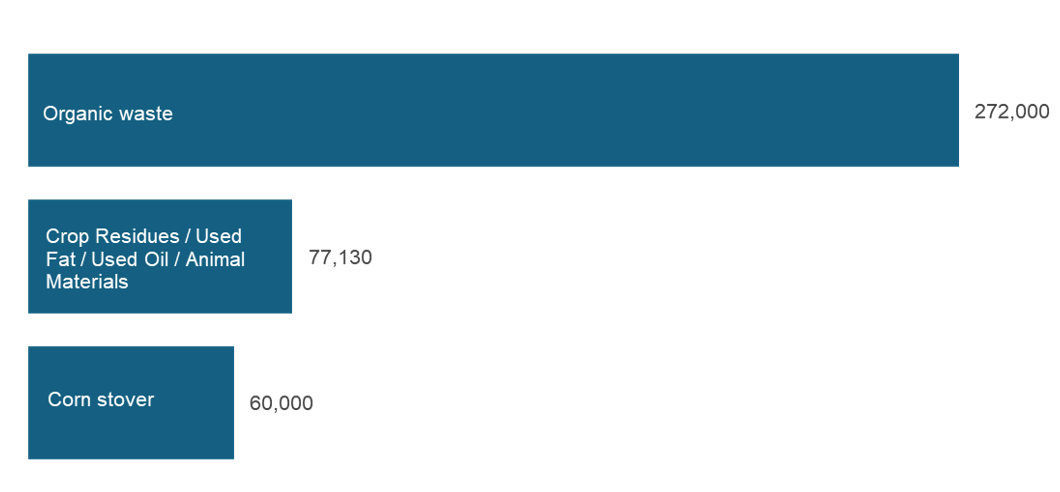
- CFFP funded projects are expected to use one or a combination of the feedstocks listed in Figure 3, exceeding its goal of two additional types of feedstocks added by the end of the program.
- CFFP is expected to partially achieve its other target of a 10% increase (473,200) in the availability (tonnage) of clean fuels feedstocks throughout program duration (until 2025-26) – starting in year 2 – with production expected to reach 409,130 tonnes (86% of its target).
Figure 3: Distribution of Planned Feedstocks for Clean Fuel Production (by tonnage)
Text version
This bar chart shows planned tonnage of feedstocks for clean fuels production by type of feedstock. “Organic waste” has the largest planned tonnage of 272,000, followed by “Crop Residues/ Used Fat/ Used Oil/ Animal Materials”, with 77,130 tonnes, and “Corn stover” with 60,000 planned tonnes.
Integration of GBA+ consideration to improve program participation
The CFFP has integrated Gender-based Analysis Plus (GBA+)Footnote 31 considerations in its design to improve program participation and ease administrative burden for certain underrepresented groups and regions. However, challenges and gaps in data collection make it difficult to assess program impacts on these groups.
Contributing to increased active participation with and by Indigenous Peoples and other underrepresented groups
Increasing active participation by Indigenous Peoples and other underrepresented groups by up to 50% by March 2026 is one of the intended outcomes of the CFFP; however, progress toward achieving this outcome could not be ascertained largely due to program data collection gaps and challenges.
Data gaps and challenges
While the program implemented measures that were intended to improve program access for and reduce the administrative burden on some groups, the engagement had limited information to assess the CFFP’s impact in relation to contributing to the increased participation with and by Indigenous Peoples and other underrepresented groups in the clean fuels sector.
CFFP project progress and completion reports include a section pertaining to workforce diversity which aims to collect data on diversity in proponent company’s personnel, including the number of employees who identify as women, Indigenous people, immigrants, visible minorities and gender diverse people. At the time of the engagement, the program was not tracking the workforce diversity data from project-level reporting. Further, the review of project files showed that workforce implementation information provided by proponents was inconsistent for most projects. For example, three projects reported direct employment as a percentage; others were whole numbers or decimals. Furthermore, much of the information on workforce implementation of projects was left blank for almost all the projects reviewed, and it was unclear if it was indicative of zero or if the proponent did not have the workforce information.
Interviews with proponents highlighted challenges regarding providing workforce diversity data, noting that self-identification information is provided voluntarily by employees and thus the information may be incomplete or not available, and in some cases privacy policies limit their ability to share this information with third parties.
Implementation of measures to improve program access
Foundational documents note that GBA+ was central to the CFFP’s design with investments through the program contributing to promoting improvements in gender and diversity imbalances in the clean energy sector.
The CFFP adapted certain program requirements for applicants with projects located in the Atlantic provinces and the Territories by lowering minimum production capacity requirements for liquid and gaseous fuels.
| Production – Rest of Canada |
Production – Atlantic Canada and Canada’s North |
||
|---|---|---|---|
| CFFP 1.0 | CFFP 2.0 | CFFP 1.0 | CFFP 2.0 |
|
Liquid clean fuels: 30 million liters per year Gaseous clean fuels: 50,000 gigajoules per year |
|
Liquid clean fuels: 15 million liters per year Gaseous clean fuels: 30,000 gigajoules per year |
Indigenous-led stream
Both CFFP 1.0 and 2.0 have some eligibility criteria and requirements that are unique to Indigenous-led projects. To be eligible for funding under this Stream in CFFP 1.0, organizations needed to demonstrate a minimum of 50% Indigenous ownership of the proposed project. Like the CFFP Production stream, the Indigenous stream in CFFP 1.0 included two components:
- Production capacity build-out projects: the expansion or conversion of existing facilities, and buildout of new facilities; and
- Production facility feasibility assessments / studies: feasibility studies and FEED studies.
To reduce the administrative burden for Indigenous applicants, the program offered the option to submit applications for end-to-end projects, which included a feasibility study project, a FEED study project and a production project via a single application. However, in practice, this option resulted in notable challenges and was discontinued under CFFP 2.0. The end-to-end application process was confusing for applicants and set expectations of funding being secured for later phases of project work, which was not the case. Further, other challenges described by the program include:
- information available to applicants at the initial project stages was insufficient and not accurate enough (e.g., availability of accurate cost estimates) to assess costs of the construction phase of a project.
- each project needed to have a unique and distinct application and funding decision associated with it, thus the program could not make a single funding decision subject to future information.
- it would have been impossible for proponents to complete the necessary studies, make final investment decisions and construct a facility by March 31, 2026.
Both the Indigenous-led and Biomass Streams applicant guides note that for Indigenous applicants wishing that their application be submitted, in part or in whole, in an Indigenous language, the program would facilitate the translation of the application to English or French at the choice of the applicant. Once translated, related document(s) would be returned to the applicant for accuracy verification, prior to the program’s review.
Further, the program also adapted certain program criteria under the Indigenous stream. For example:
- Lower minimum production capacity requirements (for fuel production projects)
- Lower minimum output of processed feedstock (for feedstock production projects)
- Funding limits, i.e., greater proportion of project costs covered by NRCan funding
- Non-repayable contributions for organizations that can demonstrate at least 50% Indigenous ownership
- Slightly lower firm financing requirements
Additional information on program criteria can be found in Appendix B.
Program results – Indigenous projects
As of March 2025, available data shows that the CFFP received a total of 33 applications under its Indigenous-led Stream. As of August 2025, the CFFP signed a total of ten CAs under this Stream, the majority of which were for feasibility and FEED studies. The remaining 23 applications were rejected due to not meeting the program eligibility criteria or were deemed incomplete, even after additional outreach from the program. Further, the CFFP’s Biomass Stream, which included a separate continuous intake process for meaningfulFootnote 32 and majorityFootnote 33 Indigenous ownership projects, received a total of three applications from organizations identifying as fully or majority Indigenous-owned. One of these applications resulted in the signing of a CA.
| Production – Indigenous-led Stream | 10 | $55,817,102 |
|---|---|---|
| Feasibility / FEED | 9 | $17,700,435 |
| Production | 1 | $38,116,667 |
Evidence suggests that program parameters may have impacted uptake under the Indigenous-led Stream. Under CFFP 1.0, applicants to this Stream were required to demonstrate a minimum of 50% Indigenous ownership on their projects. Stakeholder feedback received by the program described this requirement as too high for many projects and suggested that the threshold be lowered to encourage broader participation. Feedback described access to capital and resources as a challenge for many Indigenous entities to meet the 50% ownership requirement.
Projects located in Atlantic Canada and the North
In terms of regional participation in the program, available data shows that of 239 applications received under the CFFP 1.0’s three streams, 22 (or 9%) were for projects located in the Atlantic provinces or the Territories. Of these, CA data shows that one in Atlantic Canada (Newfoundland and Labrador) was selected for funding. None of the funded projects were located in the Territories.
| Regions | Production | Biomass | Indigenous-led | Total | ||||
|---|---|---|---|---|---|---|---|---|
| n | % | n | % | n | % | n | % | |
| Atlantic provinces | 16 | 10% | 2 | 4% | 2 | 6% | 20 | 8% |
| Territories | 0 | - | 0 | - | 1 | 3% | 1 | 1% |
Capacity challenges
Proponent interviews noted that some smaller organizations and Indigenous communities faced challenges in meeting program administrative and reporting requirements. Interviews noted that reporting requirements are not adapted to proponent capacity nor to the size or complexity of the project. All proponents provide the same report notwithstanding the size of the firm. Larger firms have more capacity than smaller firms.
Participants to recent NRCan engagements have emphasized the importance of building capacity within Indigenous groups, both in terms of community readiness and project-specific capacity, as being essential for their ability to effectively engage in and benefit from economic development opportunities, should they choose to do so.Footnote 34 While federal initiatives often include funding streams for capacity-building, this program’s application requirements assume a high level of organizational and technical capacity, which may exceed the resources available to smaller organizations and Indigenous communities.
Data shows that, as of March 2025, nearly half of applications (14 of 33) received under CFFP 1.0’s Indigenous-led Stream were deemed “incomplete”. Documents note that the program attempted to contact applicants by sending an RFI via email and providing opportunity to submit missing information on the application but did not receive responses from the proponents.
While the program has made efforts to broaden access, limited success in accessing CFFP funding among certain groups suggests that the current program design may not fully address existing barriers to participation. Additionally, following engagement with Indigenous communities, the program design assumed a higher level of project readiness than was present. Specifically, it overestimated the number of Indigenous-led projects that were ready for immediate implementation (i.e., “shovel ready”). This misalignment between expectations and actual readiness created challenges for timely delivery and highlighted the need for more accurate assessments of project development stages during program planning.
Progress towards addressing gaps in clean fuels codes and standards
The CFFP’s Codes and Standards Program’s target was to develop new and/or revise 8 – 10 published codes and standards per year, by 2024. The Codes and Standards Program contributed to the development and publication of 77 standards by supporting the Canadian Standards Association (CSA Group) and the Canadian General Standards Board (CGSB), for an average of 25 per year.
| Standards Association | 2021-22 | 2022-23 | 2023-24 | 2024-25 | Total |
|---|---|---|---|---|---|
| CSA* | 0 | 45 | 25 | 4 | 74 |
| CGSB | 1 | 1 | 1 | 0 | 3 |
| Total | 1 | 46 | 26 | 4 | 77 |
*Note: Some standards appear more than once in the CSA dataset and the data presents all standards published and cannot be disaggregated according to whether standards are new, amended or new editions. Further, the data cannot be disaggregated according to the type of fuel, vehicle or infrastructure for which the standards apply. The data includes standards developed for low carbon fuels, mainly hydrogen and solid biofuels (e.g., wood pellets) and alternative fuels, primarily natural gas.
Program activities also supported the development of the Hydrogen Codes and Standards Roadmap,Footnote 35 which provides a strategic framework to harmonize hydrogen codes and standards in Canada with international best practices, ensuring safety, interoperability, and market confidence. Also, the Roadmap supports the implementation of Canada’s Hydrogen Strategy by identifying, prioritizing and addressing gaps in codes and standards across the hydrogen value chain. The aim is to accelerate hydrogen adoption and deployment in the transportation, industrial, commercial and residential sectors, while fostering innovation and reducing barriers to commercialization.
Contributing to the increased adoption of clean fuels codes and standards in Canada
The program is not systematically collecting data on the number of PTs that adopt new and/or revised bi-national codes and standards. The program noted that it is challenging to collect data for this indicator as it there is no mechanism through which the program can actively track changes in federal or PT policies or regulations, including references to NRCan funded standards and whether those that are cited are up to date.
Further, the program described challenges that impact the extent to which standards are adopted by jurisdictions:
- the adoption of standards is voluntary, meaning that jurisdictions are not obligated to incorporate standards in regulations; and
- PTs may have concerns about some codes or standards, e.g., concerns regarding potential adverse impacts of code adoption on industry.
As of July 2025, there is evidence that the program is expected to partially achieve its target of eight additional PTs adopting bi-national codes and standards by March 2026. Seven hydrogen-related codes and standards developed with funding by NRCan have been referenced in regulations or guidelines across Canada, including at the federal, PT and municipal levels. See examples in Table 7.
| Code / Standard | Description |
| Canadian Hydrogen Installation Code (CHIC) | Used by seven provinces, this code is to establish the installation requirements for hydrogen‑generating equipment for non‑process end use, hydrogen utilization equipment, hydrogen‑dispensing equipment, hydrogen storage containers, hydrogen piping systems, and their related accessories.Footnote 36 |
| CSA HGV 4.9, Hydrogen refueling stations standard | This standard specifies the design, installation, operation, and maintenance of site-built and modular gaseous hydrogen fuelling stations (HFS) intended to fuel on-road vehicles.Footnote 37 This standard is not referenced in any provincial or territorial regulations but is referenced in the CHIC and in provincial guidelines in three provinces. |
| 2023 edition of CSA Z662, Oil and gas pipeline systems standard | These are updates and changes to the existing CSA Z662 standards.Footnote 38 Includes standards for hydrogen and hydrogen blend pipeline systems, including standard addressing the unique design, material, construction and operational considerations for pipelines containing hydrogen. The standard is cited in two federal regulations and in various regulations in all provinces and territories, with the exception of Nunavut. The standard is also cited in national codes, including the National Building Code of Canada (NBCC) and the CHIC. |
| CSA B149.3, Code for the field approval of fuel-burning appliances and equipment | This Code sets the requirements for gas‑appliance fuel components downstream of the manual shut‑off valve and adds extra rules for industrial ovens/furnaces/atmosphere generators at near‑atmospheric pressure.Footnote 39 Includes provisions for hydrogen, specifically addressing the use of hydrogen and hydrogen-natural gas blends as fuel. This code has been adopted by all provinces and territories, with the exception of Nunavut. |
Clean Fuels codes and standards program promotion and collaboration activities
The Clean Fuels Codes and Standards Program conducted engagement activities to promote the development, publication and harmonization of codes and standards for hydrogen and other alternative fuels. In particular, the program played a co-lead role, along with the Standards Council of Canada, in implementing codes and standards related recommendations stemming from the Hydrogen Strategy of Canada via its involvement in the Hydrogen Codes and Standards Working Group (CSWG). Examples of engagement activities undertaken by the program include:
- MOU with the Standards Council of Canada (SCC): NRCan signed an MOU with the SCC for the period March 2022 to March 2024. The objective was for the department to engage the SCC to provide project management and oversight for the scoping and program management of R&D projects related to codes and standards in support of the implementation of the Hydrogen Strategy for Canada.
- MOUs with the Canadian General Standards Board (CGSB): During the engagement period, NRCan signed two MOUs with the CGSB. The objective of the MOUs is to support the development and maintenance of the CGSB collection of petroleum and alternative fuel standards.
- Hydrogen Codes and Standards Working Group (CSWG): co-chaired by NRCan and the SCC, the working group was established in April 2021 to support the implementation of the Hydrogen Strategy for Canada. Its objective is to coordinate and harmonize national efforts to address codes and standards-related barriers to and opportunities for hydrogen deployment from both safety and commercialization perspectives. The CSWG includes 250 members from various stakeholder groups, including government, standards development organizations, industry and academia.
- International Partnership for Hydrogen and Fuel Cells in the Economy (IPHE): NRCan is a member of the IPHE. The IPHE is an international governmental partnership established to promote cooperation and accelerate the development and deployment of hydrogen and fuel cell technologies. It is intended to serve as a forum for advancing policies and common codes and standards regarding hydrogen.Footnote 40
Challenges to program spending
Program G&C funding lapses
Overall, the CFFP spent a total of $234.2 million in Gs&Cs between 2021-22 to 2024-25. This represented approximately 21% of its initial allocation of $1.1 billion for this period. Underspending led to significant lapses in CFFP funds, with the program lapsing 42% of its initial funding allocation (or $473.2 million). Most lapsed funds came in year 2 of the program when $340 million in Gs&Cs funding under the Production Stream went unspent due to significant delays in program processes and funding decisions.
Delays in program implementation contributed to lapses. While the launch of program’s Production Stream was mostly aligned with planned timelines, the application evaluation process and funding decisions were significantly delayed. The first contribution agreement was signed in May 2023, which was approximately a year later than initially projected. Documents indicate that the Call for Proposals process for the Biomass Stream was launched 12 months later than originally planned (as described in foundational documents). The RFP process was launched in August 2022 and closed in November 2022. According to AMI data, the first CA for this stream was signed in January 2024.
To limit funding lapses, the program took steps such as:
- reducing threshold for funding consideration from 70% to 60%; and
- reprofiling a portion of its initial allocation to support CFFP 2.0.
The engagement requested disaggregated expenditure data for the Clean Fuels Codes and Standards Program; however, this information was unavailable as the program does not systematically track disaggregated financial data for this component.
Administrative costs expenses
The program underspent salary and O&M budgets. Overall, the CFFP spent $16 million in salaries and O&M, representing 56% of its related budget:
- O&M: program spent $4.7 million, representing only 33% of its O&M budget
- Salaries: program spent $11.4 million, representing 78% of its salary budget
Data shows that the largest gap in terms of spending was in year one, with the program only spending 38% of its total budget. Program spending increased in year two and remained fairly stable in subsequent years.
The engagement requested disaggregated expenditure data for the Clean Fuels Codes and Standards Program; however, this information was unavailable as the program does not systematically track disaggregated financial data for this component.
Evolving economic and policy conditions that impact program delivery and effectiveness
Evidence points to external policy and economic factors that have impacted the low carbon fuels market in Canada and the CFFP’s effectiveness.
COVID-19
File and document reviews, as well as interviews noted that COVID-19 and related supply chain issues impacted CFFP project timelines and outcomes.
Uncertainty and difference in domestic and international clean fuel policies
During its implementation, program documents note that the domestic biofuels industry has expressed some concerns regarding the suite of capital incentives currently available in Canada. Specifically, incentives were viewed are relatively modest in scale and insufficient to enhance the sector’s competitiveness against international markets. Interviews, document review and literature review highlight the differences in policy approaches between Canada and the US as having a significant impact on the global competitiveness of the Canadian clean fuels market, such as:
- The introduction of the US Inflation Reduction Act (IRA) in 2022, which stakeholders perceived as more competitive incentives and provided more flexible funding mechanisms like ITCs. This directly affected Canadian biofuel projects and was cited as a factor contributing to the shutdown of some facilities. However, program documents and interviews note that the CFFP was not expected to compete with the production tax credit provided by the US IRA.
- Program documents noted that the IRA directly impacted the RNG and biogas sector in Canada, making attracting investments more difficult and with several indicating that planned future investments in Canada were on hold.
- Program documents also noted that production facilities faced competition from low-cost renewable diesel imported from the US. Following the announcement of the IRA, several RD and SAF producers indicated their intention to pause or reconsider plans for fuel production in Canada. For example, Parkland, a Calgary-based energy company, cancelled its plans to build a $600 million RD facility in Burnaby, BC in 2023. Parkland cited the US IRA and rising project costs as contributing to a lack of market certainty regarding investments in low carbon fuels.Footnote 41
- In January 2025, the US introduced a Clean Fuel Production CreditFootnote 42 under the IRA available only to US-based producers. These incentives replace the US Blenders Tax Credit (BTC)Footnote 43 that was previously accessible to Canadian exports.
Further, documents point to an anticipated oversupply of renewable diesel in the US during the summer of 2024. US producers were expected to sell excess renewable diesel in other markets, including Canada. This lowered prices, particularly in BC. In late 2024, Tidewater Renewables, operating Canada’s first standalone renewable diesel refinery in Prince George, BC, reported challenges resulting from competition with imported US fuel, including the risk of shutting down refinery operations.Footnote 44
Interviews and literature review also identified the lack of long-term policy certainty related to carbon pricing and emissions regulations in Canada as impacting the low carbon fuel market. In particular, the lack of long-term funding for low carbon fuel commitments in Canada and recent uncertainty in policy prioritiesFootnote 45 may impact investments in low carbon fuel projects.
Governance and delivery
Processes are generally in place to support the administration of the CFFP; however, opportunities exist to enhance their effectiveness. While standardized tools guide program delivery, improvements are needed in updating committee terms of reference, program tools, documenting conflict-of-interest declarations and in monitoring and meeting service standards.
Roles and responsibilities
The engagement sought to determine whether roles and responsibilities are clearly defined, documented and communicated.
Based on the review of program documentation and interviews with program representatives and stakeholders, key program administration roles and responsibilities are clearly defined and documented through governance materials and organizational charts. The roles of the Investment Committee and the Evaluation Committee are well established and formally outlined in their respective Terms of Reference (TOR). Their high-level responsibilities are summarized below:
- Evaluation Committee: Reviews and validates application scores, builds consensus on results, ranks applications, and provides strategic recommendations for approval.
- Investment Committee: Reviews the recommendations from the Evaluation Committee and endorses selected projects for ADM approval.
The engagement team noted that the ToR for the Evaluation Committee had not been updated to reflect the roles and responsibilities under the redefined CFFP 2.0. Upon discussion, program management clarified that while the ToR was not formally revised, the roles and responsibilities of the Evaluation Committee remained largely unchanged between CFFP 1.0 and CFFP 2.0, except for the removal of the project ranking requirement. Program staff conducted an onboarding session with committee members, during which the applicant’s guide and scoring matrix were presented and explained to ensure a full understanding of the evaluation process. In addition, financial merit assessments are conducted by an external public accounting firm, whose roles and responsibilities are outlined in their contract.
Given that appropriate processes were in place to ensure reviewers were sufficiently informed of their roles and responsibilities, and that financial assessments are governed by a separate contractual arrangement, no further recommendation is required.
Internal communication
The engagement team examined whether communication mechanisms are in place to ensure the timely sharing of relevant information with program personnel and management.
The engagement team found that internal communication mechanisms are in place to share information with program staff through various tools over the course of the program (e.g. program decision tracker, implementation tracker, etc.). Interviews noted that program information is also communicated verbally to program staff, which generally meets their operational needs.
The draft Program Procedure Manual reviewed during the engagement was developed to guide personnel and program management in the day-to-day administration of the program and has been communicated to staff. While it has not yet been formally approved, program management noted that the manual is intended to function as an evergreen document. As such, new processes and individual components are approved and finalized as they are completed.
Due diligence – Evaluation of proponents
The engagement sought to determine whether processes are in place to ensure due diligence in the evaluation of proponents against established criteria in a consistent, transparent, and timely manner.
Based on the review of program documentation, the engagement team noted that pre-determined assessment criteria were established prior to being communicated to applicants, and that standardized tools/templates were used by the program to support consistency in the evaluation of proposals.
The engagement team sampled eight contribution agreements to determine whether applicant proposals were assessed against pre-established criteria in a timely manner. The results showed that all proposals sampled were assessed against the established selection criteria; however, the assessments were not completed within the expected timelines. Specifically, seven of the eight proposals sampled were not processed within the established program service standards of 120 days from receipt of the submission to issuance of the letter of approval. Program management advised that delays in proposal assessment were due in part to a significantly higher-than-expected volume of applications and delays in the departmental approval process.
While proposals are evaluated against pre-established criteria and standardized tools support consistency, delays in completing assessments may affect timely funding decisions, which could hinder proponent planning and project implementation.
Funding agreement alignment and approval
The engagement assessed whether funding agreements were developed in accordance with the CFFP Terms and Conditions and approved by the appropriate delegated financial authority.
To evaluate compliance, the engagement team selected a sample of eight contribution agreements. Each agreement was reviewed to confirm alignment with program requirements and verify evidence of proper approval. The review confirmed that all sampled contribution agreements were consistent with the TB-approved Ts&Cs and were signed by an NRCan official with the appropriate delegated signing authority.
Payments to recipients
The engagement assessed whether payments to recipients are made in a timely manner, in compliance with approved agreements, program service standards, and the Financial Administration Act (FAA).
The engagement team tested a sample of 25 contribution agreements to determine whether payments to recipients were made in accordance with the approved funding agreements, the FAA, and within established timelines. The results showed that all sampled payments were approved by the appropriate delegated financial signing authority. For each payment tested, FAA Section 34 certification was signed by an individual with the appropriate authority, and the corresponding Quality Assurance Checklist was completed and signed by an authorized individual under FAA Section 33. However, eleven out of the 25 payments reviewed were not issued within the 30-day service standard.
Although payments are properly approved and comply with the FAA, delays in issuing payments beyond the 30-day service standard could affect recipients’ cash flow and program planning.
Using lessons learned to inform program redesign
Interviews and documents point to a series of changes implemented as part of the CFFP redesign that were expected to address some of the gaps in, and challenges experienced with the program’s initial implementation. While it is too early to assess the impact of these changes, some resource and implementation constraints, along with planning and design gaps that affected the program’s early performance, remain. Evidence from interviews and program documents point to additional internal factors that impacted the CFFP’s implementation and delivery.
| Gaps and challenges identified by the engagement team | How the CFFP 2.0 redesign Is expected to address identified challenges |
|---|---|
| Management of applications | |
| Surge in applications during initial launch: Interviews and program documents note that the CFFP encountered challenges in managing the volume of applications received under the Production Stream, straining an already rigorous application review process. According to program documents, preliminary analyses estimated that the Production Stream would receive a total of 50 to 75 applications, the program noted however that there was “considerable uncertainty” in these numbers. A much greater number of applications was submitted than originally anticipated, with the program receiving 160. Cascading impacts of strained application process: The surge in applications strained the application review process, significantly increasing the time required to review applications. While the CFFP staff managed the intake of applications, the program relied heavily on staff and subject matter experts from across NRCan and other federal departments to act as reviewers to assess the technical merit of applications; work that was done in addition to their regular duties. Key informants noted that initial guidance provided by the program indicated that reviewing an application would take only a few hours. However, given the large volume of documents submitted with each application and the technical nature of the subject matter, key informants reported that reviewing an application took several days. Documents indicate that these challenges resulted in pressures on processes and resources to perform a comprehensive review of all applications and to make timely funding recommendations. Large volume of incomplete applications: Given the high number of incomplete applications under the Production Stream, applicants were given additional time to provide information in support of their applications. This extended the application evaluation process to May 2022. Technical issues with the online application portal: NRCan offered extended timelines to proponents due to technical difficulties encountered with the GoC electronic system during the application period for the Production Stream under CFFP 1.0. |
Transition from call for proposals (CFP) to continuous intake process: Under CFFP 2.0, the program transitioned from a call for proposals (CFP) process to a continuous intake process, whereby applications are received and reviewed on a first come, first served basis. The continuous intake process was launched in February 2025 and intake closed in July 2025.The expectation was that this process would avoid bottlenecks experienced under CFFP 1.0 and allow the program to manage applications more effectively and on a continuous basis for timelier decision-making. Use of external consultants to support application evaluations: The program is using external consultants to conduct technical reviews of applications. The goal is to ease pressure on NRCan and OGD resources during application evaluations. This approach is expected to avoid workload challenges experienced due to the reliance on voluntary efforts of federal government technical experts which was a source of delay under CFFP 1.0. Implementation of new application portal and customer relationship management tool: CFFP has implemented a new customer relations management software to support the management of applications and projects. |
| Mandatory documentation | |
| Mandatory project documentation not a requirement during application stage: The application guide for CFFP 1.0 did not list some critical documentation as mandatory to be included as part of applications. For example, the guide asks that applicants provide “relevant reports, studies and applications that may further substantiate the validity of the project, such as front-end engineering, feasibility and/or research studies, permitting, regulatory approvals, environmental assessments (or their status)”. The guide goes on to state that these documents are not mandatory for the application but will be assessed later as part of due diligence. Program documents provide at least seven cases of withdrawals of projects by applicants or of LOCAs by NRCan due to applicants not obtaining or providing key documentation for their projects, e.g., impact assessments, firm financing guarantees or site access permits. | Changes to mandatory application documentation requirements: As part of applications under CFFP 2.0, applicants are required to provide key documentation, such as site access permits, environmental assessments, and proof of firm financing, at the time of submitting their application (as opposed to during contribution agreement negotiations, as was done under CFFP 1.0). Addressing these gaps ensures that the program prioritizes shovel-ready projects and to avoid withdrawals of projects and LOCAs that occurred under CFFP 1.0. Requiring mandatory documentation at the beginning of the application would also help address issues related to incomplete documentation experienced in the program’s initial launch. |
Other lessons learned outside the scope of the program’s redesign
Maximum CFFP contribution amounts for production stream projects: CFFP 2.0’s maximum contribution amounts for capital projects were reduced under the Production Stream. Program documents and interviews noted that the rationale for this change is to keep funding decisions within departmental authorities. However, as noted previously, stakeholders have already expressed concerns that program funding levels are not sufficient for supporting larger scale projects.
Staffing challenges: Program documents and interviews described challenges in staffing and establishing a new program team during the COVID-19 pandemic. Program staff reported that these challenges were compounded by the short timelines between program approval and its initial launch. In addition, the program faced difficulties in managing a high volume of applications and in negotiating contribution agreements which contributed to delays during the application phase.
Delays related to signing Contribution Agreements (CAs): Staff and proponents interviewed described significant delays in signing CAs and disbursing funds, which had cascading effects on project timelines, financial management, and overall execution. Project documents do not detail the causes of the delays related to the signing of CAs, but Program staff noted that delays in some CA signings were due to the inability of proponents to secure additional financing/funding. In interviews, proponents cited a perceived lack of transparency and insufficient communication on the reason for the delays which created frustration. The engagement found evidence of two projects that encountered delays that were, in part, attributed to delays in signing a CA. Uncertainties created by delays in singing CAs exacerbated the existing risks of applicants not successfully completing projects after receiving their conditional approvals. CFFP 1.0 and 2.0 applicant guides noted that the program would only reimburse proponents for eligible expenses incurred starting on the date of execution of a CA. Expenditures incurred between the date of receiving a LOCA and the date on which a CA is signed by the department fall outside the eligible expenditure period. However, stakeholder feedback received by the program reported that some applicants may avoid incurring any costs while waiting for a finalized CA, thus leading to project delays. Interviewees and stakeholder feedback received by the program noted that allowing applicants to incur eligible costs prior to the signing of a CA would provide them with more flexibility to advance their projects based on their own risk tolerance.
Lack of standardized templates and processes: Interviews noted that the concurrent design and implementation without a defined process and clear procedural guidelines led to delays in approvals early during program implementation. Program staff have noted that standardized templates and processes have since been developed, but it is too early at this stage to determine the impact of these changes.
Selection of evaluation committee members
The engagement sought to determine whether processes are in place to ensure due diligence in the selection of qualified and independent evaluation committee members.
Selection processes are important to ensure qualified individuals are chosen and that there is no conflict of interest. The engagement found that Evaluation Committee membership was chosen from across several federal departments where members were identified by their respective DGs; however, there is limited documentation outlining the selection process.
The NRCan Transfer Payments Standard Operating Procedures contains high-level guidance related to the requirements for the selection of members responsible for the review and evaluation of applicants’ proposals. Required practices include ensuring the Evaluation Committee members are separate and independent. As part of ensuring proper due diligence, the Program is responsible for determining whether any real or perceived conflict of interest (COI) exists.
Based on documentation review and key informant interviews we found no declarations of conflict of interest were maintained for Evaluation Committee members. Since the redesign of the CFFP, a COI clause has now been included as part of the Statement of Work for contractors conducting the technical merit reviews for CFFP 2.0; however, a declaration of COI process has yet to be implemented for other types of assessments (i.e. feasibility studies). While no actual COI issues were identified during the engagement, there is an opportunity for the program to enhance its COI consideration process for committee members to reduce the potential risk of perceived or real COI.Program design
The CFFP’s broad fuel eligibility criteria promote greater accessibility for a wide range of market participants. However, this approach limits the program’s ability to direct resources to those fuels that are:
- experiencing the greatest market demand; and
- critical to the achievement of program results related to liquid fuels and hydrogen.
Program expected outcomes by fuel type
The expected outcomes and associated indicators for the CFFP regarding low carbon fuel production are targeting two types of fuels: hydrogen and liquid low carbon fuels.
Although the CFFP streams were designed to advance market-ready projects without favouring specific fuel types, a more strategic framework incorporating a more targeted eligibility criteria could have enabled the program to allocate resources toward fuels with the greatest market demand or the highest likelihood of delivering intended program outcomes.
Eligibility under the CFFP 1.0 was open to all liquid and gaseous fuels that met program carbon intensity requirements. Overall, most of the demand for CFFP funding has been for projects targeting the production of gaseous fuels, mainly RNG.
In terms of applications received for new production capacity projects under CFFP 1.0, data shows that more than half (55%) were targeting RNG.
Figure 4: Number of new production capacity applications received under the CFFP’s Production Stream by fuel type (n=67)
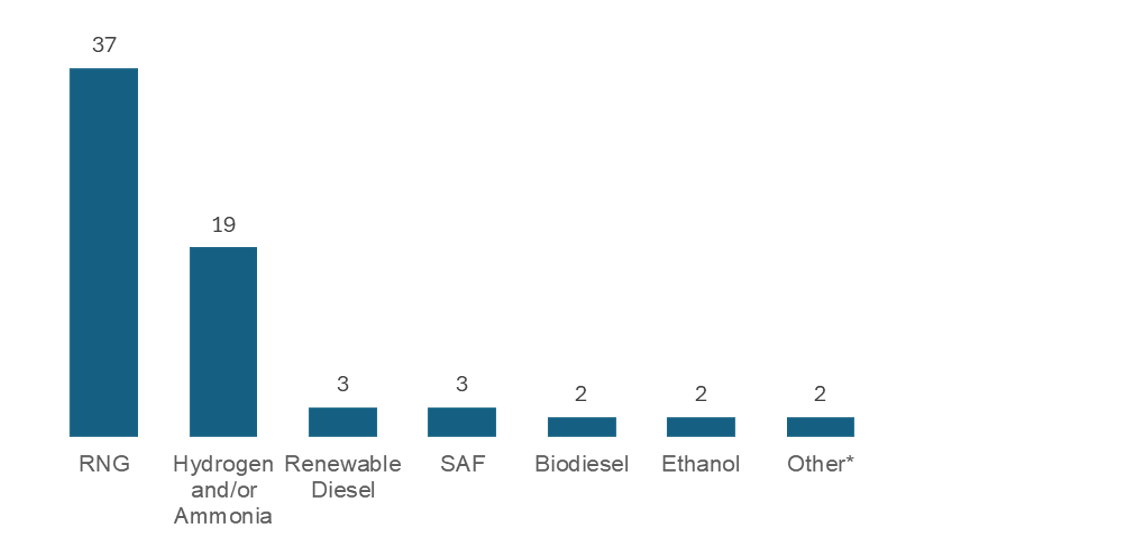
Text version
The bar graph shows the distribution of 67 new production capacity applications received under the CFFP’s Production Stream by fuel type. Each bar represents a fuel type and displays the corresponding number of applications. There were 37 applications for “RNG”, 19 for “Hydrogen and/or Ammonia”, three for “Renewable Diesel”, three for “SAF”, two for “Biodiesel”, two for “Ethanol”, and two for “Other”. There are two additional notes. The first note is related to the total number of applications, as the total sums to 68 (not the 67 stated in the title of the graph) as one application was targeting both ethanol and RD. The second note expands on the category of “Other”, adding that this includes one project that was targeting “biocoal” and another targeting “low carbon fuel oil and biochar”.
*Note: Category “Other” includes one project that was targeting biocoal and another targeting low carbon fuel oil and biochar.
As noted previously in this report, demand for low carbon liquid fuels in particular will continue to grow due to tightening CFR and provincial blending requirements. Demand for RNG is growing as a result of BC and Quebec blending requirements and opt-in programs in some regions. However, demand for liquid biofuels far exceeds that for RNG.
As part of the redesign process, program documents indicate that the CFFP had initially considered limiting eligibility to three fuels only: RNG, renewable diesel and SAF. This change would have been consistent with direction as set out in Budget 2024 and with departmental analysis of Canadian market needs. However, ultimately, eligibility criteria were expanded to include all liquid and gaseous fuels that meet CFFP carbon intensity thresholds. The exception was hydrogen, where funding is now being limited to projects not already covered by the Clean Hydrogen Investment Tax Credit. Program documents note that the decision to expand fuel eligibility was informed by feedback received from stakeholders.
When the program intake closed in July 2025,, the program had received a total of 44 applications for clean fuel production capital projects, nearly all of which were for the production of RNG (n=36, 82%). In terms of liquid fuels, the program received five applications for e-methanol, methanol production, and SAF.
Need for the improvement of program design with large-scale production projects
Supporting large scale production projects is critical to the achievement of program expected results. The target set for the CFFP indicates that the program was expected to support the construction of 6 – 8 facilities producing a total of 2.5 to 3 billion litres of liquid fuel annually. This would require that each facility produce approximately 313 million to 500 million litres per year. However, evidence suggests that some aspects of the CFFP’s design may not be well aligned with the needs of large scale, commercial production projects.
Funding limits
Evidence indicates that under CFFP 1.0 the program predominantly funded projects that were smaller in scale as reflected in the profile of projects and proponents supported. Of the 14 capital projects supported under the Production and Indigenous-led Streams, nearly three-quarters (73%, n=10) were under $100 million in total project costs and 36% (n=5) were under $30 million. Overall, CFFP contributions represented approximately 28% of total project costs for these projects. The majority of these projects were targeting RNG production, which interviews noted typically require lower capital expenditures when compared to liquid biofuel production facilities.
Internal documents suggest that funding levels under CFFP 1.0 for the construction of new and expansion of existing production capacity would not be sufficient to support large-scale, commercial facilities. When considering the largest project supported by the CFFP in terms of total project costs, data shows that the total costs for the renewable diesel refinery were approximately $1.32 billion, with program funding (~$37.4 million) representing approximately 3% of this amount. Overall, 93% of funding was provided by the proponent and other private sector sources.
As previously mentioned, under CFFP 2.0, the program funding limit was reduced from a maximum of $150 million to $50 million to remain within departmental funding authorities. According to program documents, feedback from stakeholders suggested that the maximum funding level be increased to $150 million or more as the new cap would not be sufficient to support large-scale production projects.
Program five-year cycle and commissioning deadline
Evidence indicates that the program’s initial timelines were considered ambitious and lacked the flexibility to accommodate changes in project schedules that often come with large scale capital projects. Program documents show that five recommended capital projects under the Production Stream were withdrawn due to the March 2026 deadline. Additionally, two contribution agreements—one for SAF and one for hydrogen—were terminated when proponents confirmed they could not meet the timelines. Further, program documents describe concerns shared by stakeholders in feedback received prior to the launch of CFFP 1.0, where some noted that the commissioning deadline of March 31, 2026, was unrealistic, given that permitting and construction for capital projects can take 4–6 years. Specifically, stakeholders noted that these types of projects are also usually at high risk of delays and warned that the program’s timelines could act as a barrier to the participation of large-scale projects.
Alignment of funding mechanisms with industry needs
Evidence from key informants suggests that Gs&Cs programs, such as the CFFP, play a critical role in supporting smaller producers who lack upfront capital and face challenges in attracting investment. Some interviewees noted that tax credits, such as investment or production tax credits, provide certain benefits over contribution programs. For example: under a contribution program, firms must apply with no guarantee that they will obtain funding. According to interviewees, tax credits offer more certainty allowing firms to incorporate credits into their project budgets; and tax credits can be more easily accessible with credits claimed via tax filings. Further, the process for tax credits was viewed as timelier when compared to application and approval processes for contribution programs. Also, a few interviewees noted that the CFFP’s repayability conditions are unattractive to industry.
Evidence from the jurisdictional scan shows that, domestically and internationally, different approaches have been adopted for supporting increased production of capacity of clean fuels. Jurisdictions including the US, the EU, Australia, and the UK provide clean fuels development initiatives with alternative design and delivery approaches from CFFP’s G&C program approach. Domestically, there are examples of federal and provincial policies and programs that provide tax incentives and grants.
Internationally, one example is the US where financial support for low carbon fuel production has mainly been in the form of production and blending tax credits, grants and loan guarantee programs that have generally been sustained over multi-year periods. Evidence from the US shows the benefits of dedicated and stable fiscal policies in supporting domestic clean fuel capacity development.Footnote 46 In addition to the CFFP, other subsidies have become available in Canada in recent years to support clean fuel production, such as the Clean Hydrogen ITC (2024) and the Biofuels Production Incentive (2026).
Oversight and reporting
Oversight mechanisms are generally in place to support the CFFP’s objectives; however, enhancements are needed to enhance their effectiveness. Improvements to financial reporting processes would help ensure consistent oversight. The need for consolidated financial reporting at the program level, structured monitoring of contribution agreements, and a formal risk-based recipient audit plan is needed to provide the program with visibility to monitor expenditures, compliance, and overall program operations.
Monitoring and reporting of program expenditures
The engagement team expected that regular and formal reporting mechanisms would be in place to provide the program with timely and comprehensive information on project-level and program-level expenditures, including consolidated financial data across all program streams.
The review of documentation and interviews confirmed that tools and internal trackers are in place to monitor expenditures at both project and program levels. However, the program level tracker does not consolidate financial information across all program streams, limiting its ability to provide a complete picture of overall program expenditures and key financial performance indicators.
Expenditure reporting currently occurs through memos, verbal updates and forecasts. The Director General (DG) receives quarterly forecasts that feed into the departmental-wide annual reporting process. In addition, the DG provides recurring CFF projects updates to the Assistant Deputy Minister.
A lack of consolidated financial tracking across program streams, may impact the CFFP’s visibility into overall program expenditures, which could constrain their ability to monitor financial performance comprehensively.
Mechanisms and tools to track and report on activities and results
Documents show that the CFFP utilizes the following mechanisms and tools to monitor program activities and results:
- Results from the CFFP, including the Codes and Standards Program, are reported through the Departmental Results Reports from FY 2021-22 to 2024-25.
- The CFFP utilizes two separate tools to track the status of contribution agreement negotiations for each project and the status of the ongoing implementation of each project, including a master implementation tracker that monitors various aspects of the program, with regular updates and cross-referencing with AMI and SAP.
- The document review also found evidence of separate tools used to track information on applications, including application evaluation results, for the Biomass and Indigenous-led Streams. Those tracking systems, including AMI and a customer relationship management software (CRMs), are employed to ensure comprehensive management of project tasks and updates.
- According to some interviewees, there are trackers for LOCAs and CAs, with monthly updates to senior management. Internal templates and trackers are used to document claims and manage information.
- The program utilized several briefing notes to provide updates to senior management on funding decisions and program changes (ADM, DM, Minister’s Office).
- Project selection and program funding decisions were shared with the Investment Committee for concurrence.
- Quarterly reports on projected expenditures allow for financial monitoring.
Lack of data collection, baselines and targets for performance measurement
Important gaps limit the program’s ability to assess progress in the achievement of several outcomes. As of July 2025, the CFFP has not yet established baselines or is not collecting data for 5 of 7 intermediate and long-term outcomes. As a result, the program cannot fully report on its intermediate or long-term outcomes.
| Outcome | Indicator | Baseline | Targets (per original design) | Data collection status |
|---|---|---|---|---|
| Intermediate outcomes | ||||
| Increased use of clean fuels in Canada | Clean fuel consumption as proportion of total energy demand increases | No baseline established | 10% increase over baseline starting at program end | Not collecting data |
| Clean fuels industry is increasingly diverse and inclusive | Percentage of projects with funding recipients that have signed on to the “Equal by 30” campaign Diverse (i.e. location, previous experience, classification, gender, ethnicity) talent pool at NRCan related to Clean Fuel programming increases by % |
No baseline established | 10% biennial increase over baseline starting in year 2 >50% by the program end |
Not collecting data |
| Ultimate outcomes | ||||
| Clean fuels contribute to Canada’s environmental and social sustainability | Environmental: GHGs reduction contribution from the use of clean fuels (in MT CO2e)* Life-cycle carbon intensity of all fuels used in Canada is lower (Kg CO2e/tonne or joule) decreases by % Social: Workforce related to the clean fuels industry is demographically more diverse by % increase |
No baseline established | 9-12 MTs of GHG emissions reductions in 2030. >10% by the program end. 5% bi-annual increase over baseline starting in year 3 |
Not collecting data |
| Clean fuels contribute to Canada’s energy security | Production capacity as a proportion of total clean fuel demand [%] | Baseline established for production capacity by fuel type | Up to 10% increase in total clean fuel production capacity | Not collecting data on fuel demand |
| The clean fuel industry contributes to Canada’s economic growth and global competitiveness | Addition of jobs related to clean fuels
Leveraging private sector investment |
No baseline established in relation to job creation
No baseline established for leverage of investment |
36,000 direct and indirect jobs by 2030 Leverage more than $3.5 billion in other public and private investments |
Collecting data on job creation but project-level reporting is inconsistent Collecting data on leveraging private sector investment |
No metrics developed for key program activities
Funding for feasibility and FEED studies
Despite being a key funding activity of the CFFP, investments in feasibility and FEED studies were not captured in the program’s indicators or expected outcomes. Two-thirds of CFFP-funded projects are feasibility or FEED studies, representing approximately $69.2 million in program funding. This shows that the program plays an important role in de-risking early-stage projects and allowing organizations to make informed decisions about their projects.
Support for increased gaseous fuel production
While support for the increased production of gaseous fuels such as RNG has been a key program activity, the CFFP does not have any indicators or targets specific to this fuel. The program’s initial design and expected outcomes were focused on supporting the increased production of hydrogen, to align with the Hydrogen Strategy for Canada, and liquid biofuels, to align with the CFR.
Nearly three quarters of CFFP capital project CAs (73%) were for RNG production, representing $98.5 million in funding commitments. Projects are still ongoing but are expected to result in the production of approximately 1.9 petajoules of RNG annually. The Canada Energy Regulator (CER) estimated that Canada’s RNG capacity would increase by 10 petajoules between 2021 and 2025.Footnote 47 If all RNG capital projects supported by the program are completed, the CFFP’s support for RNG projects could represent a significant contribution to increasing Canada’s overall capacity. Further, over one-third of FEED / feasibility studies funded under the Production and Indigenous-led Streams (39%) were targeting RNG production.
Under CFFP 2.0, nearly all applications received as of June 2025 were production capacity projects for RNG. Supporting increased production capacity for RNG will continue to be an important program activity.
Monitoring and reporting on funding agreements
The engagement team expected that regular and formal reporting mechanisms would be in place to provide timely and comprehensive information on the status of contribution agreements.
The program has developed and implemented internal trackers to monitor key details of funding agreements; however, some of these trackers were found to be incomplete. The engagement team also noted that processes and tools have been established to monitor program activities related to repayments. While current practices provide operational oversight, program management is aware of existing gaps and has plans to enhance monitoring through a grants management solution system.
In addition, risk-based recipient audit plans are an important tool to monitor compliance with the terms and conditions of contribution agreements. While an initial recipient audit plan has been developed, a formal risk-based recipient audit plan has not yet been established.
Conclusions
The joint engagement confirmed that the CFFP is relevant and well aligned with NRCan and Government of Canada priorities. It addresses a clear need to expand low-carbon fuel production and advance codes and standards, particularly for emerging fuels such as hydrogen. Its role complements other federal and provincial initiatives in supporting Canada’s clean fuel sector. However, evidence suggests that some CFFP design elements were not adequately aligned with the needs of large-scale production projects which were critical to achieving the program’s high fuel production targets. Further, a more strategic or targeted approach to fuel eligibility could have also enabled the CFFP to better direct limited program resources to those fuels that are experiencing strong and sustained growth in market demand due to federal and provincial clean fuel mandates or that were expected to deliver expected program results.
Since its launch, the program’s outreach and engagement mechanisms have been effective and the CFFP has made progress toward its immediate outcomes, funding hydrogen projects, liquid fuel facilities, biomass hubs, and Indigenous-led initiatives. However, several targets will not be met, including those for hydrogen and liquid fuel production. While the Codes and Standards Program exceeded expectations by publishing new standards and contributing to regulatory adoption, tracking uptake remains a challenge.
Oversight and administrative processes are generally in place but require improvements in monitoring and reporting on service standards, tracking of consolidated financial information, structured reporting on contribution agreements along with a formal risk-based recipient audit plan. Operational challenges such as staffing shortages, delays in service standards, and gaps in program planning have affected performance. External economic and policy shifts combined with internal resource constraints, further limited the program’s effectiveness and timely delivery, with the CFFP spending only 21% of its initial $1.1 billion allocation which resulted in substantial lapses in funding.
Lessons learned have already informed a 2024 redesign of the CFFP, though its impact is yet to be assessed.
Appendix A - Engagement sub-objectives and criteria
The objectives of the joint engagement were to:
- assess the CFFP’s relevance and the extent to which its design and delivery support the effective and efficient achievement of intended outcomes, including identifying areas for improvement, best practices and lessons learned.
- assess the overall adequacy and effectiveness of oversight mechanisms and management processes in place to support the operations of the CFFP.
| Question 1: Is the CFFP focusing on relevant needs and priorities within the changing context of the program’s operating environment? | |
|---|---|
| Sub-Objective 1: To assess the extent to which the CFFP is aligned with and responsive to needs and priorities in the clean fuels sector. |
|
| Question 2: How has the CFFP made progress in the achievement of its immediate outcomes? | |
| Sub-Objective 2: To assess the extent to which the CFFP has made progress in the achievement of its immediate outcomes. |
|
| Question 3: Are the CFFP’s design and delivery effective in supporting the achievement of its immediate outcomes? | |
| Sub-Objective 3: To assess the extent to which the CFFP’s design and delivery efficiently and effectively support the achievement of program outcomes. |
|
| Question 4: Are adequate and effective oversight mechanisms in place to support the achievement of the CFFP’s objectives? | |
| Sub-Objective 4: To assess the extent to which adequate and effective oversight mechanisms and processes are in place to support the achievement of the CFFP’s objectives. |
|
| Question 5: Are adequate and effective processes in place to administer the CFFP? | |
| Sub-Objective 5: To assess whether adequate and effective processes are established and implemented to administer the CFFP objectives. |
|
| Criteria | Production | Indigenous-led Stream | Biomass – Indigenous applicants | ||
|---|---|---|---|---|---|
| CFFP 1.0 | CFFP 2.0 | CFFP 1.0 | CFFP 2.0 | ||
| Repayability | Production: for a period of up to 10 years after official commissioning date, repayment will be required once the project starts generating profits. Feasibility: eligible for non-repayable contributions. |
Capital projects: repayment will be required after the official commissioning date from when the project starts generating profits and for a period of up to 10 years. Non-repayable contributions: available to feasibility and FEED studies, projects with non-profit organizations, projects with legal entities validly incorporated or registered in Canada that can demonstrate Indigenous ownership of the organization greater than 50% and who do not permit dividends to be paid or distributed to shareholders. |
Contribution will be conditionally repayable, except for:
|
Repayable: only if organizations allow dividends to be paid or distributed to shareholders Non-repayable for:
|
Capital projects: conditionally repayable, except for: projects with non-profit organizations and projects that can demonstrate a majority Indigenous ownership |
| Funding limits | Production: maximum of 30% of total eligible project costs, up to a maximum of $150 million per project. Maximum amount of contribution to the project from all levels of government must not exceed stacking limits. Feasibility: maximum of 50% of total eligible project costs, up to a maximum of $5 million per project. Maximum amount of contribution to the project from all levels of government must not exceed stacking limits. |
Capital projects: up to 30% of total project costs up to a maximum of $50 million. Studies: up to 75% of total project costs up to a maximum of $5 million. |
Production: up to 50% of total projects to a maximum of $150 million Feasibility: up to 75% of total project costs to a maximum of $5 million End-to-End: up to 75% of total project costs to a maximum of $5 million for feasibility project and up to 50% of total projects to a maximum of $150 million for production project |
Capital projects: up to 50% of total project costs to a maximum of $50 million Feasibility: up to 75% of total project costs to a maximum of $5 million |
Feasibility projects with Meaningful Indigenous Ownership: up to 50% of total project costs to a maximum of $100,000 Capital projects with Majority Indigenous Ownership: up to 50% of total projects to a maximum of $5 million Feasibility projects with Majority Indigenous Ownership: up to 75% of total project costs to a maximum of $100,000 |
| Firm financing | Production: Applicants must demonstrate that:
|
Indicate that at the time of application a minimum of 30% of total project costs have been secured or conditionally secured. This requirement applies to both capital projects and studies. Funding not secured at the time of application must be secured through firm financing prior to signing of contribution agreements Provide information on all sources of financial contributions towards the project. |
Production: Applicants must demonstrate that:
|
Feasibility projects with Meaningful Indigenous Ownership: Applicants must demonstrate that:
Feasibility projects with Majority Indigenous Ownership: Applicants must demonstrate that:
|
|
| Minimum production capacity |
|
Liquid clean fuels: 30 million liters per year Gaseous clean fuels: 50,000 gigajoules per year |
|
Liquid clean fuels: 15 million liters per year Gaseous clean fuels: 30,000 gigajoules per year |
N/A |
| Minimum output of processed feedstock | N/A | N/A | N/A | N/A | Non-Indigenous: 30,000 tonnes per year Indigenous: 20,000 tonnes per year |
| Stacking provisions | Total Canadian government (federal, provincial, territorial and municipal) contributions may not exceed 75% of total project costs. Canadian government funding will not exceed 100% of total project costs if recipient is a provincial, territorial, regional or municipal government, majority Indigenous owned business or community or not-for-profit. |
||||
Appendix C: Program Logic Model
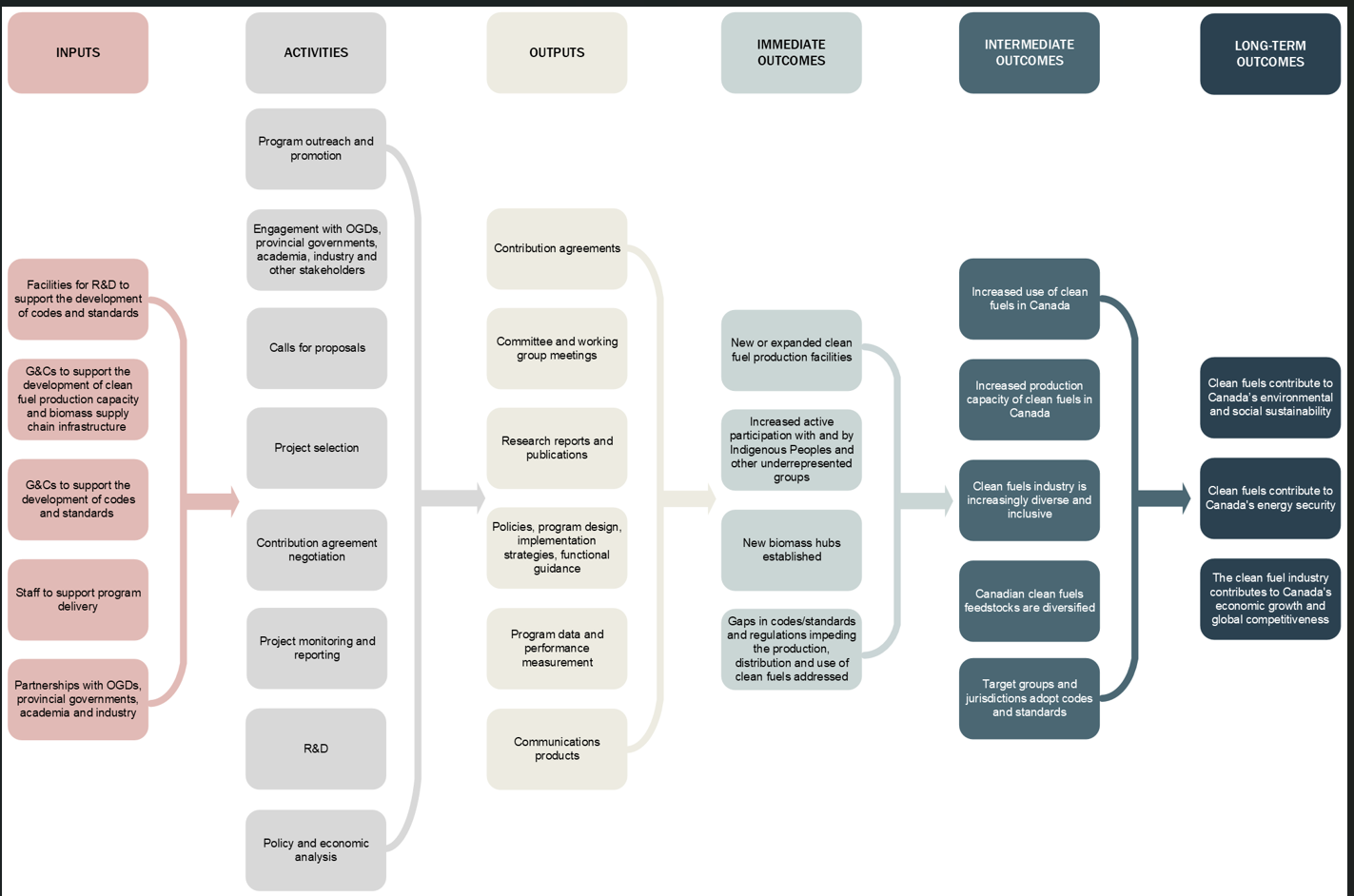
Text version
This logic model presents a left-to-right sequence showing how program inputs and activities are expected to lead to outputs and outcomes over time. Inputs feed into activities; activities produce outputs; outputs lead to immediate outcomes; immediate outcomes contribute to intermediate outcomes; and intermediate outcomes lead to long-term outcomes. The arrows between each stage indicate an expected causal or logical relationship, showing how program resources and actions are intended to produce progressively broader results over time.
The specific inputs, activities, outputs, immediate outcomes, intermediate outcomes, and long-term outcomes associated with the model are included in the lists below:
Input
- Facilities for R&D to support the development of codes and standards
- G&Cs to support the development of clean fuel production capacity and biomass supply chain infrastructure
- G&Cs to support the development of codes and standards
- Staff to support program delivery
- Partnerships with OGDs, provincial/territorial governments, academia and industry
Activities
- Program outreach and promotion
- Engagement with OGDs, provincial/territorial governments, academia, industry, and other stakeholders
- Calls for proposals
- Project selection
- Contribution agreement negotiation
- Project monitoring and reporting
- R&D
- Policy and economic analysis
Outputs
- Contribution agreements
- Committee and working group meetings
- Research reports and publications
- Policies, program design, implementation, strategies, and functional guidance
- Program data and performance measurement
- Communication products
Immediate Outcomes
- New or expanded clean fuels production facilities
- Increase active participation with and by Indigenous Peoples and other underrepresented groups
- New biomass hubs established
- Gaps in codes/standards and regulations impeding the production, distribution and use of cleaned fuel addressed
Intermediate Outcomes
- Increased use of clean fuels in Canada
- Increased production capacity of clean fuels in Canada
- Clean fuels industry is increasingly diverse and inclusive
- Canadian clean fuels feedstocks are diversified
- Target groups and jurisdictions adopt codes and standards
Long-term Outcomes
- Clean fuels contribute to Canada’s environmental and social sustainability
- Clean fuels contribute to Canada’s energy security
- The clean fuel industry contributes to Canada’s economic growth and global competitiveness
Appendix D: Engagement methodology
The joint engagement limits the duplication of effort that would have been required to conduct separate audit and evaluation projects. The engagement was carried out in a manner that ensures the team’s neutrality and objectivity, as per respective professional requirements and standards, and ensures that observations and conclusions are evidence-based.
Key informant interviews: The engagement team interviewed 45 stakeholders, including: 15 CFFP Staff, 12 External/OGD representatives, 5 Industry Associations, 11 Proponents, and two Senior Managers. Interview guides prioritised questions for each group to reflect their level of engagement with the program.
Document review: The joint engagement completed a review of over 200 public and program documents related to the design and implementation of the CFFP, including the Codes and Standards Program, to inform the assessment of program relevance, design and delivery, and progress in the achievement of results. Open-source information was also consulted to collect contextual information about the clean fuels market in Canada.
File review: This line of evidence examined CFFP project-level files and was treated separately from the review of program documents. The engagement team reviewed the files and reporting documents of 22 CFFP funded projects, including 17 New Production Capacity Stream projects, three Biomass Stream projects, and two Indigenous-led Stream projects.
Administrative data review: The engagement included a review of data from two sources: NRCan’s Application for Modules and Interfaces (AMI) database and the CFFP’s Project Implementation Tracker. Data was reviewed and analyzed to assess the type and quality of data collected by the program and to develop a profile of funded projects.
Jurisdictional scan: The engagement examined similar programs from 20 jurisdictions domestically and abroad. The scan was used to inform the assessment of program relevance and to examine alternative approaches to program design and delivery.
Appendix E: Joint project team
Chief Audit and Evaluation Executive
Michel Gould
Evaluation Team
Stephanie Kalt – Director of Evaluation
Adaku Echendu – Evaluation Manager
Eric Albert – Senior Evaluator
Carlo Magnaye – Evaluator
Nessan Akemakou Njinga – Evaluator (PARDP)
Audit Team
Linda Jones – Senior Director, Audit Operations
Darine Doresca – A/Internal Audit Manager
Nour Al Youssef – Internal Audit Project Leader
Sean Ebert – Internal Auditor
Melvyne Mapfumo – Internal Auditor