
Searching for energy sources hidden beneath Canada’s volcanic regions
September 2026
“Canada has enormous geothermal potential ranging from high-temperature systems related to volcanic belts of western Canada to warm sedimentary basins across the country,” says Steve Grasby, NRCan research scientist. “Natural Resources Canada (NRCan) leads foundational science, technology research and mapping to support conventional and enhanced geothermal development across Canada.”
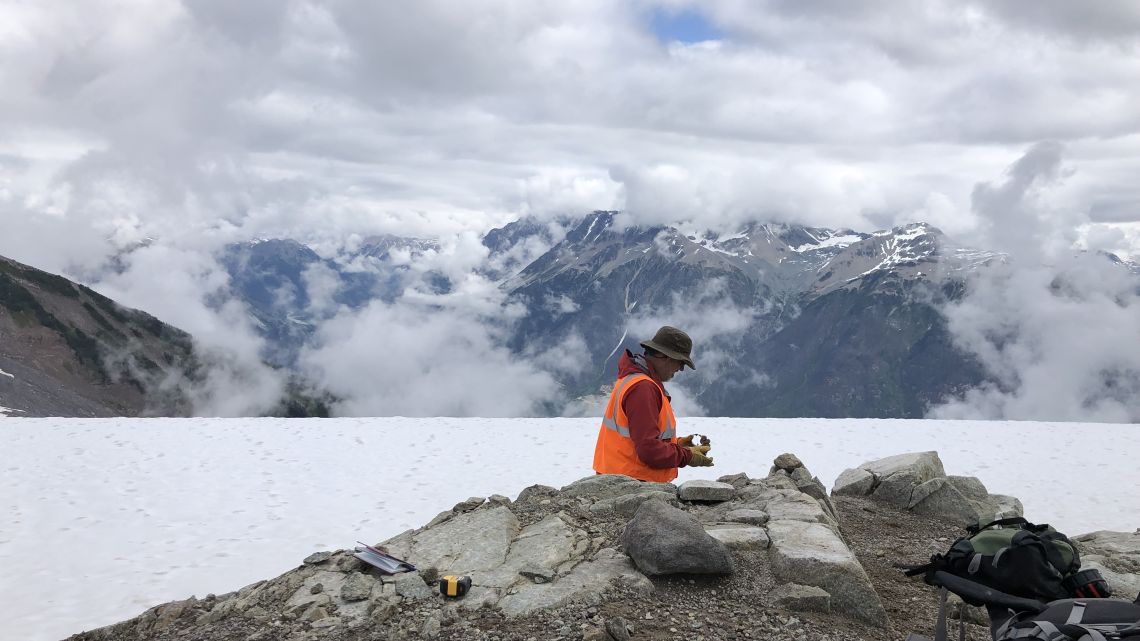
A Geological Survey of Canada researcher examines a rock sample during geothermal fieldwork.
The seven-second summary
Beneath the Earth’s surface lies a source of clean, renewable energy. For more than 50 years, NRCan researchers have been exploring how this geothermal energy could provide reliable electricity and heat for communities across Canada. Today, they’re identifying where geothermal resources exist and how they can be safely developed to help meet the need for clean energy.
What is geothermal energy?
Geothermal energy is heat naturally produced underground as radioactive materials decay deep within the Earth’s crust. When extracted, it can provide a clean, renewable and highly reliable source of energy. Unlike solar and wind power, geothermal energy can provide electricity day and night, regardless of weather conditions. That feature makes it an especially attractive energy source for remote communities in northern Canada.
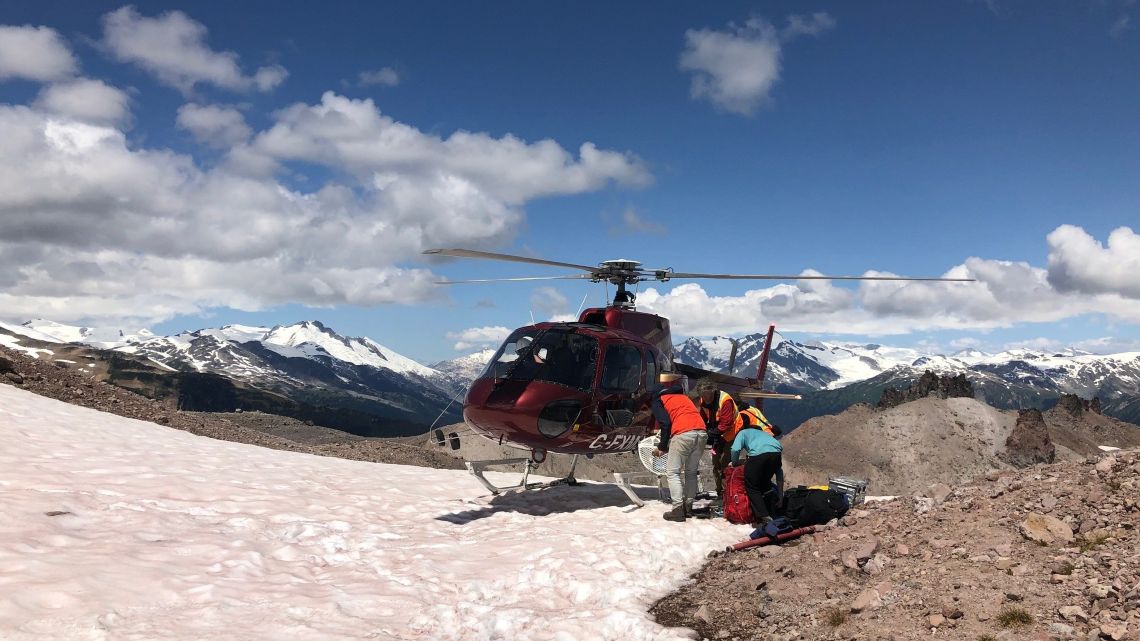
Getting to remote locations can be an adventure. Researchers load equipment on to a helicopter during geothermal fieldwork at Mount Meager, British Columbia.
Current research
NRCan researchers are exploring the potential of geothermal energy in several ways:
- Scientists are studying volcanic regions in British Columbia where heat from past volcanic activity remains trapped underground.
- Researchers use geology, geophysics and geochemistry to identify promising sites.
- Experts study underground geological reservoirs to help reduce the high risks associated with drilling geothermal wells.
- NRCan researchers map geological conditions across Canada to help identify areas where high temperatures underground could indicate geothermal resources.
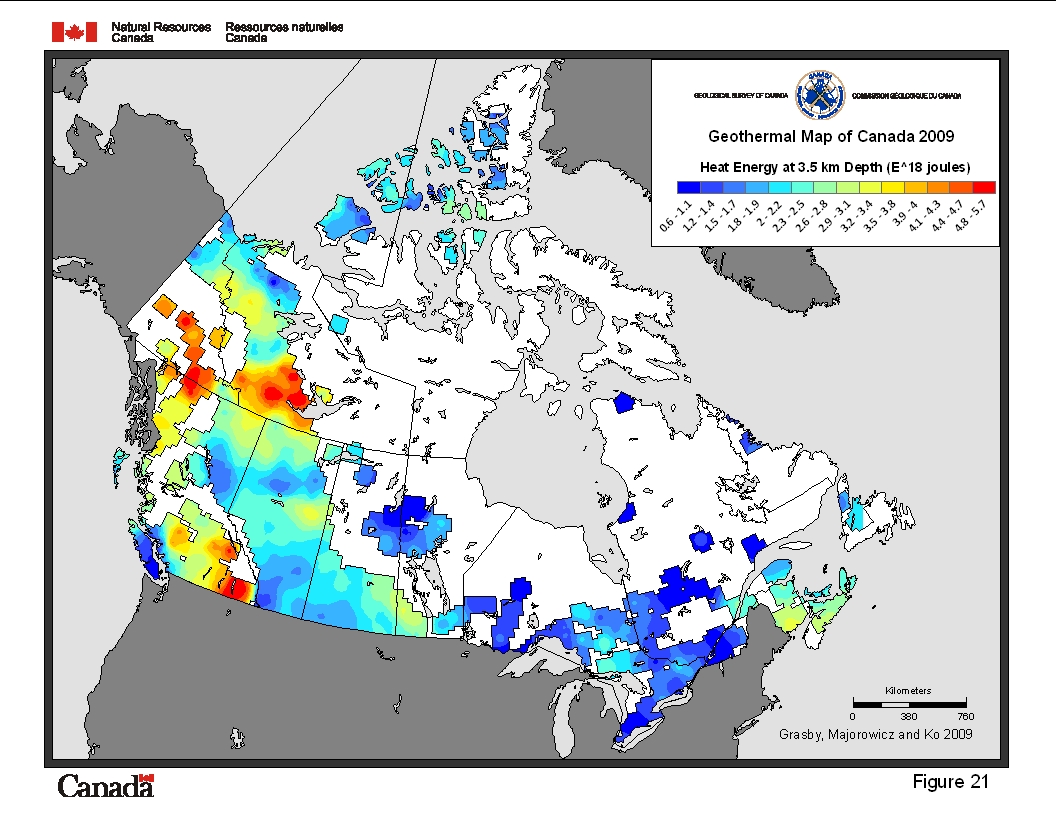
A map of geothermal heat energy across Canada at a depth of 3.5 kilometres. Warmer colours show areas with higher heat energy, including regions of western Canada with strong geothermal potential. White areas do not have geothermal data. (Map: Geological Survey of Canada, 2009)
How energy is gathered from geothermal sources
Geothermal energy can be extracted from naturally occurring, scalding-hot brine that circulates deep underground before rising toward the Earth’s surface. Power plants can bring this mineral-rich, hot brine to the surface, where its heat can be used to help generate electricity and heat buildings.
Geothermal energy extraction functions as a closed system, which reduces its impact on the environment compared with other extraction processes. Critical minerals can also be extracted using this same approach. And as an additional benefit, geothermal extraction operations could potentially extract critical minerals like lithium, zinc, manganese and silica while producing geothermal energy.

A piece of Canadian geothermal history: GSC scientist Steve Grasby stands beside Canada’s first geothermal well at Mount Meager, British Columbia.
Geothermal powering the future
NRCan is heavily involved in researching alternate fuel sources. From research and development of biofuels to solar and wind energy possibilities, geothermal energy is just one of the many possibilities to replace the fossil fuels currently being used to heat Canadian homes and power communities.
“The biggest potential for geothermal is in direct heating, which is Canada’s largest energy need,” says Kim Picard, Director General, Geological Survey of Canada, Calgary. “What better way than using heat directly from the Earth for our homes and spaces? Areas like Mount Meager in B.C. have great potential for generating electricity from that heat.”
If you’re a member of the media or an educator and would like to learn more about Steve’s research or read his latest paper, contact us at: sciencecommunications-communicationsscientifiques@nrcan-rncan.gc.ca.
Discover more:
Geothermal energy: NRCan
Harnessing the power of volcanoes: The search for geothermal energy (article)