
October 2025
By Laura Thomas for Natural Resources Canada and Simply Science
What provides a valuable window into Canada’s past while helping to produce a delicious Thanksgiving delicacy? This year, when you’re spooning cranberry sauce onto your plate, take a moment to thank… sand dunes. Because without them, cranberry growers across Canada couldn’t produce those tangy sweet berries that end up on your table.
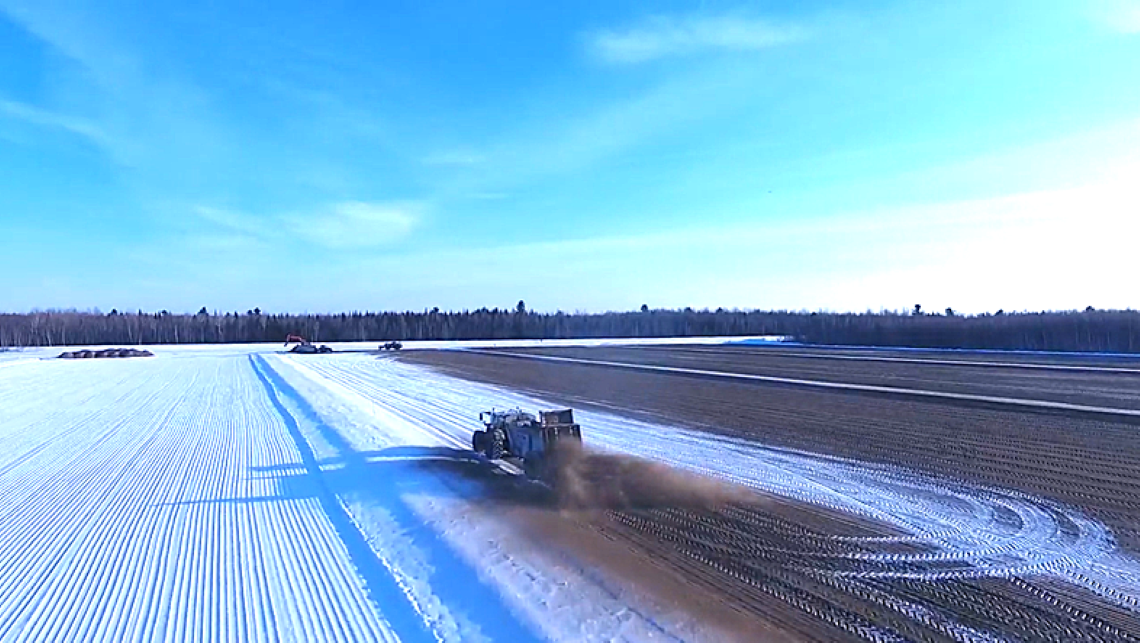
Farmers add a fresh layer of fine-grained sand over a frozen cranberry bog, a process called sanding. When the ice melts in the spring, the sand falls onto the vines. Photo: L&S Cranberry.
The sand performs three main functions: it keeps cranberry bogs well-drained, stimulates cranberry vines to produce healthy crops and controls invasions of weeds and pests — and that’s just the beginning.
Read on to discover why scientists from Natural Resources Canada are mapping sand dunes in eastern Canada and the United States to better understand their role in farming and in Earth’s geological history, and why all that matters to your Thanksgiving meal.
The nitty-gritty on the secret to healthy cranberry bogs
Cranberries grow on evergreen vines (Vaccinium macrocarpon) native to North America that can live for more than a century. Their tart fruit can be consumed in various forms — fresh, frozen or dried — in a variety of food products. Canada produces about 32 percent of the world’s cranberry crops, with Quebec providing up 63 percent of our national production.
Cranberry vines thrive in acidic, low-nutrient soils. Sand provides excellent drainage and helps the soil from becoming waterlogged while allowing the bogs to be flooded for harvest or winter preparation. Cranberry farmers in Quebec flood their bogs with water in the winter and allow them to freeze, as the layer of ice insulates the vines from extreme temperatures and cold winds.
Every few years, farmers add a fresh layer of fine-grained sand on top of the frozen cranberry bog, a process called sanding. When the ice melts in the spring, the sand settles onto the vines, buries insect eggs, pushes old vines down and refreshes the soil. It is a natural way to fertilize cranberry plants and reduce insect pests.
“We usually think of sand dunes belonging to deserts, but few people realize how important they are to agriculture in Canada,” says research scientist Stephen Wolfe.
Examining the dunes
Stephen conducts research to understand the stability of sand dunes for land management purposes, including the sand used for cranberry cultivation. His most recent study examined a dune field preserved under fire-adapted oak–pine forests in the Albany Pine Bush Preserve, New York, which formed over 11,000 years ago. There, fire managers use prescribed burning to maintain the ecosystem, and they want to know how the dune field has reacted to past fires, specifically, whether prescribed burning would cause the sand to move or shift.
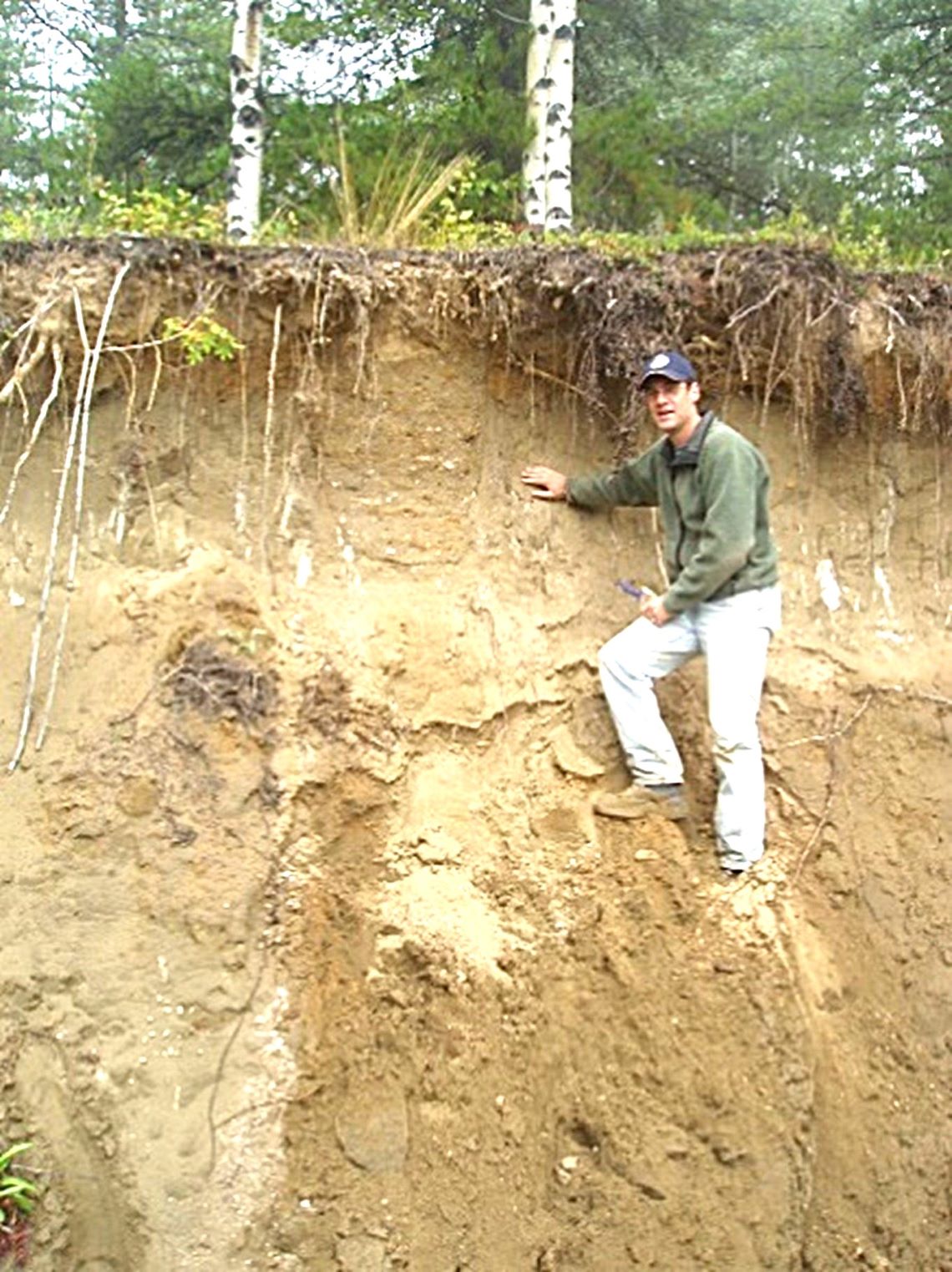
Stephen examining eolian sand beneath a forest cover.
Resetting the clock
Stephen and his team used optical dating analysis to determine the time elapsed since sand grains were last exposed to sunlight. After just a couple seconds of direct sunlight, there is a reset of what can be regarded as a mineral clock within the grains. By knowing how much time has passed since that reset, scientists can figure out how long the sand has been buried under a sedimentary deposit. In the case of the sand grains in the Albany Pine Bush Preserve, Stephen discovered that they haven’t seen sunlight since the dunes were first formed — meaning that, even with a long history of fire, the sand dunes haven’t moved since the end of the last ice age.
Sand dune science connects past climates to today
Sanding cranberry bogs has been standard practice for over 150 years. But when it comes to sanding bogs, how do you find the right sand? Well, the answer is blowing in the wind.
The most important type of sand deposit for sustainable, ongoing cranberry production is known as eolian sand — sand that, unlike sand from beaches and rivers, has been transported, shaped and deposited by wind.
What makes this sand so special? “Wind-blown sand is unique because the wind transport sorts the sand to about the size of sugar grains, removing both coarser and finer sediment,” explains Stephen, who is currently identifying and analyzing eolian sand dunes in eastern North America.
The sands of time, past and future
Eolian sand has much to tell us. More than just providing crucial material for growing cranberries, the dunes themselves provide a window into the past, holding important clues about what Canada was like thousands of years ago.
When Stephen analyzes eolian sand grains, he closely examines their size, shape and mineral composition — using optical dating techniques, he can even determine the last time the grains were exposed to sunlight. By assessing the combinations of these and other characteristics from deposits in different sites, he is creating a map of what wind patterns were like thousands of years ago and how the landscape responded to shifts in climate. So far, he and his team have mapped over 9,000 new sand dune areas in Quebec, Ontario and the northeastern U.S. — recording how our landscapes responded to past episodes of rapid warming.
Interesting in themselves as records of the past, these results can also give us a glimpse into our immediate future, says Stephen: “Examining how landscapes responded to climatic shifts in the past helps us understand how they may respond to the current warming.”
The ancient sands speak
“Each dune field has its own unique story to tell about the wind and climate of the past,” says Stephen. “Our job is to put those stories together and interpret them. Sand dunes left over from the time of the melting ice sheets are both environmentally and economically important. Many rural areas rely on clean sand for groundwater quality and quantity. Commercial agriculture in Canada, like blueberry and cranberry cultivation, relies on sand dunes.”

By the time cranberries are harvested, the sand has already settled to the bottom of the bog. Photo: © Agriculture and Agri-Food Canada
From sandy bogs to your Thanksgiving table
Whether you make it from scratch or take it from a can, your cranberry sauce would not be on your table without sand. The same sand dunes that support Canada’s cranberry harvests also preserve stories about Earth’s environmental past. They show how winds once shaped landscapes, how ecosystems responded to rapid climate change and how we might prepare for the future.
So this Thanksgiving, as you pass the cranberry sauce around the table, you can raise a toast to sand dunes not only for your meal but also for the scientific clues they provide about our planet’s resilience and the ongoing changes of the world around us.
If you’re a member of the media or an educator and would like to learn more about Stephen’s research or read his latest paper, contact us at: sciencecommunications-communicationsscientifiques@nrcan-rncan.gc.ca.
Explore more:
Unearthing the Past: Sand dunes and Naskapi ancestral lands