
On this page
- Overview
- Canada's forest sector
- Recommendations
- Detailed appendices
- Related link
Download the report, Canada's Transformed Forest Sector: Competitive. Resilient. Relevant. [4 Mb PDF]
Task force membership
Members of the Canadian Forest Sector Transformation Task Force (the Task Force) were selected by The Honourable Tim Hodgson, Minister of Energy and Natural Resources, to reflect regional representation, innovative practice, different segments of the supply chain, Indigenous leadership, the sector workforce, and financial perspectives.
Ken Kalesnikoff (Co-Chair)
Principal and Director
Kalesnikoff
Frédéric Verreault (Co-Chair)
Executive Vice-President
Chantiers Chibougamau
Brad Carr
Chief Executive Officer
Mattamy Homes Canada
Don Roberts
Chief Executive Officer
Nawitka Capital Advisors Ltd.
Jim Irving
Co-Chief Executive Officer
J.D. Irving Ltd., Kent Homes
Lana Payne
National President
Unifor
Lennard Joe
Chief Executive Officer
BC First Nations Forestry Council
Luc Thériault
President and Wood Products CEO
Domtar Canada
Executive summary for decision makers
Context and imperative for action
Canada’s forest sector is at an inflection point. Despite stewarding nearly 9% of the world’s forests and delivering over 199,000 direct jobs in 300 forest-reliant communities, and $23.5 billion in GDP, the sector is no longer globally competitive nor an attractive destination for large-scale investment. Over the past two decades, Canada has experienced declining production, capital flight, prolonged mill closures, and weakened investor and workforce confidence—trends not observed in peer forest nations such as Finland.
While external pressures—most notably sustained U.S. softwood lumber duties, global market shifts, insect outbreaks, and wildland fire—have exacerbated these challenges, the Task Force’s conclusion is unequivocal: the most significant barriers to competitiveness are homegrown. These include unstable access to cost-competitive fibre, regulatory burden disproportionate to risk, chronic underinvestment in manufacturing assets, weak deployment-focused innovation capacity, and inadequately developed domestic demand for wood-based products.
Absent immediate, coordinated, and decisive action, the forest sector faces an existential risk. Continued inaction will accelerate capital flight, erode skilled workforces, destabilize rural and Indigenous communities, and forgo a generational opportunity to position Canada as a leader in the emerging global bioeconomy.
Strategic vision
The Task Force calls for a federally led, 25-year National Forest Sector Strategy (2026–2050) accountable to the Minister of Energy and Natural Resources. The Strategy’s objective is to restore long-term competitiveness, crowd-in private capital, stabilize employment and communities, and modernize Canada’s forest-based industrial ecosystem to drive transformation.
At the core of this vision is recognition that forestry is an integrated manufacturing sector. Like all advanced manufacturing, it depends on predictable supply chains with stable and competitive access to raw materials, competitive operating costs, deployable innovation, and bankable revenue signals. Without these conditions, even a world class resource endowment cannot attract sustained investment
We make recommendations in this Report for significant federal investment. In order to ensure successful delivery, all participants in the Canadian forest sector must deliver supply chain certainty.
Within each of these recommendations, we want to emphasize that acknowledging First Nations leadership in forest stewardship, governance, and economic participation represents a credible and durable pathway for Canada to restore competitiveness, strengthen social license, and enable long-term stewardship.
Priority recommendations for leaders
1. Stabilize long-term access to cost-competitive fibre
Investment will not flow without confidence in long-term fibre availability at competitive cost.
Key actions:
- Implement a National Forest Sector Strategy by 2026, including a dedicated federal implementation team.
- Undertake rapid, targeted federal regulatory reform (species at risk, fisheries, migratory birds, effluent regulation) to reduce duplication and uncertainty while maintaining environmental outcomes.
- Support provincial transition towards working forests, including from volume-based tenure to area-based, the deployment of the Triad model, longer-term leases and clear accountability. We provide greater detail on the current Fibre Access State of Play in Appendix D.
- Launch pathways to scale divesting Crown forest management to local owners, including First Nations and Métis partners, backed by up to $1 billion over 10 years. In some jurisdictions this will accelerate a process already in place, in others, it will start fresh conversations.
Business implications: Reduced delivered-wood costs, improved predictability, and materially lower investment risk.
2. Catalyze transformation and modernization at scale
The sector’s challenge is not a shortage of potential and opportunities, but a lack of bankability.
Flagship recommendation:
Create a $10 billion Forest Sector Transformation Investment Fund, with a 10-year mandate, deploying:
- Loan guarantees
- Unsecured debt
- Contracts for difference
- Long-term off-take agreements
This Fund, reflecting the need for investment partnerships for both major firms and SMEs, would crowd-in private capital, support regional industrial hubs anchored by competitive facilities, and enable diversification into biofuels, biochemicals, engineered wood, and carbon-based products.
Complementary actions:
- Extend existing federal Forest Sector Competitiveness Programs to align with the Fund’s 10 year horizon (+$1.2 billion).
- Shift to open-intake, business responsive program delivery.
- Build a deployment-focused innovation ecosystem linking R&D, capital planning, and market execution.
- Identify and support regional anchor facilities critical to value chain stability.
Business implications: Improved access to patient capital, predictable revenue signals, and conditions required for final investment decisions.
3. Increase domestic demand by building more—and with wood
Canada exports most of its wood products, leaving the sector exposed to foreign market volatility and trade disputes.
Strategic objective: Treat housing and infrastructure as a national transformation platform.
Key actions:
- Launch a Modern Methods of Construction (MMC) Accelerator to scale wood-based prefabrication, mass timber, light frame, and panelized systems.
- Accelerate National Building Code reforms ahead of 2030 to normalize wood construction up to 18 storeys and beyond.
- Create standardized, pre-approved wood building designs to reduce approval timelines.
- Establish a national insurance instrument to de-risk wood-based MMC projects.
- Leverage federal procurement (Build Canada Homes, Canadian Forces Housing) to source Canadian wood.
- Reduce government-driven housing costs, including taxes and fees that inflate prices and suppress construction volumes.
Business implications: Expanded domestic markets, reduced exposure to trade disputes, and increased capacity utilization across manufacturing value chains.
4. Stabilize the workforce and support communities
The success of the sector is inseparable from the success of its workforce.
Urgent actions for 2026:
- Establish a Forest Workforce Advisory Council and a federal Forest Transition Office to coordinate proactive interventions.
- Deliver emergency income support for subcontractors and targeted wage subsidies during restructuring.
- Expand work-sharing, retraining, and early retirement options.
- Partner with postsecondary institutions to align training with emerging technologies (automation, MMC, bio-manufacturing).
Business implications: Preservation of skilled labour, smoother transitions, and reduced social disruption linked to restructuring.
5. Defend market access and strengthen trade infrastructure
High transportation costs and trade barriers undermine competitiveness.
Priority actions:
- Continue pursuit of a negotiated softwood lumber agreement with the United States.
- Launch a Natural Resource Industry Rail Efficiency Initiative to reduce transport costs and improve reliability.
- Implement national traceability and chain-of-custody systems to meet EU Deforestation Regulation (EUDR) requirements.
- Strengthen investment in port and rail infrastructure critical to export performance.
Business implications: Lower delivered costs, improved access to offshore markets, and enhanced resilience to trade shocks.
6. Rebuild a national forest culture
Awareness, understanding, and policy stability are prerequisites for the long-term health of the forest sector.
Recommended action:
Create a Canadian Forest Management Office—a permanent, nonpartisan body responsible for:
- Public reporting on forest health, carbon, and wildland fire risk.
- Education and fact based communication.
- Coordinating national risk mitigation-efforts.
- Support collaboration with California.
Business implications: Reduced polarization, increased predictability, and stronger public trust in forest based industries.
The case for urgency
The Task Force estimates that failing to act risks $23.5 billion in GDP and nearly 200,000 jobs, while the targeted actions and investments we recommend would reverse decline, crowd-in private capital, and rebuild competitiveness at scale.
For the Task Force, the message is clear: Canada has the resource base, skills, and market opportunities—but lacks coordinated execution and investment certainty. The recommendations in this report provide a roadmap to close that gap.
With decisive leadership in 2026, Canada can reposition its forest sector as:
- Competitive and investable
- A cornerstone of housing affordability and infrastructure delivery
- A driver of rural, Indigenous, and national prosperity
- A pillar of the global bioeconomy
The cost of action is substantial—but the cost of inaction is far greater. Together we can secure the forest sector by 2030 and increase it thereafter.
Roadmap to transformation
The following summarizes our recommendations and priority actions for Canadian governments over the next 5 years. The substance of our report provides the underlying rationale, including Key Performance Indicators (KPIs).
Challenge: Access to fibre
Recommendation 1
The federal government develop, fund, and implement a National Forest Sector Strategy that:
- is anchored on restoring long-term competitiveness and investment confidence
- sets GDP-linked targets
- aligns with provincial reforms to stabilize access to cost-competitive fibre
In parallel, that Canada:
- undertake regulatory reforms unique to its jurisdictional responsibilities to ensure effective delivery; and
- offer funding partnerships to support provinces that choose to undertake parallel reforms
Priority actions
In 2026: Launch a fully funded National Forest Sector Strategy with a dedicated implementation team accountable to the Minister of Energy and Natural Resources.
In 2026: Undertake a rapid, targeted regulatory reform agenda see (Appendix A) to reduce duplication and improve equivalency with the provinces/territories while respecting sustainable practices, including compliance requirements that materially affect delivered fibre costs, project timelines, and investment confidence across the forest sector.
By 2030: Ensure that Crown forests are appropriately managed to mitigate wildland fire risk.
By 2030: Fund a nation-wide series of long-term pathways to scale divesting Crown forests to local forest owners, including First Nations and Metis.
Recommendation 2
Provincial governments take the necessary legislative, regulatory, and contractual steps to stabilize industry access to cost-competitive fibre in the long-term.
Priority actions
By 2030: Shift volume-based forest regimes towards area-based, working forest models under long-term leases.
Challenge: Transformation, modernization, transition
Recommendation 3
The federal government act quickly to catalyze and “crowd-in” transformative investment by allocating an incremental $10 billion over 10 years for forest-origin fibre projects, including product development and commercialization. This fund should:
- Prioritize projects that contribute to long-term transformation;
- Include regional industrial hubs anchored by competitive facilities; and,
- Be delivered through multiple instruments, including loan guarantees, unsecured debt, contracts for difference, and offtake agreements.
Priority actions
In 2026: Launch a Forest Sector Transformation Investment Fund, designed to crowd-in private capital for transformation outcomes, including modernization and diversification of regional anchor facilities.
In 2026: Extend existing Forest Sector Competitiveness Programs to match the timelines of the Investment Fund with modifications to program delivery.
In 2026: Design and operationalize a forest-sector business and innovation ecosystem focused on deployment with the objective of identifying, de-risking and scaling transformation pathways, and aligning research, capital and industrial platforms as well as market execution in support of bankable investment.
In 2026: Identify industrial anchor facilities for Canada’s distinct regional forest fibre value-chains as basis for coordinated fibre, capital and innovation deployment, and partner with provinces and industry to confirm fibre access and capital investment plans for each.
In 2026: Champion bankable carbon value mechanisms for forest industry and bioeconomy applications that provide price and volume certainty for capital intensive projects.
Challenge: Increasing wood in construction
Recommendation 4
Federal and provincial governments launch a national strategy to increase construction, and increase the use of wood in construction, including modern methods of construction (MMC), providing a jointly funded suite of carrots and sticks to encourage uptake across the building system.
Priority actions
In 2026: Create a MMC Accelerator for digitalization and AI, expand the manufacturing base (including light frame and panelized systems), and increase wood construction market share in the multi-storey sector.
In 2026: Reduce and eliminate government-driven sources of new home unaffordability.
In 2026: Accelerate delivery and raise ambition for Build Canada Homes and the Canadian Forces Housing Agency, with clear direction to use Canadian-sourced wood in procurement.
In 2026: Create a nationally available insurance instrument with a 10-year mandate to de-risk wood-based MMC building projects.
By 2030: Develop and deploy pre-approved patterns, tools and protocols needed to scale mass timber and Modern Methods of Construction (MMC), including systems suited to regional fibre profiles, for all building types.
By 2030: Accelerate the implementation of strategic changes to the National Building Code to encourage the use of wood in construction.
Challenge: Workforce and communities
Recommendation 5
The federal government must take action to drastically increase continuity and stability for its labour force, related work streams and forest-dependent communities.
Priority actions
In 2026: Improve retention rates and diversity of skillsets through urgent and robust support measures including income support, emergency wage subsidies, retirement bridging and a Forest Workforce Advisory Council, amongst others.
In 2026: Establish a federal Forest Transition Office to anticipate sectoral shocks and align interventions between federal and provincial governments including personalized support for affected workers.
By 2030: Partner with industry and post-secondary institutions to make strategic investments in technical capacity, including retraining.
By 2030: Proactively address labour shortages through curriculum development, pilot project to better align workers’ skills with new opportunities, and region-specific relaxation of limits placed on temporary foreign workers, as necessary.
Challenge: Trade and market access
Recommendation 6
The federal government should continue to partner with provinces and industry in developing and defending offshore markets for Canadian forest products, and on making the necessary investments and changes to Canada’s rail systems and port infrastructure to ensure sustained competitiveness.
Priority actions
In 2026: Launch a Natural Resource Industry Rail Efficiency Initiative to strengthen regulatory oversight, reduce transport costs and aggressively explore new rail lines (with the railways and other resource sectors) to improve performance and reduce costs throughout the transport chain—including delivered wood costs to processing plants.
In 2026: Publish a consensus definition of forest degradation in Canada compatible with the EUDR to increase transparency and market access.
In 2026: Implement a national program to deploy traceability and chain-of-custody systems across the forest sector.
By 2030: Strengthen in-market collaboration with industry to develop and defend offshore markets in Europe and Asia.
Challenge: Fostering a forest culture
Recommendation 7
That the federal government create a Canadian Forest Management Office, consisting of representatives of governments, industry, unions, scientists, Indigenous communities, environmental NGOs and the workforce, responsible for educating, reporting and clearly communicating with Canadians on the role the forest sector plays in their lives; and coordinating appropriate risk mitigation strategies (such as FireSmart activities) needed to protect Canadians, and to rebuild a national forest culture.
Priority actions
In 2026: Create a Canadian Forest Management Office with a mandate to rebuild a national forest culture through reporting, education, communication, and coordination of forest-based risk mitigation activities.
By 2030: Actively combat misinformation and other impediments to forest sector social license.
Message from co-chairs
Canadians approach forests largely from a perspective of values: economic, ecological, cultural, and spiritual. In this context, the Canadian forest industry has been seen as necessary by many to create jobs in rural communities. These perspectives are all legitimate, and this makes changing the way that Canadians manage forests difficult, because nearly all Canadians have a degree of personal investment in Canada’s forests. This remains relevant but it is no longer sufficient. There are better reasons to cut trees in 2026, based on how forests can be managed in the country and the fundamental qualities of forest products.
Unfortunately, the headline take-away from what we heard these past 90 days is that as things stand Canada’s forest sector is not competitive in global markets. As we will demonstrate later in our report, while external factors do play a role, the most fundamental challenges facing the forest sector are homegrown: lack of access to cost-competitive fibre, underinvestment, inadequate domestic construction (and not enough wood used in all levels of construction), a crisis of confidence by our workforce and the communities in which we operate, and social license tension. We also heard that the sector faces structural challenges that limit its ability to identify and navigate the technological and market transformation, reflecting a gap in advanced innovation capacity. These are all issues to which we can, and must, respond. We can only do so if we as Canadians get our own house in order, rather than focusing on the problems others have created. We can only do so by acting together.
The challenges we currently face are not short-term: they have been on-going for decades and have reduced the resilience of the sector to an all-time low. Unless we take immediate steps the capital flight that has come to characterize our sector will continue. We risk losing the sector completely within some jurisdictions, or seeing it limp forward, a shell of the economic engine that formerly fueled hundreds of communities, and hundreds of thousands of stable, well-paying jobs. This would be a particularly critical loss for Canadians now, at a time when many Canadians are struggling with housing affordability, given that forest products are Canada’s most important building material.
We believe that some of the necessary actions we identify here will be difficult and will require at times challenging partnerships for federal and provincial governments, industry, the workforce and Indigenous Peoples. We understand the challenge associated with a voluntary federal task force recommending to provinces how to manage Crown forests within their jurisdictions. However, we believe that Canada’s needs leave us no choice but to submit such recommendations. There is no shame in sustainably cutting trees, nor acknowledging the need for access to economically competitive fiber, as long as all participants are working together with respect: for biodiversity, for carbon management, and for the rights of Indigenous Peoples.
The problems we face are complex enough, and the solutions involve so much sustained integration, that they warrant a federally led, 25-year National Forest Sector Strategy. It is for the immediate development and implementation of that strategy that we most emphatically call. If we collectively follow through, the forest sector will return to strength within the emerging global bioeconomy.
Thank you to the experts that met with us, and the many Canadians who made online submissions for our consideration. We read. We listened. We questioned. Your thoughtful reflections contributed greatly to the final form of our report.
Thank you also to the Secrétariat that supported us, in particular Shannon and Jeff: we could not have reached the finish line without you.
Lenny, Lana, Jim, Don, Brad and Luc: thanks for the many hundreds of hours you and your teams put in over the past 90 days, both as a group and as individuals. We are truly blown away by your commitment and desire to serve Canadians. Some who read this report will disagree with us and will criticize the conclusions that we have drawn. However, we hope that no one will doubt the sincerity with which we have pursued this task.
Minister Hodgson, thank you for the invitation, despite the crazy 90-day timeline! Your openness and your ambition for the country pushed us beyond where we thought we could go, and we hope we have met your expectations.
As for the two of us, we were competitors who had never talked to each other until receiving this mandate. It is fair to say we are now partners and it has been a privilege to have this opportunity.
Status quo is not an option for the best interest of our Country. As Don said on the day we met for the first time, we need to bring “bold and practical” recommendations. In the pages that follow we will identify the necessary components of a National Forest Sector Strategy, and the actions that we will need to take by 2026, 2030 and 2050 to build a forest sector that delivers on the aspirations of Canadians. Competitive. Resilient. Relevant.
About the Task Force
Announced on November 26, 2025, by the Right Honourable Mark Carney, Prime Minister of Canada, the Task Force is an independent body of 8 Canadian leaders that convened on a voluntary basis. Beginning on January 19, 2026, the group was given 90 days to identify priority actions and pathways to accelerate the transformation and long-term competitiveness and sustainability of Canada’s forest sector.
Principles
The Task Force unanimously adopted a set of principles to guide its work, notably:
- Member engagement was key to establishing the legitimacy of the group and its recommendations. Members signed non-disclosure agreements (NDAs) to protect conversations and volunteered hundreds of hours to discussions via weekly meetings and expert engagement sessions.
- The scope of recommendations would not delve into potential resolutions for current Canada-U.S. trade disputes. While connections inevitably arose in this work, the group’s consistent focus was to identify made-in-Canada solutions to problems that Canadians can solve without depending on foreign governments.
- Respect for provincial and territorial jurisdiction and the differing regional realities would be core to engagement efforts. Nonetheless, the Task Force’s final report and roadmap include recommendations to all levels of government, which reflects the interconnected nature of Canada's forest industry and the need for all levels of government to work collaboratively toward its success.
- Indigenous and treaty rights are protected by Canada’s Constitution and increasingly reflected across Canada in forest policy and management practices. The work of this Task Force is not a substitute or alternative to Crown consultation. If Canadian governments seek to implement our recommendations, consultation with Indigenous Rights Holders would need to be addressed as appropriate to the actions under consideration.
Process
At its launch, the Task Force established a forward plan that included weekly meetings, an intensive 8-week engagement schedule, and two in-person group drafting sessions ahead of final delivery by April 18, 2026.
A Secretariat, housed at Natural Resources Canada with support from FPInnovations, assisted the Task Force in conducting research and analysis, facilitating stakeholder engagement, receiving written submissions through a web portal, and other administrative duties. The Secretariat reported to the Task Force’s Co-Chairs.
Engagement
To better understand opportunities and challenges and ensure the Task Force's ability to incorporate diverse insights from governments, experts and stakeholders, the group:
- Met with Ministers, Deputy Ministers and other officials responsible for forests at federal and provincial levels.
- Held bilateral sessions with implicated federal departments including Natural Resources Canada; Innovation, Science and Economic Development Canada; the National Research Council; Employment and Social Development Canada; Global Affairs Canada; Business Development Canada; Housing, Infrastructure and Communities Canada.
- Held 27 engagement sessions with a broad range of individuals and groups—including mayors, industry leaders, unions, Indigenous and community representatives, and noted specialists from finance, innovation, environmental, conservation, academic and wildland fire domains.
- Reviewed input from 176 written submissions uploaded to their web portal, whose province of origin included British Columbia (54); Ontario (51); Quebec (33); Alberta (9); New Brunswick (9); Nova Scotia (9); Saskatchewan (5); and Manitoba (3) (3 submissions originated from the United States).
- Representative topics has been tracked for each submission, with Innovation & Technology (60), Industry (37), and Fibre (29) occurring most often.
- Indigenous affiliated groups or individuals made 24 submissions (categorization figures are approximate as one submission can reflect multiple categories).
Attestation
This report represents the consensus views of the Task Force on final recommendations, which have been tabled with Minister of Energy and Natural Resources Tim Hodgson. Consensus is defined as prevailing when all members accept the proposed decision on a specific issue in the context of the full package of outcomes.
Canada’s forest sector: Numbers and concepts
The forest sector is a manufacturing sector, and as such, depends on robust and stable supply chains. The origin of those supply chains are Canada’s forests. Canada has 369 million hectares (ha) of forest (roughly 9% of the world's total), a value that has been stable to slightly increasing for more than 30 years. In 2023 (the most recent year for which data are available), harvesting accounted for 670,000 ha or the equivalent of 0.2% of the total forested area.
Provincial and territorial governments own 90% of our forests and have authority over associated forest resources, including tenure systems, harvesting rights, and management of Crown forests. Provinces and territories set the Allowable Annual Cut (AAC) for their jurisdictions and develop and enforce forest laws, issue timber licenses and supply agreements, set harvesting standards, monitor compliance, collect royalties, and manage protected areas like provincial parks. They also implement programs that support innovation.
Indigenous leadership in the forest sector is growing. The forest sector is one of the largest rural job bases for Indigenous people in Canada. There is higher participation of Indigenous workers in the forest sector (6%) than in the labour force overall (4%). As of 2024, Indigenous groups hold more than 11% of annual harvest allocations from Provincial Crown forests across Canada. There is a growing presence of Indigenous-owned mills, or partnerships with Industry in forest products manufacturing.
The federal government is responsible for market access, trade, and international forest policy. It provides science expertise and develops policy and programs to support the sector’s competitiveness. A number of federal departments and agencies develop and implement policies, fiscal/tax measures and regulations that impact forest management and industry, such as nature conservation and biodiversity protection; standards and regulations affecting markets for bio-based carbon and other renewables; and innovation. The 4% of forests owned by the federal government are primarily in national parks, Department of National Defence lands, and on First Nations reserves.
The 6% of privately owned forests are quite diverse, including ownership by corporations, First Nations, individuals, municipalities, and pension funds.
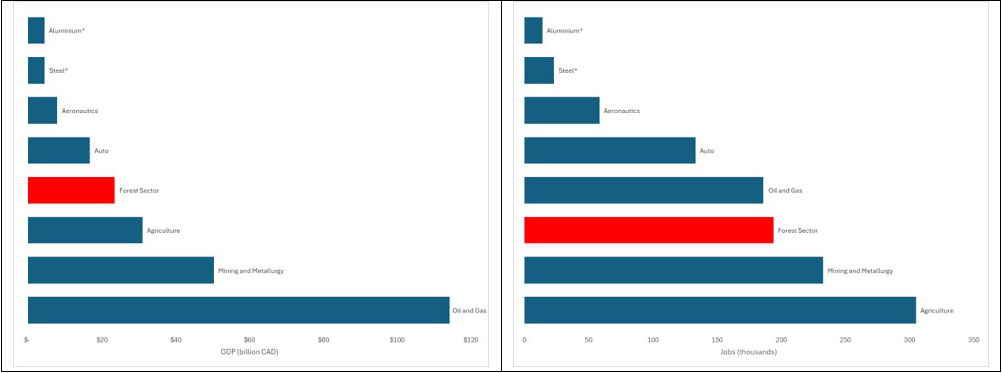
Canada’s forest sector supports nearly 300 forest-reliant communities, particularly in rural areas. It directly employs over 199,000 workers across ten provinces and two territories, including over 11,000 Indigenous people, and accounting for $23.5 billion (approximately 1%) of Canada’s real GDP, while generating significant and highly strategic volumes of bioenergy (over 77,000 GWh of heat and over 8,500 GWh of power). It also provides other economic opportunities through indirect employment in upstream industries, estimated at approximately 148,000 jobs in 2024. These are abstract figures, however, so they are worth considering in relative terms.
Text version
Sector | Gross Domestic Product (billion CAD [in 2017 dollars]) |
|---|---|
Aluminum | 4 |
Steel | 5 |
Aeronautics | 8 |
Auto | 17 |
Forest | 23 |
Agriculture | 31 |
Mining and metallurgy | 50 |
Oil and gas | 114 |
Sector | Jobs (thousands) |
|---|---|
Aluminum | 14 |
Steel | 23 |
Aeronautics | 59 |
Auto | 133 |
Forest | 194 |
Agriculture | 305 |
Mining and metallurgy | 233 |
Oil and gas | 186 |
*Aluminum and steel are also included in the mining and metallurgy sector value
The forest sector compares favourably in economic impacts to Canada’s other strategic sectors, contributing more to GDP than the automotive or steel and aluminum industries combined, and more to employment than oil and gas. It is also one of the very few industries that is both sustainable and national in scope.
However, like most leading Canadian sectors, domestic markets account for only a portion of production. For example, out of traditional forest products Canada consumes roughly a third of its softwood lumber (SWL) production, a quarter of its pulp production, a fifth of its oriented strand board (OSB) productionFootnote 1.
Most of Canada’s production is destined for export and in 2024 Canada exported $37.0 billion in forest products to the world. The U.S. remains Canada’s primary export market, accounting for 76% of total forest product exports: 86% of Canadian softwood lumber exports (valued at $7.3 billion), nearly all structural panels ($3.4 billion) and builders’ joinery and carpentry products ($2.2 billion), and 44% of Northern Bleached Softwood Kraft pulp (NBSK) ($2.0 billion). Other key markets include China (accounting for $3.7 billion in total exports), including 41% of NBSK exports ($1.9 billion) and Japan ($1.1 billion).
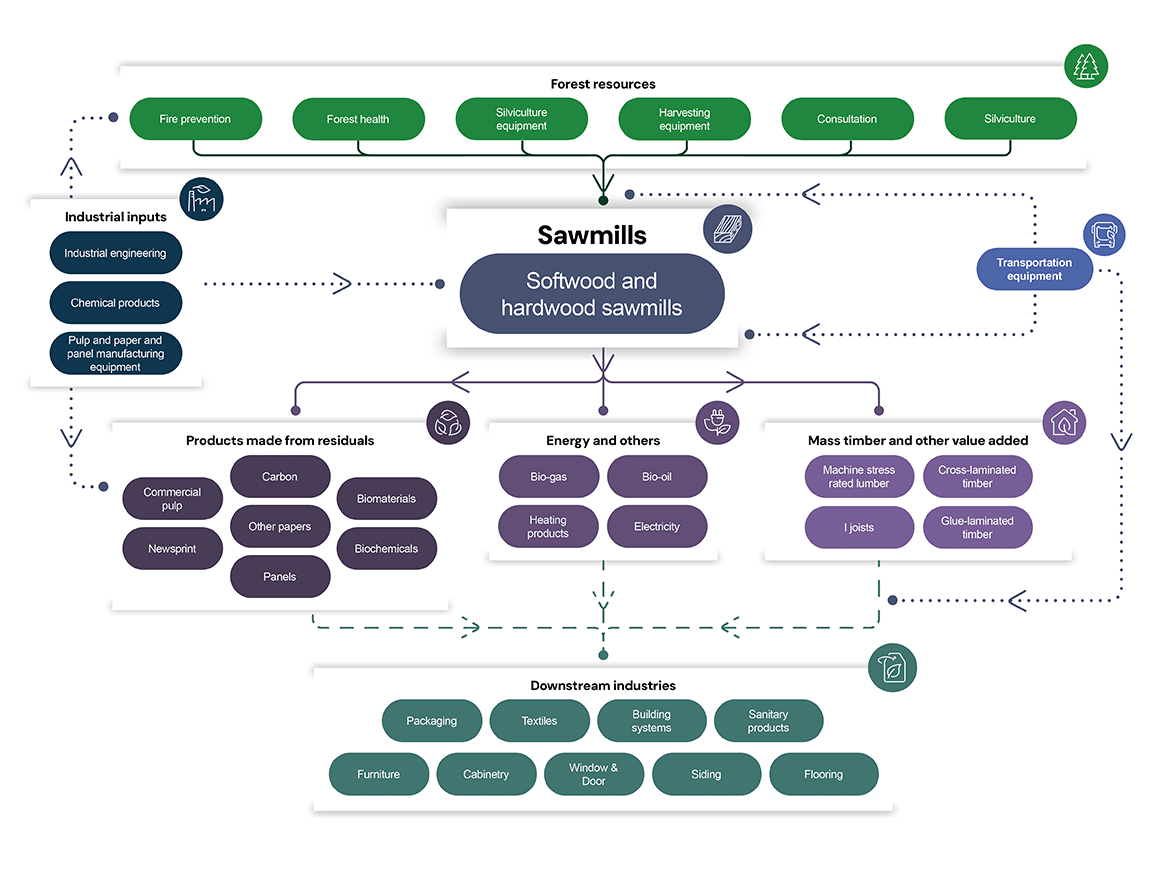
This diversity of products and markets occur within regional clusters of complex and interconnected industrial ecosystems where the outputs from many sub-sectors are inputs to others. Significant disturbance to any sector impacts the others, with sawmill health being central to the health of the system as a whole (see Figure 2).
Text version
The flowchart shows forest resources (fire prevention, forest health, silviculture equipment and harvesting equipment, consultation, and silviculture) on the top row; with arrows leading down to saw mills (softwood and hardwood sawmills) on the second row; directing down to 3 separate categories on the third row: products made from residuals (commercial pulp, newsprint, carbon, other papers, panels, biomaterials, and biochemicals), energy and others (bio-gas, bio-oil, heating products, and electricity), and mass timber and other value added (machine stress–rated lumber, I-joists, cross-laminated timber, and glue-laminated timber); and ending on downstream industries (packaging, textiles, building systems, sanitary products, furniture, cabinetry, window and door, siding, and flooring) on the bottom row.
On the left side of the flowchart is industrial inputs (industrial engineering; chemical products; and pulp, paper, and panel manufacturing equipment). Arrows move both down and up from this category (illustrating multidirectional flows) between the top 3 rows (forest resources; sawmills; and products made from residuals, energy and others, and mass timber and other value added). On the right side of the flowchart is transportation equipment, which also has multidirectional flows between all levels of the chart.
It can be helpful to consider the sector in terms of what happens to a tree that is harvested for economic purposes. Depending on region, species mix, and technology, different portions are used for solid wood products and the chips traditionally used in the pulp and paper sector, with the remainder considered low grade fibres or “residuals," such as bark, sawdust, and other post-processing by-products. To differing degrees, sawmills and pulp mills use a portion of these materials for energy and other income streams, but the generation of by-product revenues must be consistent for the industrial ecosystem to be stable and competitive.
Canada's forest sector: Challenges and opportunities
Many casual observers of the forest sector mistakenly believe that it is a dying industry. While several market segments are in terminal decline (e.g., newsprint) this is not the case for the sector as a whole, which is dynamic, innovative, and expanding globally.
However, this is far from obvious looking only at Canada, where the forest sector has undergone a dramatic contraction over the past two decades. Between 2004 and 2024, softwood lumber production fell 42%, from 83 million cubic meters (m3) to 48 million m3, while pulp production dropped from a peak of 26 million tons in the early 2000s to 12.3 million tons by 2024.
However, looking at these numbers globally paints a different picture: between 2004 and 2024 global lumber production increased by 6% (from 420 million m3 to 445 million 3) and pulp production by 22% (from 353 million tons to 431 million tons). There are many opportunities for profit and employment in the forest sector, even in traditional products, just not in Canada.
These Canadian declines contributed to the sector's shrinking economic impact: its share of Canada's GDP fell from 3% in 2004 to roughly 1% in 2024. Employment is 41% lower today compared to 2004, a reflection of the interconnected nature of this industrial system. Between January 2022 and February 2026, 23 sawmills closed across the countryFootnote 2. Of these 53% are located in communities considered by the Government of Canada to be “forest dependent.” Temporary curtailments at more than 70 sawmills have been announced.
There are many causes to this Canadian exceptionalism, but they are not difficult to understand. The 1999–2015 Mountain Pine Beetle outbreak in western Canada killed more than 50% of British Columbia’s merchantable pine volume, as well as having negative effects in Alberta. The impacts on British Columbia forests and the industry will continue for decades. Similarly, wildland fires are increasing in intensity and seriously impacting communities, infrastructure, and forest health. Given the role of climate change in both of these phenomena, it is fair to consider them as human caused, even though they were not human intended.
For the purposes of this report, it is also worth stating our terms - transformation refers to the achievement of the following outcomes:
- Restored competitiveness and reduced delivered-wood costs relative to peer jurisdictions;
- Diversified, multi-product industrial platforms anchored by viable mills and regional hubs;
- Predictable, investable revenue streams, including fibre, products, energy and carbon;
- Sustained private capital investment supported by stable hosting conditions.
Where we will focus the rest of our attention in this section, though, is on the causes of Canadian forest sector decline that are the direct result of deliberate human intention, which include demand- and supply-side factors that act in both the short and long-term. While some of these factors are outside of Canada’s control, others (particularly over-regulation disproportionate to risk) are well within our ability to influence.
Demand-side 1: Global market disruption for lumber
Between the summer and fall of 2025, the combined duty and tariff rate facing most Canadian softwood lumber exporters to the U.S. rose to 45.16%, up from the previous 14.4%. Companies have paid more than $10 billion in U.S. duties since 2017. This has affected profit margins, liquidity, and available credit. These pressures have also affected SWL exporters’ ability to sustain domestic investment in industry transformation, as they continue to pay duties and bonds required on exports to the United States
However, it is not U.S. softwood lumber production that has displaced Canadian lumber in the U.S. market as a result—the U.S. is essentially producing at the same volume it did 25 years ago. Rather, European market share is rapidly increasing, which started due to Russia’s invasion of Ukraine, cratering European softwood lumber consumption due to significantly constrained construction. Much of their surplus has ended up in the U.S. because it is newly competitive due to differential tariffs, for which Canadian exporters pay 45% as opposed to the 15% paid by Europeans.
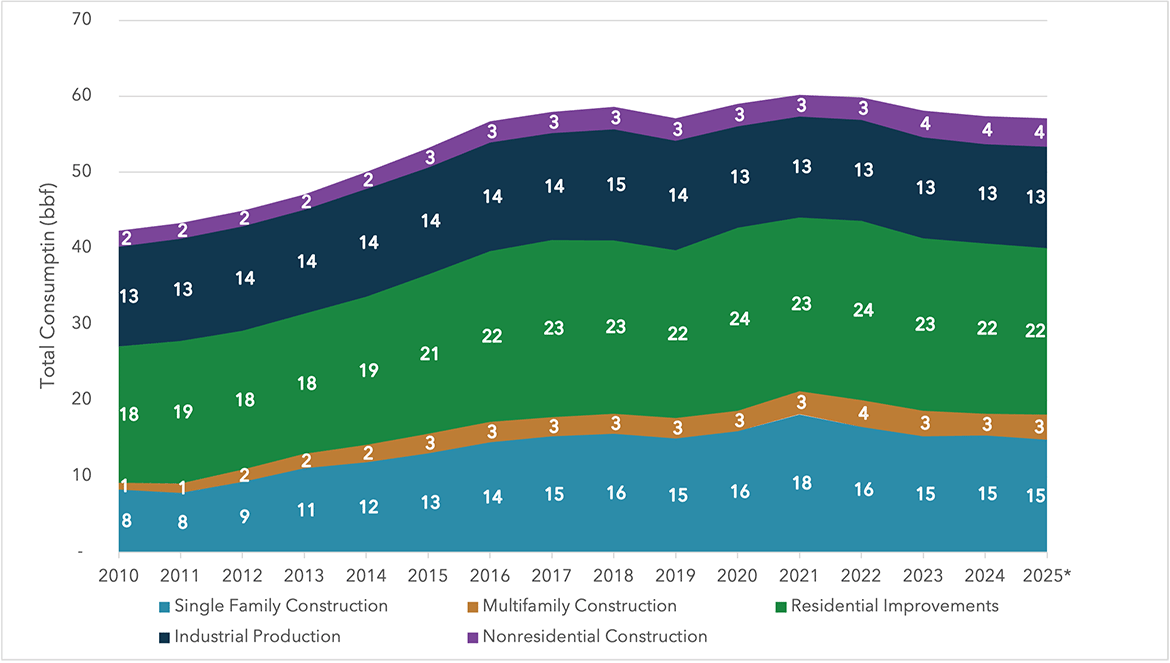
Perversely, this has a disproportionate impact on Canada’s value-added wood sector, much of which is scoped into duties despite few value-added manufacturers holding forest tenure. Value-added exporters must pay duties on the total value of their finished product, rather than on just the lumber inputs, so they end up paying more duties than the lumber manufacturers that are the ostensible target of the duties in the first place. This is particularly galling given the disproportionate role of small and medium sized enterprises in the value-added sector, which have the least available financial resources to address the duties. The federal government has done well to launch the Softwood Lumber Guarantee Program through the Business Development Bank of Canada to respond to this challenge, but more needs to be done. Given these disruptions, it is important to pay attention to the big picture (see Figure 3).
Text version
Year | Single-Family Construction (Total Consumption [bbf]) | Multi-Family Construction (Total Consumption [bbf]) | Residential Improvements (Total Consumption [bbf]) | Industrial Production (Total Consumption [bbf]) | Non-residential Construction (Total Consumption [bbf]) |
|---|---|---|---|---|---|
2010 | 8 | 1 | 18 | 13 | 2 |
2011 | 8 | 1 | 19 | 13 | 2 |
2012 | 9 | 2 | 18 | 14 | 2 |
2013 | 11 | 2 | 18 | 14 | 2 |
2014 | 12 | 2 | 19 | 14 | 2 |
2015 | 13 | 3 | 21 | 14 | 3 |
2016 | 14 | 3 | 22 | 14 | 3 |
2017 | 15 | 3 | 23 | 14 | 3 |
2018 | 16 | 3 | 23 | 15 | 3 |
2019 | 15 | 3 | 22 | 14 | 3 |
2020 | 16 | 3 | 24 | 13 | 3 |
2021 | 18 | 3 | 23 | 13 | 3 |
2022 | 16 | 4 | 24 | 13 | 3 |
2023 | 15 | 3 | 23 | 13 | 4 |
2024 | 15 | 3 | 22 | 13 | 4 |
2025* | 15 | 3 | 22 | 13 | 4 |
Source: Western Wood Products Association and Forest Economic Advisors LLC, compiled by Quebec Forest Industry Council. *Data for 2025 are an estimate.
A few points are worth highlighting. First, the market is tight. Consider that in 2021 prices more than doubled in the face of what amounted to a 1.9% increase in demand under COVID supply disruptions. Second, consumption is stable. Residential construction accounts for roughly 33% of long-term demand, home renovation 40%, and industrial use 25%.
In this environment, small changes have big effects. The U.S. housing sector remains historically underbuilt. Affordability is a major factor (caused by lingering post-COVID inflation and recent oil and gas disruption) as are relatively high interest rates. We expect these issues to be addressed in the medium term, and that the U.S. will once again be a growth market for Canadian softwood lumber exporters, albeit at a lower market share than we previously enjoyed. In the meantime, anticipate a dynamic market.
Though there is relatively little that Canada can do to change policies in foreign capitals, there are actions we can take at home and abroad that will make a substantial difference, and which we address in our later Sections on Increasing wood in construction and Trade and market access.
Demand-side 2: Changing consumer demand for paper products
Consumer demand for forest products is in transition. Demand for certain paper-based products is growing, such as packaging and tissues. Between 2004 and 2024 global tissue production increased by 67% (from 24 million tons to 40 million tons) and packaging paper and paperboard by 64% (from 170 million tons to 278 million tons). As we noted earlier, demand for pulp, including NBSK, remains robust.
However, many of the value-added products that dominated the Canadian forest sector ecosystem for a century are in long-term decline, particularly newsprint and printing and writing papers. The impact of this collapse cannot be overstated, and it is this factor that has most seriously undermined the competitiveness of low-value fibres. The Canadian forest industry, in partnership with federal and provincial governments, must invest in new and globally competitive ways to use this lower quality fibre.
We discuss how to respond to these factors in our Section on Transformation, Modernization, and Transition. If all of our softwood lumber issues were solved tomorrow, the forest sector would still face major competitiveness hurdles as a result of this factor—no industry player can be profitable using only 30% of a tree. However, it is just as true that focusing on the demand-side tells at best half of the story, for the rest we must consider the supply-side, including disproportionate regulatory burden.
Supply-side: Uncompetitive fibre
It is easy to blame others for our problems, and difficult to take responsibility. For too long Canadians, including the forest industry, have blamed distant others for matters for which we must be held to account. That must end if the trajectory of Canada’s forest sector is to change.
Some of the challenges facing the forest sector could have been avoided with more effective leadership within industry. Intelligent risk taking, and early, aggressive capital plans to transform high-performing facilities into new product lines while rationalizing older, smaller, and less efficient facilities in ways that proactively partnered with communities and the workforce would have mitigated our problems somewhat. Some industry leaders took these risks, and they should be applauded. However, by and large Canada’s forest industry played a high-stakes game of chicken, keeping costs and investment as low as possible, trying to shift the social burden onto governments, and aiming to become the last mill standing in any given region or product line.
Some of the challenges facing the forest sector could have been avoided with more effective leadership within industry. Intelligent risk taking, and early, aggressive capital plans to transform high-performing facilities into new product lines while rationalizing older, smaller, and less efficient facilities in ways that proactively partnered with communities and the workforce would have mitigated our problems somewhat. Some industry leaders took these risks, and they should be applauded. However, by and large Canada’s forest industry played a high-stakes game of chicken, keeping costs and investment as low as possible, trying to shift the social burden onto governments, and aiming to become the last mill standing in any given region or product line.
This behaviour increased industry leverage on governments as fears for the workforce and communities grew, resulting in some sub-optimal public funding designed to simply keep the doors open at certain facilities. Meanwhile, available capital was invested in other countries while Canadian facilities were hollowed out. This sustained underinvestment may have limited quarterly losses, but it also prevented industry-led sector transformation across much of the country. We must face these facts honestly. Canadian industry, however, is not alone in terms of home-grown contributions to the current crisis (see Figure 4).

Text version
Sawmill jurisdiction | US South (Annualized Cost Index) | BC Interior (Annualized Cost Index) | Alberta (Annualized Cost Index) | Ontario (Annualized Cost Index) | Quebec (Annualized Cost Index) |
|---|---|---|---|---|---|
Harvesting and transportation | 1 [Reference] | 2.54 | 1.73 | 2.15 | 1.96 |
Stumpage | 1 [Reference] | 0.74 | 1.07 | 0.60 | 0.77 |
Sawmilling variable costs | 1 [Reference] | 0.70 | 0.80 | 0.93 | 0.98 |
Total | 1 [Reference] | 1.20 | 1.12 | 1.16 | 1.18 |
Each value has been divided by the U.S. South value (U.S. South = 1.00).
Source: FPInnovations
Canada’s costs of lumber production are much higher than our closest competitors. In the past, relatively high revenues from large volumes of chip sales and the construction of larger mills to generate economies of scale could mitigate some of the structural factors that drive this (such as slow-growing trees) but the collapse of demand for newsprint and printing and writing papers, and systematic underinvestment, means that this is no longer the case.
Though it varies from jurisdiction to jurisdiction, the basic costs associated with accessing fibre (stumpage) and sawmilling are relatively competitive in Canada—on average roughly 15% to 20% less than in the U.S. South—despite what in many cases are smaller diameter trees. It is our harvesting and transportation costs, which range from 75% to 154% greater than mills in the U.S. South, that destroy our competitiveness, leading to between 12% and 20% higher average production costs at the sawmill level, which cascade through the entire supply chain. Once again, it is the small and medium enterprises, many of them independent contractors working in forest operations, that are the most vulnerable to this non-competitive cost structure.
Even without tariffs, this is a major challenge. There are multiple causes that we will address in more detail later in this report, including unstable access to cost-competitive fibre, a high and growing regulatory burden, and inefficient ownership incentives. However, most of these factors can be reduced to sub-optimal system-design accompanied by redundant and disproportionate regulation. In the Canadian context, regulatory unpredictability and federal–provincial duplication have become material drivers of investment risk, project delay, and elevated operating costs, directly undermining bankability and competitiveness.
We will provide a roadmap to respond to these issues in our Sections on Stable access to Fibre, Workforce and Communities and Fostering a Forest Culture.
The forest sector crisis
Canada’s forest sector faces twin crises. There is a crisis of investor confidence long in the making, in which the sector needs significant investment in aging mills and equipment to improve its productivity, but global and domestic capital have serious enough doubts about the industry’s future that they are unwilling to invest. As multiple union leaders have pointed out to us, there is also a crisis of worker confidence, just as long in the making. Many current and potential members of the forest sector workforce look at the trends and the aging equipment and ask themselves: Is it worth it? Can I risk my mortgage, my pension, my family’s future, on working in the forest sector?
We have collectively spent the last 90 days hearing about these crises from CEOs, researchers, mayors, First Nations and Métis representatives, union leaders, environmentalists, home builders, investors, and many others. But we have heard even more from them about their vision, their hopes, and their commitment.
After hearing these messages, we have no crisis of confidence: the Canadian forest sector has a bright future, and we believe that we know how to get there, if we but choose to do so. As we have said to each other many times over the past 90 days: we have the skill, but do we have the will?
Stable access to cost-competitive fibre
The forest sector is a manufacturing sector. For supply chains to operate effectively, industry requires long-term stable access to its core input, cost-competitive fibre, which goes on to support an array of up and downstream markets as the tree becomes lumber, pulp, tissue and paper, residuals, and other byproducts. If we look at it strictly from a market and investment perspective, there are few incentives to bet on the future of any industry that is constantly plagued with uncertainty in accessing what it fundamentally needs to operate. Factor in trade issues and the collapse in demand for communications paper and the forest sector seems inherently high risk.
And yet, when we consider the priorities of Canadians—affordable housing, skilled employment, safety from the effects of wildland fire, sources of local and renewable energy—the forest sector is an inextricable part of what we value. We clearly want our forests to be present for generations to come, including as a renewable resource and fixer of carbon. Canada’s forests contain some of the highest quality fibre in the world, which goes on to be processed with high levels of renewable energyFootnote 3 under certified sustainable conditions. Credible science and traditional knowledge are available to increase health, productivity and resiliency outcomes. If our forests are as important as we know they are, how can we continue to allow the majority of the understorey to pile up and fuel hotter, less predictable, catastrophic wildland fires and the loss of lives, livelihoods and economic timber stands along with it?
California reached this breaking point in recent years. Accumulating forest and wildland fire crises led to the creation of a Forest Management Task Force with representatives from federal, state, local and tribal governments. Overseen by a scientific advisory body, the group has been quietly winning over skeptics by tracking key performance indicators (KPIs)Footnote 4 on wildland fire resilience and forest health, ultimately reducing risks to communities and increasing availability of marketable timber and sources of fibre. The group credits its unique decentralized governance as an enabling factor amidst significant political instability. Accounting for the likelihood that elected officials may not see eye-to-eye or could revert to hierarchical norms in decision-making better insulates this important work from political interference and red tape. Public and political criticism can be a part of healthy discourse, of course, but we believe that leadership includes a duty to share the facts consistently and on a non-partisan basis. Recommendations related to this are discussed in more detail under Fostering a forest culture.
Canada is a large country with no shortage of trees. Nuanced and adaptive management of our forests can go a long way in further sustaining their health and diversity. But these interventions run contrary to persistent and well-entrenched misconceptions in Canadian society, particularly in urban areas. “Protecting the forest” is often conflated with leaving the land untouched, whether through parks or other set asides, when this approach can actually raise risks and worsen outcomes when done in a siloed manner. When we consider our priorities, we would suggest that what we are actually seeking is much-needed investment in better outcomes, including transparency of accounting for biodiverse ecosystems that are safely and stably managed in harmony with sophisticated and highly valued manufacturing systems and logistics.
To help provide leadership and clarity in this space, we recommend that the Government of Canada implement a National Forest Sector Strategy outlining key policy positions and support to willing provinces/territories and partners, with a view to (1) increasing stable, competitively priced, long-term access to fibre as a precondition to significant private sector investment; and (2) creating the conditions to monetize the value of the biogenic carbon and array of ecosystem services produced by our forests.
Diagnosis
Stable, long-term access to cost-competitive fibre is the precondition to everything else in this report. Without it, capital will not flow regardless of incentives, transformation funds risk treating symptoms rather than causes, and workforce confidence will continue to erode. By our count, there have been 19 separate reports addressing the competitiveness of the forest sector by Government of Canada Standing Committees since 2007Footnote 5. The themes are familiar: addressing wildland fire and insect disturbances; diversifying revenue streams and increasing value-added and access to foreign markets; regulatory reform; innovation; climate change; workforce training and renewal; rail networks and port access; and increasing the use of wood in construction. Clearly, threats to the competitiveness of Canada’s forest industry pre-date 2026 headlines.
Policy
The harvesting and transportation costs that constrain the competitiveness of Canada’s delivered wood costs are largely policy-driven. Repeated provincial policy reforms in recent years have led to major reductions in industry access to fibre, persistent conflict over how forests are managed, and collapses in investor confidence. It is a crisis of uncertainty and unfulfilled potential in a country where over 90% of our forests are publicly owned. If investors can put their capital into assets linked to privately-owned forests, over which they have 100% confidence in fibre access over an indefinite term and where productivity is much higher as a result of long-term investments in silviculture, why wouldn’t they?
This is the current investment environment for managed forest lands in competitor nations like Sweden, Finland, Germany, Australia, New Zealand, Brazil and the United States. When we consider countries with major forest industries dominated by public forest ownership, Canada finds itself in the company of Russia, China, and Indonesia whose practices do not align well with Canadian expectations and leadership when it comes to industry, labour and conservation.
An appropriate comparator for Canada is Finland, a likeminded Northern country with a similar natural resource base (see Figure 5).
Country statistics | Canada | Finland |
|---|---|---|
Population (millions) | 39.7 | 5.6 |
Total forest area (million ha) | 330 | 26 |
Percent forest area (%) | 37% | 77% |
Percent forest area planted (%) | 5% | 88% |
Forest sector contribution to GDP (billion C$) | $33 | $18 |
Annual harvest (million m3) | 149 | 63 |
Forest sector contribution to GDP per m3 harvest | $224 | $287 |
Private ownership (%) | 10% | 60% |
Percent of total forest area protected (%) | 9% | 13% |
Third party certification (% of total managed forest area) | 42% | 96% |
Source: State of Canada’s Forests Annual Report (2023), National Resource Institute of Finland
At a national level, wildland fires continue to impact the country with ever-increasing intensity. We heard from First Nations and community leaders about the urgent need to increase the active stewardship of our forested land commensurate to this challenge. Since 2017 in British Columbia, approximately 8 million hectares have burned, while over the same period the area actively managed has declined by roughly 50%. Our forest policies are moving in the opposite direction from what is needed to reduce the risk of fire on the landscape, which is active management through harvesting, thinning and other silvicultural measures.
With a similar climate to Canada, Finland’s wildland fire losses over a managed forest landscape are often well under 1,000 hectares annually. Despite all evidence to the contrary, many Canadians believe that the forest industry is responsible for increased forest fires, rather than being one of our most important tools to limit them. Given our degree of polarization, though, rather than relying on Canadian governments, industry, and environmental NGOs for this information, we can learn from California’s experience to build more unity, not just in our forests, but across our country. In this regard, we want to recognize the enduring leadership of the California Wildfire and Forest Resilience Task Force and the consensus they built in California for the needed actions and partnerships to reduce wildland fire risk in their jurisdiction.
Ownership
Compared to Canada, Finland generates nearly 30% more value per m3 harvested, protects a higher percentage of its forests, and has significantly more third-party certified sustainable forest management. They are able to achieve this largely through leveraging private incentives: their forested land-base is mostly privately owned with benefits that stem from its management as an asset. This includes planting the most productive and well-adapted species and investing in silviculture to ensure planted forests are resilient to climate change. In contrast, Canada’s publicly managed lands are commonly seen as a recurring expense or cost centre to be controlled or minimized, particularly during periods of economic restraint, with significantly reduced productivity outcomes as a result. It is therefore unsurprising that Finland has not experienced the same struggles as Canada to attract private investmentFootnote 6. When we compare similar forested lands, privately owned forests are more productive, producing larger, healthier volume (see Figure 6).

Text version
Managed land | Harvest rate (m3/ha/y) |
|---|---|
Finland (public) | 2.30 |
Canada (public) | 0.32 |
Nova Scotia (public) | 0.69 |
JDI Canadian Freehold (private) | n/a |
JDI Crown License 7 (private) | 2.57 |
NB Crown (Excluding License 7; private) | 2.20 |
Source: J.D. Irving Limited (2026).
Not only that, but when public forests are managed alongside private forests, even when it’s not by the same individuals, the potential for major productivity gains jumps significantly through higher expectations, economies of scale, and the diffusion of best practices. Not every forest eco-region in Canada is set up to realize the same growth rates as New Brunswick, but all are capable of increasing their productivity through the discipline and incentives seen in private ownership.
Figure 6 is not a one-off. Canada has a proud tradition of private forest ownership, with approximately 480,000 landowners managing 25 million ha of private forest across Canada, generating more than $14 billion revenue and nearly 40,000 jobsFootnote 7. That’s a larger area of privately owned managed forest than Finland, and yet this asset is underappreciated and underleveraged.
Canadians have a proud tradition of public forest ownership and land management with longstanding consensus that large portions of this patrimony should be protected. However, the Finland example is important here: we have the ability to significantly increase our protected forest area while also designating large areas of highly productive, actively managed forests for industry to secure the stable, long-term access to fibre necessary to justify major investments in bankable projects. However, doing so will require courage from governments, industry, communities and First Nations to make the changes necessary to ensure this access, and to codify these actions into a long-term industrial strategy that provides the necessary certainty.
New Brunswick – A balanced example
We do not need to look internationally for examples of a healthy forest industry ecosystem. Forest ownership is split between the province (50%), small-scale private (30%) and large-scale private (18%), with the remaining 2% federally owned.
30% of forest is designated for conservation, with more than 10% completely protected. Annual harvest, exports, and protected areas are all rising.
This success is directly attributable to the combination of the design and implementation of New Brunswick’s Crown Lands and Forest Act (1982) which provides 25-year evergreen timber licences that are renewed after audit on a rolling 5-year basis, and the strong private land presence with its outcome emphasis.
Attracting investment
An issue closely related to capital attraction is capital flight. We have seen major publicly traded firms closing or curtailing Canadian operations while simultaneously investing in other countries. This phenomenon is often contrasted in media and policy circles with recent investments of $5.8 billion by Metsä Group in two new state-of-the-art pulp mills in Finland. This can be attributed to the investment conditions described above, but what is less often appreciated, though equally important, is the nature of Metsä Group that makes these local investments more likely.
The Metsä Group is owned by the Metsäliitto Cooperative, consisting of nearly 100,000 small-scale private Finnish forest owners. It has strong incentive to make local investments because its success is linked to the value they can add to the forest assets of their owners. While Metsä Group is active globally, ultimately they cannot succeed in the eyes of owners if not investing in Finland. This is an area where once again Canada’s publicly owned forest tradition undermines investment, favouring partnership with capital that has limited long-term connection to the local forest itself.
In the Canadian context, there are two groups with a strong enough connection to local forest land that would limit capital flight and encourage Metsä-like investments, particularly their successes amongst small and medium-sized enterprises (SMEs). The first are private forest landowners, though in the Canadian context small-scale landowners lack the large-scale cooperative organization possessed by Metsä. The second, and most strategically significant, are First Nations, which have inherent rights to many forest lands in Canada and a strong interest in the long-term health and proactive management of forests to generate stable localized employment and economies in their communities. Some may argue that the provinces themselves have similar investment drivers, but provinces do not typically make capital allocation decisions for downstream investments in the way that Metsä does. This is primarily due to the nature of provincial politics and electoral cycles, which dilute their mandate as an ownership group across a broad range of stakeholder interests to a degree that limits their effectiveness as a capital allocator. We believe that in the medium-term Canadian federal and provincial governments should provide support at a regional level with private forest landowners and First Nations to explore alternative ownership and fibre allocation models that focus investment decisions more on developing the local forest economy.
Regulatory environment
In addition to high-level fibre certainty challenges is a more granular one, which is regulatory unpredictability and enforcement disproportionate to risk. There is a long-term trend in increasing federal-provincial regulatory duplication as it pertains to the forest industry, which creates uncertainty, limits access to fibre, and is inimical to investment, while significantly increasing operational costs. This is most directly felt when it comes to enforcement of federal instruments, including the Species at Risk Act, the Fisheries Act, the Migratory Birds Convention Act, and the Pulp and Paper Effluent Regulations. The issue is well-understood, and it is not necessary to reinvent the wheel when it comes to solutions. In each case, pursuing risk-proportionate compliance that recognizes provincial equivalency within a single-window approvals system would significantly improve the health of the forest sector industrial ecosystem.
We provide a detailed prescription for how to address this issue in (Appendix A).
Fibre access
As we have seen, forest-ownership alone does not determine competitiveness, but it heavily influences it. The bottom-line with respect to the forest-ownership models most common in Canada is that they directly reduce the competitiveness of the forest sector. Market forces determine what economic activities are viable, while ownership structure influences where capital flows, how it is used, and whether it stays.
It is not the mandate of the Task Force, nor our goal, to create a prescriptive set of management reforms for provinces and territories. However, we can identify a set of common outcomes that we recommend as targets in order to strengthen supply chains and thereby competitiveness. These include:
- Greater connection between specific timber producing forests and the industrial facilities that process fibre sourced from that timber
- Increased areas of intensively managed forest land to balance increased protected areas
- Increased duration, stability and credibility of fibre access commitments
In different jurisdictions, achieving these outcomes will take different forms. Our recommendations are not intended to constrain the exercise of provincial and territorial Constitutional responsibilities, but rather to encourage that such reforms are swiftly pursued, with strengthened supply chains as their goal. We describe the current State of Play in (Appendix D).
We support a well-designed, transparent, scientifically backed regulatory landscape that delivers results. Simultaneous reforms to forest ownership, governance, and regulatory regimes would be a significant shift from the direction in which federal and provincial policy has been moving for several decades, but we believe that such a fundamental shift is necessary if the future of the forest sector is to be secured. This change will require sustained, coordinated alignment between federal and provincial governments, as well as industry, First Nations, and other stakeholders. This degree of coordination will only be possible within the context of a (non-partisan) 25-year National Forest Sector Strategy, which we call on the federal government to develop and implement, with provincial support, by the end of 2026.
The long-term focus of this strategy is not arbitrary. We are grateful and supportive of the tight timelines associated with our 90-day mandate, which is appropriate to the business context in which Task Force members operate. However, we are also deeply aware that when it comes to forest ownership and management reforms, federal and provincial governments will need to appropriately consult with Indigenous Rights Holders to meet their important treaty and legal obligations to entrench the lasting results we are seeking.
Recommendations
First, we recommend that the federal government develop, fund, and implement a National Forest Sector Strategy anchored on restoring long-term competitiveness and investment confidence, and aligned with provincial reforms to stabilize access to cost-competitive fibre, while undertaking the regulatory reforms unique to its jurisdictional responsibilities to ensure its effective delivery, while offering funding partnerships to support provinces that choose to undertake their own parallel reforms.
Second, none of this is possible unless provincial governments take the necessary legislative, regulatory, and contractual steps to stabilize industry access to cost-competitive fibre in the long-term.
Priority actions
- The federal government should develop and launch a National Forest Sector Strategy before the end of 2026, addressing the recommendations that we make in this report. Implementation of this Strategy should include clear accountability from a dedicated team under Canada's Minister of Energy and Natural Resources. This Implementation Team should work closely with an external Advisory Council including representatives of upstream and downstream industry, Indigenous Peoples, and Canada’s forest industry workforce.
- The federal government should undertake a rapid reform of existing regulations to reduce regulatory overlap and uncertainty with a focus on increasing economic fibre supply. Priority areas for reform include the federal Species at Risk Act, the Fisheries Act, the Migratory Birds Convention Act, and the Pulp and Paper Effluent Regulations (see Appendix A).
- As part of its recently announced $3.8 billion Nature Strategy, or as an equal commitment in parallel, the federal government should ensure decision making on Crown lands (e.g., parks, protected areas) include the codification of forest management plans and related costing to ensure they (1) remain healthy and have actively mitigated wildland fire risks, as an important and preventative contributor to environmental, health and conservation priorities, and (2) ensure a growing and competitive fibre supply.
- Provinces should shift their forest regimes towards “Working Forest” models that favour accountability and the sustainable production of timber from lands under long-term leases (i.e., 25 years or longer) and backed by sustained engagement with stakeholders. We endorse a shift from volume-based to area-based approaches, the Triad model which explicitly identifies Protected Areas, High Production Areas under more intensive management, and Matrixed Areas under more extensive management), and other reforms needed to strengthen supply chains. This approach has the potential to increase protected areas, decrease conflict over adjudicating between multiple values in the Working Forest, and significantly increase productivity and investment by providing long-term confidence in cost-competitive fibre supply to industry.
- The federal government should allocate up to $1 billion over 10 years for partnerships with willing provinces and territories to implement a nation-wide series of long-term projects to scale pathways to divest Crown forests to local forest owners, including First Nations and Metis. These would include a range of ownership structures, to demonstrate the effectiveness of alternative models in circumstances that are consistent with local priorities. This approach is needed to generate the evidence base necessary to deploy such a policy at scale, and to build consensus on the merits of this policy amongst key stakeholders and partners. A mix of models should be explored, but should include Indigenous ownership, Indigenous ownership in partnership with private sector Joint Ventures, and opportunities to transfer title to networks of small-scale private landowners through co-operatives.
Roadmap
Year | Priority | KPIs and milestones |
|---|---|---|
2026 | 1, 2, 5 |
|
2030 | 3, 4 |
|
2050 |
|
|
Transformation, modernization and transition
Capturing growing global demand for forest products and emerging bio-based materials requires large-scale investment in modern facilities and new value chains. Across all segments of the forest sector, the core barrier to investment is not a lack of ideas, but insufficient bankability. Capital-intensive projects require long-term supply chain certainty through fibre access, predictable operating economics, deployable innovation, and durable revenue signals. Where any one of these elements is absent, private capital withdraws or is redeployed to other jurisdictions.
As part of deliberate efforts to reindustrialize the country, it is critical that we secure bankable hosting conditions for projects to transform the forest sector, with modernization of facilities and targeted transition measures serving as an enabling instrument, while putting the necessary tools in place to support skilled workforces and communities to transition to new sectors where individual mills continue to be at risk.
Diagnosis
Canada is a vast country made up of distinct and highly interdependent regional realities. This observation, when combined with Canada’s status as a federation where provinces hold responsibility for forest management, is often raised to suggest that comparisons with Nordic countries are overly rosy or simplistic. Coordination across jurisdictions is certainly a challenge to overcome, but it is far from insurmountable with sufficient leadership, political will, and a clear understanding of the resulting value to Canadians. Rather than focusing solely on the financial return of projects, public investment in the forest industry should also consider the opportunity costs of inaction (including $23.5 billion in GDP and over 199,000 jobs), as well as the health, environmental and economic impacts of wildland fires. Large forest-related investments continue to be made based on consistent demand and market outlook for lumber, pulp, packaging, containers, panels, tissues, mass timber, biofuels, bioproducts, and more... they just are not being made in Canada. These investments are increasingly anchored in integrated regional industrial hubs, built around competitive anchor facilities with long-term fibre access, diversified revenue streams, and predictable investment conditions.
A further structural constraint is the weakness of Canada’s innovation ecosystem at the point of deployment. While Canada maintains strong scientific and engineering capabilities, these strengths are not consistently translated into large-scale industrial applications. The challenge is not invention, but the absence of sufficient mechanisms to integrate innovation with operating assets, capital planning, and market demand. As a result, promising technologies remain stuck at pilot or demonstration scale, project risks remain high, and innovation does not reliably reduce uncertainty for investors. This lack of deployment-focused innovation capacity undermines the bankability of large-scale projects and must be addressed in parallel with capital-oriented interventions. The use of Bioeconomy Economic Opportunity Zones (BDO Zones) can also help stabilize and support economic development, including within the innovation ecosystem, by designating certified regions for high potential bio-based manufacturing projects and connecting sources of local biomass and residues with developers and investorsFootnote 8.
When it comes to investments that will ultimately lead to private returns, private capital will need to take the lead, but there is an urgent need for significant government investment in forest sector transformation in Canada. Will one greenfield forest-fibre-based biorefinery transform the Canadian forest sector? No, though it could certainly transform a region. Transformation should be understood not as the sum of individual projects, but as the emergence of resilient, diversified regional industrial systems capable of sustaining investment, competitiveness, and employment over the long term. Based on recent global investments, costs for a single integrated biorefinery facility would run between $2.5 billion to $3.0 billion. If our ambitions were three facilities, then we have reached $9 billion in needed investment while only considering downstream transformation needs. However, even this amount would undershoot total investment required for real transformation, since it would miss the many innovative projects needed throughout the upstream components of the value-chain, which tend to be dominated by SMEs, and overdue investments in digitalization, optimization and Artificial Intelligence (especially for SMEs) not just to build for the future, but to catch up to the present. Even if the recommendations we made in the previous chapter are implemented in the short-term, private capital will be cautious until the results can be seen. Forest sector transformation cannot afford to wait.
Accordingly, we believe that the federal government should launch a Forest Sector Transformation Investment Fund of at least $10 billion, to deploy loan guarantees, unsecured debt, contracts for difference, and offtake agreements to crowd-in private capital. These would not be grants designed to bail out failing facilities, but financing tools to address and resolve what are ultimately financing problems for projects that would be bankable in countries with better designed systems, and to which Canada’s systems will catch up in the long-term through the implementation of recommendations in the previous section. Eligible projects within this fund should explicitly be tied to demonstrating productivity gains, fibre availability, and long-term competitiveness. The effectiveness of this Investment Fund will depend on the presence of a functioning forest-sector innovation ecosystem capable of reducing technical, commercial, and integration risks prior to capital deployment. The purpose of this fund is not solely to finance individual projects, but to catalyze system-level transformation by reinforcing stable hosting conditions, reducing investment risk, and enabling coordinated development of regional industrial hubs.
The use of contracts for difference and offtake agreements is worth further discussion. We are not proposing that the government create a strategic lumber stockpile, but rather that it enable predictable, durable revenue signals for high-volume, high-value uses of forest fibre, residuals, energy and carbon that are essential for long-term competitiveness and stability of regional clusters currently at risk. Several transformation pathways—including forest-fibre-based biofuels, bioproducts and carbon pathways (carbon capture, BECCS, etc.) remain difficult to finance at scale in Canada due to uncertainty around future demand, price stability and policy durability. In contrast, contractual mechanisms that provide price and volume certainty over defined periods reduce investment risk and support final investment decisions. If, as has been promised by some Canadian political figures, the lifespan of the Clean Fuel Regulations is limited, then biofuel investments at scale simply have no future. No degree of legislative reform can reduce this uncertainty, because laws can be changed relatively easily. What is required to deliver confidence are contracts: a commitment to deliver a certain volume of a product, within a certain price range, over a certain period. Laws may change at low political cost, but changing contracts is much more difficult, which makes projects much more bankable. We are assured that the federal government already sees the wisdom of this approach, given the recent deployment of similar tools for critical minerals. The potential for large value and large volume revenue streams through transformative policy priorities, such as clean fuels and carbon capture and storage, is high, but recent Canadian policy instability has undercut their business case to a degree to which it is difficult to compensate without direct government contractual obligations.
In any context, $10 billion is a serious spending commitment, and there will be voices that argue that this is too large an amount. To be direct: if you assume 2024 average earnings of approximately $60,000 (and a federal tax rate of 20%–22% for federal income tax, CPP, and EI premia) the estimated annual federal fiscal contribution per direct forest worker is approximately $11,000 to $12,000. Across the 199,345 forest sector workers in 2024 this represents $2.4 billion to $2.6 billion in annual federal fiscal yield—before corporate income tax or GST. For provinces, total stumpage charges, taxes, and various other fees generates a similar value ($2.3 billion in 2020), for a total government revenue from the sector of over $5 billion annually with conservative assumptions about corporate taxes and GST, and no indirect or induced considerations. If federal and provincial governments are serious about forest sector transformation, the sector itself already supplies governments with more than enough revenue to justify reinvesting the amounts that we are suggesting.
The federal government’s suite of Forest Sector Competitiveness Programs was recently renewed ($500 million over 3 years) to deliver important results for Canada’s forest sector, including technology commercialization, market diversification, applied R&D, and forest-oriented Indigenous partnerships and capacity building. The Investments in Forest Industry Transformation (IFIT) program is particularly critical as a catalyst for the sector with its emphasis on partnering with industry to fill the gap between innovation, and commercialization. Given its comparative abundance, stimulating demand for consumption of lower quality residuals (biomass) is vital to increase the bankability of innovative projects while addressing the byproducts of industry and wildland fire mitigation measures. We provide a detailed prescription for how to stimulate uses of biomass in Appendix C.
However, to be blunt, $167 million per year will not transform a $23.5 billion sector, and a three-year commitment does not provide certainty in the context of a 25-year strategy. Further, the typical delivery model of these and other federal programs, in which a single call for proposals with an arbitrary deadline is used to fully allocate a dedicated funding envelope, does not reflect business reality, merely bureaucratic convenience. Timelines for these programs should be extended, with commensurate funding commitments, for delivery to occur as an open-intake model to allow business investments to follow business realities, rather than administrative ones. Ongoing delivery and expansion of these programs is necessary as a precondition for transformation, rather than the transformation itself. Developing new markets, building capacities, and investing in R&D are important ways for governments, industry and communities to partner in overall sector health and set the stage for transformation.
Overall sector and value chain health can only truly exist at the regional level, from the well-paying jobs and tax base they support, to the products, residues and innovative manufacturing outputs they can enable. When logistics and forestry infrastructure are optimized, the majority of the tree is accessible as a resource, with resulting raw material stockpiles (residues, chips, pulp) feeding value-added secondary and tertiary uses as part of co-located or nearby sub-industries (sawmills, bioproducts, heat generation, energy) that buoy local economies. In most cases, these complex industrial ecosystems—sometimes referred to as “clusters”—depend on one or more “anchor” operations that produce and/or consume a significant volume of forest fibre, and on which the rest of the value-chain depends. Much like indicator species in a natural ecosystem, when anchor facilities are healthy, the whole value-chain is healthy. The National Forest Sector Strategy should pay particular attention to the health of these regional anchor firms, and their unique fibre, transportation, and innovation needs. Their health is critical to integrating an industrial hub that crowds-in investment throughout a value-chain.
Conversely, where this supported interconnectivity and diversification is not present or possible, the vulnerability of a community and its forest operations quickly escalate. It is not realistic for every mill to remain operational. We must recognize that there are some facilities whose average capital age is so old that no loan guarantee or machine conversion can meaningfully extend their lifespan, and that will permanently close in the short-term. Governments should not throw good money after bad by keeping such businesses on life support but should focus their investments on operations with the highest likelihood of sustained success. In these cases of transition, it behooves governments and industry to work closely with our workforce and communities to ensure advance notice, planning, and supportive measures are in place to maintain community stability and ensure skilled workers can continue to support their families. We are not advocating for government-led shutdowns, but partnerships between industry, workers, and communities that consider all viable possibilities, and use public dollars for compassion and transition, rather than false hope.
While we heard many compelling ideas on how to proactively address facility, workforce, and community transition, the Task Force did not come to a clear consensus on specific approaches. Several experts provided advice on the need to “right size” the industry in certain regions and the group spent time grappling with issues of fairness (such as paying mill owners to shut down uneconomic facilities in which they have not invested or addressed site remediation and pension requirements). In these cases, we call on federal and provincial governments to work together with industry, labour and communities on transition options. This should include a mapping exercise across all Canadian mills to understand closure risks and barriers to exit, with the proactive development of community and workforce transition planning at highest-risk facilities.
Recommendation
That the federal government act quickly to catalyze and “crowd in” transformative investment by allocating an incremental $10 billion over 10 years for forest-origin fibre projects, including product development and commercialization. This fund should:
- Prioritize projects that contribute to long-term transformation;
- Include regional industrial hubs anchored by competitive facilities; and
- Be delivered through multiple instruments, including loan guarantees, unsecured debt, contracts for difference, and offtake agreements.
Priority actions
- In 2026 the federal government should launch a Forest Sector Transformation Investment Fund with $10 billion in capitalization to support transformative projects. The fund should have a 10-year commitment, with funding fully recyclable, and include loan guarantees, unsecured debt, contracts for difference and offtake agreements. It would be delivered by a federal entity whose core activities are business finance, partnered with Natural Resources Canada for policy and economic advice and domain expertise. Detailed eligibility criteria would need to be defined, but could include:
- 10-year market viability for the facility hosting the project (independent of the project in the case of brownfield investments)
- Regional forest-fibre value-chain integration
- Demonstration of “best feasible value” for fibre and productivity gain
- Guaranteed cost-competitive fibre supply (10 years for brownfield, 25 years for greenfield)
- A dedicated stream for Canadian-owned small and medium-sized enterprises
- The federal government should extend the existing Forest Sector Competitiveness programs at Natural Resources Canada to match the 10-year timelines of the Investment Fund, with the incremental funds necessary to support that extension over an additional 7 years ($1.2 billion). Program delivery should be further modified to align with business realities, including:
- Shifting all Competitiveness programs to an open intake model to enable long-term investment planning rather than short-term thinking to meet arbitrary deadlines.
- Accelerating delivery of the Investments in Forest Industry Transformation (IFIT) program to ensure project funding decisions within current and former paper-oriented value chains are made in 2026 to prevent the immediate unplanned collapse of regional value-chain anchor facilities in short-term.
- Immediately re-launch the IFIT studies stream with an urgent focus on commercial feasibility studies for novel uses of forest-origin fibre in replacement of communications papers.
- Launch a time-bound initiative to design and operationalize a forest-sector business and innovation ecosystem, focused on deployment, with the objective of identifying, de-risking and scaling transformation pathways, and aligning research, capital and industrial platforms and market execution in support for bankable investment.
- In doing so, finance demonstration projects that clearly support the de-risking of asset-based investment decisions and acceleration of technology adoption (e.g., biorefineries).
- Delivery of both of these items should use set-asides and modified accessibility ratios and qualifying conditions for SMEs with low capital flight risk and Indigenous groups, to facilitate equal opportunities, membership in broader industry and innovation clusters, and to drive overall growth, capacity-building and resilience.
- Identify the industrial anchor facilities for Canada’s distinct regional forest fibre value-chains and work with implicated provinces, industry and communities to develop and confirm fibre access and capital investment plans for each. These plans should at a minimum address needed improvements to economic fibre supply, rail access and reliability, and applied research to ensure their long-term competitiveness.
- Support the initiative to scale the BDO Zone designation nationally. By helping to reduce the asymmetry of information on the economic supply of biomass between incumbents and potential new investors, this will help attract new entrants to support recapitalization and create market diversification for Canadian forest communities.
- Champion the expansion of bankable carbon value mechanisms into forest industry and bioeconomy applications to provide predictable price and volume signals for capital-intensive projects, building upon existing frameworks where revenues can be recycled to support and incent projects delivering measurable social and economic outcomes (e.g., local jobs, increased use of fibre or residuals). Proactively brief opposition leaders and other stakeholders on the scientific basis and business value of such an approach. As needed to ensure final investment decision, sign off-take agreements and contracts for difference through the Investment Fund to allow scalability and replicability.
Roadmap
Year | Priority | KPIs and milestones |
|---|---|---|
2026 | 1, 2, 3, 4, 5 |
|
2030 |
| |
2050 |
|
Increasing wood in construction
In order for Canadians to control our own destiny for wood market access and housing affordability, governments must treat the built environment as a Transformation Platform, taking the necessary steps to immediately double our current rate of housing starts, and to significantly increase the share of wood as a building material in all appropriate construction activities.
Diagnosis
Building more
Housing construction accounts for roughly one-third of Canadian softwood lumber consumption, and non-residential construction accounts for one-quarter, so increased construction activity is the single-most important demand-side factor in the health of the forest sector. It is also one of the areas most within our control as Canadians.
In an earlier section we detailed the ways in which duplicative and inefficient regulations have increased costs to Canada’s forest sector. This phenomenon is not limited to the forest sector, but also to its downstream markets, including the construction sector. The Canada Mortgage and Housing Corporation (CMHC) estimates that housing starts must average approximately 480,000 units per year for the next 10 years to bring housing affordability down to what it considers a “realistic” level (30% of gross household income outside of Toronto and Vancouver)Footnote 9. This figure is daunting given that Canadian housing construction has only broken 250,000 four times in history (1973, 1976, 2022 and 2025) and that this target is 2.5 times the long-term annual average of 188,720 that has been stable for the past 60 years (see Figure 7).

Text version
Year | Single- family housing (No.) | Multi-family housing (No.) |
|---|---|---|
1955 | 99,003 | 39,273 |
1956 | 90,620 | 90,620 |
1957 | 82,955 | 39,385 |
1958 | 104,508 | 60,124 |
1959 | 92,178 | 49,167 |
1960 | 67,171 | 41,687 |
1961 | 76,430 | 49,147 |
1962 | 74,443 | 55,652 |
1963 | 77,158 | 71,466 |
1964 | 77,079 | 88,579 |
1965 | 75,441 | 91,124 |
1966 | 70,642 | 63,832 |
1967 | 72,534 | 91,589 |
1968 | 75,339 | 121,539 |
1969 | 78,404 | 132,011 |
1970 | 70,749 | 119,779 |
1971 | 98,056 | 135,597 |
1972 | 115,570 | 134,344 |
1973 | 131,552 | 136,977 |
1974 | 122,143 | 99,980 |
1975 | 123,929 | 107,527 |
1976 | 134,313 | 138,890 |
1977 | 108,403 | 137,321 |
1978 | 110,029 | 117,638 |
1979 | 109,117 | 87,932 |
1980 | 87,721 | 70,880 |
1981 | 89,071 | 88,902 |
1982 | 54,457 | 71,403 |
1983 | 102,385 | 60,260 |
1984 | 83,651 | 51,249 |
1985 | 98,624 | 67,202 |
1986 | 120,008 | 79,777 |
1987 | 140,139 | 105,847 |
1988 | 128,465 | 94,097 |
1989 | 125,968 | 89,414 |
1990 | 102,315 | 79,315 |
1991 | 86,567 | 69,630 |
1992 | 92,851 | 75,420 |
1993 | 85,099 | 70,344 |
1994 | 89,509 | 64,548 |
1995 | 64,425 | 46,508 |
1996 | 77,996 | 46,717 |
1997 | 93,186 | 53,854 |
1998 | 86,431 | 51,008 |
1999 | 92,190 | 57,778 |
2000 | 92,184 | 59,469 |
2001 | 96,026 | 66,707 |
2002 | 125,374 | 79,660 |
2003 | 123,227 | 95,199 |
2004 | 129,171 | 104,260 |
2005 | 120,463 | 105,018 |
2006 | 121,313 | 106,082 |
2007 | 118,917 | 109,426 |
2008 | 93,202 | 117,854 |
2009 | 75,659 | 73,422 |
2010 | 92,554 | 97,376 |
2011 | 82,392 | 111,558 |
2012 | 83,657 | 131,170 |
2013 | 76,893 | 111,030 |
2014 | 75,515 | 113,814 |
2015 | 68,125 | 127,410 |
2016 | 74,089 | 123,827 |
2017 | 76,843 | 142,920 |
2018 | 65,940 | 146,903 |
2019 | 55,869 | 152,816 |
2020 | 60,023 | 157,857 |
2021 | 82,116 | 189,082 |
2022 | 72,647 | 189,202 |
2023 | 54,616 | 185,651 |
2024 | 54,508 | 190,859 |
2025 | 52,274 | 206,754 |
Statistics Canada Table 34-10-0126-01 Housing starts, under construction and completions, all areas, annual.
Given the magnitude of this task, speed is supply, and the biggest constraint on speed is the pace of approvals and process duplication. Nowhere is this more true than in attempts to establish Modern Methods of Construction (MMC), including light-frame systems, which are necessary in order to build at the scale and pace that Canada needs.
To fully realize the benefits of MMC, significant reforms to municipal and regional planning, permitting and zoning timelines will be necessary. This includes the need to streamline codes, inspections and permitting for modular buildings, which should be limited to focus only on site-specific conditions once a modular building type has been certified within the province and relevant environmental load zones (e.g., seismic). Furthermore, as code compliance is verified through ongoing factory inspections, municipalities should be required to reduce redundant inspection scope and associated permitting fees. Municipal services should deliver value-add feeds tied to the actual work performed, rather than flat fees tied to fee schedules that ignore significant differences in the effort required.
This issue of government charges impacting the affordability of housing has reached a crisis level. For example, in 2024 the total tax and fee burden in Ontario averaged almost 36% of the final purchase price of a new home. Approximately 70% of this consists of direct fees, such as development costs and permitting fees, while the remining 30% comes from indirect taxes paid during the development process, including income and corporate taxes Footnote 10. For perspective, the development charges on a single-family home in Toronto was roughly $141,139 in 2024, a 993% increase from 2010 when it was $12,910. Since most of these charges are fixed, the relative impact on the price of a home is greater the lower the cost of the home, a perverse outcome given affordability concerns. Furthermore, federal and provincial sales taxes and then land transfer taxes are charged on the final cost to the purchaser of a new home, which already includes the contribution of municipal fees, creating a “tax on tax” scenario. While this government-driven price inflation targets “only” new homes, because new homes compete in the market with existing homes, it has the indirect effect of driving up resale home prices as well. The biggest thing that governments could do to increase the affordability of new homes is to reduce or eliminate their 36% take of the final purchase price. For comparison, in Ontario average home-builder margins on the sale price of a new home (after taxes and fees) are approximately 10.7%, or a little under one-third of the government margin.
We applaud both the Carney and Ford governments for their commitment to cut development costs. This is a real step that will see more homes built in Canada’s largest housing market. We also applaud the temporary expansion of the 13% Harmonized Sales Tax (HST) reduction to all buyers of newly built properties in Ontario, not just first-time homebuyers. However, we cannot help but note that we have a homebuilding gap that will extend for the next decade, so short-term measures, while welcome, will need to be reconsidered in a timely manner to ensure that we have the policy stability to make scaling of MMC bankable. An outcome-based approach is preferred. For example, that the HST on newly built properties be waived nationwide until housing starts reach 480,000 and are sustained at that level for 3 years. Nonetheless, even short-term policy tools are helpful to stimulate the marketplace, but ultimately more and consistent supply, sustained over the long-term, matching or even slightly exceeding demand, will be required to structurally reset housing affordability. Widespread lumber shortages in 2021–2022 were a potent reminder of how closely housing affordability is tied to lumber production in Canada.
Building more with wood
As noted in Figure 2, sawmills are the center of the industrial ecosystem when it comes to the health of the forest sector and its workforce. Manufacture of the 2 × 4 continues to make solid contributions to GDP through construction and, in so doing, protects domestic capacity and insulates Canadians from worsening affordability. But the benefits of building with wood go beyond this single economic lens:
- Sustainable: wood is a fully renewable resource.
- Carbon: trees absorb carbon dioxide from the atmosphere, turning it into wood while trees are growing. Older forests are carbon sources to the atmosphere in Canada (due to fire and pest infestation) but managed forests accumulate carbon in trees that when harvested and used as long-lived products (such as lumber) for construction locks that carbon into the built environment, enabling replanting, and rapid sequestration of new carbon stocks into managed landscapes.
- Abundant: Canada needs to build, and there is no more abundant building material available in our country.
- Affordable: wood is the least cost conventional option for the construction projects for which Canada has the most need (residential housing). If we are able to scale modern methods of construction, it will be the lowest cost option for the most scalable new technologies as well (modular, prefabrication).
- Speed: when regulatory delays are removed, construction with wood is a much faster construction option than others, because it is lighter and more amenable to prefabrication.
- Performance: modern wood construction is light, strong, and highly resistant to earthquakes and fire.
With respect to increasing the share of wood in construction, Canada has reached the point where we are no longer constrained by innovation or technical proof, but rather by system readiness. Canada has an extensive portfolio of high performance, technically proven wood construction systems using light wood frame, mass timber, and hybrid building systems. However, product and system approvals remain slow and inconsistent across jurisdictions; insurance and financing frameworks often continue to view wood-based systems as exceptional one-offs rather than routine projects; and factory-based models face unnecessary barriers to approvals, sequencing and financing. Furthermore, though we are focused here largely on newer approaches, the light-frame construction methods that currently dominate residential housing remain effective options, highly compatible with smaller-dimension fibre profiles common in Eastern Canada, making it a scalable, cost-effective pathway to increase domestic wood use while using existing manufacturing capacity.
In construction, time is money, and if Canada’s building system continues to treat wood projects that are business-as-usual throughout much of the world as boutique, requiring supplemental approvals processes, then builders and developers will not seriously pursue them at scale. The future of wood construction in Canada is not a series of demonstration projects, it is in turning the unfamiliar into the familiar, the unique into the commonplace. This will require on-going reforms to the National Building Code, but at an accelerated pace from what bureaucratic tradition has encouraged us to accept (see Appendix B). This must include an accelerated shift to performance- based building codes.
In the same spirit, while architects admire unique exposed mass-timber designs that display their skill and impress their clients, what will accelerate production is widespread acceptance of standardized, repeatable designs for wood systems the likes of which are already commonplace for concrete and steel. There are multiple builders and developers promoting such replicable models from Coast-to-Coast-to-Coast, but their deployment has been hampered by municipal regulator anxieties about doing something new. Federal-provincial pre-approved code-compliant building patterns for panelized, light wood-frame and hybrid systems can reduce review burden and perceived novelty risk, accelerating approvals and inspections. Pre-approved design options for elementary and high schools, fire-halls, affordable housing, health clinics, and similar would enable rapid scaling through Modern Methods of Construction. Similarly, the development of a national protocol for quality assurance, moisture management, and inspection for mass timber and panelized systems would directly address risk aversion among municipal building departments, improve insurability and establish a consistent baseline competency and quality assurance.
This context creates ready opportunities for government-led industrial strategy, including a clear national objective to grow domestic use of Canadian wood through housing and public construction focused on segments where scale is most achievable and productive (see Figure 8).
Type | Current market share | Volume (mmbf) | Target market share | Net volume (mmbf) |
|---|---|---|---|---|
1–4 Storey residential | 85% | 570.3 | 85% | 0 |
5–6 Storey residential | 58% | 280.2 | 80% | 106.3 |
7–18 Storey residential | 0.5% | 3.8 | 25% | 187.5 |
19+ Storey residential | 0% | 0.0 | 10% | 61.6 |
Education | 20% | 38.5 | 50% | 57.8 |
Low-rise commercial | 15% | 25.8 | 40% | 43.0 |
Warehouses | <1% | 2.7 | 33% | 51.0 |
Total |
| 921.3 |
| 507.2 |
Source: Canadian Wood Council
The Canadian Wood Council have outlined an aggressive scenario (described in Figure 8) that should be the minimum goal for an ambitious national forest industry strategy and would see a more than 55% increase in use of wood in construction in Canada, even if housing starts remain at current levels (around 250,000). If housing starts hit their implied goal of 480,000 per year, use of wood in construction would more than double, even if the residential market shares in Figure 8 remain constant. The potential incremental volume from this aggressive scenario (507.2 mmbf) represents just over 4% of Canada’s average softwood lumber exports to the U.S. (2020–2025).
The biggest potential gains in the Figure 8 scenario (5–6 storey residential and 7–18 storey residential) are achievable with only modest policy support: the gains in the 5–6 storey segment could be achieved primarily by Quebec and Ontario (for which wood penetrates less than 50% of the 5–6 storey market) hitting levels already surpassed in British Columbia and achieved in some parts of Alberta (80%). Furthermore, wood construction is now codified up to 18 storeys in Canada’s largest construction markets (B.C., Ontario and Quebec) so normalization of wood in Canada’s building system remains the primary barrier, rather than regulation. Wood is already cost-competitive in low-rise commercial and warehouses, with high aesthetic appeal, so again, system awareness and acceptance is key. We encourage federal and provincial governments to deepen their collaboration with leading industry groups such as the Canadian Wood Council, BC Wood Specialties Group, and the Quebec Forest Industry Council in technical research and promotion of the use of wood in all construction.
The Education segment of Figure 8 provides an opportunity to focus on a current gap: procurement. While multiple jurisdictions have implemented some form of wood preference in procurement, we would characterize many as weak, with wood continuing to be passed over for major public institutional investments such as schools and hospitals. This appears to be attributable to building design decision-making being sub-delegated to independent boards or organizations whose procedures preclude specific material requirements in bidding or where material-specific preferences can be dismissed on other grounds. In light of several recent embarrassing cases of foreign-sourced wood products used in major Canadian institutional projects, governments should demonstrate their intention to take an industrial strategy for wood seriously by strengthening procurement priorities and related policies. This should include meaningful verification that materials are of Canadian origin, leadership in exploring new internal opportunities (e.g., military housing), and the use of clear performance indicators that can be applied in the grading of project proposals. Similarly, leveraging federal efforts such as Build Canada Homes and the Canadian Forces Housing Agency to create multi-year framework agreements for off-site wood components and systems (e.g., panels, modules and hybrid assemblies) will enable manufacturers to invest in capacity expansion while improving cost certainty and schedule performance.
Furthermore, there is no reason to stop at wood as a construction material. Build Canada Homes and the Canadian Forces Housing Agency should be required to source all wood components in their projects from Canadian origin wood, including flooring, cabinets and siding.
Builders and developers do not need additional incentives to adopt wood in design. Rather, the broader building system at the level of Authorities Having Jurisdiction, insurers and regulators need a combination of carrots and sticks to accelerate the normalization of wood-based construction in response to a serious federal and provincial industrial strategy.
Recommendations
That federal and provincial governments launch a national strategy to increase construction and increase the use of wood in construction including MMC, providing a jointly funded suite of carrots and sticks to encourage uptake across the building system.
Priority actions
- Develop and deploy a series of nation-wide tools for mass timber and MMC (for all building types), including code-compliant building patterns, protocols for quality assurance and inspection, whole-building life-cycle assessment frameworks supported by standardized environmental product declaration requirements, interprovincially recognized prefabrication certifications, and a modular road transport policy. These will reduce system risk and interprovincial trade barriers that raise costs by complicating design, permitting, inspections and product delivery.
- Create a Modern Methods of Construction Accelerator with a clear market share target for MMC in Canada, consisting of stated objectives to align procurement processes, provide long-term volume certainty, and drive significant improvements in cost efficiencies:
- Stream 1 would provide capacity funding, staff training, and digital permitting support to provinces and municipalities to implement the above tools, including an outcome-based incentive structure tied to measurable permitting time reductions and verified use of wood-based MMC systems.
- Stream 2 would offer federal funding to establish and grow new MMC manufacturing facilities to strengthen the business case for investment, including adding wood-based MMC investments to the activities eligible for Clean Technology Manufacturing Investment Tax Credits.
- Stream 3 would offer financial partnerships to Canadian provinces for construction activities that target progress towards achieving the market shares identified in Figure 8, as well as approval timelines for land development and building construction.
- Reduce government-driven sources of new home unaffordability by permanently eliminating HST for all new homes and expanding the reduction in development charges. This would necessarily require close federal-provincial-municipal coordination, so we recommend a tri-governmental working group to test fee rebates, reductions, or deferrals that include pilots designed to be revenue-neutral over time to avoid non-targeted fee cuts while protecting municipal fiscal integrity. Timelines should be tied to an outcome-based approach.
- Expand investment in public research for new forest-sourced products that can be used in construction, including insulation, acoustic panels, exterior cladding and trim, interior finishes, and fit-out.
- Accelerate delivery and raise ambition for Build Canada Homes and the Canadian Forces Housing Agency, with clear direction to use Canadian-sourced wood as the primary building material and MMC as the method of construction, with a preference for standardized wood and hybrid archetypes suitable for rapid deployment.
- Create a nationally available insurance instrument with a 10-year mandate to cover a portion of mass timber and MMC building project insurance, to rapidly thicken private insurer experience and reduce costs. This could be delivered through CMHC, the Business Development Bank of Canada, or a captive insurer.
- Accelerate the implementation of strategic changes to the National Building Code to drive the use of wood in construction for all building types in advance of the 2030 building code cycle and accelerate their adoption by Authorities Having Jurisdiction (see Appendix B).
Roadmap
Year | Priority | KPIs and milestones |
|---|---|---|
2026 | 1, 2, 3, 4, 5, 6 |
|
2030 | 7 |
|
2050 |
|
Workforce and communities
Canadian governments must partner with the forest sector workforce on a proactive approach to stabilize workplaces and keep people working in the forest industry, including strengthening income support mechanisms, establishing a federal transition office to coordinate interventions when needed, and deploying regional teams to support workers and communities.
Diagnosis
Canadians and their livelihoods are heavily invested in the future of our forest sector, with over 199,000 direct well-paying jobs, many of them unionized, supporting some 300 forest-reliant communities. While many of these communities are in rural areas, many are in Canada’s largest urban centres, including Toronto, Montreal, and Vancouver. The forest sector touches the lives of all Canadians. The essential and interconnected nature of forest products and their supply chains demand a more future-oriented outlook where Canada actively strives to retain, retrain, and transition its highly skilled labour force and attract a reliable stream of new entrants.
The forest industry and its workforce have a long, proud, and productive shared history, in which union presence has historically ensured strong working conditions (including higher wages, defined benefit pension plans and job security). Bargaining practices in the sector have also enabled the broad diffusion of these conditions to other workplaces, both unionized and non-unionized. However, the deterioration of financial performance amongst the facilities that anchor the viability of Canada's regional forest industry ecosystems is causing a widespread weakening of working conditions in the sector. The impact of these developments can be devastating, requiring Canada to step up to ensure fair treatment and a viable future for the forest sector workforce and its communities.
We recognize the important steps the federal government has made in partnership with provinces and territories, including support for upskilling and reskilling, and income and employment stability. Labour market agreements, training, and Employment Insurance Work-Sharing are making an impact, and these flexibilities are appreciated.
However, they are also largely reactive when we have enough information to be proactive in this space and consider lessons learned at scale during COVID-19. Canada's skilled forest workers and the sub-industries and communities they support deserve stability and certainty where it can be offered. Many of the tools we recommend already exist or have previous precedent in Canada, giving us places to start that can continue to be refined. What we need are governments with the courage and willingness to act. This includes emergency wage subsidies, dedicated resources for forest transition (including regional transition teams for workers and communities), and improved data sharing to assist in identifying regional economic opportunities. This will require a commitment to experiment through pilot studies and take the measured risk of being wrong for the sake of being right, or failing forward. Knowing women and young parents experienced disproportionately negative employment outcomes during the pandemic, addressing key factors like childcare and short-term housing arrangements should also be considered to encourage stability and certainty.
We also strongly recommend immediate, short-term income support for forest sector sub-contractors. These are the smallest enterprises, often a handful of workers focused on in-forest activities, whose financial flexibility is limited to the mortgage limits on their homes. We have seen the ability of the federal government to offer urgent income support on short-notice during COVID-19, and call on the federal government to implement this support before August 1, 2026 for a period of up to one year, to ensure that these critical skills and workers are not lost from our industrial ecosystem permanently due to the intensity of the short-term crisis.
Recommendation
The federal government must take action to drastically increase continuity and stability for its labour force, related work streams and forest-dependent communities.
Priority actions
- Retain: Improve retention rates and diversity of skillsets in Canadian workers, sub-contractors and the businesses they support through robust support measures such as flexible access to work sharing arrangements, short-term accommodations, childcare, transportation, and incentivizing local and Indigenous ownership opportunities to mitigate capital flight risks.
- Deliver a COVID-style income support program for forest sub-contractors at greatest risk in the short-term in 2026.
- Deliver a dedicated emergency wage subsidy program to go beyond Employment Insurance to increase income replacement levels in cases of layoffs resulting from industrial restructuring or trade-related disruptions. We need to keep people at work and limit job flight during short-term downturns.
- Create a Forest Workforce Council to advise provincial and federal governments on the timely and flexible deployment of available tools (e.g., EI extension, income security, early retirement, relocation incentives) to retain our trained labour pool and maximize continuity of work and community stability.
- Retrain: Partner with industry, vocational training centres, and post-secondary institutions to make strategic investments in technical capacity, including retraining (retooling of existing infrastructure), upskilling for emerging and future needs (trades, firefighting, automation, instrumentation) through hybrid and regional delivery models.
- Transition: Establish a federal forest transition office, responsible for coordinating between and within federal and provincial governments to anticipate sectoral shocks and align interventions to ensure stable, strategic funding for transition measures. This office would also support the establishment of teams with sufficient resources to provide personalized support, skills assessments, career guidance, psychosocial support, and individualized transition plans akin to the U.S. Department of Labor’s Rapid Response Services. In Ontario, there are good examples of worker and peer-to-peer action centres that we can continue to build upon.
- Attract: Proactively address labour shortages and future skills gaps by investing in curriculum development beginning at elementary school education levels, regional/rural vocational training centres and post-secondary institutions, apprenticeship opportunities, and partnerships with universities and industry to promote knowledge exchange (e.g., architects and engineers to design and build with wood). For pressing short-term gaps, allow region-specific relaxation of limits placed on temporary foreign workers
- Fund and deploy regional labour market information systems to anticipate job losses, identify regional economic opportunities, and inform decisions.
- Launch pilot projects to better align workers’ skills with new opportunities, developing more effective transition pathways, and testing new support models.
Roadmap
Year | Priority | KPIs and milestones |
|---|---|---|
2026 | 1, 2, 3, 4 |
|
2030 |
|
|
2050 |
|
|
Trade and market access
Canadian governments must work with industry to develop markets and defend access, both offshore and within North America.
Diagnosis
We call on the Government of Canada to continue to pursue a negotiated softwood lumber agreement with the U.S., while advocating for the free and fair trade of softwood lumber in North America, the end to unjustified tariffs and duties by the U.S. against Canadian softwood lumber, and the timely repayment of duties that the U.S. Government and its judicial system have acknowledged they had no right to collect. A key objective of such an agreement is to regain Canadian sovereignty over its policies related to the forest sector, which are currently subject to unjust tariffs and duties by the U.S.
The Government of Canada must also continue efforts to secure a renegotiated Canada-U.S.-Mexico Agreement (CUSMA) to provide long-term stability for North American trade in all forest products. However, Canada must also take all prudent steps that we can to reduce our dependency on U.S. markets. While the U.S. National Association of Home Builders recognizes that the U.S. needs Canadian lumber to recover housing affordability, the U.S. Lumber Coalition does not, and until the U.S. Government cares more about affordability than it does about Coalition lobbyists, we do not expect much on this front to change.
Accordingly, the Government of Canada should continue its aggressive approach to expanding free market access for Canadian forest products through the negotiation of trade agreements. We spoke with many exporters over the past 90 days and there was no consensus on which new offshore markets hold the greatest opportunities. Where there was consensus, was that the preferred approach by governments is free trade to develop new markets, brand promotion and technical advice to grow existing markets, while vigorously defending access to existing markets. Ultimately exporters themselves will make use of private incentives and individual contacts to penetrate new markets, which will vary from business to business and market to market. The key role of governments is to expand and defend access.
We are encouraged by the priority that the Government has placed on market diversification. Though the EU is currently a softwood lumber exporter to North America, once the non-market forces that we discussed in an earlier section are resolved, we anticipate incremental opportunities for certain Canadian wood products in Europe. In that light, Canada must continue to engage with EU institutions to secure proportionate mechanisms to demonstrate compliance with the EU Deforestation Regulation (EUDR) that do not place more stringent requirements on low-risk countries such as Canada than are placed on products sourced from the EU itself. In support of these efforts, federal and provincial governments should partner with industry to scale up digital traceability and chain-of-custody tools to facilitate access to compliance-heavy markets such as the EU, to enable Canadian operators to demonstrate Canada’s world-leading sustainable forest management performance. These efforts are particularly important for the many Small and Medium Enterprises (SMEs) that comprise a critical portion of Canada’s forest industry ecosystem.
Since many traceability tools have relatively fixed costs, they are borne most heavily by smaller operators that do not have the economies of scale to justify expensive traceability investments.
In Asian markets, federal and provincial governments should continue to partner with industry in investing in market entry support, including through testing labs and distributor networks, promoting building code reform, and advocating for wood as a building material of choice where a long history of wood use is not well established. We must also continue to work together in markets where the Canadian brand is well-established, such as Japan, South Korea, and China, to demonstrate our commitment, and to defend hard won market share that has come from past investments. The Canada Wood Group is a key partner to ensure the ultimate success of this work.
One of the biggest things the Government of Canada can do to improve Canadian competitiveness outside of North America is to invest in our own domestic infrastructure. Gaps in rail service reliability, port capacity, and operational stability within our transportation networks dramatically raise costs for Canada’s forest industry. The Forest Products Association of Canada estimates that inland freight charges can exceed 25% of delivered product costs, totalling more than $2 billion in inland freight costs each year.
While the federal government has taken steps to address this issue, the rail subsidy approach targeting lumber and steel currently envisioned risks significant market distortions that could see unexpected consequences, such as lumber from other provinces outcompeting B.C. and Quebec produced lumber in Vancouver and Montreal by subsidizing interprovincial rail shipping, but not intraprovincial rail. Furthermore, by focusing on only one segment of the supply chain (lumber) the program distorts already delicate connections with downstream elements of the supply chain such as pulp and paper.
Ultimately, improved competition and rail market performance is necessary, and strengthened regulatory oversight is required to do so. This is particularly the case in order to reduce restrictive contracting practices, over-recovery of fuel costs, and to establish transparent and standardized reporting and analysis of railway performance. When combined with investments to expand and improve redundancy within Canada’s major ports, transportation system benefits would translate directly into delivered-cost competitiveness in global markets.
Recommendation
The federal government should continue to partner with provinces and industry in developing and defending offshore markets for Canadian forest products, and on making the necessary investments and changes to Canada’s rail systems and port infrastructure to ensure sustained competitiveness.
Priority actions
- The federal government should strengthen its regulatory oversight of the rail system to improve rail market performance, increase confidence, and reduce overall system costs while modifying existing incentive structures to reduce market distortions.
- Create an organized initiative to reduce transport costs and aggressively explore new rail lines (with the railways and other resource sectors) which can reduce costs throughout the transport chain—including delivered wood costs to processing plants.
- The federal government should develop and publish a forest degradation definition compatible with the EUDR and endorsed by all provinces and territories. This is a potentially valuable role for the Canadian Council of Forest Ministers. Where views differ on technicalities, we appeal to jurisdictions to persevere in articulating the facts and areas of agreement in plain language to the public as part of a proactive non-partisan communications strategy.
- The federal government should implement a nation-wide program to support deployment of traceability and chain-of-custody systems across the forest sector with a particular focus on SMEs, to expand and defend access to compliance-heavy markets.
- Federal and provincial governments should strengthen their in-market collaborations with industry (particularly through Canada Wood) to develop and defend offshore markets in Europe and Asia.
Roadmap
Year | Priority | KPIs and milestones |
|---|---|---|
2026 | 1, 2, 3, 5 |
|
2030 | 4 |
|
2050 |
|
|
Fostering a forest culture
Backed by ample scientific facts and long-standing traditional knowledge, Canadian governments should take steps to reduce division and polarization on active forest management to protect the strategic interests of our country, our communities, and our environment.
Diagnosis
Canada’s economy was founded on its abundant natural resources, and our forests continue to play a multitude of essential roles in our lives—economically, environmentally, recreationally and culturally. Where these roles and interests intersect, there are competing priorities to resolve and cumulative effects that must be considered. To return briefly to the comparison with Finland that we introduced in an earlier section, this is one of the major gaps that we see between the current Finland and Canadian experiences: a forest culture. The people of Finland have a broad and long-standing consensus on the importance of actively managed forests, visible wood in construction, and the positive role of the forest sector in their lives. While this consensus once held in Canada, it has been eroded in recent years to the detriment of our industry, its workforce, our communities, and our environment.
The churn of political cycles at a time of increasing social and political polarization delay and obscure the resolution of competing interests. Decisions on forest policy have been influenced by the preferences of a relatively small number of groups. In the short-term, and regardless of political stripe, Canadian provinces need to make a conscious decision for their constituents whether they want the forest sector as a manufacturing industry to exist within their jurisdiction. The consequences are not, or even primarily, limited to the health of the forest industry.
We owe it to ourselves to take a step back from individual biases and recognize what we do agree on, in general good faith and as a starting place. We heard that decisions on the use and management of our forest resources must be carefully informed, transparently made, and clearly, factually and publicly communicated in a manner that respects jurisdictions, reduces risks to communities, and fosters public trust and understanding. Versions of this echoed across every stakeholder group we spoke to. Canada possesses well-researched forest management practices on which we need to build consensus in a holistic manner through an understanding of the facts and by dispelling misinformation. When it takes 40 years to grow a tree and healthy ones are burning down at greater rates each year, we need a path designed to outlast political cycles and a more grounded understanding of how we can collectively be and do better.
In 2023 alone, Canada’s forest fires emitted approximately 647 million tons of carbon (or 2.43 billion tons of CO2eqFootnote 11. That is a greater total greenhouse gas emission than the entire history of Canada’s oil sands since 1967, and a number that is erroneously added to forest industry emission stats to skew perceptions. Taking a page from California’s book, Canada should take a firm stance against attempts to relitigate the facts or assign blame and instead focus its limited resources on the application of knowledge and best practices to reduce wildland fire risks to its communities. Canada’s federal government also has a carbon accounting framework that is admittedly complex, but clearly defined, and fully transparent, on which it reports annually. It was developed based on the best available science, and reporting on sources of forest carbon emissions should be broadly accepted and honestly treated by media and special interest groups. The need to depolarize forest management issues and establish fact-based consensus touches many areas, including biodiversity, hunting and trapping, and others. We encourage an honest dialogue that builds bridges and unity rather than sowing the seeds of division.
A permanent, non-partisan body whose mandate includes clearly and transparently reporting on the facts, such as forest carbon emissions, with representatives of industry, Indigenous groups, environmental NGOs, and others, would go a long way toward reducing polarization, stabilizing forest policies, and rebuilding Canada’s forest culture. California’s progress and accomplishments in this space—particularly during periods of political turmoil—are a clear and inspiring example of how success for Canada is also within reachFootnote 12.
What we have heard over the past 90 days is that passionate and committed leaders within communities, Indigenous peoples, the workforce and industry will continue to advocate for a competitive forest sector that is active on the landscape. We are confident that the vast majority of Canadians share this commitment, and about the need to come together to build institutions that we trust to report the truth on what is going on in the forest.
Recommendation
That the federal government create a Canadian Forest Management Office, consisting of representatives from governments, industry, unions, scientists, Indigenous communities, environmental NGOs and the workforce, responsible for educating, reporting and clearly communicating with Canadians on the role the forest sector plays in their lives; and coordinating appropriate risk mitigation strategies (such as FireSmart activities) needed to protect Canadians, and to rebuild a national forest culture.
Priority actions
- Create a Canadian Forest Management Office with a mandate to rebuild a national forest culture through reporting, education, communication, and coordination of forest-based risk mitigation activities. Canadian jurisdictions should work directly with representatives of the Government of California to learn from their best practices.
- Actively combat misconceptions and impediments to forest sector social license including:
- Immediate delivery of a national survey of Canadians to establish a baseline of forest values and consensus.
- Public education of the wildland fire and carbon benefits of active forest management and building with wood.
- Broad Partnerships for capacity building (including educational institutions, Indigenous groups and community leaders) on curricula, scholarships, open sourcing, applied R&D, AI, digital technologies, and robust innovation ecosystems.
- Targeted outreach to stakeholder groups to rebuild national consensus on a positive forest culture across Canada.
Roadmap
Year | Priority | KPIs and milestones |
|---|---|---|
2026 | 1, 2 |
|
2030 |
|
|
2050 |
|
|
Appendix A – Regulatory reform
The Task Force prioritizes the following reforms as a short-term priority to improve fibre access and industry confidence by accelerating low-risk routine approvals and reducing regulatory overlap in the spirit of one project, one review, one decision.
- Species at Risk Act (SARA)
- Default to provincial/territorial led recovery strategies and regulatory frameworks except where federal emergency or critical habitat protection orders are in effect.
- Use administrative/bilateral agreements (including SARA sections 10 and 11 agreements where appropriate) to formally recognize provincial frameworks, establish shared outcomes, and clarify monitoring and reporting responsibilities.
- Establish a clear federal policy for coordinated federal-provincial-Indigenous consultation under SARA to ensure early engagement during recovery planning and amendments.
- Fisheries Act (Subsection 35)
- Prioritize development of additional harmful alteration, disruption or destruction of fish habitat avoidance Codes of Practice and update industry Beneficial Management Practices to cover routine activities (e.g., culvert installation/removal, maintenance dredging).
- Expedite protocol agreements with provinces that already approve forestry watercourse crossings and recognize provincial approvals as sufficient for defined low-risk routine activities.
- Improve DFO authorization processes by right-sizing conditions to actual risk, establishing clear offsetting criteria, and enabling habitat banking.
- Develop joint federal-provincial-Indigenous consultation protocols for routine works to minimize duplication and align timelines.
- Migratory Birds Convention Act and Regulations
- Modernize the Regulations to focus on the core purpose of the Act (protecting and conserving migratory birds) and avoid duplication with other statutes (such as SARA).
- Adopt risk-proportionate, outcomes-focused compliance regimes that recognizes evidence-based best management practices for forestry operations as reduced-risk when followed.
- Introduce clearer definitions, de minimis exemptions, and streamlined authorization pathways with permit scope proportional to risk and administratively workable.
- Develop guidance and tools to support compliance promotion and consistent application across regions.
- Pulp and Paper Effluent Regulations (PPER)
- Establish a federal “backstop” approach for PPER under which where a province has an equivalent outcomes-based regime, federal application is suspended while maintaining the ability to re-apply the federal standard if equivalency ceases.
- Design equivalency criteria that account for site-specific and region-specific conditions, while maintaining a clear national baseline.
Appendix B – Strategic Building Code Priorities
The Task Force prioritizes the following reforms as a short-term priority in advance of the 2030 National Building Code cycle to increase the use of wood in construction in Canada.
- Inclusion of six storeys of light wood-frame on two storeys of mass timber, concrete and/or steel (total of 8 storeys). Currently not approved as a priority for code committees but should be expedited as a cost-effective solution to accelerate housing supply.
- Expand encapsulated mass timber construction up to 18 storeys in adoption or adaptation of provincial code changes (in British Columbia, Ontario and Quebec) and reduce protection requirements during construction.
- Prioritize addressing restrictions on allowable construction type, building heights and building areas within the current Performance Based Design priority for the 2030 cycle.
- Introduce additional flexibility in code requirements to capitalize on emerging technological efficiencies and to ensure the competitiveness of Modern Methods of Construction (MMC) are not disadvantaged by arbitrary requirements (e.g., increased cost/time to implement performance-based energy efficiency modeling).
- Reduce unnecessary conservatism in seismic design for light wood-frame 5–6 storey midrise construction in high seismic locations to avoid risking delay until 2035.
- Expand materials permitted under heavy timber construction provisions to include SCL and CLT, growing the opportunity for wood use in combustible construction with a fire-resistance rating up to 45 minutes, including residential buildings.
- Inclusion of mass timber firewalls to allow wood products (including cross-laminated timber, nail-laminated timber, structural composite lumber and glulam) to be used as firewalls in place of masonry block, concrete, or gypsum/steel frame.
- Continuity of fire separations in light wood-frame to allow top wall plates in partition walls as part of the continuous fire separation of the floor assembly.
- Launch a national innovative product approval process as a complement and alternative to the National Research Council’s Canadian Construction Materials Centre to be adopted in the NBC and provincial codes to eliminate differing requirements in each province for product approvals in recognition of the priority to harmonize construction codes.
- Expedite inclusion of balloon-type cross-laminated timber shearwalls into Part 4 of the NBC as an acceptable Seismic Force Resisting System.
- Update component additive method (Appendix D-2.3) in light of recent research delivered by the National Research Council.
- Inclusion of a Generic OSB Flame Spread Rating (Table D-3.1.1.-A) which has remained unchanged since NBC 2005 due to insufficient test information at that time, a gap which has been filled in the subsequent 20 years of research.
- Allow green roofs on combustible construction.
Appendix C – Incenting use of biomass
The Task Force prioritizes the following federal measures and reforms as a short-term priority to stimulate demand for new consumption of lower-quality mill and forest residuals:
- With respect to the refundable Federal Clean Tech ITC, pass legislation as soon as possible that expands the eligibility to cover waste biomass. This was promised, but it has not yet been submitted to Parliament to receive Royal Assent.
- With respect to the refundable Federal ITC for Carbon, Capture and Storage, raise the rate for Bioenergy Capture and Storage (BECC) to the same level given for Direct Air Capture projects. This would help reduce the tax advantage enjoyed by BECC projects in the U.S. due to the 45Q Production Tax Credits and attract more private capital to Canada.
- With respect to the Clean Fuels Regulation:
- Create a mechanism so that CFR credits are bankable today. The Federal Government needs to remediate the political uncertainty concerning the longevity of the CFR and absence of clear targets past 2030, which hinders the bankability of these credits. Particularly when providing capital at the project level, financial investors require a CFR credit price floor for the tenor of the senior debt, or guaranteed CFR credit off-take prices through a contracts-for-difference mechanism
- Adjust existing Life Cycle Assessment analysis so that it reflects estimates of the emissions associated with avoiding natural emissions (for instance, wildland fires, decomposition of biomass) when forest residuals are used as a feedstock.
- Implement targeted CFR amendments with a credit multiplier for fuels produced from domestic wood residuals. This is in response to high market distortions with subsidized imported fuels from the US.
- Create a mechanism so that bio-refineries can generate CFR credits based on modelled data on Day 1 when they start processing new feedstocks derived from wood-based residues.
- Deploy financing instruments to incentivize innovation and use of new feedstocks (e.g., a Federal Equivalent to the Initiative Agreements provided under the B.C. Low Carbon Fuel Standard).
- For low feed rate co-processing of biocrude from woody biomass at oil refineries, remove the daily Carbon 14 testing requirement and allow mass balance calculation. The latter calculation method is more practical and proportionate to the challenges of co-processing of new feedstocks like woody-based liquids (that is, the C14 testing margin of error is too high to provide valid results at low feed rates).
- Do not penalize integrated oil refiners with chemical operations. Refiners should be incentivized to use low-carbon feedstocks, such as biocrude made from wood-based residues, and get credits for the full slate of their operations.
- In general, support projects utilizing forest residues—Incentivize the collection and use of forest residues otherwise left to decay or create fuel for wildland fire. This could stimulate the use of lower-quality biomass in the production of a range of bio-products (e.g., bio-power, liquid heating fuels, biochar to replace metallurgical coal in the production of steel, and emerging bio-products). Support measures could include reimbursement of biomass collection costs and public procurement of end products (e.g., biomass-based heating for Federal facilities like military bases).
Appendix D – Fibre access state of play
Canada’s approach to forest tenure separates forest asset ownership from downstream capital allocation. That separation does not guarantee underperformance, but it makes underperformance more likely. Bottom-line: in order to strengthen supply chains the current Crown Forest models require modification so as to achieve certain outcomes:
- Greater connection between specific timber producing forests and the industrial facilities that process fibre sourced from that timber
- Increased areas of intensively managed forest land to balance increased protected areas
- Increased duration, stability and credibility of fibre access commitments
Delivering on these outcomes will by necessity involve using different models in different jurisdictions, as a one-size-fits-all approach will fit no one. However, even without a single model, these outcomes must be pursued in order to deliver a competitive industry. In Figure 9, we summarize the current state of play for tenure in Canada.
Province | Contribution to nominal GDP in 2022, $ millions CAD (share of total) | Tenure types | Crown timber pricing approach | Wood supply from provicial Crown Forest in 2023, million m3 (share harvested) | Considerations | Indigenous revenue sharing |
|---|---|---|---|---|---|---|
British Columbia | 9562.4 (2.6%) | Coastal BC and some Interior areas are primarily area-based Interior BC remains largely volume-based Term for both tenure types 20–25 years, review every 5–10 years | Competitive Auctions (BC Timber Sales) and value of standing timber (stumpage) based on the expected value of forest products after harvest and processing, minus all costs and required returns (residual value appraisal) | 57.2 (57%) | Tenure reform has been recommended by external advisors, including a shift to a more area-based regime | Forest Consultation and Revenue Sharing Agreements between the province and individual First Nations (typically linked to harvest activity in their territories) |
Alberta | 4565.0 (1.0%) | Area-based Term 20 years, review every 20 years | Formula based stumpage (timber dues) system that adjusts monthly to reflect current product markets and operating economics (residual value appraisal) | 29.8 (56%) | Considering minor regulatory reforms over the 2026–2029 period | Not formally established through legislation or policy. Individual communities may benefit from company partnerships. |
Saskatchewan | 695.3 (0.6%) | Primarily area-based; some volume-based Term 20 years, review every 10 years | Administered dues system. Volume based and market linked | 8.6 (48%) | Considering expansion within existing tenure model | Not formally established but in 2025 ~32% of timber supply allocated to Indigenous firms, including NorSask Forest Products, 100% First Nations owned. |
Manitoba | 539.5 (0.7%) | Primarily area-based Term 20 years, review 20 years | Hybrid timber pricing system that combines market based stumpage rates with competitive stumpage based auctions. | 7.6 (17%) | Considering multiple options for tenure reform and willingness to pilot new models, including via Indigenous co governance | Revenue sharing of 45% of stumpage/dues |
Ontario | 7398.6 (0.7%) | Area-based Sustainable Forest Licences Term 20 years, review 5 years | Administered pricing system, market linked, and updated monthly. | 27.4 (48%) | Tenure reform in progress for regulatory streamlining | Revenue sharing of 45% of government stumpage revenues from contributing forest management units. |
Quebec | 10422.8 (2.0%) | Volume-based Supply and Forest Management Agreement for annual volume of timber Term 5 years, review 5 years | Market based, comparative sales system with forest tariffing zones and quarterly indexed unit rates. | 35.0 (60%) | Broad agreement on the need for major tenure reforms, proposed reform in 2025 put on hold. | Not formally established. Various land tenure agreements with some level of participation by Indigenous communities and businesses. |
New Brunswick | 2001.5 (5.0%) | Crown system includes both area-based elements and volume supply Term 25 years, review 5 years | Administered pricing system, market-linked in addition to some private markets. | 5.3 (106%) | Considering minor regulatory reform. Crown land already managed under Triad-inspired Models (50%), as well as small private woodlots (30%), and large industrial freehold (18%). | Not formally established. Crown timber allocations to First Nations (~5%) and from project-specific agreements. |
Nova Scotia | 574.2 (1.1%) | Small Crown land base; tenure plays a limited role | Arm’s length surveys of private stumpage transactions | 1.7 (27%) | Private ownership dominates (70%) alongside Triad model | Not formally established. Individual communities may benefit from project-specific agreements. |
Newfoundland and Labrador | 203.3 (0.5%) | Area based Term 25 years; review 5 years | Administered, fixed stumpage system | 1.4 (62%) | Tenure system stable | Not formally established. Individual communities may benefit from project-specific agreements. |
Prince Edward Island | 50.2 (0.6%) | Private dominant—Minimal Crown tenure | Private pricing | n/a | Private ownership dominates | No identifiable mechanism |
Yukon | 0.7 (0%) | Minimal area based | Permit based cost recovery, administratively set | n/a | Tenure system stable | Modern treaties (Final Agreements) define compensation and forest resource access. Benefits flow through direct control and management of timberlands. |
Northwest Territories | 0.3 (0%) | Minimal area based | Permit based cost recovery, administratively set | n/a | Tenure system stable | Community-based agreements and land-claim governance frameworks. |
Nunavut | 0 (0%) | No commercial tenure | n/a | n/a | n/a | n/a |
Source: National Forestry Database. Note that “Wood Supply” is a proxy for potential sustainable harvest, and refers to an allowable volume of timber that can be harvested over a specific period, and is calculated from the estimated Annual Allowable Cut for provincial Crown Forests. The “share harvested” refers to the actual volume of timber harvested on provincial Crown Forests. Private and federal land has been excluded. Note that Annual Allowable Cuts are set over multi-year periods, typically 5 – 10 years. Temporary over-harvest is allowed as long as the total harvest stays below the allowable threshold for the period as a whole. As such, for some individual years the harvest may surpass 100%.