
Building awareness, understanding and confidence in electric vehicles (EVs) is vital to Canada’s goal of achieving a net-zero economy by 2050. Indigenous Peoples across the country are leading innovative and effective EV and clean fuels awareness projects, supported by a pilot program from Natural Resources Canada (NRCan).

One example is the Manitoba / Ontario Free Ride EV Educational Project, which is creating a school curriculum that integrates Indigenous perspectives on EVs, hosting an annual EV conference, and helping Indigenous communities access EV grants and funding.
"At first the idea of electric vehicles in the region was met with skepticism, however, after relationship building and knowledge sharing, adoption is beginning," says Kent Heinrich, manager of the MB/ON Free Ride EV Education Project.
Early successes include installing EV chargers and operating an EV transit system in St. Theresa Point Anisiniew Nation, a remote fly-in community in northern Manitoba. The Misipawistik Cree Nation, Pinaymootang First Nation and Pimicikamak Cree Nation also installed DC FAST chargers, enabling EV travel from Winnipeg to Thompson, Manitoba.
Sustainable careers
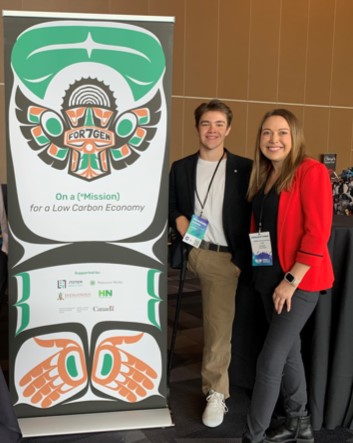
Several projects funded under this pilot program focus on training for careers in EVs and clean fuels. For example, the iTOTEM klassa project launched an initiative, For7Gen, to empower Indigenous youth to discover careers in the low-carbon economy. James Kwaksistala, an emerging Kwakwaka'wakw Indigenous artist from the Wei Wai Kum Nation, designed the For7Gen logo and artwork for a digital campaign to engage youth, encourage conversations and raise awareness of bioenergy and hydrogen careers in western Canada.
"Being a part of the For7Gen project has given me the opportunity to express my culture through a different medium while contributing to a pleasant team of multifaceted coworkers," says James, For7Gen’s Youth Artist Ambassador. "I feel blessed to share my work through For7Gen and to be able to raise some awareness for climate action and clean energy. Getting the opportunity to be a part of a project like this has given me a chance to learn about the importance and power behind renewable energy, built up my confidence, and strengthened my sense of what’s possible for the future of the next generations in regards to energy renewability."
Skills training
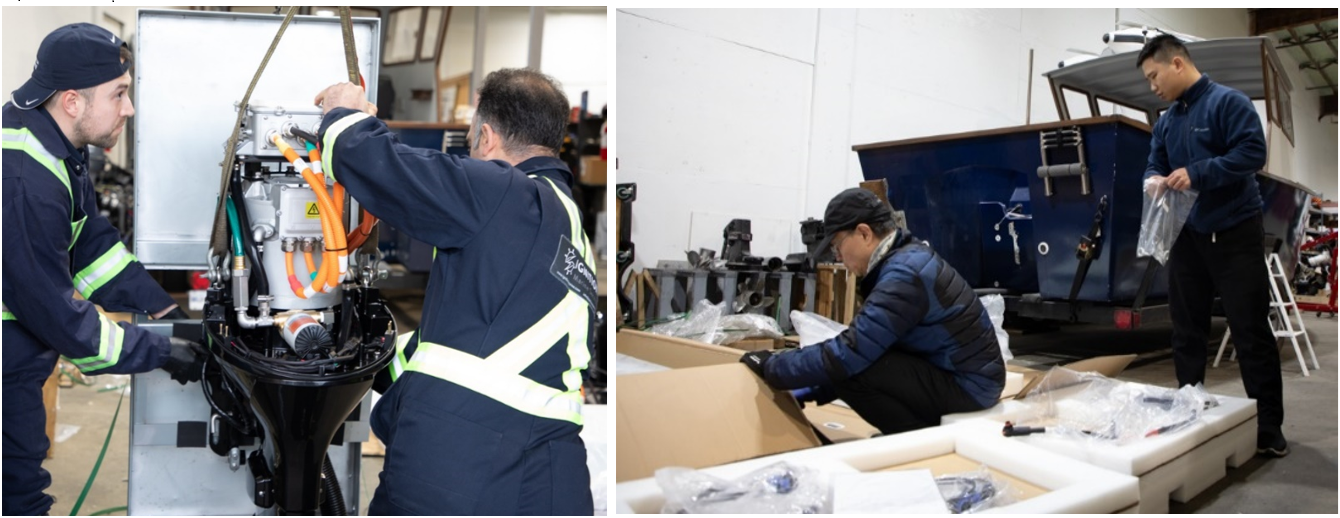
The Malahat Solutions Inc. project in British Columbia expanded the idea of electric vehicles from road to waterways. It created a hands-on teaching curriculum to teach Indigenous communities and others how to convert conventional, fossil fuel-powered marine engines to electric propulsion.
"The curriculum we developed will enable coastal communities to gain hands-on experience in electric vessel conversion," says Meiz Majdoub, President of Malahat Solutions Inc. "This practical training program will equip participants with the skills needed to modernize traditional marine vessels with electric propulsion systems. By combining technical expertise with environmental stewardship, we're creating a pathway for sustainable maritime practices that respect both our traditions and our environment."
Empowering youth
Similarly, the elibird aero project in British Columbia is taking electric vehicle awareness to new heights. Through outreach events, social media campaigns and virtual reality technology, the project engages Indigenous communities to build knowledge, awareness and confidence in zero-emission aircraft. Their mission is to empower Indigenous youth to see themselves as leaders, pilots, engineers, and innovators.
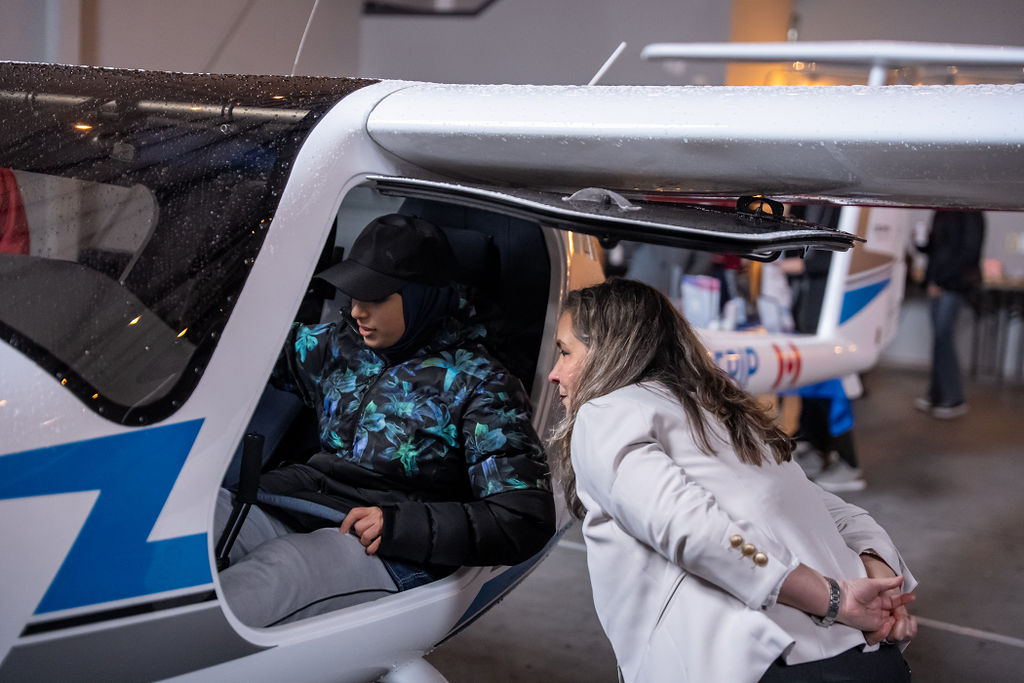
For example, elibird aero hosted an Electric Aircraft Awareness Event, in Delta, British Columbia, in collaboration with Sealand Flight and Canadian Advanced Air Mobility. The event included training for six maintenance engineers and elibird aero team members on preparing the Pipistrel Velis Electro—the world’s first certified all-electric aircraft—for flight. The event included a networking session with clean flight leaders and a public session to raise awareness about sustainable aviation.
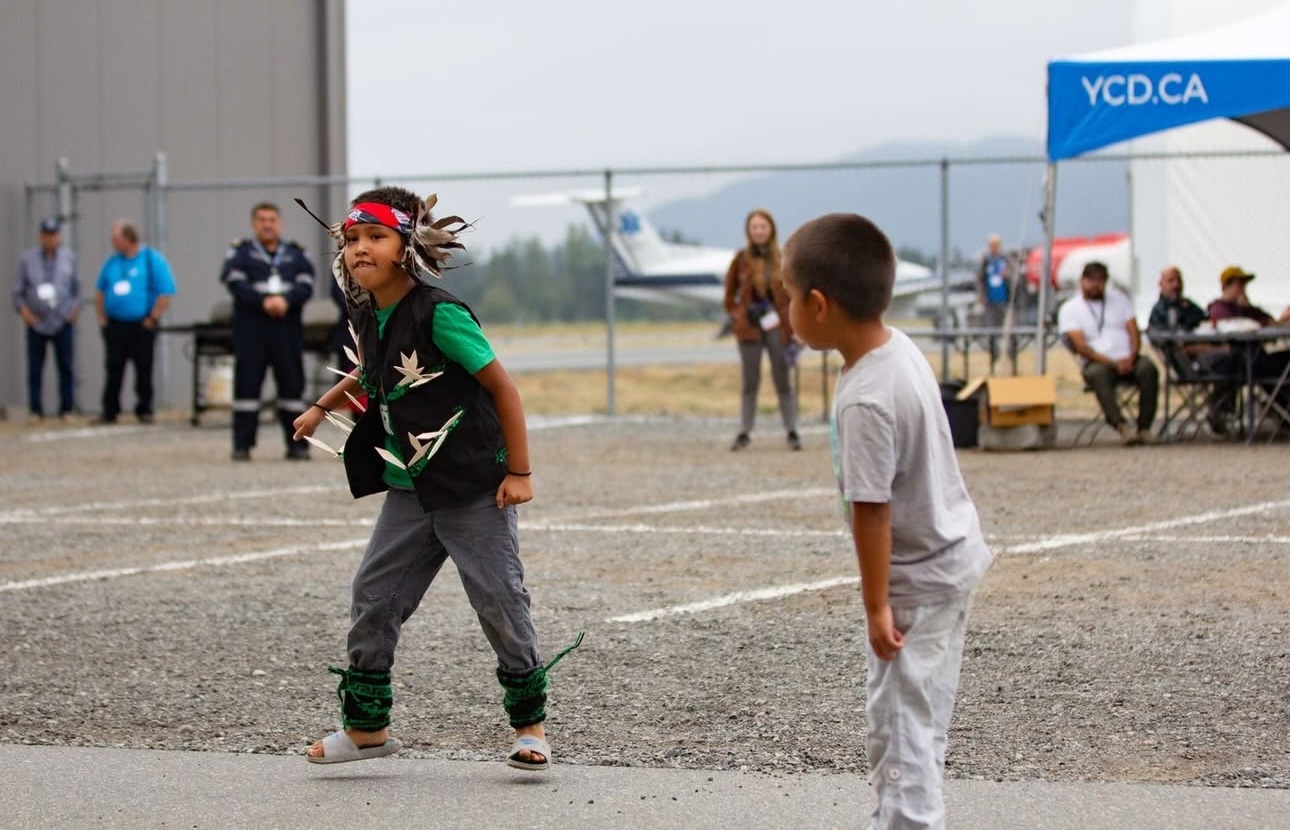
In 2024, elibird aero offered hands-on flight experiences and mentorship at the Give Them Wings event at Nanaimo Airport, where Indigenous youth and young adults (ages 15 to 39) explored aviation and related careers.
"Give Them Wings created a space where Indigenous youth could feel seen, supported, and inspired. Watching young people connect with the aircraft and imagine their futures in the skies was deeply powerful," says Ziba Afshari from elibird aero.
A dedicated stream
Since 2019, NRCan has funded awareness and education projects on zero-emission vehicles, which include fully electric, plug-in hybrid electric, and hydrogen fuel cell vehicles, and clean fuels such as biofuels, renewable natural gas, and hydrogen. Early on, NRCan staff heard from Indigenous applicants and learned from other programs about the need for a dedicated Indigenous stream.
"We know partnerships with Indigenous Peoples, communities, and businesses are critical to building an inclusive, sustainable, and resilient natural resources sector in Canada," says Anna van der Kamp, Executive Director of the Transportation and Fuels Decarbonization Branch, in NRCan’s Fuels Sector. "The first step was to engage with Indigenous representatives to ensure the program design would meet the specific needs of their communities."
What we learned
While developing the pilot program, NRCan staff met with Indigenous representatives, national Indigenous organizations, and policy experts, to learn best practices for funding Indigenous-led projects, including:
- Using a continuous intake model, rather than the typical six- to eight-week proposal window
- Creating space to build relationships and support application development
- Approaching interactions with humility, and allowing time for relationships and proposals to evolve
- Recognizing and respecting the distinct cultures and histories of First Nations, Metis and Inuit communities.
- Offering advance payments to ease financial pressure
With these lessons in mind, NRCan launched the pilot Indigenous stream under the Zero-Emission Vehicle Awareness Initiative in March 2023, with a two-year continuous call for proposals and a budget of $4.5 million.
"We are proud to partner with Indigenous communities to increase participation and enable the development of innovative projects and policies that will have benefits for generations to come," van der Kamp says. "We knew we needed to build a program based on recognition of rights, respect, cooperation and partnership. Throughout the pilot there has been a lot of learning for program staff and management, with relationships formed across the country."
Next steps
Building on the Indigenous-led awareness pilot, NRCan will continue reflecting on successes and areas for improvement. The program team will assess the outcomes of the 19 funded projects; document lessons learned and explore opportunities to strengthen Indigenous participation in awareness and capacity-building initiatives. Insights from this pilot will be shared with Nòkwewashk — NRCan’s sector for advancing Indigenous partnerships — to help inform broader departmental approaches to Indigenous-led program design and delivery.
By continuing to apply principles of respect, flexibility, and partnership, NRCan aims to support community needs and build on the trusted relationships established through this pilot.