
Nova Scotia’s Commercial Energy Benchmarking Program, now in its sixth data cycle, continues to demonstrate how accessible, data-driven tools can accelerate energy efficiency action and awareness across the province.
Operated by Efficiency Nova Scotia, the voluntary program, which began as a 99-building pilot, has since expanded to more than 1,000 participating buildings located in every municipality across the province, representing over 40 different building categories. This growth has created one of the most comprehensive commercial benchmarking datasets in Atlantic Canada.
Each participating building receives an annual performance scorecard, developed in partnership with Open Technologies, a Vancouver-based organization specializing in utility data infrastructure and building analytics. These scorecards provide clear, comparable insights that help building owners understand their energy performance, identify opportunities for upgrades, and access relevant Efficiency Nova Scotia programs. For small- and medium-sized business owners, this means practical, low-cost access to high-quality energy data that can inform decisions, reduce operating costs, and unlock incentives for upgrades to help them stay competitive while managing energy expenses.
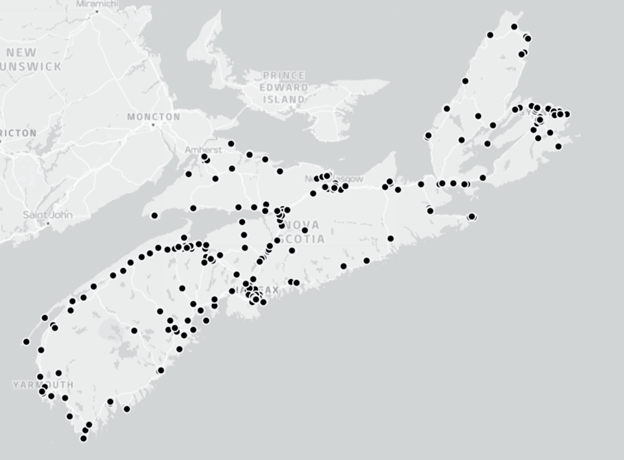
Nova Scotia Open Hot Map in 2024
Increasingly, multi-unit residential buildings (MURBs) are joining the program, benefiting from its ability to provide aggregated, whole-building data, even when tenants are individually metered. The Province of Nova Scotia is also a participant, enrolling a broad range of its own facilities and encouraging alignment from municipalities, nonprofits, and private sector owners. A streamlined utility upload process further reduces administrative burden and improves data accuracy, making the program efficient for both participants and administrators.
Beyond individual building benefits, the program’s aggregated data provides system-wide insights into energy use trends across the commercial sector. These insights support planning for efficiency, electrification, and emissions reduction initiatives. Importantly, the program also lays essential groundwork for any future performance-based policy by establishing consistent baselines, sector-wide data, and a strong foundation of market readiness.
Stakeholders and members of the public can explore participating buildings and track program progress through the interactive map available at efficiencyns.ca/programs-rebates/energy-benchmarking- program. As it continues to grow, the Nova Scotia Commercial Energy Benchmarking Program demonstrates how structured, scalable data tools can support a more efficient, resilient, and low-carbon future for communities across the province.
To learn more, visit Energy Benchmarking | Efficiency Nova Scotia and Benchmarking and building performance standards - Natural Resources Canada.