
Details
- Publication date
- Author(s)
Natural Resources Canada - ISBN
2819-5817
Message from the Deputy Ministers
Dear colleagues,
We are pleased to share the second edition of Natural Resources Canada’s (NRCan) Annual Report on Addressing Misconduct and Wrongdoing. Building on our first report, it reflects our commitment to fostering a safe, respectful and accountable workplace.
Over the past year, we have continued to strengthen the systems, practices and supports that help prevent misconduct and wrongdoing and ensure concerns are addressed promptly and transparently. This report highlights the progress we have made, the challenges that remain, and the trends shaping our work ahead. By deepening our understanding of these issues, we reinforce our shared responsibility to foster a respectful and ethical work environment.
Our commitment to integrity, transparency and respect continues to guide how we work together and serve Canadians. We also remain focused on making sure employees feel supported in raising concerns, navigating challenges and being heard.
The conversations sparked by the initial report, as well as its recommendations, have encouraged meaningful reflection across the department. They reinforce the importance of living our values and ethics in our daily work and interactions.
Looking ahead, we remain committed to strengthening trust across our workplace. Upholding integrity in everything we do is essential to who we are and to the credibility of NRCan’s work.
Thank you for your continued efforts to make NRCan a workplace where people feel safe, respected and able to do their best work.
Greg Orencsak
(he/him)
Deputy Minister
Jeff Labonté
(he/him)
Associate Deputy Minister
Executive summary
This second report summarizes findings related to reported cases of suspected misconduct and/or wrongdoing at NRCan. Its purpose is to support NRCan’s commitment to fostering a workplace that is respectful, supportive, and accountable for all employees.
The review covers cases reported between April 1, 2025, and March 30, 2026, and draws on consultations with various NRCan service units regarding their internal investigations and related activities.
While the terms misconduct and wrongdoing are sometimes used interchangeably, they represent distinct concepts. Misconduct refers to behaviour that violates government policies, codes, or established procedures. Wrongdoing, by contrast, involves serious and specific violations of public interest, as defined specifically under section 8 of the Public Servants Disclosure Protection Act (PSDPA).
During the reporting period, 94 cases of potential misconduct and 5 cases of possible wrongdoing under the PSDPA were reported. These 99 new cases, combined with 42 cases carried forward from previous years, were assessed and, where warranted, investigated.
Of the cases reviewed, 50 were deemed founded or partially founded, resulting in administrative and/or disciplinary measures. Those containing allegations deemed as misconduct involved a range of issues, including security infractions and breaches of policies and codes of conduct. Examples include failures to follow security protocols, improper use of electronic networks, inappropriate or unprofessional behaviour, improper stewardship of public resources, breaches of integrity, and incidents of harassment and/or workplace violence. No cases met the threshold for wrongdoing under section 8 of the PSDPA.
In comparing cases from the initial report to the current period, case volumes remained stable, with 99 cases received in 2025–26 (down slightly from 100 in 2024–25) and investigations increasing marginally from 75 to 76. However, founded or partially founded cases rose significantly by 47%, from 34 to 50. This increase reflects the completion of previously initiated investigations; improved awareness and reporting of workplace misconduct; and a greater number of lower-severity issues being substantiated and addressed through administrative measures.
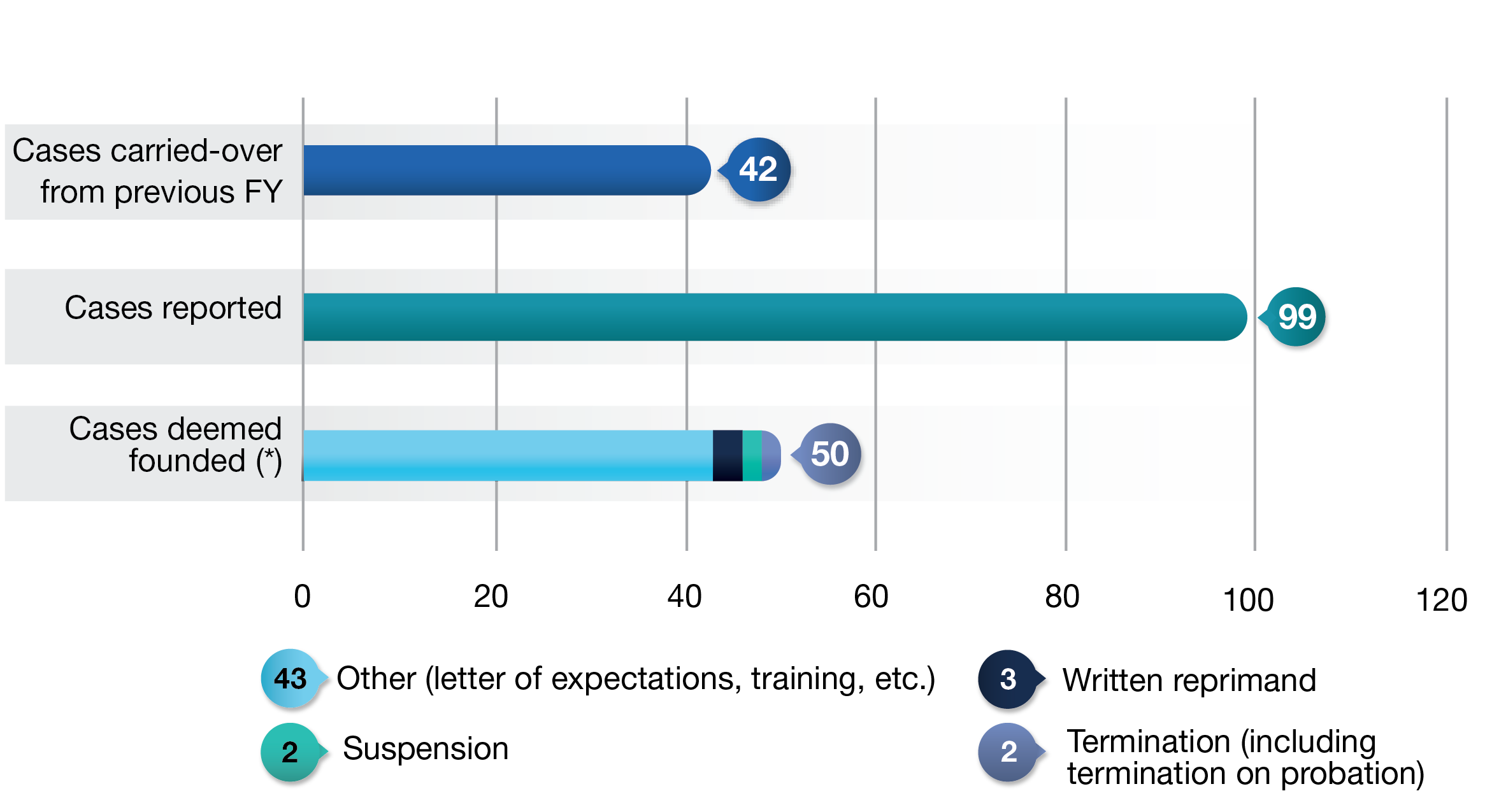
Graph 1. Overview of misconduct and wrongdoing cases, fiscal year 2025–2026
Graph 1. Text version
This image is a horizontal bar chart presenting the results of a case review process. The chart compares the number of cases received, cases carried over from a previous reporting period, and the outcomes of cases found to be justified.
The chart contains three horizontal bars arranged from top to bottom:
- Cases carried-over from previous FY
- Displayed as a dark blue horizontal bar.
- The bar extends to a value of 42.
- The number 42 appears at the end of the bar.
- Cases reported
- Displayed as a medium blue horizontal bar.
- The bar extends to a value of 99.
- The number 99 appears at the end of the bar.
- A light grey annotation showing 99 is also displayed in the upper right area of the chart, reinforcing the total number of cases received.
- Cases deemed founded (*)
- Displayed as a stacked horizontal bar with a total value of 50.
- The number 50 appears at the end of the stacked bar.
- The stacked bar is divided into four coloured segments representing different outcomes:
- 43 cases resulted in other measures, including letters of expectation, training, or similar actions (orange segment).
- 2 cases resulted in suspensions (light blue segment).
- 3 cases resulted in written reprimands (green segment).
- 2 cases resulted in demotions, including termination during a probationary period (purple segment).
The horizontal axis ranges from 0 to 120, marked at intervals of 20. Light grey vertical grid lines help indicate the values represented by the bars.
A legend below the chart identifies the colour associated with each outcome category:
- Orange: 43 Other actions (letter of expectation, training, etc.)
- Light blue: 2 Suspensions
- Green: 3 Written reprimands
- Purple: 2 Demotions (including termination during the probationary period)
Key message conveyed by the chart
The chart shows that 99 cases were received during the reporting period, 42 cases were carried over from a previous period, and 50 cases were determined to be founded. Among the founded cases, most (43 of 50) resulted in corrective measures such as letters of expectation or training, while a smaller number resulted in suspensions (2), written reprimands (3), or demotions or probationary terminations (2).
*Cases deemed founded may be linked to investigations that began in the previous fiscal year.
This report also compares data from the preceding fiscal year, reviews the implementation of recommendations from the previous report, and includes a compilation of relevant resources for employees.
Introduction
In this section
- About NRCan
- Misconduct and wrongdoing
- Reporting mechanisms
- Approaches
- Measures taken to address misconduct and wrongdoing
About NRCan
NRCan supports the sustainable development of Canada’s natural resource sectors through policy development, program delivery, and advanced scientific research. This work contributes to economic growth, improves quality of life for Canadians, and advances Canada’s international commitments.
At the end of March 2026, NRCan had 5,596 employees. While the majority are based in the National Capital Region, approximately 33% work in regional offices and laboratories. Approximately 37% of the workforce falls under scientific and technical occupational groups working on projects involving natural resource management, climate change and sustainable development, often in laboratories. The largest occupational group at NRCan is the Economics and Social Science Services group, which makes up approximately 21% of the workforce.
Misconduct and wrongdoing
All wrongdoing is a form of misconduct, but not all misconduct qualifies as wrongdoing under the PSDPA. Misconduct is a broad term covering inappropriate, unethical, or unprofessional workplace behaviour, ranging from minor issues to serious violations. It can be addressed administratively or through disciplinary processes by the appropriate service units. Wrongdoing, by contrast, is a specific legal concept defined by the PSDPA, and suspected wrongdoing must be disclosed to a supervisor, to NRCan’s Senior Internal Disclosure Officer (SIDO), or to the Public Sector Integrity Commissioner (PSIC). Full definitions of these terms can be found in the Definitions section (Annex 1).
Reporting mechanisms
There are multiple avenues for raising concerns at NRCan, and all employees and managers share a responsibility for addressing potential misconduct and wrongdoing. While employees may report concerns directly to the relevant service unit (described in section below), managers play a critical role in identifying, addressing and escalating issues when necessary.
Managers who become aware of potential misconduct are expected to assess the situation and, where appropriate, try to resolve it using informal approaches. If unsuccessful, they must report it to the appropriate NRCan service unit for guidance and to ensure the matter is properly documented and reviewed.
For suspected wrongdoing, as defined under the PSDPA, employees can make a protected disclosure to their supervisor, to NRCan's SIDO or directly to the PSIC. There is no requirement to disclose internally before approaching the commissioner.
Approaches
Each NRCan service unit reviews reported concerns to determine the most appropriate course of action. While investigative processes may vary according to each unit’s mandates, authorities and legislative frameworks, service units work collaboratively and, where appropriate, jointly to ensure concerns are addressed through the most suitable channels and mechanisms.
This coordinated approach supports integrated advice, recommendations and solutions for employees and the department, while promoting consistent and informed decision-making. It also enables service units to bring together their respective perspectives to identify broader or systemic challenges facing the department and consider measures that address emerging concerns and strengthen organizational practices. Reports such as this one can contribute to this coordinated and holistic approach.
It is important to note that not all cases lead to a formal investigation. Some may be addressed through other means, such as informal conflict resolution, management intervention, or advisory support.
As a result, the number of reported cases may be higher than the number of cases that are formally investigated. Only cases that proceed to investigation can reach a conclusion of founded, partially founded, unfounded, or inconclusive. A case may be deemed unfounded when, on the balance of probabilities, there was no behaviour that violated any policies or statutes. A case may be deemed inconclusive when there is insufficient information to reach a clear determination.
Steps can still be taken to address the concern and support the individuals even if no formal investigation is launched. This may include providing guidance, making referrals, or taking other appropriate actions to help resolve the situation and prevent it from reoccurring. This report focuses on cases where allegations were substantiated through completed investigations.
Measures taken to address misconduct and wrongdoing
If misconduct or wrongdoing is substantiated following an investigation, appropriate administrative and/or disciplinary measures are applied.
- Administrative measures are non-disciplinary and used to address workplace behaviours and ensure compliance with policies and directives. These may be applied independently or in conjunction with disciplinary measures. Examples include but are not limited to training, coaching, action plans, letters of expectations, and the temporary removal of delegated authorities.
- Disciplinary measures are formal, progressive actions intended to correct inappropriate behaviour by applying increasingly severe consequences for repeated misconduct. These measures are corrective rather than punitive. However, in serious cases, considering aggravating factors, severe measures may be justified even for a first offence. Disciplinary measures can range from verbal reprimands to termination of employment.
NRCan service units
This section outlines the NRCan service units responsible for receiving and addressing reports of suspected misconduct and wrongdoing. While investigations may be conducted by different service units depending on the nature of the allegation, each follows the legislation, policies, directives and procedures applicable to its area of responsibility. This ensures that cases are assessed and investigated using a consistent and appropriate framework.
When required, relevant NRCan service units collaborate and coordinate their activities on a case-by-case basis to ensure that cases are addressed effectively. All cases are managed in accordance with the principles of fairness, impartiality, and accountability, while respecting privacy and confidentiality requirements. This section also summarizes the founded cases by each service unit during the 2025–2026 fiscal year.
Labour Relations Centre of Expertise
The Labour Relations Centre of Expertise (LRCE) provides expert advice and guidance to management including support for dealing with suspected misconduct, which is often reflected as a potential breach of the NRCan Values and Ethics Code and the Values and Ethics Code for the Public Sector (the Codes). When suspected misconduct is raised by management to their labour relations advisor, a review is conducted to gather information, and an investigation may be completed to determine whether misconduct has occurred. Several other cases, while not formally submitted as complaints or included in this report, may still necessitate LRCE involvement to address issues that warrant attention.
The LRCE also assists managers with recourse mechanisms, such as complaints filed with the Canadian Human Rights Commission (CHRC) under the Canadian Human Rights Act (CHRA). When an individual believes they have experienced harassment or discrimination by a federal government department, agency or Crown corporation, they may file a complaint with the CHRC. This can be done independently or in parallel with other recourse mechanisms, such as a grievance or a notice of occurrence. When a complaint if filed with the CHRC, the LRCE coordinates with the CHRC throughout the process. The CHRC is responsible for reviewing and assessing the complaint and making a recommendation to the CHRC commissioner, who then issues the final decision.
2025–2026 LRCE cases summary
Of the cases reported concerning misconduct allegations and investigated by the LRCE, eleven (11) employees were found or partially found to have engaged in actions that breached departmental codes and policies, including the Departmental Security Policy, the Directive on the Management of Procurement and the Directive on Conflict of Interest .
During the 2025–2026 fiscal year, these breaches included integrity issues, such as failing to disclose information that led to a real or apparent conflict of interest, insubordination, misuse of employer assets and inappropriate or unprofessional behaviour. To address these issues, NRCan implemented measures such as mandatory training, written reprimands, suspensions without pay and, in more serious cases, termination of employment.
No complaints against NRCan were found to be substantiated by the CHRC during this period.
Values, Ethics and Respect Office
The Values, Ethics and Respect Office brings together two key programs that support a safe, respectful and ethical workplace, the Values and Ethics Program and the Harassment and Violence Prevention Program (HVPP).
Values and Ethics Program
The Values and Ethics Program (V&E) provides confidential, impartial guidance to employees and managers on a wide range of issues related to public service values and ethical conduct. This includes support on the Values and Ethics Code for the Public Sector, as well as NRCan’s own Values and Ethics Code. In its role as a trusted resource, the V&E promotes ethical decision-making and offers advice on key areas such as:
- conflict of interest
- post-employment obligations
- political activities, through the Designated Political Activities Representative (DPAR)
Political neutrality is a cornerstone of the federal public service. While V&E and the DPAR provide guidance on political activity, only the Public Service Commission (PSC) is mandated to investigate allegations of improper political involvement by federal public servants.
Harassment and Violence Prevention Program
The Harassment and Violence Prevention Program (HVPP) supports employees who are dealing with situations involving potential workplace harassment or violence. All reported cases are reviewed and addressed using the most appropriate resolution process. While some cases proceed to formal investigation, others may be resolved through alternative approaches, such as negotiated resolution, conciliation or mediation, pursuant to the Work Place Harassment and Violence Prevention Regulations.
Even when allegations are not substantiated, the process can still lead to recommendations that help improve the overall workplace environment and working relationships.
2025–2026 V&E and HVPP cases summary
In 2025–2026, for V&E no cases were reported. During the same period, under the HVPP, one (1) case was founded and one (1) was partially founded. In both instances, detailed action plans were developed to help restore the workplace and prevent similar situations from recurring.
Departmental Occupational Health and Safety
Departmental Occupational Health and Safety (DOHS) is responsible for supporting the organization in achieving its occupational health and safety objectives. As part of its mandate, DOHS coordinates the internal complaint resolution process for complaints filed under Part II of the Canada Labour Code (CLC). In some cases, complaints may also be referred for investigation by Employment and Social Development Canada, with DOHS coordinating the cases. While not necessarily involving misconduct or wrongdoing, employees who believe there has been a contravention of the CLC or who identify a risk of an accident, injury or illness linked to their employment are required to report their concerns to their supervisor. Additionally, employees have the right to refuse dangerous work under specific circumstances. DOHS must be involved immediately when an employee exercises this right.
2025–2026 DOHS cases summary
As it pertains to infractions under Part II of the CLC, the department had no cases to report for 2025–2026.
Corporate Staffing
Corporate Staffing serves as the point of contact within NRCan for investigations conducted by the PSC related to specific appointment processes. The PSC investigates both internal and external appointment processes where:
- Fraud in an appointment process may have occurred
- An appointment or proposed appointment may not have been free from political influence
Corporate Staffing also investigates external appointment processes where:
- An appointment or proposed appointment may not have been based on merit
- There may have been an error, omission or improper conduct that affected the selection of the person appointed or proposed for appointment, including when there are biases or barriers that disadvantage persons who belong to any equity-seeking group within the meaning of the CHRA
For concerns related to errors, omissions or improper conduct in internal appointment processes, the Deputy Head has the authority to initiate an investigation and may delegate this authority to the Chief Human Resources Officer. The Deputy Head may also request that the PSC conduct an investigation into an internal appointment process.
2025–2026 Corporate Staffing cases summary
No investigations resulted in founded allegations during the 2025–2026 fiscal year.
Security and Emergency Management Division
The Security and Emergency Management Division (SEMD), within the Safety, Security and Emergency Management Branch, is responsible for the management and oversight of NRCan’s Security Program. One of the objectives of this program is to ensure ongoing risk assessment, implement appropriate security safeguards and proactively manage security threats, risks and incidents. Additionally, it aims to ensure that all individuals with a valid security status or clearance comply with the security policies and procedures outlined in the Treasury Board Secretariat (TBS) Directive on Security Screening, Directive on Security Management and Policy on Government Security.
2025–2026 SEMD cases summary
During the reporting period, thirty-seven (37) cases were identified as minor security infractions following an investigation. These included failures to follow secure entry protocols, inappropriate use of electronic networks, inappropriate use of another employee’s access card, allowing unauthorized individuals into secure zones, and misuse of employer assets.
These infractions were addressed through administrative measures, such as strengthening security protocols and providing additional training to the employees involved.
Office of the Chief Scientist
The Office of the Chief Scientist (OCS) provides leadership in the development and implementation of approaches to build and maintain capacities within NRCan’s science and technology community, including promoting a culture of scientific integrity. Scientific integrity means following professional standards and ethical principles to ensure research and science are conducted responsibly. To maintain a high level of integrity across all science and research activities, NRCan established the scientific integrity policy (SIP), which outlines the principles, expectations and procedures for ensuring ethical practices in scientific research and activities. All NRCan employees involved in the design, conduct, management, review, communication or use of research, science or related activities must adhere to the SIP. If employees suspect that a breach to the policy has occurred, it is their responsibility to bring it forward.
2025–2026 OCS cases summary
There were no findings confirming breaches to the SIP.
Senior Internal Disclosure Officer
Employees may believe that a wrongdoing has occurred, is occurring or is about to occur in their workplace. They may also find themselves asked to commit wrongdoing. The PSDPA is the framework for employees and other public servants to disclose wrongdoing. A protected disclosure can be made in good faith to a supervisor or to the SIDO. In practice, most internal inquiries and disclosures reach the SIDO directly through the SIDO inbox. It is the good-faith nature of the disclosure that triggers protection against reprisal. An employee may also go directly to the PSIC of Canada to make a protected disclosure or to seek advice. There is no requirement to disclose within the organization first.
2025–2026 SIDO cases summary
When a finding of wrongdoing is made, the PSDPA requires the department to make prescribed information about it publicly available, generally within 60 days. For 2025–2026, no finding of wrongdoing was made at NRCan, and no report was published on the public registry.
Overview of 2025–2026 findings
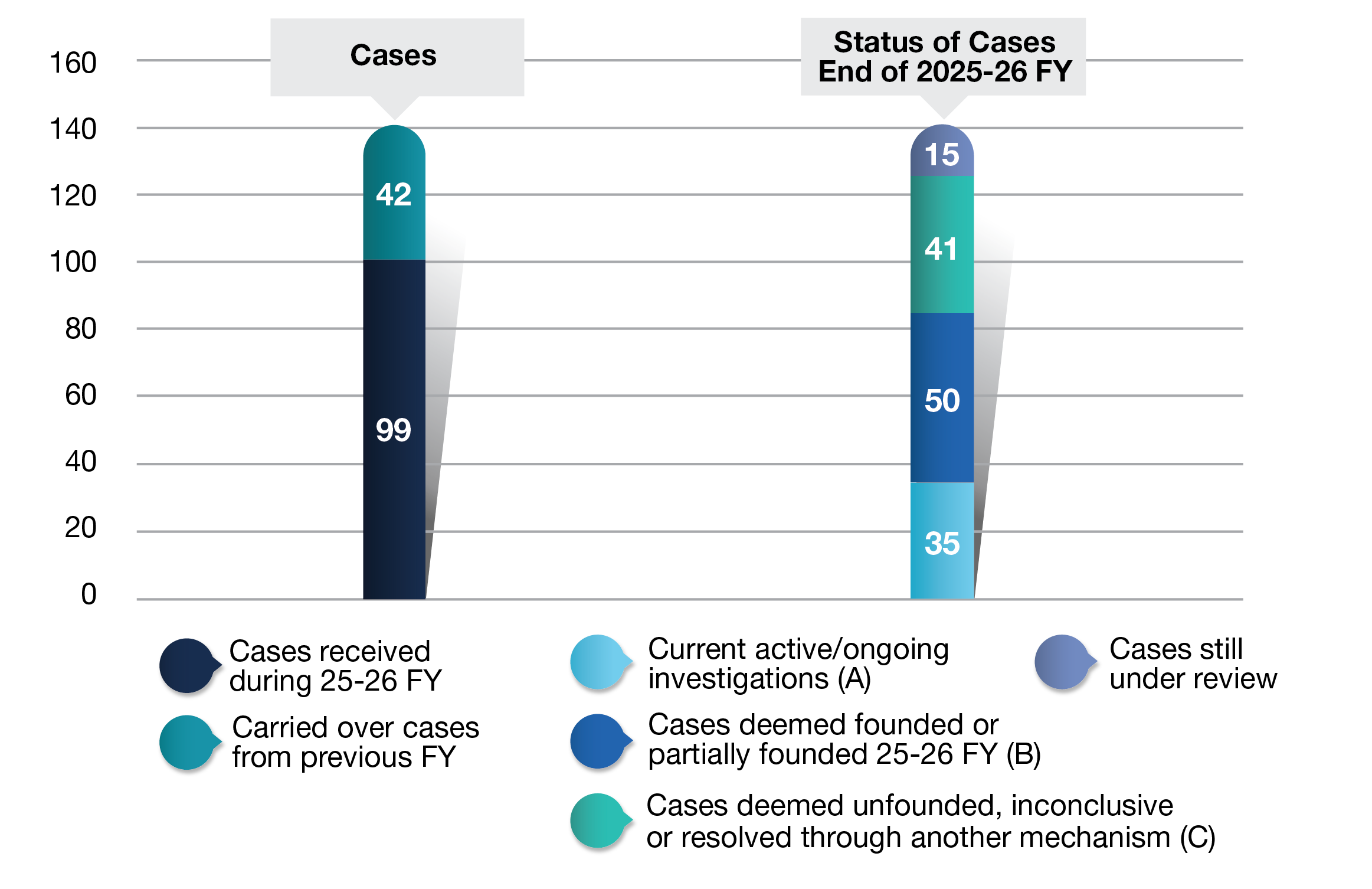
Graph 2. Summary of investigation activities – Misconduct and wrongdoing, 2025–2026
Graph 2. Text version
The chart contains two vertical stacked columns. The vertical axis ranges from 0 to 160, with gridlines at intervals of 20.
First column: Cases received and carried over
The first column, labelled “Cases”, represents the total caseload. The column reaches a total value of 141 cases and is divided into two segments:
- A dark blue segment representing 99 cases received during the 2025-2026 fiscal year.
- An orange segment stacked above it representing 42 cases carried over from the previous fiscal year.
The values “99” and “42” are shown within their respective segments.
Second column: Case status at the end of fiscal year 2025-2026
The second column, labelled “2026 Status of Cases End of 2025-26 FY”, also totals 141 cases, accounting for all cases represented in the first column. The column is divided into four segments showing the status of cases at year-end:
- A dark green segment representing 35 active or ongoing investigations.
- A light blue segment representing 50 cases deemed founded or partially founded during fiscal year 2025-2026.
- A purple segment representing 41 cases deemed not founded, concluded, or resolved through another mechanism.
- A light green segment representing 15 cases that remain under review.
The values 35, 50, 41, and 15 are displayed within their corresponding segments.
Legend
A legend beneath the chart identifies the colours and categories:
- Dark blue: Cases received during fiscal year 2025-2026.
- Orange: Cases carried over from the previous fiscal year.
- Dark green: Active or ongoing investigations.
- Light blue: Cases deemed founded or partially founded during fiscal year 2025-2026.
- Purple: Cases deemed not founded, concluded, or resolved through another mechanism.
- Light green: Cases still under review.
Key message
The chart shows that the organization managed a total caseload of 141 cases, consisting of 99 new cases received during 2025-2026 and 42 cases carried over from the previous fiscal year. By the end of the fiscal year, 50 cases had been deemed founded or partially founded, 41 cases had been deemed not founded, concluded, or otherwise resolved, 35 cases remained active or under investigation, and 15 cases were still under review.
(A) Cases may be linked to investigations that began in the previous fiscal year.
(B) Cases may include investigations launched in the previous fiscal year.
(C) Cases may include cases for which the threshold was not met, allegations could not be confirmed, or another resolution mechanism was deemed more appropriate.
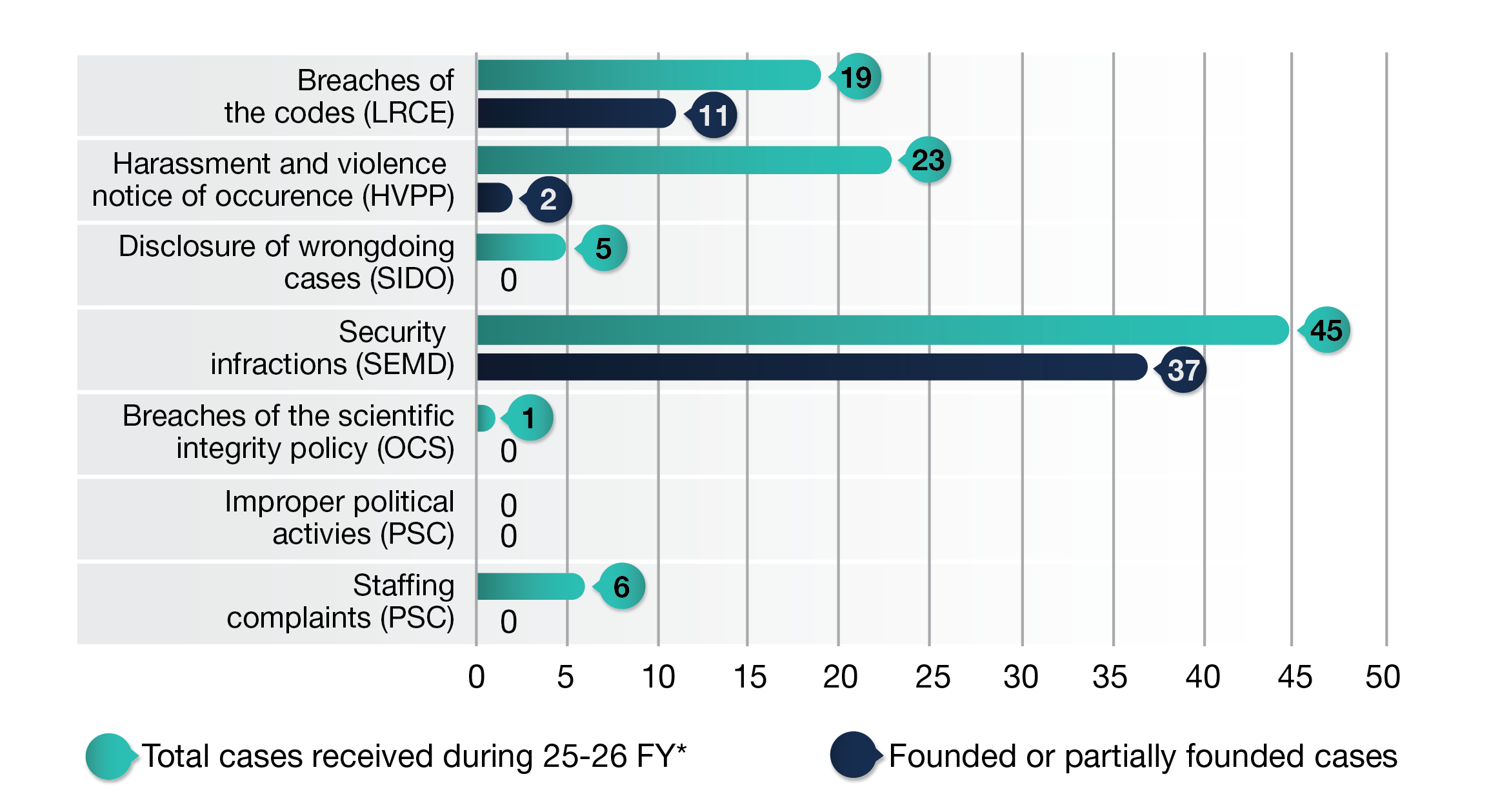
Graph 3. Comparison of misconduct cases received to founded, 2025–2026
Graph 3. Text version
The horizontal axis ranges from 0 to 50 cases, with gridlines at intervals of 5. The vertical axis lists six categories of cases. Each category is represented by two horizontal bars:
- An orange bar showing the number of cases received during fiscal year 2025-2026.
- A blue bar showing the number of cases deemed founded or partially founded.
Categories and results
Breaches of the Codes (LRCE)
- 19 cases were received.
- 11 cases were deemed founded or partially founded.
Harassment and violence notice of occurrence (HVPP)
- 23 cases were received.
- 2 cases were deemed founded or partially founded.
Wrongdoing disclosure cases (SIDO)
- 5 cases were received.
- No cases were deemed founded or partially founded
Security infractions (SEMD)
- 45 cases were received.
- 37 cases were deemed founded or partially founded.
- This category has both the highest number of received cases and the highest number of founded or partially founded cases.
Breaches of the Scientific Integrity Policy (OCS)
- 1 case was received.
- No cases were deemed founded or partially founded.
Improper political activities (PSC)
- No values are shown for improper political activities, indicating that no cases were received or found founded during the reporting period.
Staffing complaints (PSC)
- 6 cases were received in relation to staffing complaints
- No cases were deemed founded or partially founded.
Legend
The legend below the chart identifies the two data series:
- Orange: Cases received during fiscal year 2025-2026.
- Blue: Cases deemed founded or partially founded.
Key message
The chart shows that security violations accounted for the largest number of cases, with 45 received and 37 deemed founded or partially founded. Braches of codes were the second-largest category, with 19 received and 11 founded or partially founded. Harassment and violence generated 23 received cases but only 2 founded or partially founded cases. Breaches of the Scientific Integrity Policy, improper political activities, disclosure of wrongdoing, and staffing complaints resulted in few or no founded cases during the reporting period.
* Not all cases received were investigated. When comparing the number of cases received to the number of founded cases, it is important to consider that some cases are still ongoing and/or under review.
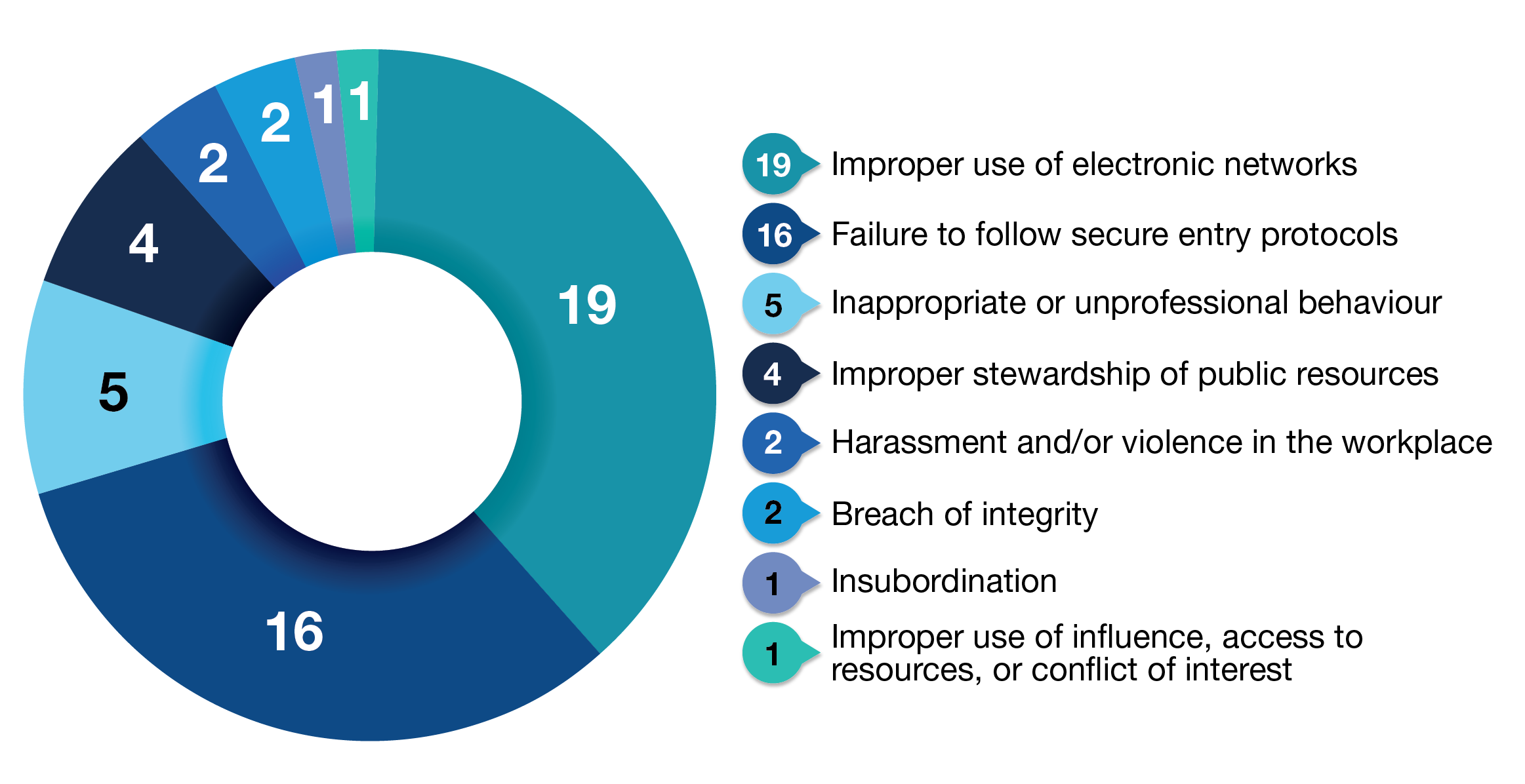
Graph 4. Type of founded or partially founded cases, 2025–2026
Graph 4. Text version
Categories and values
- Improper use of electronic networks: 19 cases
- Failure to follow secure entry protocols: 16 cases
- Inappropriate or unprofessional behaviour: 5 cases
- Improper stewardship of public resources: 4 cases
- Harassment and/or violence in the workplace: 2 cases
- Breach of integrity: 2 cases
- Insubordination: 1 case
- Improper use of influence, access to resources or conflict of interest: 1 case
Relative distribution
The largest category is improper use of electronic networks, representing 19 of the 48 cases, or approximately 40% of all founded or partially founded cases.
The second-largest category is failure to follow access security protocols, with 16 cases, representing approximately 33% of the total.
Together, these two categories account for 35 of the 48 cases, or roughly 73% of all founded or partially founded cases shown in the chart.
The remaining categories are much smaller:
- Inappropriate or unprofessional behaviour accounts for 5 cases.
- Mismanagement of public resources accounts for 4 cases.
- Workplace harassment and/or violence and integrity-related violations each account for 2 cases.
- Insubordination and abuse of influence, inappropriate access to resources, or conflict of interest each account for 1 case.
Key message
The chart shows that most founded or partially founded cases relate to the improper use of electronic networks and the failure to follow access security protocols. These two categories represent nearly three-quarters of all cases in the chart, while all other types of misconduct or violations occur relatively infrequently.
Founded cases resulted in the application of administrative and/or disciplinary measures.
Graph 5. Measures taken for founded cases
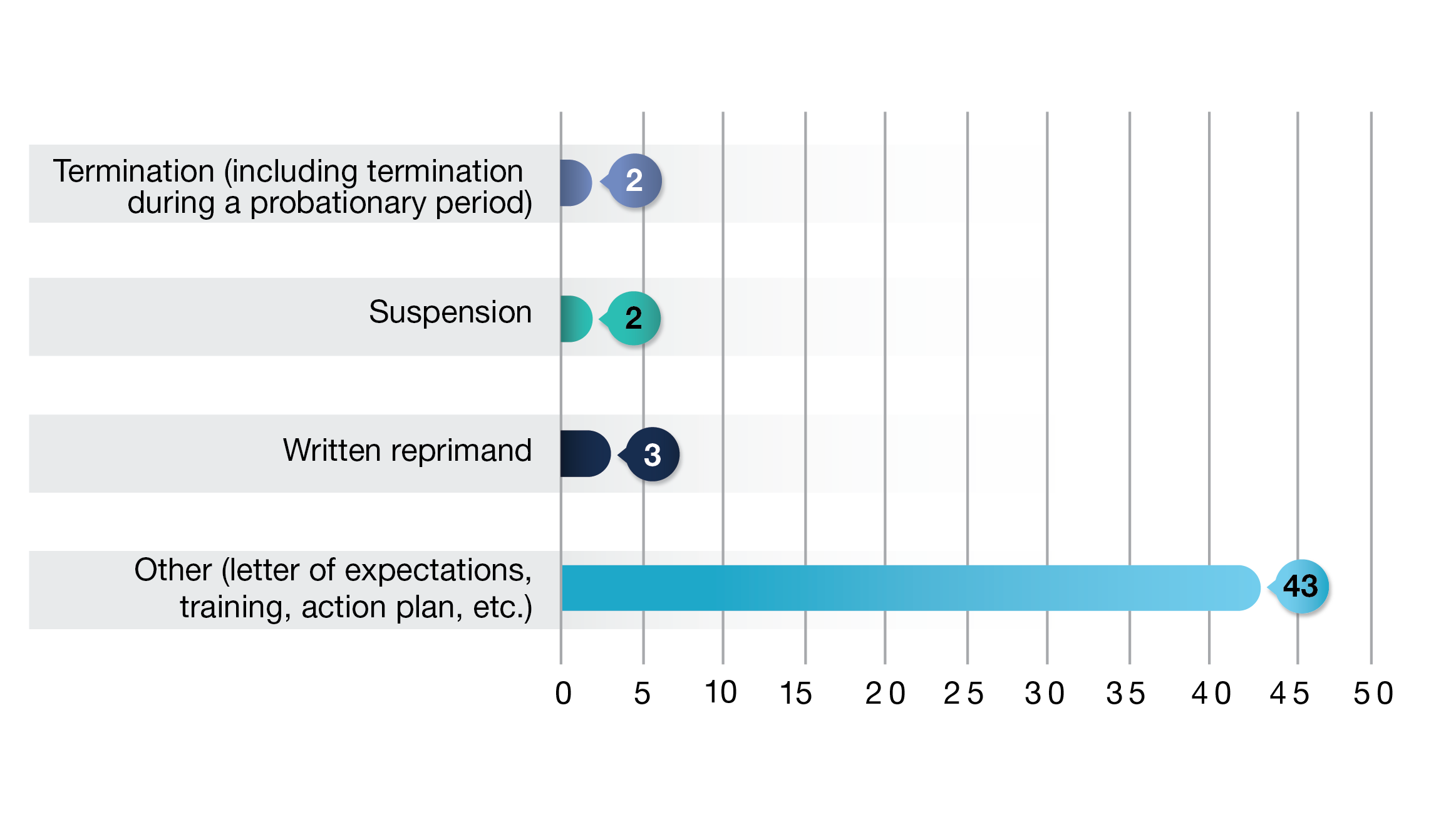
Graph 5. Text version
The horizontal axis ranges from 0 to 50, with vertical gridlines at regular intervals. The vertical axis lists four categories of outcomes. Each category is represented by a blue horizontal bar, with the number of cases displayed at the end of the bar.
Outcomes
Other measures (letter of expectation, training, action plan, etc.)
- 43 cases resulted in other corrective measures such as letters of expectation, training, or action plans.
- This is the largest category by a considerable margin.
Written reprimand
- 3 cases resulted in a written reprimand.
Suspension
- 2 cases resulted in a suspension.
Termination (including termination during a probationary period)
- 2 cases resulted in termination, including termination during a probationary period.
Distribution of outcomes
Of the 50 founded or partially founded cases:
- 43 cases, or 86%, resulted in other corrective measures.
- 3 cases, or 6%, resulted in a written reprimand.
- 2 cases, or 4%, resulted in a suspension.
- 2 cases, or 4%, resulted in termination.
Key message
The chart shows that most founded or partially founded cases were addressed through corrective measures such as letters of expectation, training, or action plans. More severe disciplinary actions were comparatively rare, with only 7 cases resulting in a written reprimand, suspension, or termination.
Comparative overview
Graph 6. Overall comparison of 2024–2025 and 2025–2026
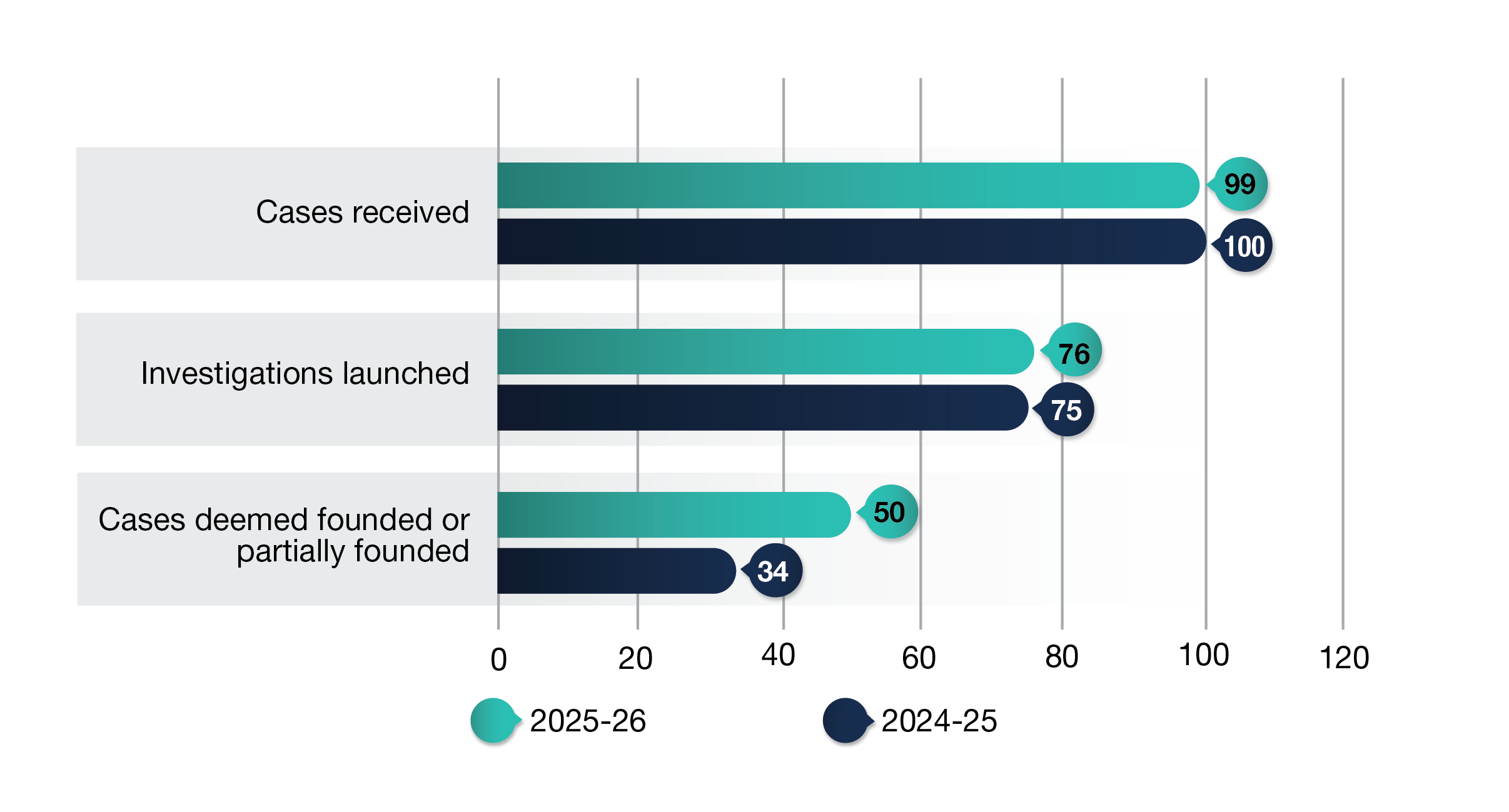
Text version
The horizontal axis ranges from 0 to 120 and includes gridlines at regular intervals. Each measure is represented by two horizontal bars:
- Orange bars represent fiscal year 2025-2026.
- Blue bars represent fiscal year 2024-2025.
Cases received
The first set of bars shows the number of cases received.
- 2025-2026: 99 cases received.
- 2024-2025: 100 cases received.
The number of cases received remained relatively stable between the two fiscal years, decreasing by one case in 2025-2026.
Investigations launched
The second set of bars shows the number of investigations launched.
- 2025-2026: 76 investigations launched.
- 2024-2025: 75 investigations launched.
The number of investigations launched was almost unchanged, increasing by one investigation in 2025-2026.
Cases deemed founded or partially founded
The third set of bars shows the number of cases deemed founded or partially founded.
- 2025-2026: 50 cases deemed founded or partially founded.
- 2024-2025: 34 cases deemed founded or partially founded.
This measure increased significantly, with 16 more cases deemed founded or partially founded in 2025-2026 than in 2024-2025.
Key message
The chart shows that the number of cases received and investigations launched remained stable between 2024-2025 and 2025-2026. However, the number of cases deemed founded or partially founded increased substantially, rising from 34 cases in 2024-2025 to 50 cases in 2025-2026. This represents the most significant year-over-year change among the three measures presented.
The overall number of cases received remained stable between 2024–25 and 2025–26, with a slight decrease from 100 to 99. Similarly, the number of investigations launched showed minimal variation, increasing from 75 to 76. In contrast, there was a significant increase in the number of cases deemed founded or partially founded, rising from 34 to 50 over the latest reporting period. This increase is consistent with the conclusion of investigations initiated in previous fiscal years and finalized during the current reporting period. It may also reflect improved awareness and understanding of misconduct in the workplace, leading employees to more accurately identify and report situations of concern.
Graph 7. Comparison of founded or partially founded misconduct cases 2024–2025 and 2025–2026
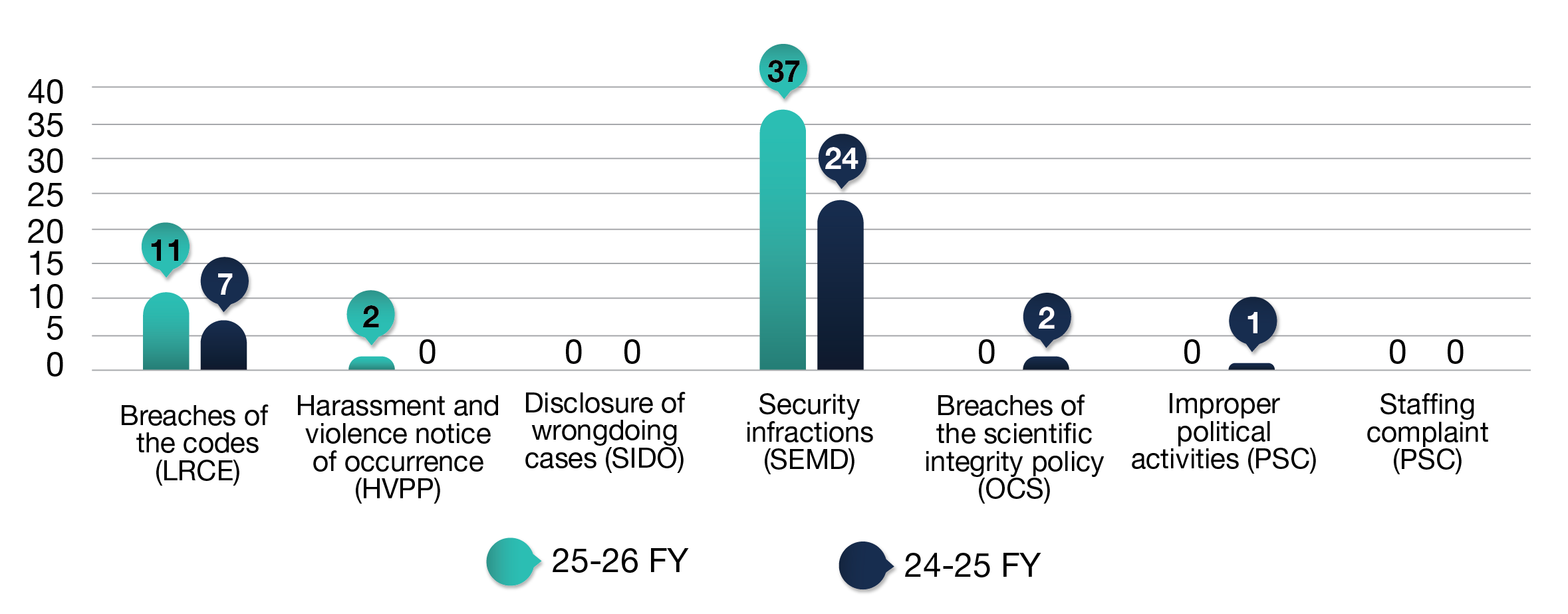
Graph 7. Text version
The vertical axis ranges from 0 to 40 cases, with gridlines at intervals of 5. The horizontal axis lists seven categories of misconduct, wrongdoing, or policy violations. Each category contains two bars:
- An orange bar representing fiscal year 2025-2026.
- A blue bar representing fiscal year 2024-2025.
The number of cases is displayed above each bar.
Categories and results
Breaches of the Codes (LRCE)
- 2025-2026: 11 founded or partially founded cases.
- 2024-2025: 7 founded or partially founded cases.
Harassment and Violence Occurrence Notices (HVPP)
- 2025-2026: 2 founded or partially founded cases.
- 2024-2025: 0 founded or partially founded cases.
Wrongdoing Disclosure Cases (SIDO)
- 2025-2026: 0 founded or partially founded cases.
- 2024-2025: 0 founded or partially founded cases.
Security infractions (SEMD)
- 2025-2026: 37 founded or partially founded cases.
- 2024-2025: 24 founded or partially founded cases.
- This category records the highest number of founded or partially founded cases in both fiscal years.
Breaches of the Scientific Integrity Policy (OCS)
- 2025-2026: 0 founded or partially founded cases.
- 2024-2025: 2 founded or partially founded cases.
Improper Political Activities (PSC)
- 2025-2026: 0 founded or partially founded cases.
- 2024-2025: 1 founded or partially founded case.
Staffing Complaints (PSC)
- 2025-2026: 0 founded or partially founded cases.
- 2024-2025: 0 founded or partially founded cases.
Comparison and trends
The chart shows a total of 50 founded or partially founded cases in 2025-2026 and 34 founded or partially founded cases in 2024-2025.
The increase of 16 cases between the two fiscal years is driven primarily by:
- Security violations, which increased from 24 to 37 cases.
- Breaches of codes, which increased from 7 to 11 cases.
- Harassment and violence occurrence notices, which increased from 0 to 2 cases.
Several categories recorded no founded or partially founded cases in 2025-2026, including wrongdoing disclosure cases, breaches of the Scientific Integrity Policy, improper political activities, and staffing complaints.
Key message
The chart demonstrates that security violations were the predominant category of founded or partially founded cases in both fiscal years and were the primary contributor to the increase observed in 2025-2026. Breaches of codes also represented a notable portion of cases, while all other categories accounted for relatively few or no founded or partially founded cases.
The increase in cases deemed founded or partially founded is primarily observed in two (2) NRCan service units: LRCE and SEMD. For the LRCE, this rise reflects cases involving inappropriate or unprofessional behaviour, improper stewardship of public resources, and breaches of integrity. These matters were addressed through administrative and disciplinary measures proportionate to the nature and severity of the conduct. In the SEMD, the increase is mainly associated with minor security‑related infractions, such as improper use of electronic networks and failure to follow secure entry protocols, including the practice of piggybacking through controlled-access points. These matters were predominantly resolved through administrative actions, including additional training and awareness measures.
Graph 8. Comparison of measures taken for founded or partially founded cases 2024–2025 and 2025–2026
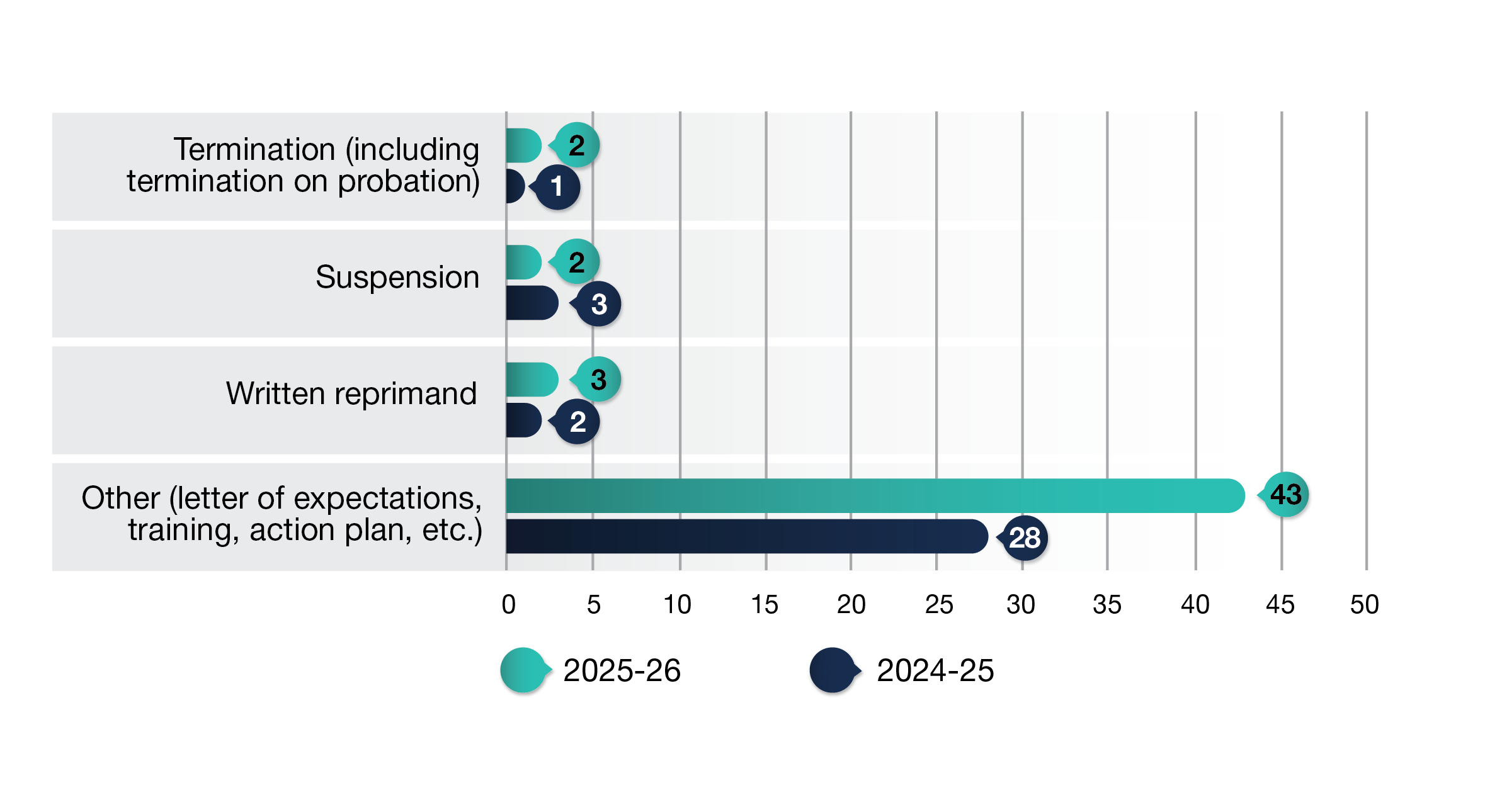
Graph 8. Text version
The horizontal axis ranges from 0 to 50, with gridlines at regular intervals. The vertical axis lists four types of outcomes. For each outcome, two horizontal bars are shown:
- Orange bars represent fiscal year 2025-2026.
- Blue bars represent fiscal year 2024-2025.
The values are displayed at the end of each bar.
Outcomes by fiscal year
Other measures (letter of expectation, training, action plan, etc.)
This category includes corrective actions such as letters of expectation, training, or action plans.
- 2025-2026: 43 cases
- 2024-2025: 28 cases
This is the largest category in both years and shows an increase of 15 cases in 2025-2026.
Written reprimands
- 2025-2026: 3 cases
- 2024-2025: 2 cases
Written reprimands increased by 1 case compared with the previous year.
Suspensions
- 2025-2026: 2 cases
- 2024-2025: 3 cases
Suspensions decreased by 1 case in 2025-2026.
Terminations (including termination during a probationary period)
- 2025-2026: 2 cases
- 2024-2025: 1 case
Terminations increased by 1 case compared with the previous fiscal year.
Overall comparison
The chart represents a total of:
- 50 founded or partially founded cases in 2025-2026, consisting of 43 other measures, 3 written reprimands, 2 suspensions, and 2 terminations.
- 34 founded or partially founded cases in 2024-2025, consisting of 28 other measures, 2 written reprimands, 3 suspensions, and 1 termination.
The largest year-over-year change is in the category of other corrective measures, which increased from 28 to 43 cases.
Key message
The chart shows that corrective actions such as letters of expectation, training, and action plans remained the primary response to founded or partially founded cases in both fiscal years. While the use of written reprimands and terminations increased slightly in 2025-2026 and suspensions decreased slightly, the most significant change was the increase in the overall number of cases addressed through other corrective measures.
A comparison of measures taken in founded or partially founded cases shows an increased reliance on administrative actions. This trend suggests that the rise in founded cases is largely associated with lower‑severity matters, for which administrative measures are an appropriate first response.
Commitment to advancing transparency, accountability and workplace integrity
Since the first annual report, several targeted actions have been implemented to strengthen the workplace environment and reinforce a culture of values, ethics and respect, with clear linkages to identified risks and trends. Notably, the LRCE provided specialized training session for management on topics such as misconduct, the purpose of discipline, and the principles of procedural fairness to ensure that issues are addressed appropriately and consistently. The LRCE also completed the development of a new “Conduct in the Workplace” intranet page, improving access to guidance and resources for employees. Complementing this, ongoing efforts across Values, Ethics and Respect Office and the Office of the Chief Scientist have expanded the use of scenario-based and interactive learning. These initiatives are designed to help employees and managers better recognize and respond to real-world ethical dilemmas, including potential breaches of the Scientific Integrity Policy, while also reinforcing awareness of reporting mechanisms and expectations.
Additional measures have focused on strengthening communication, support, and leadership engagement. Targeted training on values, ethics, and harassment and violence prevention continues to be delivered on an ongoing basis, while the Security Awareness Team is actively promoting incident reporting through initiatives such as Security Awareness Week. Building on previous efforts, a post-mortem of the Fear of Reprisal Campaign is underway to inform future outreach and equip managers with more effective tools to lead conversations on ethics and misconduct. Further actions, including the ongoing review of the Harassment and Violence Prevention Policy, enhancements to onboarding materials, renewed communications on reporting mechanisms in collaboration with the Ombuds function, and continued promotion of a “Speak Up” culture are in progress and aim to improve employee confidence in internal processes while fostering a respectful, ethical, and supportive workplace.
These efforts will continue to evolve in response to emerging risks and employee feedback, supporting a strong and sustained culture of integrity across the organization.
Annex 1. Definitions
Administrative measure refers to non-disciplinary actions used to address workplace issues and ensure compliance with directives and policies. These may be applied independently or in conjunction with disciplinary measures. Examples include training, coaching, action plans, letters of expectation, temporary removal of delegations or other appropriate actions.
Disciplinary measure refers to formal and progressive actions intended to correct inappropriate behaviour by applying increasingly severe consequences for repeated misconduct. These measures are corrective, not punitive. Disciplinary measures can range from verbal reprimands to termination.
Discrimination is an action, behaviour, decision or omission that treats a person or a group of people unfairly and badly because of their race, national or ethnic origin, colour, religion, age, sex (including pregnancy and childbearing), sexual orientation, gender identity or expression, marital status, family status, genetic characteristics, physical or mental disability (including dependence on alcohol or drugs) or pardoned criminal conviction.
Harassment and violence is, according to the Canada Labour Code, any action, conduct or comment, including of a sexual nature, that can reasonably be expected to cause offence, humiliation or other physical or psychological injury or illness to an employee, including any prescribed action, conduct or comment.
Misconduct refers to deliberate behavior, actions or omissions that violate TBS policy instruments, standards or expectations outlined in the NRCan Code of Values and Ethics (NRCan Code), the Values and Ethics Code for the Public Service (VECPS), the Departmental Security Policy, the Scientific Integrity Policy, approved procedures, reasonable management requests or any other relevant federal act or regulation.
Occurrence means an occurrence of harassment and violence in the workplace.
Wrongdoing relates to serious violations that go against the public interest, as defined in the PDSPA, such as:
- A contravention of any act of Parliament or of the legislature of a province or of any regulations made under any such act, other than a contravention of section 19 of the PSDPA
- A misuse of public funds or a public asset
- A gross mismanagement in the public sector
- An act or omission that creates a substantial and specific danger to the life, health or safety of persons or to the environment, other than a danger that is inherent in the performance of the duties or functions of a public servant
- A serious breach of a code of conduct established under section 5 or 6 of the PSDPA
- Knowingly directing or counselling a person to commit a wrongdoing set out in any of paragraphs (a) to (e)
Annex 2. Contacts and resources
NRCan is committed to supporting employees and managers in addressing cases of misconduct and wrongdoing.
The first step is to encourage open and respectful dialogue. If you have experienced or witnessed an incident, you are invited to speak with your manager, if you feel comfortable doing so.
If that is not possible, employees may seek guidance directly from the relevant NRCan service unit:
- Harassment and violence: harassmentandviolence-harcelementetviolence@nrcan-rncan.gc.ca
- Guidance on NRCan’s Values and Ethics Code, including the prevention of conflict of interest situations, post-employment obligations and political activities: values_and_ethics-valeurs_et_ethiques@nrcan-rncan.gc.ca
- Disclosure of wrongdoing: disclosure-senior_officer-divulgation-agent_superieur@nrcan-rncan.gc.ca
- Security and unacceptable use of NRCan electronic networks: socc-ccos@nrcan-rncan.gc.ca
- Occupational health and safety: deptl_ohs-sst_ministeriel@nrcan-rncan.gc.ca
- Staffing processes: corporatestaffing-dotationministerielle@nrcan-rncan.gc.ca
- Breach of scientific integrity: nrcanscientificintegrity-lintegritescientifiquedurncan@nrcan-rncan.gc.ca
Other Government of Canada organisations may be contacted directly:
- Discrimination on one or more grounds of discrimination: Canadian Human Rights Commission
- Disclosure of wrongdoing: Public Service Integrity Commissioner
- Staffing complaints: Public Service Commission of Canada
- Occupational Health and Safety concerns: Employment and Social Development Canada
Other helpful resources:
- A bargaining agent representative
- Association of Professional Executives of the Public Service of Canada (APEX)
- Ombuds Office: An independent, informal, confidential and impartial space to discuss workplace concerns. The Ombuds provides complimentary services to those offered by the department and supports employees by listening, identifying options for resolution and referring them to appropriate channels. With the help of the Ombuds, employees can explore forward-looking solutions through a lens of transparency, fairness and equity. Ombuds@nrcan-rncan.gc.ca
- Employee Assistance Program: The Employee Assistance Program (EAP) offers confidential support services to employees and managers who are experiencing a challenging personal situation (conflicts at work, health issues, substance misuse, abusive relationships, etc.) that may affect their health, or personal or professional lives. To learn more on the EAP, employees and managers are encouraged to consult the Wellness Program wellness_mieux-etre@nrcan-rncan.gc.ca or contact the EAP directly at 1-800-268-7708.
- Informal Conflict Resolution Services: Conflict management provides employees and managers with a confidential, neutral forum in which to discuss and resolve workplace conflicts before initiating a formal process, or after putting a formal process on hold to attempt to resolve the conflict informally. Employees and managers are invited to call 1-844-899-3609 or email icms-sgic@hc-sc.gc.ca to obtain further information or services.
- Labour Relations Centre of Expertise: Managers can also email labourrelations-relationsdetravai@nrcan-rncan.gc.ca for additional support.
- Chief Security Officer (SCO): Employees and managers can contact the CSO directly by email securityinvestigations-enquetesdesecurite@nrcan-rncan.gc.ca to report a security incident if they don’t feel comfortable contacting the SOCC.
Your feedback is valuable. If you have any comments or suggestions to enhance future editions of this report or if you have questions regarding the current edition, please contact the Annualmisconductreport-Rapportannuelinconduite@nrcan-rncan.gc.ca generic inbox.