
Table of contents
- Message from the Deputy Ministers
- Executive summary
- About NRCan
- Introduction
- NRCan service units
- Commitments and recommendations
- Annex 1- Definitions
- Annex 2- Contacts and resources
Message from the Deputy Ministers
At Natural Resources Canada (NRCan), we are committed to fostering a workplace rooted in integrity, transparency and respect. As part of our ongoing efforts to uphold the highest standards of values and ethics, we are pleased to share the inaugural edition of the Annual Report on Addressing Wrongdoing and Misconduct.
This report marks an important step in reinforcing our culture of accountability. It reinforces our commitment to preventing misconduct, addressing issues promptly and fostering a workplace where every employee feels safe and empowered to speak up. It builds on the important conversations from the What Unites Us, Defines Us Values and Ethics Symposium and contributes to our broader vision of a healthy, respectful and inclusive public service.
Looking ahead, the insights from this report will help us identify trends, spotlight areas needing attention and guide meaningful action. We will continue refining our strategies and interventions to address misconduct and wrongdoing and strengthen our culture of integrity.
We remain dedicated to ensuring that employees have access to resources and supportive mechanisms, such as the Ombuds Office, the Harassment and Violence Prevention Program and Wellness Support Services, to help them navigate challenges and raise concerns without fear.
Above all, we want employees to feel confident that misconduct and wrongdoing are addressed transparently and constructively. Your voices matter, and we are listening. Together, we all share the responsibility of building a workplace where integrity is not only expected but lived every day.
Thank you for your continued dedication to making NRCan a place where people feel valued, heard and empowered to do their best work.
Michael Vandergrift
(he/him)
Deputy Minister
Jeff Labonté
(he/him)
Associate Deputy Minister
Executive summary
This report summarizes findings related to reported cases of possible misconduct and/or wrongdoing at Natural Resource Canada (NRCan). The purpose of this document is to support NRCan’s commitment to fostering a workplace environment that is supportive, respectful and transparent for all employees. It also supports the Government of Canada’s ongoing dedication to strengthening Values and Ethics and the Clerk of the Privy Council’s request that each department develop reports on the disclosure of wrongdoing and misconduct.
The review covers reported cases between April 1, 2024, and March 30, 2025, drawing from consultations with various NRCan service units on their internal investigations and activities, including:
- Labour Relations Centre of Expertise (LRCE)
- Values and Ethics, Harassment and Violence Prevention Office
- Security and Emergency Management Division (SEMD)
- Office of the Chief Scientist (OCS)
- Corporate Staffing
- Senior Internal Disclosure Officer (SIDO)
Though the terms misconduct and wrongdoing are sometimes used interchangeably they are quite different. Misconduct refers to behaviour that violates various government policies, codes, approved procedures etc., while wrongdoing covers serious and specific violations that go against the public interest pursuant to section 8 of the Public Servants Disclosure Protection Act (PSDPA). More detailed definitions follow below.
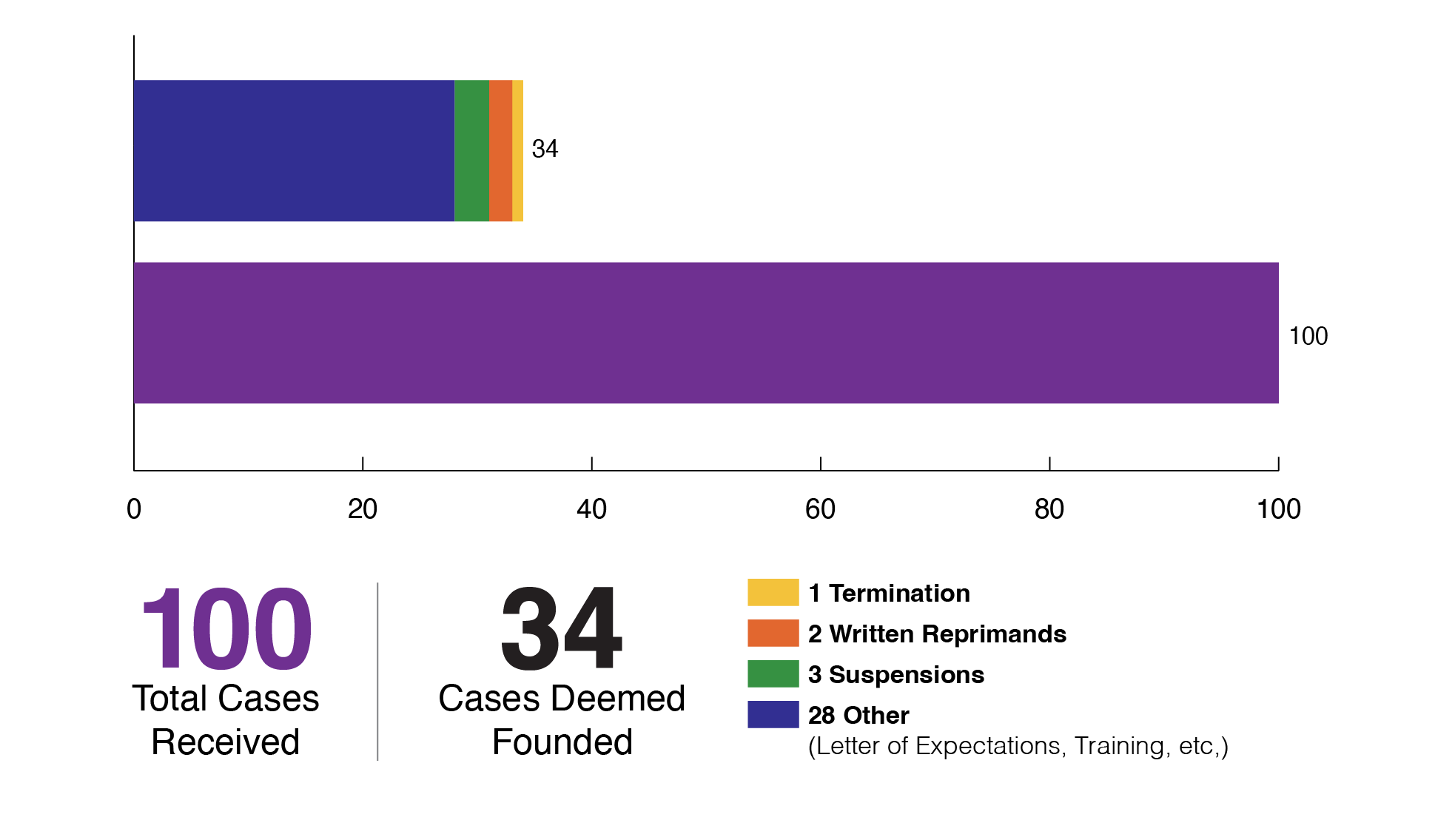
During the last fiscal year, 100 cases related to potential misconduct and/or wrongdoing were reported at NRCan. Of these, 34 were deemed founded, but none were determined to constitute wrongdoing. The cases cover breaches of various codes, security infractions, breaches of the Scientific Integrity Policy, and improper political activities. Specific examples include failure to follow instructions, failure to safeguard information, inappropriate or unprofessional behaviours and improper use of network and devices abroad. Administrative and/or disciplinary measures were applied for these cases.
Graph 1 - Overview of Misconduct and Wrongdoing - Fiscal Year 2024-2025
Text version
Horizontal bar chart showing misconduct and wrongdoing cases for Fiscal Year 2024–2025. The chart presents 100 total cases received, with 34 deemed founded. Outcomes included: 1 termination, 2 written reprimands, 3 suspensions, and 28 categorized as “other” (letters of expectation, training, etc.). The visualization highlights the distribution of disciplinary actions taken for founded cases.
Note: (*) Cases deemed founded may be linked to investigations that began in the previous fiscal year.
This report also offers a compilation of resources, current efforts and recommendations for the next fiscal year. These include strengthening support services for individuals reporting misconduct to ensure employees have access to comprehensive resources throughout the reporting process.
About NRCan
NRCan develops policies and delivers programs that enhance the contribution of the natural resource sectors to the economy and improve the quality of life for all Canadians. The department also conducts innovative science in facilities across Canada to generate ideas and transfer technologies. We are an established leader in the fields of energy generation, forests and forestry, minerals and mining, earth sciences, energy efficiency as well as science and data. We also represent Canada on the international stage to meet the country’s global commitments related to the sustainable development of natural resources.
The workforce represents over 6000 employees. While the majority are based in the National Capital Region, approximately 30% work in regional offices and laboratories. The largest group of employees (approximately 40%) work in scientific and technical areas working on projects involving natural resource management, climate change and sustainable development.
Introduction
Defining misconduct and wrongdoing
Misconduct refers to deliberate behavior, actions or omissions that violate Treasury Board Secretariat (TBS) policy instruments, standards or expectations outlined in the NRCan Values and Ethics Code (NRCan Code), the Values and Ethics Code for the Public Service (VECPS), the Departmental Security Policy, the Scientific Integrity Policy, approved procedures, reasonable management requests or any other relevant federal act or regulation.
Wrongdoing specifically refers to incidents defined in section 8 of the Public Servants Disclosure Protection Act (PSDPA). They are serious violations that go against the public interest, such as:
- Violating any Act of Parliament or any Act of the legislatures of the provinces or territories;
- Misusing public funds or public assets;
- Gross mismanagement;
- Doing something, or failing to do something, that creates a substantial and specific danger to the health, safety or life of persons or to the environment;
- Serious breach of the VECPS or NRCan’s Code; and
- Directing or counselling someone to commit a wrongdoing.
While all forms of wrongdoing are also a form of misconduct, not all forms of misconduct meet the definition of wrongdoing under the PSDPA. Misconduct is a broad term that refers to inappropriate, unethical, or unprofessional behavior in the workplace. It can range from minor infractions to more serious violations. Dealing with misconduct can involve multiple service units found below and can be addressed administratively or through disciplinary procedures as deemed appropriate. Wrongdoing on the other hand is a specific legal category defined by the Public Servants Disclosure Protection Act (PSDPA) and cases of potential wrongdoing begin with disclosure to NRCan’s Senior Internal Disclosure Officer.
NRCan service units
Reporting mechanisms
There are multiple ways within NRCan to which misconduct and wrongdoing can be reported, such as the Labour Relations Centre of Expertise (LRCE), the Values and Ethics, Harassment and Violence Prevention Office, the Security and Emergency Management Division (SEMD), the Office of the Chief Scientist (OCS), Corporate Staffing and the Senior Internal Disclosure Officer. Which manner to report to is based on the nature of the case and will be clarified further in this report.
Upon becoming aware of suspected misconduct, managers are expected to assess the situation and, where appropriate, explore resolutions and informal mechanisms. If this is not possible, they are required to report the issue to the appropriate NRCan service unit to obtain guidance and ensure the matter is appropriately documented and reviewed.
Employees, meanwhile, have the option to report potential misconduct directly to the appropriate service unit. However, when appropriate, their manager remains as the best first point of contact.
For cases of wrongdoing, as defined under the Public Servants Disclosure Protection Act (PSDPA), employees can make a protected disclosure to NRCan’s Senior Internal Disclosure Officer or go directly to the Public Sector Integrity Commissioner of Canada.
Each NRCan service unit has its own intake process and assesses allegations before deciding whether to launch an investigation to determine whether allegations of misconduct occurred. In some cases, an investigation may not proceed if informal mechanisms are deemed more appropriate for addressing the issue. Additionally, they may determine that another NRCan service unit is better positioned to provide support and refer the employee accordingly.
When an investigation is initiated, its purpose is to determine whether the allegations are founded. Allegations may be deemed unfounded if there is insufficient evidence to support them or the alleged conduct does not violate any directive, code or legislation. In some instances, the outcome may be inconclusive due to a lack of supporting evidence. This report focuses on cases in which the allegations were found to be substantiated.
Measures taken to address misconduct and wrongdoing
If misconduct or wrongdoing is confirmed following a thorough investigation and deemed founded, appropriate administrative and/or disciplinary measures must be applied.
- Administrative measures are non-disciplinary actions used to address workplace behaviours and ensure compliance with directives and policies. These may be applied independently or in conjunction with disciplinary measures. Examples include training, coaching, action plans, letters of expectations, temporary removal of delegations or other appropriate measures.
- Disciplinary measures are formal, progressive actions intended to correct inappropriate behaviour by applying increasingly severe consequences for repeated misconduct. These measures are corrective rather than punitive. However, in serious cases, taking into account aggravating and mitigating factors, severe measures may be justified even for a first offense. Disciplinary measures can range from verbal reprimands to termination of employment.
The following section outlines the service units available at NRCan for reporting suspected misconduct and wrongdoing. This section also provides a summary of cases determined to be founded during the 2024–2025 fiscal year.
Labour Relations Centre of Expertise (LRCE)
The LRCE provides expert advice and guidance to management including support for dealing with suspected misconduct, which is often reflected as a potential breach of the NRCan Values and Ethics Code and Values and Ethics Code for the Public Sector (the Codes). When suspected misconduct is raised by management to their labour relations advisor, a review is conducted to gather information, and an investigation may be completed to determine whether misconduct has occurred. Several other cases, while not formally submitted as complaints or included in this report, may still necessitate LRCE involvement to address issues that warrant attention.
The LRCE also assists managers with recourse mechanisms, such as complaints filed with the Canadian Human Rights Commission (CHRC) under the Canadian Human Rights Act, when an individual believes they have experienced harassment or discrimination by a federal government department, agency or Crown corporation. In such cases, the LRCE coordinates with the CHRC throughout the process. The CHRC is responsible for reviewing and assessing the complaint and making a recommendation to the CHRC Commissioner, who then issues the final decision.
2024–2025 LRCE cases summary
Of all the misconduct allegations received and investigated by the LRCE, seven (7) employees were found to have engaged in behaviors or actions that amount to breaches of the Codes, the TBS Policy on Service and Digital, the Departmental Security Policy, the Directive on Conflict of Interest and/or the Directive on the Management of Procurement.
The employees’ actions that led to breaches during the 2024–2025 fiscal year include failing to follow instructions, failing to safeguard information, preferential treatment and inappropriate or unprofessional behaviour. To address these issues, NRCan implemented measures such as mandatory training, written reprimands and suspensions without pay.
As it pertains to CHRC complaints against NRCan, no complaints were deemed founded in 2024–2025.
Values and Ethics, Harassment and Violence Prevention Office
The Values and Ethics, Harassment and Violence Prevention Office brings together two key programs that support a safe, respectful and ethical workplace, the Centre of Expertise in Values and Ethics (CEVE) and the Harassment and Violence Prevention Program (HVPP).
Centre of Expertise in Values and Ethics (CEVE)
The CEVE provides confidential, impartial guidance to employees and managers on a wide range of issues related to public service values and ethical conduct. This includes support on the Values and Ethics Code for the Public Sector, as well as NRCan’s own Values and Ethics Code. In its role as a trusted resource, the CEVE promotes ethical decision-making and offers advice on key areas such as:
- Conflict of interest
- Post-employment obligations
- Political activities, through the Designated Political Activities Representative (DPAR)
Political neutrality is a cornerstone of the federal public service. While CEVE and the DPAR provide guidance on political activity, only the Public Service Commission (PSC) is mandated to investigate allegations of improper political involvement by federal public servants.
Harassment and Violence Prevention Program (HVPP)
The HVPP provides support to employees navigating situations involving potential workplace harassment or violence. Every case reported through the HVPP is assessed and addressed through an appropriate resolution process. While some cases proceed to formal investigation, others may be resolved through alternative means, such as negotiated resolution, conciliation or mediation.
Even when allegations are found to be unsubstantiated, the process can still result in constructive recommendations to improve the overall workplace environment and interpersonal dynamics.
2024–2025 CEVE and HVPP cases summary
In 2024–2025, one (1) employee was found to have engaged in political activity without obtaining the required permission from the PSC, in violation of the Public Service Employment Act. Appropriate corrective actions were taken in accordance with PSC procedures and internal policies to address the situation and reinforce the importance of political impartiality in the federal public service.
Of all the cases brought to the HVPP’s attention in 2024–2025, none concluded that harassment or violence had occurred.
Security and Emergency Management Division (SEMD)
The SEMD, within the Safety, Security and Emergency Management Branch (SSEMB), is responsible for the management and oversight of NRCan’s Security Program. One of the objectives of this program is to ensure ongoing risk assessment, implement appropriate security safeguards and proactively manage security threats, risks and incidents. Additionally, it aims to ensure that all individuals with a valid security status or clearance comply with the security policies and procedures outlined in the Directive on Security Screening, Directive on Security Management and Policy on Government Security.
2024–2025 SEMD cases summary
One (1) case involved an employee who introduced malware into the department’s network and misused government assets, resulting in the revocation of the employee’s reliability status and subsequent administrative termination. In addition, twenty-three (23) cases were identified as minor security infractions following an investigation. These infractions included:
- Using another employee’s access card inappropriately
- Leaving sensitive and protected materials unsecured
- Improperly procuring contract services
- Taking unauthorized photographs inside a secure departmental laboratory
- Opening a secure cabinet without authorization
- Improperly storing government-owned goods (including a small explosive device and a firearm)
- Connecting government devices to public Wi-Fi in a foreign country
- Using a personal device to connect to the NRCan network abroad
- Connecting an unauthorized USB device to the NRCan network (which led to introducing malware)
- Downloading unauthorized software onto an NRCan device
All the above infractions were dealt with through administrative measures such as improved security protocols and additional training for the employees involved. Of note, other founded cases requiring disciplinary action were referred to the LRCE and are documented in the corresponding section of the LRCE cases summary.
Departmental Occupational Health and Safety (DOHS)
DOHS is part of the People and Culture Branch and is responsible for supporting the organization in achieving its Occupational Health and Safety objectives. As part of its mandate, DOHS coordinates the Internal Complaint Resolution Process (ICRP) for complaints filed under Part II of the Canada Labour Code (CLC). In some cases, complaints may also be referred for investigation by Employment and Social Development Canada (ESDC), with DOHS coordinating the cases. While not necessarily involving misconduct or wrongdoing, employees who believe there has been a contravention of the CLC or who identify a risk of an accident, injury or illness linked to their employment are required to report their concerns to their supervisor. Additionally, employees have the right to refuse dangerous work under specific circumstances. DOHS must be involved immediately when an employee exercises this right.
2024–2025 DOHS cases summary
As it pertains to infractions under Part II of the CLC, the department had no cases to report for 2024–2025.
Office of the Chief Scientist (OCS)
The OCS provides leadership in the development and implementation of approaches to build and maintain capacities within NRCan’s science and technology (S&T) community, including promoting a culture of scientific integrity. Scientific Integrity means following professional standards and ethical principles to ensure research and science are conducted responsibly. To maintain a high level of integrity across all science and research activities, NRCan established the Scientific Integrity Policy (SIP), which outlines the principles, expectations and procedures for ensuring ethical practices in scientific research and activities. All NRCan employees involved in the design, conduct, management, review, communication or use of research, science or related activities must adhere to the SIP. If employees suspect that a breach to the policy has occurred, it is their responsibility to bring it forward.
2024–2025 OCS cases summary
Of the cases received by OCS, two (2) were found to involve breaches of the SIP, both pertaining to procedural expectations regarding the dissemination of research and scientific findings. Given the unintentional nature of these breaches, administrative measures were taken, including a reminder of expectations outlined in the SIP and Guidelines for Scientific and Technical (S&T) Publishing.
Corporate Staffing
Corporate Staffing serves as the point of contact within NRCan for investigations conducted by the Public Service Commission (PSC) related to specific appointment processes. Anyone can submit a request for an investigation into irregularities in an appointment process. Submissions can be made online or via mail. The PSC investigates both internal and external appointment processes where:
- Fraud may have occurred
- An appointment or proposed appointment may not have been free from political influence
It also investigates external appointment processes where:
- An appointment or proposed appointment may not have been based on merit
- There may have been an error, omission or improper conduct that affected the selection of the person appointed or proposed for appointment, including when there are biases or barriers that disadvantage persons who belong to any equity-seeking group within the meaning of the Canadian Human Rights Act (CHRA)
For concerns related to errors, omissions or improper conduct in internal appointment processes, the Deputy Head has the authority to initiate an investigation. The PSC may also investigate these processes at the request of the Deputy Head.
2024–2025 Corporate Staffing cases summary
No investigations concluded that there were founded allegations in the 2024–2025 fiscal year.
Senior Internal Disclosure Officer (SIDO)
Employees may believe that a wrongdoing has occurred, is occurring or is about to occur in their workplace. They may also find themselves asked to commit wrongdoing. The Public Servants Disclosure Protection Act (PSDPA) is the framework for employees and other public servants to disclose wrongdoing while protecting them from reprisals for making a protected disclosure or cooperating in an investigation in good faith.
Inquiries and protected disclosures are primarily submitted through the Senior Internal Disclosure Officer (SIDO) inbox. To be protected, the disclosure must be made in good faith to a supervisor or the SIDO. Protection ensures the employee is safeguarded against reprisal.
The PSDPA defines wrongdoing as one or more of the following:
- A contravention of any Act of Parliament or of the legislature of a province, or of any regulations made under any such Act, other than a contravention of section 19 of the PSDPA;
- A misuse of public funds or a public asset;
- A gross mismanagement in the public sector;
- An act or omission that creates a substantial and specific danger to the life, health or safety of persons, or to the environment, other than a danger that is inherent in the performance of the duties or functions of a public servant;
- A serious breach of a code of conduct established under section 5 or 6 of the PSDPA; and
- Knowingly directing or counselling a person to commit a wrongdoing set out in any of paragraphs a) to e).
Employees may also go directly to the Public Sector Integrity Commissioner (PSIC) of Canada to make a protected disclosure or to seek advice, there is no requirement for an employee to make a disclosure first within their organization.
2024–2025 SIDO cases summary
Founded cases must be published externally in accordance with the PSDPA. For 2024–2025, no reports related to Natural Resources Canada were published.
Overview of 2024–2025 findings
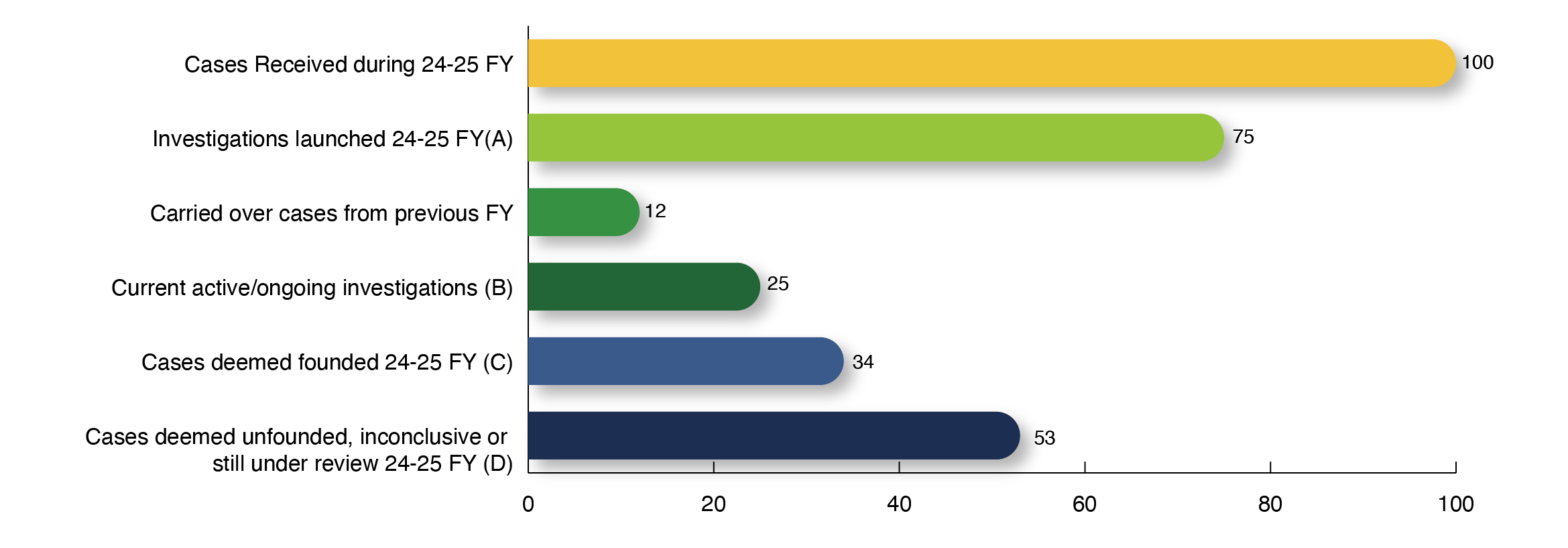
Graph 2 - Summary of Investigation Activities – Wrongdoing and Misconduct (2024-2025)
Text version
Horizontal bar chart summarizing investigation activities for Fiscal Year 2024–2025. Of 100 cases received, 75 investigations were launched, with 12 carried over from the previous year. Among these, 25 investigations remain active, 34 cases were deemed founded, and 53 were deemed unfounded, inconclusive, or still under review. The visualization shows the flow and status of cases through the investigative process.
Notes:
(A) Not all new cases received result in a formal investigation.
(B) May include investigations launched in the previous fiscal year that have yet to be completed.
(C) Cases may be linked to investigations that began in the previous fiscal year.
(D) Cases may be linked to investigations that began in the previous fiscal year. These also include cases for which the treshold was not met, allegations could not be confirmed and cases that are currently under review which are not included in the “Investigations launched 24–25” category.
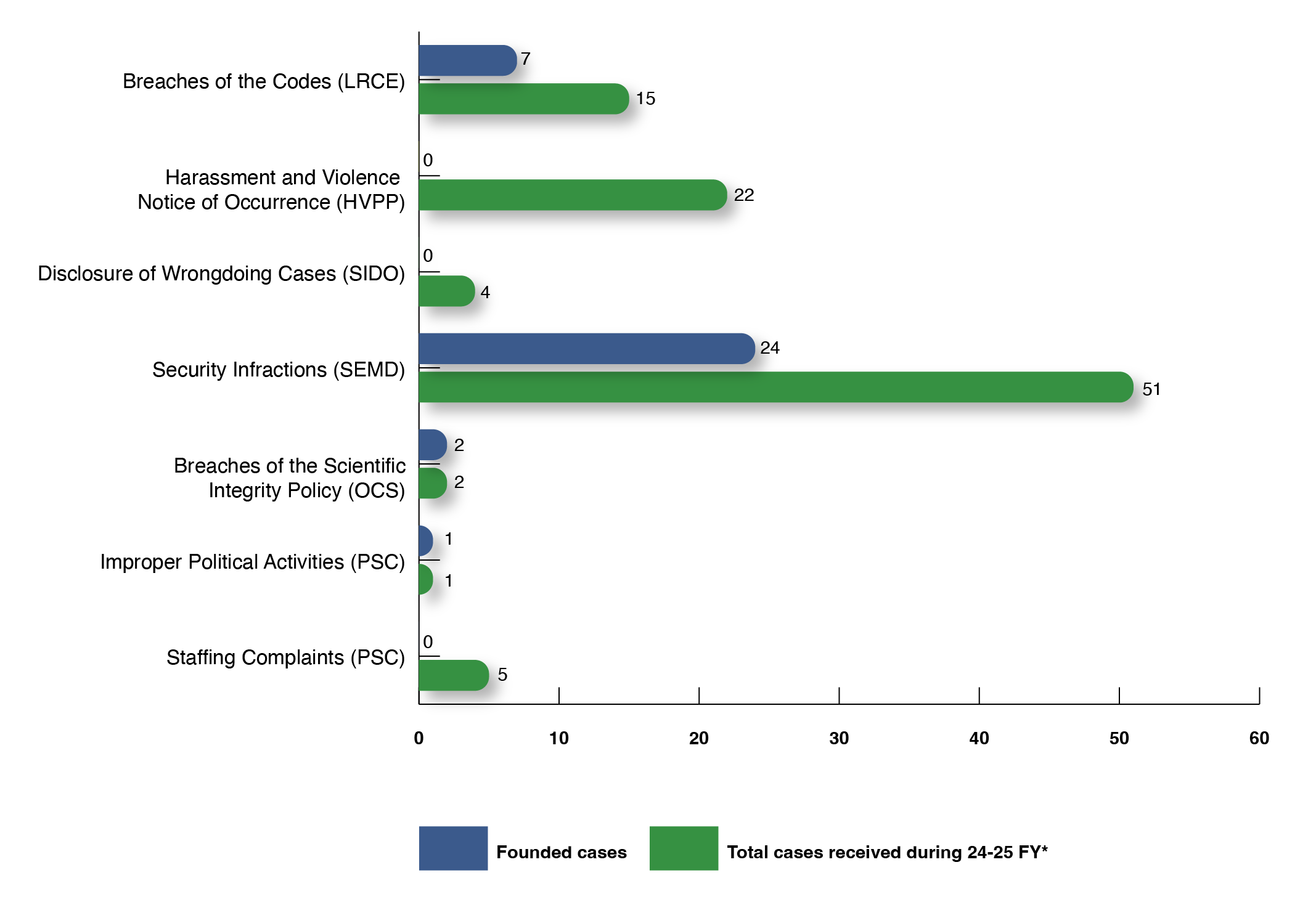
Graph 3 - Comparison of Misconduct Cases Received versus Founded
Text version
Horizontal bar chart comparing cases received versus founded across misconduct categories in Fiscal Year 2024–2025. Security infractions had the highest numbers (51 received, 24 founded), followed by breaches of the codes (15 received, 7 founded). Other categories showed fewer cases, with several having none founded.
Note:* Not all cases received were investigated. When comparing the number of cases received to the number of founded cases, it is important to consider that some cases are still ongoing and/or under review.
Founded cases resulted in the application of administrative and/or disciplinary measures.
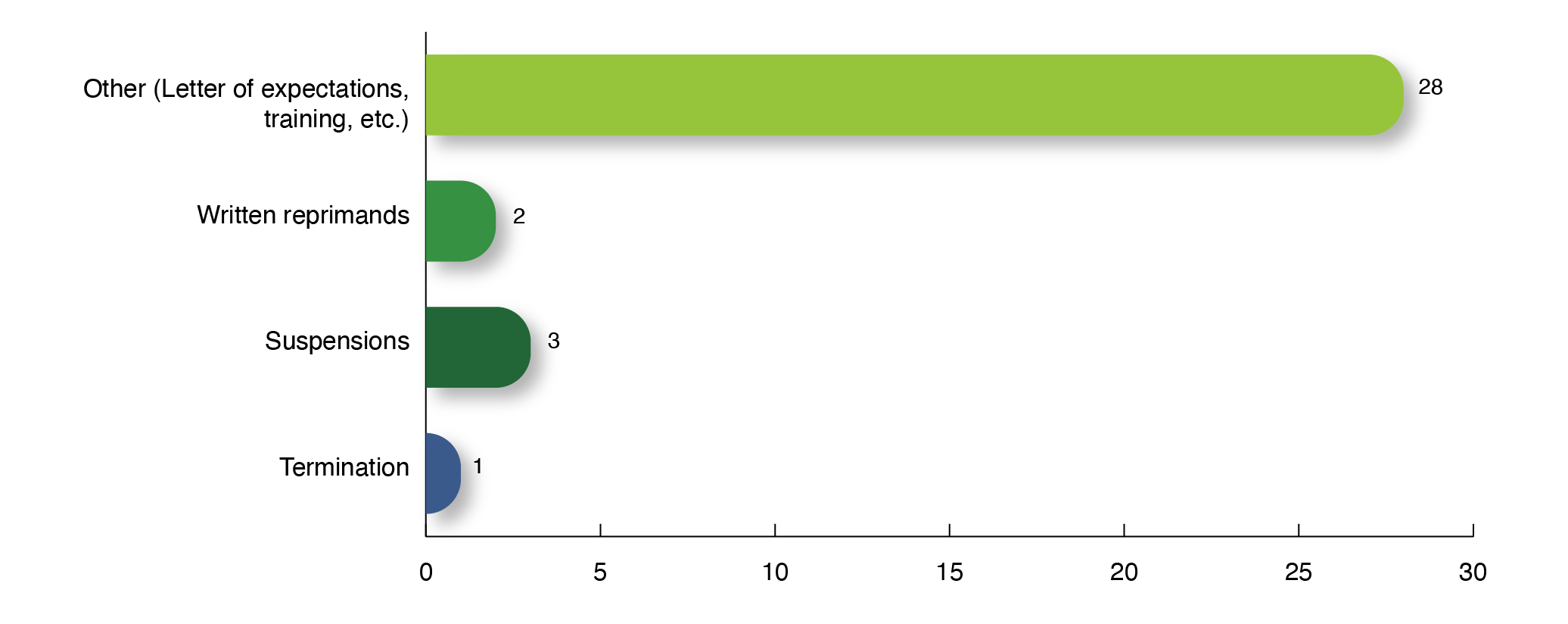
Graph 4 - Measures Taken for Founded Cases
Text version
Horizontal bar chart showing measures taken for founded cases in Fiscal Year 2024–2025. Outcomes included: 1 termination, 2 written reprimands, 3 suspensions, and 28 categorized as “other” (letters of expectation, training, etc.). The chart highlights that the majority of founded cases resulted in alternative measures rather than severe disciplinary action.
Commitments and recommendations
Commitment to advancing Transparency, Accountability and Workplace Integrity
As part of our commitment to fostering a culture rooted in these principles, the organization is actively strengthening its ethical framework. Key highlights are:
- In October 2024, we introduced our renewed NRCan Values and Ethics Code (NRCan Code), a guiding framework that reaffirms our core values: respect for democracy, respect for people, integrity, stewardship, excellence and reconciliation.
- NRCan is currently completing the Risk and Compliance Process exercise for 2024–2025 due in the Fall of 2025, which included the completion of a self-assessment of its efforts to advance a renewed conversation on values and ethics. In support, NRCan had already undertaken various initiatives, including dedicated discussions at all levels in the spring of 2024, to obtain perspectives on the Department’s proposed strategic plan and to engage in meaningful dialogue on values and ethics, identifying key areas of importance and those requiring further discussion.
- NRCan has implemented monthly sessions facilitated by the VECE, regular newsletters covering key values and ethics topics and reminders to employees about their declaration obligations, among other initiatives.
- NRCan will be launching a “Fear of Reprisal” campaign to foster psychological safety, encourage open communication and ensure that employees feel secure in reporting concerns and stay informed about available support options and reporting mechanisms for reporting incidents of misconduct and wrongdoing.
- The LRCE introduced a specialized training session for management, providing critical guidance on the role and responsibilities of Labour Relations. This training includes misconduct, the purpose of discipline and emphasizes the principles of procedural fairness to ensure that issues are addressed appropriately and consistently.
- The SSEMB has implemented a range of security initiatives to help prevent misconduct and wrongdoing, as well as to promote a culture of accountability. These include mandatory security awareness and cybersecurity training as well as a bi-annual audit to assess compliance. A system of regular reminders is also being developed to support timely completion of training. As part of the onboarding process, new employees receive a security and the SSEMB has introduced a new foundational security training developed in collaboration with the Strategic Policy and Innovation Sector and the Office of the Chief Scientist. This comprehensive training covers corporate, cyber and research security, reinforcing best practices across NRCan.
- The SSEMB hosts an annual Security Awareness Week dedicated to further educate and engage employees on the importance of maintaining a secure environment and upholding ethical standards. These initiatives are designed to create accountability and vigilance across all levels of the organization.
- The Finance and Procurement Branch is currently developing the NRCan Fraud Risk Management Framework, which will outline roles, responsibilities and accountabilities for fraud risk management within the department. It will also cover the control environment, risk assessment, control activities and the reporting of results to senior management.
Recommendations for future actions
Building on the findings of this report, the following recommendations outline key actions to further strengthen the organization and enhance the workplace environment:
- Develop a process map among service units handling misconduct and wrongdoing to improve coordination, with originating services responsible for determining when and whom to involve.
- Develop an improved framework to collect data on potential misconduct and wrongdoing cases to help consolidate information from multiple sources, improve efficiency, reduce manual workload and enhance data accuracy.
- Strengthen support services for individuals reporting misconduct to ensure individuals have access to comprehensive resources throughout the reporting process. While existing services already provide support for employees, increasing the visibility and access to these resources will further empower those who come forward.
- Further engage NRCan service units and the Ombuds Office in ongoing discussions to identify systemic trends or barriers that may contribute to discrimination and harassment, particularly where certain communities or groups are disproportionately affected.
- Develop targeted communication campaigns that focus directly on defining different types of misconduct and wrongdoing as preventative measures and learning. These could include real-life (anonymized) scenarios and/or interactive quizzes illustrating what constitutes unethical behavior, conflict of interest, harassment, fraud and other forms of wrongdoing specific to the public service and NRCan’s context.
- Review and assess the scope and content of misconduct awareness activities, such as onboarding and mandatory training.
- Empower managers as key communicators building on the “Fear of Reprisal” campaign’s focus on managers. Equip managers with specific talking points, resources and training to proactively discuss ethical conduct and the definition of misconduct with their teams. Encourage them to foster open dialogue and create an environment where employees feel comfortable asking questions and raising concerns.
- Promote the “Speak Up” culture to explicitly and consistently promote a workplace where employees feel empowered and safe to report suspected misconduct without fear of reprisal. Highlight the importance of reporting for maintaining a healthy and ethical workplace. The “Fear of Reprisal” campaign is a strong starting point, and its success should be amplified through ongoing communication that reinforces the message.
- Enhance employee and public awareness by publishing a second annual report and conducting a comparative analysis with the first. As this is the inaugural report, future iterations will provide valuable trend data, offering deeper insights into progress, ongoing challenges and areas for improvement. Continuously improving this process will better position NRCan to drive meaningful change and stay aligned with its strategic objectives.
Annex 1 – Definitions
Administrative measure refers to non-disciplinary actions used to address workplace issues and ensure compliance with directives and policies. These may be applied independently or in conjunction with disciplinary measures. Examples include training, coaching, action plans, letters of expectation, temporary removal of delegations or other appropriate actions.
Disciplinary measure refers to formal and progressive actions intended to correct inappropriate behaviour by applying increasingly severe consequences for repeated misconduct. These measures are corrective, not punitive. Disciplinary measures can range from verbal reprimands to termination.
Discrimination is an action, behaviour, decision or omission that treats a person or a group of people unfairly and badly because of their race, national or ethnic origin, colour, religion, age, sex (including pregnancy and childbearing), sexual orientation, gender identity or expression, marital status, family status, genetic characteristics, physical or mental disability (including dependence on alcohol or drugs) or pardoned criminal conviction.
Harassment and violence is, according to the Canada Labour Code, any action, conduct or comment, including of a sexual nature, that can reasonably be expected to cause offence, humiliation or other physical or psychological injury or illness to an employee, including any prescribed action, conduct or comment.
Misconduct refers to deliberate behavior, actions or omissions that violate TBS policy instruments, standards or expectations outlined in the NRCan Code of Values and Ethics (NRCan Code), the Values and Ethics Code for the Public Service (VECPS), the Departmental Security Policy, the Scientific Integrity Policy, approved procedures, reasonable management requests or any other relevant federal act or regulation.
Wrongdoing relates to serious violations that go against the public interest, as defined in the PDSPA, such as:
- A contravention of any Act of Parliament or of the legislature of a province, or of any regulations made under any such Act, other than a contravention of section 19 of the PSDPA;
- A misuse of public funds or a public asset;
- A gross mismanagement in the public sector;
- An act or omission that creates a substantial and specific danger to the life, health or safety of persons, or to the environment, other than a danger that is inherent in the performance of the duties or functions of a public servant;
- A serious breach of a code of conduct established under section 5 or 6 of the PSDPA; and
- Knowingly directing or counselling a person to commit a wrongdoing set out in any of paragraphs (a) to (e).
Annex 2 – Contacts and resources
NRCan is committed to supporting employees and managers in addressing cases of misconduct and wrongdoing.
The first step is to encourage open and respectful dialogue. If you have experienced or witnessed an incident, you are invited to speak with your manager, if you feel comfortable doing so.
If that is not possible, employees may seek guidance directly from the relevant NRCan service unit:
- Harassment and violence: Harassment and Violence Prevention Program
- Guidance on NRCan’s Values and Ethics Code, including the prevention of conflict of interest situations, post-employment obligations and political activities: Values and Ethics Centre or Expertise
- Disclosure of wrongdoing: NRCan’s Senior Internal Disclosure
- Security and unacceptable use of NRCan electronic networks: Security Operations Control Centre (SOCC)
- Occupational health and safety: NRCan’s Departmental Occupational Health and Safety
- Staffing processes: Corporate Staffing
- Breach of science integrity: Office of the Chief Scientist
Other Government of Canada organisations may be contacted directly:
- Discrimination on one or more grounds of discrimination: Canadian Human Rights Commission
- Disclosure of wrongdoing: Public Service Integrity Commissioner
- Staffing complaints: Public Service Commission of Canada
- Occupational Health and Safety concerns: Employment and Social Development Canada
Other helpful resources:
- A bargaining agent representative
- Association of Professional Executives of the Public Service of Canada (APEX)
- Ombuds Office: An independent, informal, confidential and impartial space to discuss workplace concerns. The Ombuds provides complimentary services to those offered by the department and supports employees by listening, identifying options for resolution and referring them to appropriate channels. With the help of the Ombuds, employees can explore forward-looking solutions through a lens of transparency, fairness and equity.
- Employee Assistance Program: The Employee Assistance Program (EAP) offers confidential support services to employees and managers who are experiencing a challenging personal situation (e.g., conflicts at work, health issues, substance misuse, abusive relationships, etc.) that may affect their health, personal or professional lives. To learn more on the EAP, employees and managers are encouraged to consult the Wellness Program or contact the EAP directly at 1-800-268-7708.
- Informal Conflict Resolution Services: Conflict management provides employees and managers with a confidential, neutral forum in which to discuss and resolve workplace conflicts before initiating a formal process, or after putting a formal process on hold to attempt to resolve the conflict informally. Employees and managers are invited to call 1-844-899-3609 or email to obtain further information or services.
- Labour Relations Centre of Expertise: Managers can also consult their labour relations advisor for additional support.
Your feedback is valuable. If you have any comments or suggestions to enhance future editions of this report, or if you have questions regarding the current edition, please contact the Annual Report on Addressing Misconduct and Wrongdoing at NRCan generic inbox.