
Audit and Evaluation Branch
Natural Resources Canada
April 16, 2026
On this page
Indigenous Land Acknowledgement
Evaluation Objectives, Methods, and Limitations
What We Found: Performance – Effectiveness
What We Found: Performance – Design and Delivery
Efficiency of CERRC Governance, Resources and Processes
Indigenous land acknowledgement
The evaluation team acknowledges that the land on which they work and live is the traditional territory of diverse Indigenous Peoples, and that the offices of the Audit and Evaluation Branch (AEB) in Ottawa are on the traditional and unceded Algonquin Anishinaabe Territory. We also offer our gratitude to Indigenous Peoples who live in what is now Canada for their stewardship of the land since time immemorial, and honour their enduring relationships with these lands and waters. This acknowledgement reflects our commitment to reconciliation and to incorporating Indigenous perspectives in our work.
Executive summary
This report presents the findings, conclusions, and recommendations from the formative evaluation of Natural Resources Canada’s (NRCan’s) Clean Energy for Rural and Remote Communities (CERRC) program, covering fiscal years 2017-18 to 2024-25. The evaluation examined questions of the program’s relevance and performance.
Launched in 2018, the CERRC program supports renewable energy and capacity-building projects to reduce diesel use for heat and power in rural and remote communities across Canada. About 200 communities rely entirely on diesel for electricity and heat. Currently funded through 2026–27, the program prioritizes Indigenous-led projects with demonstrated community support and aims to support local renewable energy use and improve energy efficiency, generating environmental, social, and economic benefits.
Program relevance
Transitioning remote and northern communities away from diesel involves geographic, technical, and financial challenges. As diesel systems are aging, demand for new clean power, including renewables, is growing. The CERRC program has been oversubscribed since its launch, and as of March 2025 funding applications received exceeded available budgets. Additional applications are currently under review in case any funding may become available in the future. Despite the program’s increased support for capacity building, capacity limitations in Indigenous communities remain a significant barrier to accessing government funding. Long-term success of projects also depends on local capacity for operations and maintenance, which is excluded under current funding.
The CERRC program operates within a policy context shaped by Canada’s climate commitments and reconciliation objectives. The evaluation found that CERRC has appropriately responded to this changing context by shifting from its original design, moving away from industrial-scale projects focused on greenhouse gas reduction toward community-scale initiatives and capacity building.
This evolution reflects reconciliation priorities but has created misalignment with original targets and made it more challenging for some agreements to directly contribute to long-term outcomes, such as diesel reduction. If assessed solely on its greenhouse gas reduction potential, the program may not appear cost-effective. Remote and northern communities account for less than 1% of Canada’s electricity-related emissions, making absolute reductions modest compared to the investment required. However, over the long term, transitioning away from diesel can reduce government spending on diesel electricity subsidies and aging infrastructure maintenance, contributing to fiscal sustainability. The co-benefits delivered by the program also extend beyond emissions reduction to include improved health and air quality, economic and social gains through job creation and local capacity building, and advancement of reconciliation by supporting Indigenous leadership and participation in clean energy projects.
Program performance
As of March 2025, CERRC had signed a total of 240 grant and contribution agreements, exceeding both its original and revised targets for immediate outcomes related to participation of Indigenous partners. Data indicates that an estimated 86% of CERRC projects were Indigenous-led or Indigenous-partnered, with another 6% of projects involving Indigenous Peoples as beneficiaries.
Program extensions in 2019 and 2021 resulted in important changes to CERRC’s expected outcomes. The expected timing for the achievement of results by specific projects has also been extended to account for external factors impacting delivery, including the significant delays brought by the COVID pandemic.
Data indicates that progress towards intermediate and ultimate outcomes is ongoing. The program expects diesel reductions to be realized only once a CERRC-funded project is completed and commissioned. The need for longer timeframes for projects in rural and remote communities (particularly given seasonal and technical challenges in northern Canada) has been a key learning for the program. These multi-year renewable energy projects have long lead times, and most are now still either under construction or in the early stages of operation. As a result, a full assessment of outcomes is not yet possible as some key results will only be known closer to the end of current funding (March 2027).
As of March 2025, assuming all are completed as planned, signed funding agreements across all streams were expected to result in approximately 67 MW of new renewable energy capacity, meeting its revised target of 67.2 MW by 2030. In terms of diesel use, the program expected the agreements to result in annual reductions of about 28 million litres by 2027 (80% of its revised target of 35 million litres by 2030). Based on this, the program estimates a total annual GHG emissions reduction of about 0.075 MT by 2027. This is 65% of the target of 0.115 MT by 2030. Given that almost all available funding has been allocated, CERRC is unlikely to meet the target.
Program design changes have also affected outcomes. Demand for capacity-building projects has grown significantly, representing 62% of all CERRC agreements and 35% of total funding between 2018–19 and 2024–25. This percentage was about 37% in 2018-19 and rose to over 75% in FY 2022-23 through 2024-25. This increase reflects both the need for early-stage project support and the program’s shift to a continuous intake model, which encouraged smaller, incremental projects to reduce risk and build readiness.
Despite progress, capacity limitations remain a major barrier for Indigenous communities. Many lack technical expertise and resources to initiate proposals, leading to reliance on third-party project management firms and discouraging participation by communities with more limited capacity. While strengthening local knowledge and reducing these barriers is critical to achieving equitable energy transitions, capacity building projects generally have a more indirect and longer-term contribution to the expected results and outcomes.
Overall, the program would benefit from revising its performance measurement framework to better align with its reconciliation-focused orientation.
Program design and delivery
In 2020, the Government of Canada announced the creation of a new Indigenous and Remote Communities Clean Energy Hub (now called Wah-ila-toos). With related reforms aimed at emphasizing federal reconciliation objectives and reducing isolated program delivery within the federal government, the introduction of Wah-ila-toos resulted in major governance and program delivery revisions for the CERRC program. The new “single window” and “no wrong door” approaches under Wah-ila-toos were intended mainly to shift some administrative effort from proponents to the departments delivering the federal programs, as well as improving coordination among the programs.
The evaluation found that this new governance structure has had a positive effect on increasing stakeholder engagement, and it has improved Indigenous involvement and leadership in projects. The shift toward community-led initiatives, supported by simplified requirements and increased grant funding, has contributed to enhanced capacity-building and improved stakeholder engagement. While data indicates that it now takes longer to reach a funding decision, program managers described CERRC’s design as “intentionally community-paced”, with delivery timelines driven by community readiness, local capacity, and respect for self-determined engagement.
However, this approach has also introduced additional operational requirements and challenges in maintaining ongoing support; managing multi-stage engagement processes; and planning budgets and allocating resources. The new processes for decision-making have created some confusion regarding roles and responsibilities. Interviewees also noted an ongoing need for better coordination across the three sectors responsible for delivery of CERRC within NRCan.
Funding for CERRC is currently set to expire at the end of March 2027, and the majority of available funding has already been committed. Given this, there may be limited opportunity or benefit to enacting further design changes to increase efficiency. However, lessons learned from CERRC – such as the importance of capacity building to support community readiness and the need for longer timeframes for projects in rural and remote communities, particularly in Canada’s north – can be used to inform any existing or potential future programming with related objectives.
Recommendations
In light of these findings, the following table presents the evaluation’s recommendations, along with the management response and action plan.
| Recommendation | Management response and action plan |
|---|---|
| Recommendation 1: The ADM ESS, ADM EETS and ADM CFS should collaborate with Indigenous partners to review and, if necessary, revise its expected results and ensure that appropriate data collection tools and processes are in place to measure program performance. This could include identifying indicators and targets to more comprehensively assess program performance related to capacity building and better reflect the needs and expectations of Indigenous communities. |
Management agrees. Management agrees that CERRC’s performance framework should be reviewed, in conjunction with confirmation of funding renewal, to ensure the data collection and management tools can adequately track and report on key program performance indicators. As part of this review process, program officials will engage key Indigenous partners, stakeholders and right-holders, to align the performance framework with a reconciliation-focused delivery model. This work is already underway. The Wah-ila-toos Performance Measurement Framework project was launched in early 2025 through an external contractor, that includes a review of existing performance measurement criteria, input from Wah-ila-toos staff and the Indigenous Council, and developing a culturally responsive performance measurement framework tool for programs seeking to capture performance results for capacity building outcomes and community-specific qualitative benefits. Given the current program is sunsetting in March 2027, most of this work will focus on informing future programming and renewal considerations. Positions Responsible: Director General of Energy Resources Branch, Director General of Office of Energy Research and Development, and Director General of Trade, Economics and Industry. Timing: By end of September 2026: Complete targeted review and document lessons learned and recommend approaches. By December 2026: Integrate findings into renewal or successor program design materials. |
| Recommendation 2: The ADM ESS, ADM EETS and ADM CFS should develop a strategy to improve the sharing of information, lessons learned and best practices observed from CERRC and CERRC-funded projects across program streams and across the Wah-ila-toos Network and, where relevant, with other clean energy and Indigenous-focussed programs. |
Management agrees. Management agrees that there is value in strengthening the systematic sharing of information, lessons learned, and proven practices across the Wah-ila-toos Network, and related clean energy and Indigenous-focused programs. Given the cross-cutting nature of this work, the Wah-ila-toos Administrative Unit will develop a practical, proportionate knowledge-sharing strategy and action plan in coordination with Program streams. This will build on existing coordination mechanisms, with a focus on improving internal learning and supporting future program design rather than creating new reporting requirements for funded communities. Key Actions: Develop a knowledge-sharing strategy and action plan, including identification of priority themes (e.g. capacity building, supply chains, operations and maintenance, community readiness, etc.). Report on lessons learned from funded projects and evaluation findings. Disseminate lessons learned and best practices through existing Wah-ila-toos Network platforms at the working- and DG-level and, where appropriate, with external partners. Positions Responsible: Director General of Energy Systems Branch, Director General of Office of Energy Research and Development, and Director General of Trade, Economics and Industry. Timing: By December 2026: Complete a knowledge-sharing strategy and action plan, including Identification of priority themes and existing sources of lessons learned. By March 2027: Disseminate reporting on lessons learned and proven practices. |
Introduction
This report presents the findings, conclusions, and recommendations from the formative evaluation of Natural Resources Canada’s (NRCan’s) Clean Energy for Rural and Remote Communities (CERRC) program, covering fiscal years 2017-18 to 2024-25. The Audit and Evaluation Branch (AEB) conducted this evaluation as part of the NRCan Integrated Audit and Evaluation Plan. The evaluation responds to a commitment to the Treasury Board (TB) and adheres to section 42.1 of the Financial Administration Act. The evaluation examined questions of the program’s relevance and performance.
Program profile
The CERRC program, launched in 2018 with $218 million over six years, supports renewable energy and capacity-building projects to reduce diesel use for heat and power in rural and remote communities (see Box 1) and industrial sites across Canada. The program aimed to address three challenges in these communities: reliance on imported fuels, limited energy reliability, and high energy costs. Objectives included reducing GHG emissions, increasing renewable electricity capacity, creating economic benefits, and leveraging stakeholder investment.
Currently funded through 2026–27, the program prioritizes projects with demonstrated community support and aims to improve energy efficiency and local renewable energy use, generating environmental, social, and economic benefits.
Since its inception, the CERRC program has put its emphasis on supporting Indigenous-led and community-driven solutions to the clean energy transition. CERRC also works closely with provinces and territories (PTs) and utilities on understanding the challenges they face with advancing the clean energy transition in remote communities.
Box 1: CERRC definitions of rural and remote communities
Rural community is defined as a community connected to the North American electrical grid and not connected to the North American piped natural gas network, with a population of fewer than 5,000 people and a population density of less than 400 people per square kilometre. A permanent or long-term (5 years or more) settlement with at least 10 dwellings.
Remote community is defined as a community not currently connected to the North American electrical grid nor to the piped natural gas network and which is a permanent or long-term (5 years or more) settlement with at least 10 dwellings. Includes all Northern Remote Communities.
Find out which energy sources are used by rural and remote communities by visiting the Atlas of Canada - Remote Communities Energy Database.
Source: Clean Energy for Rural and Remote Communities Program (last consulted on September 8, 2025).
Program context and resources
In 2016, Canada developed the Pan-Canadian Framework on Clean Growth and Climate Change (PCF) to align its domestic actions with its obligations under the 2015 Paris Agreement on Climate Change. This included a commitment from the Government of Canada and collaborating provinces and territories to reduce the dependency of remote communities on diesel. The PCF acknowledged the health, environmental, and economic benefits of clean energy generation, including support for community ownership and job creation. It also recognized the need for partnerships with Indigenous communities and businesses to achieve this objective.
Funding for federal activities to support the PCF was provided through the Investing in Canada Plan (ICP), led by Infrastructure Canada. As part of the Green Infrastructure stream of the ICP, Budget 2017 allocated $218 million for CERRC over six years, starting in 2018-19. Starting in 2019-20, CERRC was further supported with additional funds pursuant to the Greenhouse Gas Pollution Pricing Act. These new funds were specifically to support Indigenous communities in Ontario, resulting in about $4.5 million directed to bioenergy projects under CERRC’s Bioheat stream. In Fall 2020, $300 million in additional funds for diesel reduction programming were announced in the Government of Canada’s Strengthened Climate Plan (Healthy Environment, Healthy Economy). This included $233.1 million for NRCan, including a top-up and three-year extension of CERRC funding (to FY 2026-27). It also included $25.9 million allocated to the creation of a new Indigenous Clean Energy Hub (now Wah-ila-toos), most of which was for NRCan as the lead. The creation of this new Hub resulted in critical changes to the governance structure for CERRC. During the period covered by the evaluation (2018-19 to 2024-25), CERRC received $383.2M in total from all sources.
Governance
Operational decision-making authority for the CERRC program rests with NRCan across three different sectors, including the Canadian Forest Service (CFS), the Energy Efficiency and Technology Sector (EETS) and the Energy Systems Sector (ESS). Each ADM of the three funded sectors administers the program streams that fall within their sector.
At its inception in 2017, responsibility for coordination of CERRC with other diesel reduction federal programming was assigned to the Interdepartmental Working Group on Federal Coordination to Reduce Diesel Reliance of Remote Communities (IWG). The Working Group reported through the PCF structure and focused on implementing diesel reduction programming, reporting progress, and providing oversight and strategic direction. It was co-led by NRCan and the former Indigenous and Northern Affairs Canada (now CIRNAC). Other members included Housing, Infrastructure and Communities Canada (HICC) and Environment and Climate Change Canada (ECCC). Strategic management of the Working Group was delivered through a DG-level Oversight Committee.
In 2020, the Government of Canada announced the creation of a new Indigenous and Remote Communities Clean Energy Hub. In 2021, the governance of the CERRC underwent a major revision when the role of the Interdepartmental Off-Diesel Working Group was assumed by this new Hub, with a mandate from the Treasury Board to streamline federal diesel reduction programming. The Hub was gifted the Indigenous name of Wah-ila-toos in 2023 (see Box 2). CERRC also transitioned from an industrial and a community-led delivery model to a community-led only approach, prioritizing Indigenous readiness, local capacity, and self-determined engagement. This approach sought to better align delivery with community readiness, foster lasting capacity development, and respond to community priorities, demonstrating reconciliation in practice.
Box 2: Wah-ila-toos is a sacred name
Wah-ila-toos is a sacred name that was gifted to the Government of Canada by Indigenous Grandmothers and Elders during a ceremony held on Treaty 6 Territory at NRCan’s Northern Forestry Centre in February 2023.
Wah-ila-toos is a hybrid word formed from three words in the Nehiyaw and Michif, Inuinnaqtun, and Haíɫzaqvḷa languages. Wah-ila-toos serves as a reminder that we are all related, that we are all in a relationship with everything and everyone, and that we are all kin. The name bestows the responsibility to be in good relations with all living and non-living kin. It represents the meaningful relationships that we strive to establish with our Indigenous partners.
Wah-ila-toos brings together multiple clean energy programs, including CERRC, under a single reconciliation-focused framework. Its purpose is to strengthen collaboration, embed Indigenous leadership, and reduce administrative complexity for communities. The initiative is co-led by NRCan, CIRNAC, and Indigenous Services Canada (ISC), with overall administration housed within NRCan.
CERRC's integration into Wah-ila-toos represents a federally approved structural reform aimed at emphasizing reconciliation objectives and reducing isolated program delivery. In 2023, Wah-ila-toos formalized Indigenous participation in governance by establishing an Indigenous Council (IC) and a Governing Board. The Board consists of three Indigenous Council members and representatives from the three participating federal departments (NRCan, CIRNAC, and ISC) who are responsible for reviewing program advice on proposals and deciding whether to endorse them. While these governance bodies provide strategic guidance, ultimate accountability regarding execution of grants and contribution agreements under CERRC remains with NRCan as the department holding delegated signing authority.
Program components
CERRC is organized into five components that each target specific outcomes related to the overall program goals. Four of the areas are considered “streams”, while Energy Efficiency is an area of activity intended to support the four streams. These components are delivered across three sectors of NRCan as shown in Table 1.
Table 1: CERRC program components
| Component | Sector – Branch | Purpose | Planned spending, 2018-19 to 2024-25 |
|---|---|---|---|
| Bioheat | Canadian Forest Service (CFS) – Trade, Economics and Industry Branch | This program stream funds projects that deploy proven bioenergy technologies and support biomass supply chain business development in rural and remote locations. | $101,015,476 |
| Deployment | Energy Systems Sector (ESS) – Electricity Resources Branch | This program stream funds new renewable energy capacity in off-grid remote communities and in off-grid industrial operations across Canada. | $165,957,400 |
| Capacity building | This program stream supports local technical expertise and community capacity building activities that are a foundational need to ensure a successful transition to renewable energy technologies, improve the off-grid remote communities energy knowledge base and the web-based energy database. | ||
| Demonstration | Energy Efficiency and Technology Sector (EETS) – Office of Energy Research and Development (OERD) | This program stream funds demonstrations of innovative clean energy solutions (for example, hybrid wind-biomass power plant with battery storage, waste-to-energy) for off-grid, remote Indigenous and non-Indigenous communities and off-grid industrial operations, building local capacity and providing a model for wider adoption of innovative alternatives to diesel. | $113,450,185 |
| Energy efficiency | EETS – Office of Energy Efficiency (OEE) | While not a program stream, funding was provided between 2018-19 to 2022-23 to expand existing Office of Energy Efficiency resources to provide internal expert support to the four streams for the deployment of energy efficiency technologies in Northern and remote communities through complementary programs led by federal partners. No Grants and Contribution funds. | $2,765,160 |
| CERRC Total | $383,188,221 |
Expected results
Performance measurement for CERRC is complex. Results contribute to four larger Programs in the NRCan Program Inventory, and those four larger Programs support two Core Responsibilities in the current NRCan Departmental Results Framework (DRF) as shown in Table 2. In addition, each component has its own theory of change, with unique outcomes and indicators. Responsibility to track and collect the component-specific performance information rests with each responsible administrative unit.
Table 2: CERRC alignment with NRCan Departmental Results Framework, by CERRC component
| DRF core responsibility (CR) |
Core responsibility #2: Innovative and sustainable natural resources development |
Core responsibility #3: Globally competitive natural resource sectors |
|||
|---|---|---|---|---|---|
| Program inventory | Electricity Resources Program | Energy Innovation and Clean Technology Program | Energy Efficiency Program | Forest Sector Competitiveness Program | |
| CERRC component | Capacity building | Deployment | Demonstration | Energy efficiency | Bioheat |
The evaluation team worked with the Evaluation Working Group (EWG), composed of CERRC streams program representatives, to develop a CERRC program logic model (see Figure 1). This logic model reflects the planned design and delivery as described in foundational documents (2017 and 2021).Footnote 1 The activities specific to the newly created Wah-ila-toos (that is, those that are not directly linked to the delivery of CERRC) were excluded from the scope of the evaluation. However, this logic model likely requires revision as the program has continued to evolve over the course of the evaluation period. As of summer 2025, Wah-ila-toos is actively working to adjust CERRC’s design to a more reconciliation-focused administration, including an update of the performance measurement framework. While increasing energy efficiency contributes to objectives of reducing fuel use, the logic model also likely over-represents the role of energy efficiency activities, as this was not a program stream and received only about 2% of total funds. More details on the evolution of expected results are provided where relevant in the findings of this evaluation.
Figure 1: CERRC logic model
-
Ultimate outcome
- Environmental benefits from renewable energy
- Economic benefits from clean energy deployment
-
Long-term outcome
- Increased collaboration between the public sector and Indigenous Peoples in the demonstration and deployment of renewable energy technologies for Indigenous, rural, and remote communities.
- Reduction in diesel use in Indigenous, rural, and remote communities as a result of renewable energy generated by projects funded.
-
Intermediate outcome
- Increased renewable energy and / or heat production in target communities.
- New and innovative technologies are closer to commercial readiness.
- Reduction in energy demand.
- Increased community technical capacity to own and operate renewable energy systems.
-
Immediate outcome
- Investments in clean energy technology deployment projects, demonstration projects, and bioheat projects in target communities.
- Increased energy efficiency components in projects and initiatives funded by other federal programs.
- Increased energy literacy in target communities.
-
Output
- Supported deployment of medium to large scale renewable energy projects, clean energy technology demonstration projects, and bioenergy technologies deployment and biomass supply chain development projects.
- Contribution agreements for investments in clean energy technology projects in target communities.
- Information products and expertise on energy efficiency for other federal departments.
- Supported community capacity building projects and activities.
-
Reach
- Indigenous, rural, and remote communities (including northern and off-grid industrial sites).
- NRCan and other federal departments with complementary programs.
-
Activity
Deployment, demonstration and bioheat
- Negotiate and manage contribution agreements.
- Direct projects to the most relevant CERRC components.
- Conduct monitoring, reporting, and evaluation of projects.
Energy efficiency
- Provide expert advice and support to federal partners through complementary programs led by federal departments.
- Provide expert advice and support within NRCan for the CERRC program.
Capacity building by ESS, CFS and OERD
- Administer CERRC application processes, reporting, administrative duties, and planning the allocation of the capacity building funding.
- Coordinate among federal capacity building programs.
-
Input
Federal funds; Personnel; Community knowledge and resources
Evaluation objectives, methods, and limitations
Evaluation objectives and scope
Since the program’s launch in 2017, CERRC and the context surrounding it have evolved. Thus, the objectives of the evaluation were:
- to examine CERRC’s implementation and changes in its design and delivery over time;
- to examine the program’s progress in the achievement of its expected results as well as its alignment with and capacity to respond to the needs of intended beneficiaries; and
- to provide evidence to inform the development of a culturally sensitive performance measurement strategy for Wah-ila-toos.
The evaluation examined CERRC program activities from 2017-18 to 2024-25. This period represents the first years of the program implementation, characterized by major changes in the administration and objectives of the program that came with the introduction of Wah-ila-toos. While the evaluation team examined the impact of Wah-ila-toos on CERRC’s effectiveness and efficiency, the full scope of Wah-ila-toos activities is broader than CERRC, and its full impact on results could not be expected to be evident within this period as the full program continues until 2026-27. Therefore, this report is considered as a formative evaluation, meaning that it presents a picture of the results attained by CERRC within the timeframe covered by the evaluation period only.
The evaluation team worked with the Evaluation Working Group (EWG) to develop the evaluation matrix which includes the evaluation questions and indicators that guided the assessment of whether expected outcomes of the program were achieved. These are the questions that guided the evaluation project:
| Evaluation questions |
| Relevance |
|
| Performance – effectiveness |
|
|
| Performance – design and delivery |
|
|
|
|
Evaluation methods
The approach and methodology comply with the TB Policy on Results (2016) and related Standards on Evaluation. The bulk of evidence to inform the evaluation was collected between January and October 2024, and data on projects’ status was updated in October 2025 (see Table 3).
Table 3: Lines of evidence
| Document review | Administrative data and file review | Interviews | Literature review |
|---|---|---|---|
| The evaluation team reviewed approximately 300 program documents in depth. The findings of the review informed the context and results of the evaluation. |
The evaluation team reviewed files for 65 CERRC-funded projects completed between April 2018 and December 2023. The evaluation team reviewed project-specific financial and performance data for all projects signing contribution or grant agreements with CERRC as of March 2025. The data was collected by the program, and a sample of the data was verified using the evaluation team’s file review. |
A total of 50 semi-structured interviews were conducted with 57 individuals from the following groups:
|
The evaluation team reviewed published literature, focusing on identifying external factors impacting program effectiveness, best practices, lessons learned and alternative program delivery approaches. |
Limitations
The evaluation collected data using multiple lines of evidence to enhance the reliability of results and validity of findings. However, the following limitations should be considered when reviewing the evaluation findings:
- Rapid evolution of CERRC. As outlined in the program profile, the period of the evaluation includes major changes in the program’s objectives and approach. The evaluation examines both past performance and the ongoing, rapid evolution of the program within the Wah-ila-toos governance. However, work to update the performance measurement framework is not yet complete. As a result, while acknowledging that major updates had occurred to program design and delivery, the evaluation team and the EWG agreed to base the evaluation of results achieved mainly on the performance measurement framework established at the CERRC program’s inception in 2017. However, in 2021, new performance measures were approved and existing targets were updated for some indicators. These updates responded to increased resources and the evolving focus of the program, while acknowledging the need for further work to better situate results expectations within a reconciliation-first context. The timing of the evaluation does not permit a final assessment of results against these later measures, as many funded projects are not yet completed.
- Availability and reliability of program information. The administrative data and file review identified important gaps in the availability, quality and consistency of the program’s performance data. These gaps result from a variety of factors, including external conditions such as the disruptions of the COVID pandemic and limitations in community capacity; timing of the evaluation relative to the timelines for key performance indicators; and the program’s decision not to collect certain data in order to reduce the administrative cost for project proponents. Post-project reporting by proponents was inconsistent, partially due to capacity limitations for smaller communities. Over time the program reduced the post-project reporting requirements on proponents in line with the overall movement to reduce administrative costs for them. The document review also revealed gaps in documented policies and processes for governance, approvals and decision-making, data collection and reporting, information management, and lessons learned. These limitations impeded the evaluation’s ability to fully assess program effectiveness and efficiency.
- Results of the Energy Efficiency component. The Office of Energy Efficiency played a relatively limited role in program delivery, with planned spending close to $2.7M and actual spending of $1.1M, a difference of about $1.6 M. The Energy Efficiency component did not include any G&C funds. Given this role, perspectives from the Office of Energy Efficiency were collected via informal rather than structured interviews, and the evaluation included limited assessment of the performance of this component.
- Representativeness of partner and stakeholder perspectives. Given the complex structure and rapid evolution of CERRC over the evaluation period, interviews do not include a fully representative sample of all beneficiaries, stakeholders, collaborators, and program personnel. For example, interviews of targeted communities were limited to a small sample of funded applicants (16 interviews); most of these interviews were with external consultants that conducted the project under hire to the benefiting community. The perspectives of unsuccessful applicants could only be obtained indirectly, through document and literature review and through interviews with program personnel that may have interacted with them. While two interviews were conducted with members of the Wah-ila-toos Indigenous Council, the evaluation does not reflect the full scope and diversity of Indigenous perspectives.
What we found: Relevance
We examined the extent to which the CERRC program continues to respond to stakeholder needs within its changing operating environment. Overall, we found that CERRC has made design and delivery changes that improve program accessibility and support reconciliation.
Reconciliation and climate action characterized the evolving context of the CERRC Program
Over the evaluation period, the operating context of the CERRC program was influenced by the Government of Canada’s actions in two key areas: climate change and reconciliation. These two priorities became closely intertwined in 2021, with the creation of Wah-ila-toos (see Figure 2).
Climate change is becoming an increasingly perceptible reality, particularly for remote, northern and Indigenous communities, and it has received increasing public and government attention. In alignment with its priorities, the Government of Canada has introduced numerous measures aiming to address climate change, including by reducing greenhouse gas (GHG) emissions.
At the same time, the federal government has strengthened its focus on reconciliation with Indigenous Peoples in Canada. Since adopting the United Nations Declaration on the Rights of Indigenous Peoples in 2016, the legal and policy context for programs like CERRC has evolved significantly. In 2018, Canada adopted the principle of free, prior, and informed consent as one of 10 Principles respecting the Government of Canada’s Relationship with Indigenous Peoples. In 2021, this principle was later integrated into Canada’s United Nations Declaration on the Rights of Indigenous Peoples Act (UNDA). These principles now guide federal considerations related to resource development, including energy projects.
Building on this context, the CERRC program helps advance reconciliation by promoting Indigenous participation and leadership in clean energy initiatives. It enables Indigenous organizations to apply for funding, prioritizes projects with Indigenous engagement or ownership, and supports capacity building for planning and implementing renewable energy projects. The program also fosters collaboration between Indigenous communities and the public sector and ensures Indigenous representation in decision-making through expert review panels and advisory structures.
Figure 2: Key contextual events in the evolution of CERRC
| Year | Climate change | Reconciliation |
|---|---|---|
| 2015 |
|
|
| 2016 |
|
|
| 2017 |
|
|
| 2018 |
|
|
| 2019 |
|
|
| 2020 |
|
|
| 2021 |
|
|
| 2022 |
|
|
| 2023 |
|
There is a continued need to support renewable energy initiatives in rural and remote communities
In Canada, as of 2023, 292 communities and industrial sites were considered “off-grid”, which means they were not connected to the national electricity system or natural gas pipelines. Off-grid locations rely mainly on fossil fuel to produce their electricity and heat. About 280 of the 292 locations were communities, most of which were Indigenous, with a combined population of roughly 210,000. The locations were widely dispersed across Canada and mainly in remote and northern areas. About 200 of these communities relied completely on diesel.
The adverse impacts of diesel and diesel generator use in rural and remote communities are well documented. These include:
- release of GHG emissions;
- the risk of soil and water contamination from fuel spills and leakage;
- noise pollution from generator use;
- increased air pollution in communities resulting from the release of exhaust fumes;
- the risk of supply disruptions, for example, delays in fuel shipments and unreliable access routes; and
- increased operating and energy costs, with high and variable fuel and fuel transportation costs leading to higher costs per kilowatt hour for consumers in diesel dependent communities, when compared to prices for grid-connected consumers.
Electricity costs in remote and northern communities are the highest in Canada. To counter high costs, the federal government provides subsidies to reduce prices. For example, as of 2025, electricity costs in Nunavut were subsidized so that communities (non-government residential customers) paid 37.6 cents per kilowatt hour (kWh) at a subsidized rate – customers are entitled to receive a subsidy of 700 kWh for each 30-day period from April 1 to September 30, and 1000 kWh for each 30-day period from October 1 to March 31. If consumption exceeds these amounts, the consumer is charged the full unsubsidized rate at 75.23 cents per kWh. Electricity rates in NWT were also subsidized as of 2018, with most communities paying 29.5 cents per kWh for the first 600 kWh. Rates would then increase as high as 68.4 cents for each additional kWh.Footnote 2 The federal government provides subsidies through payments to provincial and territorial governments, utilities, and Indigenous communities. For example, ISC provided diesel subsidies to 35 First Nation communities on reserve in FY 2022-23.
In 2021, the Pembina Institute estimated diesel electricity subsidies in remote Canadian communities to be between $300 million and $400 million annually. From 2018-19 to 2029-2030, this would amount to between $3.6 billion and $4.8 billion total subsidy. Some portion of this subsidy cost to the federal government would be eliminated by new clean energy generation in the communities.
By keeping the cost of generating energy from diesel artificially low, government policies may reduce the financial incentive for communities to adopt renewable energy technologies. Other competing benefits of diesel that cannot necessarily be met by renewable energy include operating reserves in the form of stored fuel and quick motor starts to meet instantaneous load demands. Diesel generators also generate heat as a by-product of combustion, which can be captured and used. However, existing diesel infrastructure is also aging, with growing needs for repair and declining reliability overall.
As a result, the demand among fossil fuel dependent communities in Canada to shift away from diesel, propane, and other fuels fossil fuels to renewable energy sources has been increasing, with the number of renewable energy projects in remote communities nearly doubling between 2015 and 2020. According to program documents, CERRC has been oversubscribed since its launch. In the first round of funding (2018), the Bioheat, Demonstration, and Deployment streams received a total of 136 applications requesting approximately $757 million – more than triple the program’s total available budget.
In September 2023, the Capacity Building and Deployment streams determined that funding applications already received had exceeded available budgets. Additional applications are under review in case any funding may become available in the future. As of October 2024, the Bioheat and Demonstration streams also had applications under review.
CERRC plays an important role in an ecosystem of federal programs supporting the transformation from fossil-fuelled power to clean, renewable, and reliable energy
In 2021, a Ministerial Mandate Letter tasked the Minister of Natural Resources with working with Indigenous partners and communities to support the transformation from diesel-fuelled power to clean, renewable, and reliable energy by 2030. A 2024 CanmetENERGY study indicates that transitioning all rural and remote communities away from diesel would require billions of dollars in investments. To date, CERRC has been allocated $462 million.
CERRC is not the only program contributing to this objective. Jurisdictional responsibility for energy in Canada is a shared responsibility between the federal government and the provincial/territorial (PT) governments, and PTs holding primary responsibility for regulation of local generation, transmission, and distribution of energy. However, opportunities for funding of renewable energy projects vary from one province or territory to another. For example, the Government of British Columbia offers the CleanBC Remote Community Energy Strategy, and utilities companies in Alberta and Ontario have contributed significant support to CERRC-funded projects. In light of this evolving and variable funding landscape, there is a continued role for the federal government to support the transition off diesel in rural and remote communities.
Additional federal programs are contributing to this transition. Examples include NRCan’s Indigenous Off-diesel Initiative (IODI) and Indigenous Natural Resource Partnerships (INRP), as well as CIRNAC’s Northern Responsible Energy Approach for Community Heat and Electricity (Northern REACHE) and ECCC’s Low Carbon Economy Fund (LCEF). The evaluation team conducted interviews with representatives of other government departments and found that while there are some similarities, in general the other federal programs are complementary to CERRC, rather than duplicative.
Program documents and interviews indicated that communities often apply to multiple programs and multiple funding organizations to support their projects, particularly for projects that are larger and involve multiple components. For CERRC-funded projects examined in the evaluation’s file review, additional funding contributors included provincial governments, utility corporations, other federal programs, and the proponents themselves. Some larger projects received funding from as many as six different programs. The need to continually scan and engage with a large number of potential funding sources exacerbates existing capacity challenges for some communities.
The Government of Canada recognizes the complexity of this ecosystem of programs. In 2021, Wah-ila-toos was established to coordinate federal program delivery and policy development for clean energy initiatives supporting the diesel transition. Streamlining and increasing accessibility of the programs, including CERRC, were seen as a contribution to reconciliation. Key changes intended to reduce this complexity included:
- Single Window: Wah-ila-toos brought together federal diesel reduction initiatives (CERRC, Northern REACHE, IODI) with the intention of streamlining funding processes and reducing administrative effort for proponents.
- No Wrong Door Approach: Project applications could be received via multiple entry points and routed to the best program to address their needs. The range of entry points includes the contact form on NRCan’s website, emails to the Northern REACHE and CERRC general mailboxes, direct inquiries to program officers, and referrals from external programs.
- Pathfinding Support: Wah-ila-toos identifies alternative potential funding options for projects deemed ineligible for Wah-ila-toos programs or requiring co-funding. This includes providing customized information and resources.
The new “single window” and “no wrong door” approaches under Wah-ila-toos are intended to improve coordination among diesel reduction programs, including the different streams and responsible sectors in CERRC. CERRC Program staff also participate in regional tables to coordinate activities and programming across the federal government, provincial/territorial governments, and other stakeholders. Interviews with program staff and officers found this to be a very useful mechanism to understand regional needs and engage with provincial and territorial partners. They perceive the tables to be a clear benefit in facilitating target communities’ access to funding, including programs that are not strictly for diesel reduction activities. As part of the single-window funding application process, the Wah-ila-toos Pathfinding Support also aids in coordination by using a database of over 200 programs to refer applicants to other potential funding opportunities.
Our findings related to the impacts of the introduction of Wah-ila-toos on the effective administration of CERRC are outlined in the discussion of design and delivery later in this report.
Assessments of the value of CERRC as an investment in climate action must also consider offset costs and co-benefits
Fossil fuel consumption in rural and remote communities, primarily through use of diesel, contributes to climate change and localized environmental degradation. Diesel generates more emissions than some other fossil fuels, and the periodic transportation of diesel to reach these communities is also a source of GHG emissions. Addressing climate change was the main driver in the initial establishment of CERRC.
While the transition of rural and remote communities from diesel-fuelled power to clean and renewable energy sources will contribute to Canada’s climate change objectives, in 2018, the three northern territories produced less than 1% of Canada’s total GHG emissions from electricity generation (Nunavut produced 0.2%, Northwest Territories 0.1%, and Yukon 0.1%). At its outset, the CERRC program set a target to reduce annual diesel use in rural and remote communities by 30 million litres by 2024. This was intended to translate to an annual reduction of 0.138 megatonnes (MT) of GHG emissions by 2030. With additional funding received in 2019 and 2021, but in light of lessons learned about the challenges in the beneficiary communities, this target has decreased to 0.115 MT.
If assessed only based on achieving the largest emissions reduction at the lowest cost, the CERRC program would appear less cost-effective due to its relatively high cost per tonne of GHG reduced. However, the value of emissions reduction initiatives also depends on how and where reductions occur, and the most beneficial option for society may not always be the least expensive. The CERRC program delivers additional benefits beyond GHG reductions, including improved air quality, enhanced public health, and job creation. Federal support for emissions reductions in Indigenous communities, combined with co-benefits such as health improvements, financial and energy independence, also contributes to reconciliation. Furthermore, the transition away from diesel would reduce the cost to government of maintaining existing diesel electricity subsidies, which is funding that could be invested in other priorities. These avoided costs and co-benefits should be factored into the overall value assessment.
Evidence suggests that some needs cannot be met by CERRC
The costs of the projects supported by CERRC are limited to the initial investment and therefore are not able to consider the full lifecycle of the technologies. CERRC is not designed to support post-commissioning activities, and as such its Terms and Conditions do not allow funding for ongoing operations and maintenance (O&M) and eventual repowering or decommissioning (Figure 3). It is up to the proponent to manage these costs through revenues generated by their project or other funding sources.
Program documents note that communities often underestimate the financial and human resource (HR) requirements for O&M over the long term. A wide range of specialized skills may be required to support the ongoing O&M of renewable energy systems. One academic study in 2021 found that a common challenge with renewable technologies is inadequate maintenance of installed systems due to the lack of trained personnel.Footnote 3 There are benefits to developing this capacity within the community. Projects that rely on external maintenance crews or imported replacement parts are at risk of early breakdowns or abandonment of the systems.
Figure 3: Lifecycle of renewable energy technologies
- Phase 1: Development
- Phase 2: Construction and Installation
Not funded by CERRC
Phase 3: Operations and MaintenanceNot funded by CERRC
Phase 4: Repowering and Decommissioning
Note: Phases 3 & 4 Not funded by CERRC
Document review and interviews found that the lack of planning and funding for O&M may discourage communities from engaging with CERRC or jeopardize the long-term viability of projects. In 2015, an evaluation conducted by CIRNAC of the ecoENERGY for Aboriginal and Northern Communities Program highlighted the risks associated with the absence of O&M plans for completed renewable energy projects, and these risks included the program’s ability to achieve intended results.
Some Indigenous communities may have different priorities than transitioning to clean energy
To support reconciliation, collaborations and partnerships with Indigenous communities should be mutually beneficial and established with consideration of the needs and priorities identified by the Indigenous partners. In general, Indigenous communities are strong supporters of the clean energy transition, with active support and leadership driven by a desire for energy security, self-determination, and economic development, as well as a commitment to environmental stewardship. As noted above, there are numerous factors increasing the demand among fossil fuel dependent communities in Canada to shift away from fuels fossil fuels to renewable energy sources.
However, some Indigenous communities have not prioritized transitioning from diesel to clean energy, especially when time from conception to operational energy generation can be several years. In these communities, competing priorities regarding health, housing, safety, and education often take precedence over environmental objectives. A community’s familiarity with diesel may also limit the willingness to transition to renewable energy. For example, program documents and the literature note that diesel provides a reliable and trusted source of energy for some communities, and in many cases can provide ongoing employment for O&M of the systems. Jobs associated with diesel-generation are generally high paying, full-time positions in communities where employment opportunities may be limited.
What we found: Performance – effectiveness
We examined the extent to which the CERRC program has made progress on achieving its intended outputs and outcomes. Results reported in this section are derived from two main lines of evidence:
- The evaluation team conducted a file review of 65 funding agreements completed by December 2023, as an early sample for detailed understanding of the program’s administration and the development of the projects it supports. This work also served to address the lack of comprehensive project data from the program at this stage of the evaluation.
- As the evaluation progressed, CERRC’s performance measurement team compiled comprehensive data on the progress of 240 funding agreements signed by March 2025 (see Figure 4). Of these agreements, 46 involved contributions or grants to projects managed by the IODI and SPI programs. The program’s data was used to assess the overall results of the agreements such as funds committed, leadership by Indigenous groups, and diesel consumption avoided. NRCan’s website provides descriptions of specific projects that CERRC has supported.
Figure 4: Locations of 240 agreements signed by March 2025
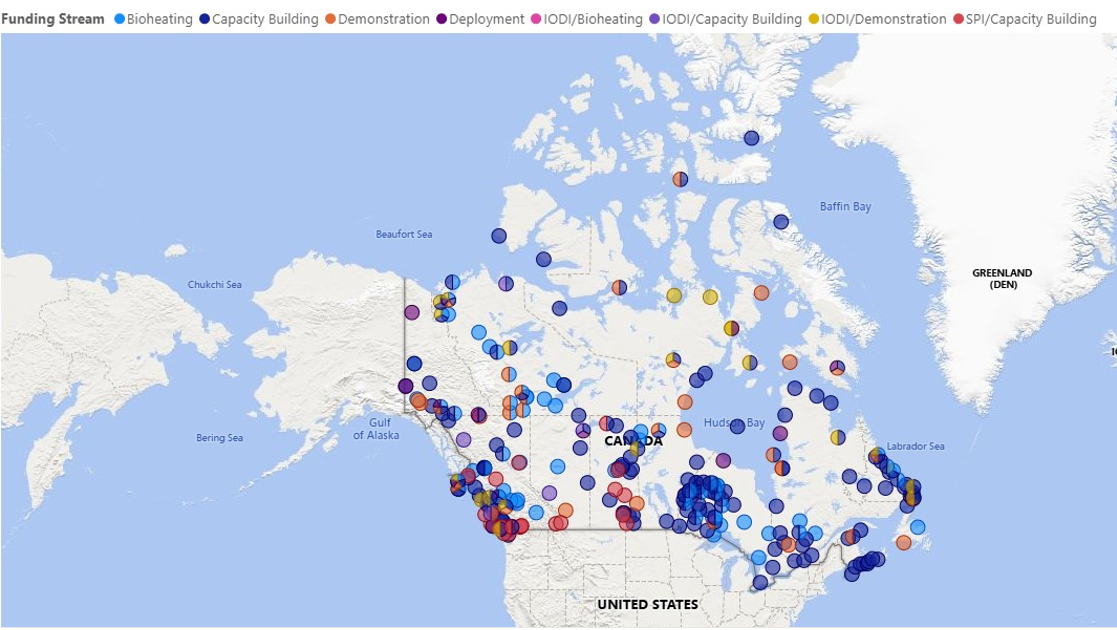
Figure 4: Locations of 240 agreements signed by March 2025
Long description
Figure 4 shows the location of every agreement signed CERRC by the end of March 2025. The figure uses colours to indicate what funding stream each agreement falls into. The different funding streams identified in this way include:
- Bioheating
- Capacity Building
- Demonstration
- Deployment
- IODI/Bioheating
- IODI/Capacity Building
- IODI/Demonstration
- SPI/Capacity Building
Overall, the projects show strong clustering across the lands of Canada. Some projects range as far north as Baffin Bay, but the total group of agreement locations is more concentrated geographically in the southwestern area of British Columbia, in eastern Manitoba, in northwestern Ontario, in Nova Scotia, and in Labrador.
Given the timing of the evaluation, our focus in this analysis was on targets expected to have been achieved as part of initial funding in 2017. Program extensions in 2019 and 2021 resulted in important changes to CERRC’s expected long-term outcomes (see Table 4).
Table 4: Targets for some of CERRC’s indicators were revised in 2021
| Outcome | Indicator | Original target (2017) | Revised target (2021) |
|---|---|---|---|
| Immediate outcome | |||
| Indigenous, remote, and rural communities have access to funds for planning and construction of inclusive renewable energy and energy efficiency projects. | # of projects funded | 65 to 95 projects by 2024 | 150 projects by 2024 |
| Intermediate outcome | |||
| Indigenous leadership and ownership of clean energy projects | % of funded projects that are Indigenous-led or Indigenous-partnered | 40% by 2024 | 90% by 2027 |
| # of job years generated by projects | 5,700 by 2030Footnote 4 | 15,500 by 2027 | |
| Ultimate outcome | |||
| Indigenous, remote, and rural communities have access to clean energy. | Litres of diesel avoided annually with clean energy | 30 million litres by 2024 | 35 million litres by 2030 |
| Megatonnes (MT) of GHG emissions avoided annually with clean energy | 0.138 MT by 2030 | 0.115 MT by 2030 | |
| Megawatts of renewable energy generation and heating capacity | 40 MW by 2025 | 67.2 MW by 2030 | |
| Power production from renewable energy systems annually | n/a | 100 GWh by 2030 | |
The evaluation was not otherwise provided with updated performance metrics or targets for immediate or intermediate outcomes by program stream. However, program managers emphasized that the expected timing for the achievement of these results has also been extended to account for external factors impacting delivery, including the significant delays brought by the COVID pandemic (see Box 3).
Box 3: COVID-19 disrupted CERRC’s delivery capacity and slowed project implementation
Program representatives reported that COVID-19 affected CERRC’s delivery capacity through prolonged community closures and global supply chain disruptions, delaying engagement, planning, and construction. Remote communities maintained fuel reserves but encountered logistical challenges and higher costs. Diesel infrastructure refurbishment was delayed by travel restrictions, labour shortages, and equipment supply issues, increasing risks to power reliability.
Clean energy projects were deprioritized as utilities focused on grid stability. Engagement slowed due to health measures, limited internet access, and cancelled in-person events. Many communities imposed travel bans that restricted access for external people to conduct construction and engagement activities. Global supply chain disruptions reduced availability of turbine and solar components, extending timelines. Canada’s clean technology sector faced liquidity issues, production halts, and layoffs, affecting projects in remote communities.
Results by component
The following sections present an analysis of achievement of outputs and immediate outcomes by program stream. For those outcomes that were measurable, data shows that CERRC funded-projects are encouraging the increased participation of Indigenous partners in renewable energy projects. As of March 2025, CERRC had signed a total of 240 grant and contribution agreements, exceeding both its original and revised targets. Of this total, 12 agreements were cancelled or pending cancellation as of March 2025. Reasons for cancellations included changes in community or partner priorities, capacity issues for the proponent, impacts of the COVID-19 pandemic, and challenges with contracting of work.
Progress towards targets is ongoing. The program expects diesel reductions to be realized only once a CERRC-funded project is completed and commissioned. These multi-year renewable energy projects have long lead times, and most are now still either under construction or in the early stages of operation. As a result, a full assessment of outcomes is not yet possible as some key results will only be known closer to the end of current funding (March 2027).
Bioheat
The Bioheat stream, led by the Canadian Forest Service (CFS), funds projects that deploy proven bioenergy technologies and support biomass supply chain business development in rural and remote locations. Heating is an energy demand generally distinct from the electricity demand funded by other CERRC streams. The Bioheat stream supports technologies with a very different kind of fuel source than other CERRC streams, including high-carbon organic material like forest-based biomass, residue from wood processing, dead trees from local wildfire sites, and manufactured wood pellets.
In 2017, the Bioheat stream set a target to fund approximately 25 to 40 projects to deploy proven bioenergy technologies and support biomass supply chain business development. The Bioheat stream has met this target. As of March 2025, the stream has signed 70 agreements for a total of $81.4 million. Of these agreements, 39 (56%) were for deployment projects with an additional 31 (44%) focused on capacity building. Almost all of the capacity building agreements were for project feasibility and pre-development work. Training, workshops, and supply chain development also received support.
As of 2017, the stream was expected to complete projects to install or retrofit new systems in 2 to 3 communities by the end of 2018-19, increasing to more than 40 projects by 2023-24. These targets were not met. No projects were completed by March 2019. However, the program’s data indicates that progress has since been made, with 18 agreements completed by March 2025. Beyond site preparation and construction, the Bioheat stream has supported communities to complete numerous activities intended to facilitate their energy transition (for example, visioning and planning activities, community and stakeholder engagement, engineering and technical studies, signing of financing agreements, and land transfers and acquisitions).
The evaluation’s file review found that projects completed by December 2023 included work to establish seven distinct new or expanded supply chains for biomass fuels. While program representatives indicated that nearly all funded projects contributed to strengthening existing supply chains, the evaluation was not provided with reliable data to further assess this result.
Deployment
The Deployment stream, led by the Renewable and Electrical Energy Division (REED) within NRCan’s Energy Systems Sector, supports the development of new renewable energy systems in off-grid remote communities and industrial operations across Canada. The stream is designed to reduce diesel reliance, lower energy costs, and promote sustainable economic development. By funding medium- to large-scale renewable energy projects, it aims to help overcome common barriers such as limited funding and technical expertise. These projects were expected to attract additional public and private investment, making clean energy more accessible. Technologies like solar, wind, hydro, and battery storage of energy are deployed to improve energy security, reduce fuel consumption, and build local technical capacity.
As of March 2025, the Deployment stream had funded 16 projects for a total of $81.7 million, contributing to the overall target for all CERRC streams of 150 funding agreements signed by 2024. When complete, these Deployment agreements are expected to result in a total new capacity of 29.9 MW, contributing to the overall targets for all streams of 40 MW by 2025 and 67.2 MW by 2030. This assumes that all projects are completed as planned. As of March 2025, three Deployment projects had been completed, delivering approximately 3.2 MW. Two agreements had been cancelled.
Demonstration
The Demonstration stream, led by the Energy Efficiency and Technology Sector’s Office of Energy Research and Development (OERD), funds demonstrations of innovative clean energy solutions (for example, hybrid wind-biomass power plant with battery storage) for rural and off-grid, remote Indigenous and non-Indigenous communities and off-grid industrial operations, building local capacity and providing a model for wider adoption of innovative alternatives to diesel. Over the long term, deeper reductions in northern diesel consumption will require new technologies. Demonstrations are required to bring these new technologies to market, and without the program’s support, remote communities may not be able to build their capacity, secure financing, and manage risks of implementing innovative technology.
In 2017, the Demonstration stream set a target to sign agreements by 2023 to fund approximately 15 demonstrations of innovative clean energy solutions. The Demonstration stream has met this target, having signed 38 agreements for a total of $99 million by March 2025. The program also transferred funds to IODI-managed projects by means of 29 additional agreements. Of these 67 total agreements, 23 (34%) supported demonstration and pilot projects, 39 (58%) were for project feasibility and pre-development work such as front-end engineering and design studies, and 5 (7%) supported capacity building activities such as training, networking, and community energy planning.
Although full results for the Demonstration Stream cannot be assessed at this time given the program is still underway, results available at the time of the evaluation show progress in moving new and innovative technologies closer to commercial readiness. While the program continuously monitors project advancement, several metrics can only be assessed at project completion, and the program’s data indicates that only 28 (42%) of the 67 signed agreements were completed as of March 2025. Most of these completed agreements were for capacity building, project feasibility, and pre-development. While critical for getting projects construction-ready, targets to advance technology readiness levels do not apply to these activities. As with the other CERRC streams, more comprehensive results data for the Demonstration Stream will be available in 2027.
Capacity building
The Capacity Building stream, also led by REED, supports local technical expertise and community capacity building activities that are foundational to ensure a successful transition to renewable energy technologies and to improve the energy knowledge base of off-grid communities. Activities supported by this stream include community energy planning, renewable resource assessments, strategic evaluations, technical training for clean energy systems, and the creation of educational tools to support energy literacy. In 2017, the Capacity Building stream set a target to initiate five energy literacy initiatives by 2018-19, with 15 capacity-building projects delivered by 2023. Both of these targets were met.
The Bioheat and Demonstration streams of CERRC also fund activities that the program classifies as capacity building. These include workshops and public events, research, feasibility studies, and other non-construction work.
More generally, there was a large increase in applications for capacity building projects over time and across all streams, especially after the transition to a continuous intake process under Wah-ila-toos. Some interviewees viewed it as an unintended outcome of the new process, suggesting that it created an incentive for communities to identify smaller, early pieces of projects in the interests of an earlier submission and funding agreement. In contrast, program representatives involved in the governance bodies considered it a shift in project management approach, emphasizing that supporting smaller agreements to complete early phases of a project can reduce project risk, enable iterative development and design improvements, and build capacity for future phases. Program data indicates that CERRC capacity building projects across all streams comprised 62% of the 240 CERRC funding agreements signed from FY 2018-19 to 2024-25. This percentage was close to 37% in 2018-19 and rose to over 75% in FY 2022-23 through 2024-25. Capacity building agreements represented 35% of all funding allocated by CERRC from 2018-19 to 2024-25 (approximately $110 million out of $313 million).
Evidence shows that the increase in capacity-building projects reflects the need to support Indigenous communities’ participation in clean energy initiatives and strengthen energy literacy through education and learning opportunities. Capacity limitations in Indigenous communities remain a significant barrier to accessing government funding. CERRC’s model requires communities to initiate proposals, but many lack technical expertise and resources, leading to reliance on third-party project management firms and discouraging participation. Community knowledge about energy resources and technologies is foundational for successful energy transition. CERRC-funded capacity building projects cover a wide range of activities, as illustrated in Figure 5.
Figure 5: Examples of CERRC Capacity-building Activities
Conferences / international fora
Awareness building
Workshops / events
Energy literacy
Community energy planning
Community organization and leadership development
Figure 5: Examples of CERRC Capacity-building Activities
Long description
Figure 5 arranges six examples of capacity building activities in a uniform spatial structure. The examples are:
- Conferences / International fora
- Awareness building
- Workshops / events
- Energy literacy
- Community energy planning
- Community organization and leadership development
Program representatives indicated that the increase in capacity-building projects within the Bioheat stream is also linked to funding constraints. By the end of 2024–25, contribution funding in this stream was fully allocated, leaving only grant funding available—primarily for 2026–27. This reduced the program’s ability to support larger capital projects aimed at lowering GHG emissions and led to a greater focus on capacity-building initiatives funded through grants.
Energy efficiency
Literature review evidence suggests that energy efficiency initiatives can play a critical role in supporting the achievement of CERRC’s long-term outcomes, including sustained reductions in diesel consumption and GHG emissions for a relatively lower cost than investing in larger infrastructure projects. Investments in energy efficiency improve health, affordability, comfort, and the environment. Even without complementary investments in clean energy generation, energy efficiency provides quantifiable benefits by reducing energy demand, fuel usage, and operation costs. By reducing the overall energy demand in communities, these investments can also reduce the amount and cost of clean energy projects needed to supply that energy.
While there was not a program stream specific to energy efficiency, in the program’s initial design EETS’ Office of Energy Efficiency was expected to provide expert technical advice on energy efficiency to initiatives by other federal departments, with a target to maintain at least two co-operative arrangements. Between 2018-19 to 2022-23, OEE was funded for one FTE and approximately $225,000 in O&M to support research projects and communications materials.
In 2017, CERRC also set a target of receiving 6 to 12 projects that include an energy efficiency component by 2023-24. Such measures could include, for example, retrofits of buildings, upgrades of equipment, and improved energy management technology. In interviews, program staff expressed that energy efficiency projects have faced obstacles due to the lack of dedicated grant and contribution funding for this CERRC activity.
During interviews, some proponents of CERRC-funded projects expressed the need for more support in this area. Document review and interviews also found that Indigenous groups and communities, especially in the North, are increasingly seeking investments in improved energy efficiency for buildings and homes. The 2021 Census data indicate approximately 16% of Indigenous Peoples live in housing that is in need of major repairs, including 26% of Inuit, 20% of First Nations Peoples, and 10% of Métis. In 2020, the Pembina Institute estimated that two-thirds of diesel use in remote communities was for heating buildings and homes. Interviewees for the evaluation emphasized that the benefits of new renewable energy projects can be hindered by the ongoing deterioration of basic infrastructure and housing.
Participation of Indigenous partners
Outcomes related to collaboration with Indigenous partners have been a priority for CERRC since inception, and across all streams CERRC has met the quantitative targets for related commitments. By 2024, 77% of funding agreements signed by CERRC were Indigenous-led or Indigenous-partnered, a result that greatly exceeds the program’s original target of 40%. As of March 2025, the percentage of Indigenous-led or Indigenous-partnered agreements was 86% (very close to the revised target of 90% by 2027). Another 6% of projects involved Indigenous Peoples as beneficiaries.
The United Nations Declaration on the Rights of Indigenous Peoples affirms Indigenous Peoples’ right to self-determination, including decision-making authority in political and economic decisions affecting them. In the context of energy, this means the right to develop, own, and control local energy systems. Some communities view a transition from fossil fuels to renewable energy as an important part of reconciliation. Accordingly, reconciliation considerations have become a foundational element of the CERRC program design. Evidence collected for the evaluation indicates that CERRC has incorporated Indigenous perspectives in program decision-making; contributed to increased autonomy of Indigenous communities; and contributed to economic reconciliation with Indigenous communities.
CERRC’s design does not include mechanisms to target communities that it perceives to have the greatest needs; it does not try to impose an energy transition on communities that are not ready. Rather, the program places the onus on communities to bring forward proposals as part of the application process. However, previous evaluations of federal programs have highlighted capacity challenges as an important barrier for communities in accessing funding. Results from a 2015 evaluation of CIRNAC’s ecoENERGY for Aboriginal and Northern Communities Program indicated that the lack of technical expertise in some communities may lead to a reliance on consultants, with many communities turning to third-party project management firms to complete project proposals. The evaluation further noted that “[t]his reality arguably discourages low-capacity communities from applying for projects”.
From inception in 2017, CERRC included existing flexibilities to support Indigenous communities, especially financial flexibilities such as:
- Advanced funding where a need has been identified.
- Honoraria to facilitate Indigenous Elders’ participation in projects.
In addition, the program made extensive use of the option to amend funding agreements as a way of supporting project proponents through challenges. As noted in Box 3, one of the major challenges in this regard was the COVID-19 pandemic which, among other impacts, increased costs and delayed project delivery. Thus, 53% of the funding agreements reviewed by the evaluation team (those completed by December 2023) underwent at least one amendment. For example:
- 44% of agreements were amended to extend project timelines.
- 23% of agreements were amended to increase NRCan’s contribution amount.
- Other common amendments to the funding agreements included changes to project tasks, to performance indicators, to financial management measures, and to reporting requirements.
Interviews and document review found that Indigenous perspectives have routinely had a direct influence on program decision-making and selection of projects for CERRC funding. From its outset, Indigenous subject matter experts were included in the RFP evaluation committees for project selection. Since the program’s re-orientation in 2021, CERRC projects are reviewed by the Wah-ila-toos Indigenous Council and endorsed by its Governing Board. Wah-ila-toos is designed to support the transition to clean energy in Indigenous and remote communities by streamlining and facilitating access to Government of Canada diesel reduction initiatives.
The focus on reconciliation provided new tools to support Indigenous communities in the transition away from diesel. For example, CERRC Terms and Conditions were amended in 2021 to enable grants as a funding mechanism. Expected benefits of grants included:
- Increased efficiency in completing low-risk activities.
- Greater autonomy for proponents in fund allocation.
- Reduced administrative effort for proponents, such as reduced reporting requirements.
The respective streams of CERRC adopted grants to fund low-risk, low-dollar agreements for capacity building, early project development, pilots, and smaller capital projects.
CERRC project proponents described improvements following the implementation of Wah-ila-toos:
- The single window approach simplified the application process for CERRC and other diesel reduction initiatives, improving program access.
- The continuous intake process was viewed as beneficial by proponents.
- Program officers provided valuable, direct guidance and support to project proponents throughout the application process.
Overall, NRCan staff find that the increased ongoing support is fostering stronger relationships with proponents, applicants, funders, other departments, and utilities.
Box 4: Use of GBA Plus to inform CERRC’s approach
Under the TB Directive on Results (2016), evaluations are to consider impacts of the program using gender-based analysis plus (GBA Plus). The “plus” refers to demographic/identity factors in addition to gender that can impact the performance, relevance and delivery of a program. Cultural norms, ethnicity, Indigenous status, communication styles, location, mobility, age and other factors all have the potential to affect these evaluation issues.
We found that such considerations have been integrated into CERRC processes, templates, and data collection tools. The great majority of the communities targeted by CERRC are Indigenous or have significant Indigenous populations. CERRC was designed to address inequities in cost, health, and environmental impacts experienced by those in off-grid locations due to reliance on fossil fuels for power and heat. It also takes into account the limited resources and opportunities typical of the targeted communities.
In the review of funding applications, extra merit is given to projects that are community-led and that target underrepresented groups for jobs, training opportunities, and other benefits created by the project. However, the data currently available for funded projects is otherwise limited in its usefulness for measuring program impacts on underrepresented groups. Templates for proponents to report on their projects ask them to report on job creation results for Indigenous individuals, women, and youth. However, the file review found that many project reports did not provide measurable results for these indicators.
Results for longer-term outcomes
In 2017, CERRC set a target to install a total of 40 MW of new renewable energy capacity across all streams by 2025. In 2021, the indicator was revised to 67.2 MW by 2030. Based on funding agreements signed as of March 2025, the program expects to meet the new target, with 67 MW in new capacity.
Also in 2017, the program set a target to achieve total reductions in diesel and propane use of 30 million litres per year by 2024. In 2021, this target was amended to 35 million litres by 2030. The program now estimates that CERRC-funded projects completed by March 2025 are displacing about 6 million litres per year. Considering all agreements that were signed as of March 2025, including projects still to be completed, the program expects a total annual reduction of about 28 million litres by 2027. While new agreements are still under consideration, funding for all CERRC streams is now almost entirely committed.
GHG reductions are unlikely to meet established targets. The program asked funding recipients to estimate GHG reductions resulting from the avoided diesel and propane consumption. However, due to inconsistencies in reporting on this indicator across program streams, the program has calculated a standardized GHG result based on expected diesel, home heating oil, or propane fuel reductions. For CERRC-funded projects completed by March 2025, the program estimates an annual reduction in GHG emissions of 0.016 MT. Considering agreements signed as of that date, including projects not yet completed, the program expects a total annual reduction of about 0.075 MT by 2027. This is 65% of the target of 0.115 MT by 2030.
External factors impeding results
Evidence points to barriers that are limiting the completion of renewable energy projects in rural and remote communities, especially where completion involves operationalizing new clean energy facilities. As noted, many delays in completing projects can be attributed to significant challenges introduced by the COVID-19 pandemic and exacerbated by the specific conditions in communities eligible for CERRC. However, there are also inherent challenges in constructing, installing, and maintaining renewable energy systems in remote communities, and these challenges have also impeded the progress of projects and the achievement of CERRC results. The file review found that it was common for CERRC funded projects to encounter challenges that are particular to, or especially acute in, the kinds of communities supported by the program. These include:
- Logistical challenges. Program documents and interviews indicate that shipment of supplies and equipment to remote communities is often weather dependent; some communities depend on barges in the summer, and some depend on ice roads in winter. When shipments miss these key transportation windows, projects can be delayed by months or years. This consideration also applies to ongoing O&M of installed systems, because it can take weeks for a qualified individual to arrive on site for maintenance or repairs.
- Technical challenges in integrating new equipment with existing diesel-based infrastructure. The literature review found that many renewable energy projects require high upfront investments, and the logistical challenges in rural and remote areas can add further to the cost. Bioheat projects generally are a lower upfront cost. Higher capital costs can discourage project implementation. Existing energy and housing infrastructure are also often not optimized for integrating new renewable energy sources. In these cases, additional investments are required to retrofit the systems, driving up the cost and complexity of the projects. Further, if the integration of clean energy components with existing diesel generators leads to a reduced diesel demand, this can reduce the effectiveness of the generators. While fuel use is reduced, the costs of ongoing maintenance remain.
- Uncertainty regarding the efficacy and reliability of renewable energy technologies. Document review found that diesel generators provide reliability and firm capacity, even in extreme weather conditions. By contrast, some types of renewable energy are challenged by uncertainty of supply, as these technologies depend on variable and sometimes unpredictable natural and meteorological phenomena. For example, solar energy is most abundant in summer, but remote communities in the North have extremely short days in the winter. Better technology to store energy for winter use is needed, and CERRC funded projects often include battery storage components. However, the technology is not yet adequate or cost-effective enough to fully replace diesel systems in these communities. Bioheat projects face another challenge, which is the uncertainty of market availability of wood pellets or other biomass fuel, for these generally very small communities.
- Challenges in negotiating power purchase agreements with utilities. Major projects to establish new infrastructure for clean energy technologies often involve negotiations between the project proponent and the relevant utilities company to connect the new system to the existing power grid. These companies’ mandates focus primarily on providing safe, reliable, and affordable energy to communities, which limits the steps they can take towards broader policy objectives like GHG emissions reductions, economic development, and reconciliation. In addition, the companies may lack technical expertise in renewable energy technologies. Perceived risks of lost revenues and new costs can discourage utilities from supporting CERRC-funded projects.
- Barriers to accessing capital. Literature notes that government funding currently provides the bulk of financing for renewable energy projects in remote communities. However, current funding levels are not adequate to meet the needs of these communities. Thus, accessing capital from private sources is critical to advancing clean energy initiatives. Recognizing this, while the program does not require that projects be cost-shared, in 2017 CERRC set targets for the project funding it expected to be leveraged to support the Deployment, Demonstration, and Bioheat streams. However, Indigenous communities face barriers when accessing capital. The Indian Act limits the ability of First Nations to use on-reserve assets as collateral and leverage their tax base, resources and assets to raise revenues. There is also a lack of familiarity and comfort among conventional financial lenders with Indigenous business models, such as Indigenous economic development corporations where the community is the sole shareholder. Remote communities are viewed by financial lenders as higher risk clients. Indigenous communities are also usually charged higher interest rates on loans.
In light of these challenges, CERRC was designed to provide four different funding streams to target different stages and technologies in the transition from fossil fuels to clean energy. However, as noted, the CERRC program underestimated the need for capacity building, and that has reduced or delayed results related to the program’s expected environmental benefits. While an important precursor to the construction of energy generation facilities, a capacity building project itself does not directly result in significant diesel or GHG reductions.
Need to revise theory of change and performance measurement framework
The CERRC logic model presented in the introduction of this report reflects the initial program design as it existed in 2017, with some adjustments for changes in 2021. However, the program has evolved rapidly over the course of the evaluation period, with subsequent decisions to streamline program delivery in the diesel reduction space and the creation of Wah-ila-toos. Particularly given these important changes in design and delivery, we examined the extent to which the program theory of change and performance measurement framework continue to support CERRC and the future direction of Wah-ila-toos.
Box 5: How is a logic model different from a theory of change?
While logic models tend to focus solely on describing a program’s intended results (the results chain), theories of change also explain how and why an intervention is expected to bring about its targeted sequence of results, with explicit consideration for the conditions and external factors that may influence the achievement of outcomes.
As program implementation progressed, CERRC’s delivery diverged from aspects of its original design. While the original design envisioned community- and industrial-scale GHG reduction projects, the funded portfolio became predominantly community-scale due to the higher volume of community proposals and challenges affecting several selected industrial projects, including cancellations prior to construction. Because the program’s indicators and targets were calibrated for a greater proportion of industrial-scale initiatives, this shift resulted in a misalignment between planned and actual results.
Over time, CERRC has also increased spending on capacity building initiatives across all relevant program streams such that capacity building now represents more than half of CERRC’s funded projects. This evolution has proceeded as a part of the program’s increasing emphasis on reconciliation under the Wah-ila-toos governance. While this pivot better addresses community needs, these projects generally have a more indirect and longer-term contribution to the expected results and outcomes in the logic model (i.e., job creation, reducing diesel use, and lowering GHG emissions). The evaluation did not find reliable data to measure the extent to which the outcomes of capacity building projects have lead to proposals for new construction projects.
In 2021, the renewal of program funding under the Strengthened Climate Plan articulated more clearly the social, economic and particularly the reconciliation outcomes suggested in CERRC’s original design, as well as the indicators that would be used to measure progress. However, formal outcomes as committed in the foundational documents remain principally linked to environmental results and do not necessarily reflect the perspectives of the Indigenous communities that the program is intended to benefit (see Box 5). The evaluation identified a need for the program to formally articulate a new theory of change and performance measurement framework aligned with its current orientation. This could also help resolve the tension between reconciliation-focused efforts to ease administrative burden on targeted communities and the need to maintain reporting processes to inform the current performance measures.
In the summer of 2025, the evaluation team was told that work was underway to complete the adjustment of CERRC’s design to a more reconciliation-focused administration under Wah-ila-toos, including the development of a new set of performance indicators through a contracted Indigenous consultant. However, program managers have since clarified that this work is intended as a policy exercise to inform future Indigenous programming and will not be applied to revise CERRC’s indicators, given the program’s upcoming sunset in 2027.
Box 6: Reconciliation and gathering information
“Reconciliation requires gathering meaningful information from an Indigenous moral authority’s perspective that decidedly shifts emphasis to outcomes that are germane to community, amplifies and focuses on its strengths, and offers a simple and reasonably broad way to tell a sustainable development story.”
Source: Scott, Kimberly (2020). Reconciliation and Energy Democracy, Canadian Journal of Program Evaluation.
What we found: Performance – design and delivery
We examined the extent to which the design and delivery of the CERRC program supported the achievement of program objectives. Our analysis considered the complex and evolving context of the program, and included a review of the documented use of resources allocated to and spent by the program as well as information about the effectiveness and efficiency of the program’s design and delivery as described in interviews and program documents.
Efficiency of CERRC governance, resources and processes
The findings in previous section demonstrate several shortfalls in CERRC’s performance relative to original expectations and targets, in a context of evolving governance, priorities and pandemic-related delays. The evaluation’s findings about the design and delivery of the program reflect the challenges involved.
The CERRC program used less than the allocated funding resources
To date, the program has spent fewer resources than were available. CERRC spent a total of $313.5 million out of a planned budget of $383.1 million during the period covered by the evaluation (2018-2019 to 2024-25), which represents around 82% of its allocated funds at around 80% of the program’s lifecycle, as shown in Figure 6.
Figure 6: Percentage of CERRC budget spent from 2018-19 to 2024-25
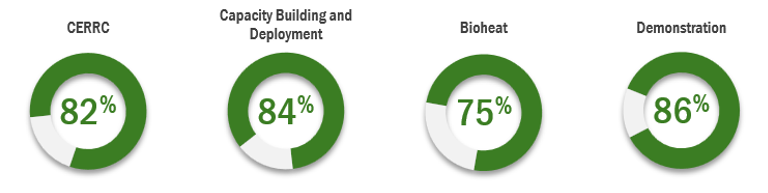
Figure 6: Percentage of CERRC budget spent from 2018-19 to 2024-25
Long description
Figure 6 depicts the percentages of available budgets actually spent by each CERRC stream, from 2018-19 to 2024-25, as ring charts. The percentages are:
- CERRC overall – 82%
- Capacity Building and Deployment – 84%
- Bioheat – 75%
- Demonstration – 86%
Figure 7 presents the total variance between planned and actual spending by program stream. Overall, to 2025-26, the CERRC program had spent 77% of its planned Vote 1 budget (operating spending), and 82% of its Vote 10 (G&C investments).
Figure 7: Planned vs actual spending, 2018-19 to 2024-25
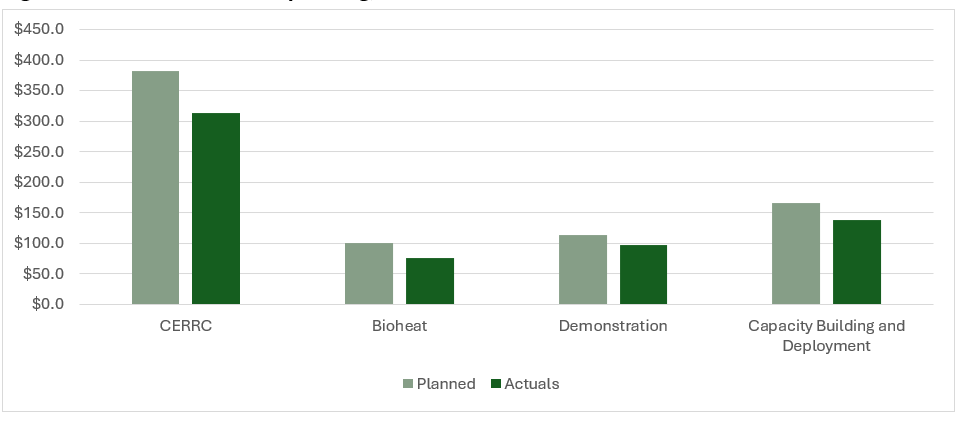
Figure 7: Planned vs actual spending, 2018-19 to 2024-25
Long description
Figure 7 uses bar charts to compare the planned spending of each CERRC stream with its actual spending, from 2018-19 to 2024-25. The amounts are:
- CERRC overall - $382.7 million planned spending, and $313.2 million actual spending
- Bioheat - $101.0 million planned spending, and $75.7 million actual spending
- Demonstration - $113.5 million planned spending, and $97.8 million actual spending
- Capacity Building and Deployment - $166.0 planned spending, and $138.9 actual spending.
Whereas underspending of G&C allocations is likely attributable to project delays, the difference in planned versus allocated operating costs is mostly explained by less than full use of allocated O&M (see Figure 8). While CERRC spent roughly 16% ($3M) more than expected on salaries from 2018-19 to 2024-25, it only spent an estimated 36% of its allocated O&M ($6M of $17M allocated).
Figure 8: Planned vs actual operating expenditures, 2018-19 to 2024-25Footnote 5
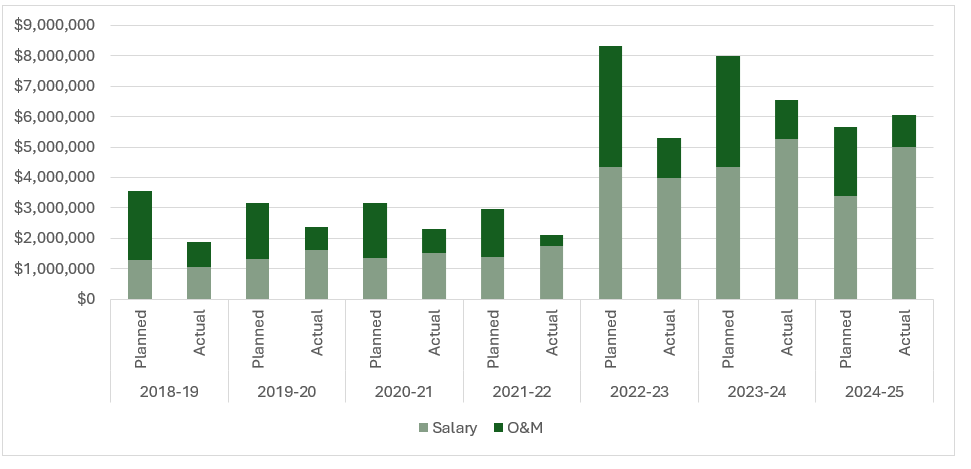
Figure 8: Planned vs actual operating expenditures, 2018-19 to 2024-25
Long description
Figure 8 compares the planned and actual annual operating expenditures for the CERRC program overall, from 2018-19 to 2024-25. The figure separates out the salary spending and operations and maintenance (O&M) spending. The amounts are:
| Fiscal Year | Planned O&M ($) | Actual O&M ($) | Planned Salary ($) | Actual Salary ($) |
|---|---|---|---|---|
| 2018–19 | 2,281,906 | 814,160 | 1,285,967 | 1,062,883 |
| 2019–20 | 1,833,204 | 741,035 | 1,328,248 | 1,613,937 |
| 2020–21 | 1,784,595 | 762,752 | 1,363,969 | 1,531,219 |
| 2021–22 | 1,560,568 | 357,450 | 1,391,780 | 1,735,087 |
| 2022–23 | 3,973,477 | 1,326,432 | 4,335,477 | 3,972,075 |
| 2023–24 | 3,667,928 | 1,302,605 | 4,329,183 | 5,258,919 |
| 2024–25 | 2,279,274 | 1,026,341 | 3,392,881 | 5,018,452 |
This does not necessarily mean that CERRC was inefficient in its use of O&M. All program streams had a similar administrative ratio (operating costs vs G&C spending), with a ratio for the whole program of roughly 11% (Figure 9). On average, CERRC spent $81.2K to deliver every million spent in G&C.
Figure 9: Administrative costs as a percentage of total spending
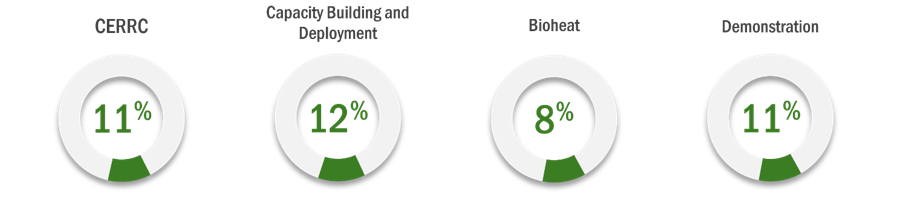
Figure 9: Administrative costs as a percentage of total spending
Long description
Figure 9 depicts the administrative costs of each CERRC stream as a percentage of the total spending, from 2018-19 to 2024-25, as ring charts. The percentages are:
- CERRC overall – 11%
- Capacity Building and Deployment – 12%
- Bioheat – 8%
- Demonstration – 11%
The CERRC program was initially allocated 17 new FTEs in each of the funded years. These were to be leveraged with existing resources in the funded NRCan sectors to maximise efficiencies in program delivery, particularly in engagement with Indigenous communities. In 2022, CERRC received new FTEs for a total of 45, 14 of which were allocated to support project delivery under the larger Wah-ila-toos initiative. The new human resources were to support continued assessment and administration of CERRC funded projects, as well as increased staff involvement in project development expected under Wah-ila-toos. While specific staffing levels varied by year, program data indicates that CERRC has made full use of these resources.
There are challenges in the efficiency of CERRC governance
Since its start, operational decision-making authority for the CERRC program has rested with NRCan. CERRC involves three NRCan sectors, each with their own operational environments. In addition, the Demonstration stream’s Terms and Conditions for its G&Cs differ from those of Deployment and Bioheat. Prior to the 2021 re-orientation of the program, intersectoral communication and collaboration was largely informal. For the purposes of coordination with other federal programs in the transition away from diesel, NRCan co-led the Interdepartmental Working Group on Federal Coordination to Reduce Diesel Reliance of Remote Communities with CIRNAC, and its associated DG Committee.
In 2021, CERRC began to be integrated into a new governance structure for increased coordination with other federal programming, while retaining the existing decision-making authorities. Key changes relevant to the administration of CERRC funding agreements included the creation of:
- Indigenous Council: The Council was established as a group of First Nation, Inuit, and Métis leaders providing strategic guidance and support on program design and delivery, engagement strategy, and Indigenous Climate Leadership. Part of the Council’s role is to provide direction and leadership on meaningful engagement with Indigenous Peoples on a strategy and action plan for the transition of diesel-reliant communities, as well as providing recommendations on project review protocols, project prioritization criteria, and allocation guidelines. With the support of an independent Indigenous consultant, the Indigenous Council members were selected on the basis of their knowledge and leadership in supporting clean energy projects within Indigenous communities.
- Governing Board: The Board is comprised of federal government and Indigenous Council representatives, whose CERRC-related activities include:
- providing endorsement of recommended program implementation instruments, for example, project review protocols, project prioritization and allocation guidelines; and
- reviewing and endorsing projects for final approval by the appropriate NRCan delegated signing authority.
- Wah-ila-toos Administrative Unit: NRCan’s communication function for horizontal coordination across sectors was included under the Wah-ila-toos Administrative Unit.
The evaluation found that this new governance structure has had a positive effect within CERRC on increasing stakeholder engagement, and it has improved Indigenous involvement and leadership in projects. However, the new processes have created some confusion regarding roles and responsibilities. While program managers in the Wah-ila-too Administrative Unit were clear that the Governing Board – not the Indigenous Council – manages the project endorsement process, some interviewees within the CERRC program expressed concern that the Indigenous Council’s role to date has centered more on reviewing individual projects rather than defining broader objectives and shaping program design. They perceive this approach to have added governance layers without fully drawing on the Council’s strategic capacity to inform policy, program design, and delivery.
Interviewees also identified uncertainty among program staff regarding the roles and responsibilities of the Administrative Unit, Indigenous Council and Governing Board in relation to engagement and communication. Specifically, they perceived a lack of clear processes and guidelines for how the Council interacts with program staff, participates in technical project reviews, and the expectations for presentations to the Council.
Overall, interviewees agreed that roles of the Wah-ila-toos Administrative Unit relative to CERRC are clearly defined, but there remains a need for better coordination within NRCan. Interviews for the evaluation highlighted ongoing inefficiencies due to the lack of centralization in CERRC’s management and delivery, with three separate sectors delivering a single program.
There are challenges in the efficiency of CERRC processes
The evaluation team analysed the intake processes before and after 2021, overall data demonstrates an intentional change in process to connect with applicants at an earlier stage in project development. Together with the program’s governance and new departmental approval processes, federal involvement in the project review and approval process timelines were extended by approximately eight to twelve months.
The original design of CERRC (as presented in foundational documents) included a focus on industrial sites. Following early engagement, CERRC received clear feedback that the greatest need was instead with communities. In response, the program pivoted to prioritize community and Indigenous-led projects.
CERRC initially launched in 2018 using a competitive request-for-proposal (RFP) process with set deadlines for project submissions. The first intake (Round 1) focused on clean energy projects—Deployment, Demonstration, and Bioheat—and a separate intake for Capacity Building projects. A second intake (Round 2) followed in early 2019. Across these two rounds, the program was oversubscribed, with more than $1 billion in federal funding requested, leading to recapitalization.
Over time, CERRC’s intake process evolved. With the introduction of Wah-ila-toos in 2021, a “single-window” approach was established to coordinate proposal intake across multiple programs, including CIRNAC’s Northern REACHE and NRCan’s Indigenous Off-Diesel Initiative (IODI). Streamlining and increasing accessibility to federal diesel reduction programs, including CERRC, are seen as important contributions to reconciliation. Evidence collected by the evaluation team from interviews and document review indicates that since the creation of Wah-ila-toos, program officers are providing more responsive support to funding applicants and project proponents. This includes making more effort to explain funding requirements and taking the additional time required to implement the new governance structure and application process under Wah-ila-toos. This added to the time required for project approvals.
Program representatives involved in the application process perceived the new “single-window” or “no-wrong-door” continuous intake model to be less formal than the previous RFP approach. Project ideas now enter the program through various channels and are routed to the appropriate regional table. If a project appears eligible, a team member follows up to clarify details with applicants through several iterations until the application is ready. This model involves end-to-end handling: from intake, eligibility assessment, and application support to internal governance review and final endorsement. This results in a more complex process requiring significant resources, especially when determining whether to use grants or contributions.
In September 2023, the Wah-ila-toos Governing Board reduced its project review threshold from $1 million to $500,000. This change increased the number of projects requiring Board review and thereby added to the time required for project approvals.
Evidence highlights both strengths and limitations in the program’s implementation and delivery. The shift toward community-led initiatives, supported by simplified requirements and increased grant funding, has contributed to enhanced capacity-building and improved stakeholder engagement. While data indicates that it now takes longer to reach a funding decision, program managers described CERRC’s design as “intentionally community-paced”, with delivery timelines driven by community readiness, local capacity, and respect for self-determined engagement. However, this approach has also introduced additional operational requirements, particularly in maintaining ongoing support and managing multi-stage engagement processes, for example, evaluating funding applications; managing and attending regional tables; and engaging directly with communities, which may require more direct oversight than comparable initiatives. Key informants reported that the updated process has also increased the time that program staff spend in meetings. Quantitative data about time spent by staff to process and evaluate funding applications was not available.
CERRC has learned lessons about design and delivery that should be shared
Funding for CERRC is currently set to expire at the end of March 2027, and the majority of available funding had already been committed by March 2025. Given this, there may be limited opportunity or benefit to enacting further design changes to increase efficiency. However, lessons learned from CERRC can be used to inform any existing or potential future programming with related objectives.
Proponents identified some challenges with CERRC administration that have persisted after the changes under Wah-ila-toos. Although some reporting requirements have been streamlined for proponents with demonstrated management experience, interviews revealed that the process continues to be a challenge for small communities with limited capacity. Key informants noted that many of these communities depend on external expertise to navigate the requirements. Quarterly financial reports are perceived by proponents as particularly stressful or challenging, and greater flexibility is desired. Requirements to track in-kind contributions to a project have proven to be difficult, and in some cases resulted in removing these contributions from a final project report. However, the program has already reviewed its approaches to calibrate requirements between best practices for Indigenous recipients and federal directives or guidance on G&Cs. Program managers indicated that reducing process controls further could create significant risks to the department. For example, reducing reporting requirements for proponents creates challenges for the collection of robust program performance data.
According to evidence collected as part of the document review, Indigenous partners have suggested more could also be done to reduce the administrative cost for project proponents arising from differences in requirements and processes across the various programs offered by federal, provincial, territorial, local, and private organizations. This could include, for example, increasing consistency across program applications, processes, and reporting requirements, and streamlining funding arrangements to use similar mechanisms and complete requirements through a single agreement.
Challenges also were found in the funding application process. Some proponents reported experiencing prolonged periods without updates on their applications. Evidence indicates that some of these delays can be attributed to limitations on what program officials were able to disclose to recipients before internal process requirements were completed.
There are additional areas for improvement, as the program continues to adjust design and delivery to the new reconciliation-first mandate. Key informants also reported that increased representation of Indigenous Peoples in CERRC's program management and delivery could enhance support for reconciliation. Similarly, program staff have expressed a desire for more training and learning opportunities to improve Indigenous cultural competencies and knowledge of Indigenous histories and cultures.
In response to challenges identified, one or more interviewees made the following suggestions for improvement:
- Enhance representation by strengthening the presence of teams in regional locations.
- Create mechanisms for sharing lessons learned between project teams.
- Streamline cross-sectoral management by simplifying structures, clarifying roles and decision-making processes, and reducing senior-level meetings to improve operational coherence.
Document review supports the need to share information, lessons learned, and best practices from both successful and unsuccessful renewable energy projects. In 2024, a report from the Wah-ila-toos Indigenous Council recommended creating a broader range of outreach strategies, information sharing sessions, and clean energy education for communities at early stages. This would include reaching out to communities that have not yet started their energy transition in order to cultivate and support community-based “energy champions”. NRCan already supports efforts to share information among project proponents and other interested communities, as well as supporting work by non-profit organizations such as Indigenous Clean Energy and the Pembina Institute in this area. To do so efficiently, the Wah-ila-toos Indigenous Council also suggested that NRCan could consider taking fuller advantage of events where people are already gathering to host federal government workshops and webinars about federal funding opportunities.
Conclusion
The CERRC program operates within a policy context shaped by Canada’s climate commitments and reconciliation objectives. Transitioning remote and northern communities away from diesel remains necessary but complex, given geographic, technical, and financial challenges. While the program has improved accessibility and Indigenous leadership in the clean energy projects it funded, its initial design underestimated the scale of local capacity-building needs and the long lead times for infrastructure projects, particularly in remote communities. As a consequence, many expectations set in 2017 were not realistic in light of Northern and remote community realities and the program’s evolution to respond to those realities. Over time, the program has made changes to address these challenges, but continued alignment with climate and reconciliation goals will require sustained effort and planning to ensure long-term success.
The ongoing evolution of the program
Over the course of the evaluation period, CERRC’s governance and delivery evolved from its original design, acquiring additional funding over an extended period of time. In parallel, the program:
- moved away from GHG reduction projects on industrial sites, focussing more on community-scale initiatives and capacity building.
- moved away from a call-for-applications intake model to a continuous intake, also establishing a “single window” intake approach for all federal diesel reduction programs.
- acquired the authorities to sign grant agreements for low-risk, low-cost activities, with reduced administrative cost for the funding recipients.
This evolution reflects reconciliation as an operational driver for CERRC, but direct contributions to expected outcomes such as diesel displacement have been delayed. Targets such as displacing 30 million litres of fossil fuels annually by 2024, resulting in 0.138 MT of GHG, were unrealistic given project complexity, the need for capacity building, supply chain constraints, and pandemic disruptions.
The results to date raise questions about the alignment between CERRC’s current work and the formally established performance targets, and how some activities have contributed to long-term outcomes such as diesel reduction and job creation. In addition, it is apparent that the current results framework does not adequately account for important co-benefits of the funded projects such as improved air and water quality, economic development, and support for Indigenous leadership and community energy independence. The program would benefit from a revised theory of change and performance measurement framework that is better aligned with a focus on reconciliation.
Governance of the CERRC program has evolved from an NRCan-led structure with intersectoral coordination to a multi-layered structure under Wah-ila-toos, establishing the Indigenous Council, the Governing Board, and the Wah-ila-toos Administrative Unit starting in 2021. While these changes have generally improved stakeholder engagement and Indigenous leadership, they have also created some operational inefficiencies and ambiguity in roles and responsibilities. If a continuation of program funding is considered, there would be a need to review the governance structure.
Performance summary
All streams met or were on track to achieve outputs in signing contributions and grant agreements. Despite progress in the program’s output of funding, capacity limitations remain a major barrier for Indigenous communities. Many lack technical expertise and resources to initiate proposals, leading to reliance on third-party project management firms and discouraging participation by communities with more limited capacity. Strengthening local knowledge and reducing these barriers is critical to achieving equitable energy transitions.
Over time, the percentage of funding agreements that focussed on needed capacity building activities increased, including support for activities such as community energy planning, technical training, resource assessments, feasibility studies, and business development. This growing focus on capacity-building activities also may partly reflect unintended consequences of program changes that incentivized the development of lower-cost, early-stage proposals rather than higher-cost, longer-term projects involving multiple funding sources and levels of government.
While CERRC achieved strong results in capacity building and Indigenous participation, it has not yet met targets for renewable energy installations and diesel reductions. By March 2025, completed projects were displacing about 6 million litres of diesel annually, and data suggests that they will continue to fall short of the target of 35 million litres by 2030. Even with pending projects, the program anticipates reaching only 28 million litres by 2027. Correspondingly, GHG reductions will also likely be less than expected.
Ultimately, Northern and remote communities face unique geographic, economic, and infrastructure challenges, and lasting reductions in diesel use will depend on programs that address these realities by supporting local capacity, operations, maintenance, and full life-cycle planning.
Appendix A: Evaluation Team
Michel Gould, Chief Audit and Evaluation Executive
Stephanie Kalt, Director of Evaluation
Marc Riopel, Evaluation Manager
Eric Albert, Senior Evaluator
Mark Kepkay, Senior Evaluator
Vanessa Sandoval Romero, Evaluator
With additional AEB contributions from: Michelle Brazil, Angie Yong, Hannah Beaulieu, and Raoul Tamekou Tsowa