
Audit and Evaluation Branches
Natural Resources Canada and Statistics Canada
June 11, 2025
On this page
- List of acronyms and abbreviations
- Executive summary
- Purpose of the evaluation
- Background
- Evaluation methodology
- Relevance
- Performance – Effectiveness
- Performance – Efficiency and economy
- Conclusion
- Appendix A: Evaluation matrix
- Appendix B: Crosswalk of evaluation coverage versus CESD performance audit
- Appendix C: Evaluation team
List of acronyms and abbreviations
- CESD
- Commissioner of the Environment and Sustainable Development
- CHRI
- Charging and Hydrogen Refuelling Infrastructure
- CIB
- Canada Infrastructure Bank
- CVP
- Commercial Vehicle Pilots Program
- EDI
- Equity, Diversity and Inclusion
- EV
- Electrical Vehicle
- EVAFIDI
- Electric Vehicle & Alternative Fuel Infrastructure Deployment Initiative
- FAA
- Financial Administration Act
- GBA+
- Gender-Based Analysis Plus
- H2
- Hydrogen Gas
- IAE
- International Energy Agency
- IAEP
- Integrated Audit and Evaluation Plan
- MURB
- Multi-Unit Residential Buildings
- NEVI
- National Electric Vehicle Infrastructure
- NRCan
- Natural Resources Canada
- O&M
- Operations and Maintenance
- OAG
- Office of the Auditor General of Canada
- OGDs
- Other Government Departments
- PCF
- Pan-Canadian Framework
- RFPs
- Requests for Proposals
- UK
- United Kingdom
- US
- United States
- ZEV
- Zero-emission Vehicles
- ZEVI
- Zero Emission Vehicle Infrastructure
- ZEVIP
- Zero Emission Vehicle Infrastructure Program
Executive summary
This report presents the findings, conclusions, and recommendations from the Evaluation of the Zero Emission Vehicle Infrastructure Program (ZEVIP) led by the Audit and Evaluation Branch of Natural Resources Canada (NRCan) with the support of Goss Gilroy Inc.
This evaluation was approved in NRCan’s 2022-23 to 2026-27 Integrated Audit and Evaluation Plan. At the time of planning for the ZEVIP evaluation, a performance audit of the program was being conducted by the Commissioner of the Environment and Sustainable Development (CESD) as part of the Office of the Auditor General of Canada (OAG). In order not to duplicate what was being covered in the performance audit, evaluation objectives, scope, and questions were revised. The evaluation methodology followed the Treasury Board Policy on Results (2016) and consisted of surveys, a review of the CESD/OAG Performance Audit report, document review, an environmental scan, an international comparative review and case studies. The evaluation period was 2019-20 to 2023-24.
ZEVIP provides funding towards the deployment of electric vehicle (EV) chargers and hydrogen refuelling stations across Canada. The program enters into contribution agreements with selected recipients for the installation of infrastructure in public places, on-streets, at workplaces, at multi-unit residential buildings and to support vehicle fleets. ZEVIP’s goal is to increase charging opportunities in communities where Canadians live, work, travel and play.
What the evaluation found
Relevance
Based on all lines of evidence, and aligned with the findings of the CESD, the evaluation found that ZEVIP is relevant and there is a continued need for ZEV infrastructure programming. It responds to continuing needs for EV charging infrastructure across Canada.
There is a legitimate and necessary role for the federal government in the area of ZEV infrastructure. Findings suggest that the federal government's involvement in the development and funding of EV infrastructure is necessary to address market failures, support the transition to zero-emission vehicles, leverage private investment, and ensure transparency and accountability in achieving program goals.
The program is aligned with climate change priorities at multiple jurisdictional levels, including the United Nations’ Sustainable Development Goals. Federal, provincial and municipal governments have commitments to reduce green house gas emissions, particularly to reduce emissions from transportation. The program also aligns with NRCan’s mandate to advance clean energy solutions.
Effectiveness
The evaluation found that the program is contributing to an increased availability of ZEV charging and refuelling opportunities across Canada. In doing so, it contributes to the national zero emission vehicle strategy. The program is progressing to its target number of EV charger installations, and ZEVIP support is increasing the capacity of proponents to undertake projects. However, it is too early to tell if increased usage of EV infrastructure is occurring, and hydrogen projects have been more difficult to implement.
The program has considered equity, diversity and inclusion goals and has taken steps to better serve Indigenous organizations and communities. Its requirement for a Diversity and Inclusion Plan and subsequent reporting is clear to project proponents. The program started to take a strategic approach to defining all underserved areas by mapping charging infrastructure gaps and evaluating projects in the next call for proposals based on their location. There is an opportunity to better promote physical accessibility of the infrastructure the program funds.
External factors, such as supply chain issues, lack of equipment availability, delays related to infrastructure problems, the reliability of systems, and administrative setbacks, were identified as the most significant factors that influenced the achievement of expected outcomes.
Unintended outcomes identified as a result of ZEVIP were positive, including the development of new partnerships and networks by proponents, increased awareness of EVs in communities, and the generation of additional projects.
Gaps and unmet needs still exist at the ecosystem level in the areas of the number of charging stations needed across Canada, challenges associated with multi-unit residential buildings and the production and distribution of hydrogen which require additional inputs beyond just ZEVIP.
Efficiency
The majority of funding recipients were satisfied with ZEVIP processes. However, there are opportunities for improved efficiency in the delivery of ZEVIP including increasing timely insight to program opportunities and reducing the time taken to review and approve applications. The CESD reported that application processing times were long, and the program did not meet its service standards in this area. In addition, the evaluation found that the program needs to increase the transparency of the assessment criteria.
The evaluation found that the program is operating efficiently. Resources have been mostly appropriate to produce the intended outputs and outcomes for the implementation of ZEVIP and actual overhead costs as a proportion of committed contribution dollars have decreased over time.
Also, the ZEVIP has learned from other evaluations and assessments and is implementing continuous improvement efforts. Its model of partnering under a Memoranda of Understanding for shared investment in EV charging infrastructure is a leading practice, and it should continue to seek these types of partnerships.
Recommendations and management response and action plan
In light of these findings, the following table presents the evaluation’s recommendations, along with the management response and action plan.
| Recommendation | Management response and action plan |
|---|---|
|
Management agrees. In response to Recommendation #1, NRCan commits to prioritizing ZEVIP project applications that are located in underserved areas. NRCan views underserved areas as locations where there is an identified gap/need for additional EV charging infrastructure. To inform ZEVIP’s July 2024 request for proposals (RFP), NRCan took action to advance its understanding of underserved areas through the development of infrastructure planning maps for corridors and communities. For the 2024 RFP, NRCan made the corridor planning map publicly available to inform the public and potential applicants of these underserved areas. Before the launch of future ZEVIP RFPs, NRCan will complete a review of the effectiveness of efforts to date regarding EV charging in underserved areas. As done with the 2024 RFPs, NRCan will continue to encourage applicants to pursue inclusion, diversity, equity and accessibility (IDEA) plans. Additional funding will also continue to be made available to Indigenous recipients to reduce financial barriers. Position responsible: Transportation and Fuel Decarbonization Programs Branch Executive Director Timing: Notwithstanding factors beyond our control, new actions complete by November 2026. |
|
Management agrees. In response to Recommendation #2, NRCan commits to continue to provide advanced public notice of future RFP timing through the ZEVIP website, and will build on these efforts to increase transparency by making additional information available regarding future RFP opportunities. The Program will work closely with Communications and Portfolio Sector (CPS) on a communication strategy to announce future RFPs. Information will be shared on the ZEVIP website home page, in social media posts, and through stakeholder engagement forums. Greater transparency of RFP timing will be achieved by providing the approximate timing of planned RFPs on the ZEVIP website at least three months in advance, and the RFP launch date will be announced at least three weeks in advance. At the time of announcing the launch date, NRCan will also provide an outline of the mandatory and merit criteria evaluation categories and general scoring values on the ZEVIP website. A description of the mandatory and merit criteria, with the associated scoring weights, will be posted on the ZEVIP website and provided in the RFP application guide that is made available to applicants by request. Position responsible: Transportation and Fuel Decarbonization Programs Branch Executive Director Timing: Notwithstanding factors beyond our control, the communications strategy will be finalized by November 2026. |
|
Management agrees. In response to Recommendation #3, NRCan commits to seek opportunities to develop ZEV infrastructure related partnerships with provinces and territories, similar to those currently established with British Columbia and Nova Scotia. Position responsible: Transportation and Fuel Decarbonization Programs Branch Executive Director Timing: Ongoing until the end of program authority (2027) or when funding is no longer available. |
Purpose of the evaluation
The Zero Emissions Vehicle Infrastructure Program (ZEVIP) falls under Natural Resources Canada’s (NRCan’s) Lower Carbon Transportation Program in NRCan’s Program Inventory and is aligned with NRCan’s Core Responsibility 2: Innovative and Sustainable Natural Resources Development. An evaluation of ZEVIP was planned in NRCan’s 2022-23 to 2026-27 Integrated Audit and Evaluation Plan (IAEP).
At the time of planning for the ZEVIP evaluation, a performance audit of the program was being conducted by the Commissioner of the Environment and Sustainable Development (CESD) as part of the Office of the Auditor General of Canada (OAG). The performance audit concluded on September 18, 2023, was publicly posted in November 2023, and covered the same time period as planned for in the ZEVIP evaluation (January 2019 to June 2023Footnote 1). The performance audit addressed:
- Whether the department designed ZEVIP to enable Canadians living in urban, rural, remote, or Indigenous communities to have access to reliable charging stations; and,
- Whether the department was on track to achieve program targets and intended outcomes by supporting the deployment of accessible and reliable electric vehicle charging ports for all light-duty electric vehicles throughout Canada.
In order not to duplicate what was being covered in the performance audit, evaluation objectives, scope, and questions were revised. The resulting evaluation assessed the relevance and performance (i.e., effectiveness, efficiency) of ZEVIP and considered lessons learned and best/leading practices related to program design and delivery.
The evaluation covered the Department’s direct program spending ($242.2M actual) on ZEVIP over the period of 2019-20 through 2023-24 and was conducted to comply with the Financial Administration Act (FAA) and the Treasury Board (TB) Policy on Results.
Background
Canada’s transportation sector accounts for approximately 25% of Canada’s greenhouse gas (GHG) emissions - making it the second largest emitting sector in the country. As part of the Government’s action on climate change and to address this challenge, the Government of Canada worked with provincial and territorial governments and industry stakeholders to develop a national Zero-Emission Vehicle Strategy under the Pan-Canadian Framework (PCF) on Clean Growth and Climate Change. The Strategy laid the foundation for coordinated actions at all levels of government and the private sector to put more zero-emission vehicles (ZEV) on the road. Thus, the government targets are to ensure every community in Canada has access to a stronger and cleaner transportation system through hybrid and electric vehicles.
Battery electric vehicles and plug-in hybrid electric vehicles need to charge via a charger to replenish the battery; fuel-cell electric vehicles need to be refuelled with hydrogen. There are two main consumer barriers that have been identified as limiting the deployment of ZEVs among consumers: (1) the fear that a vehicle has insufficient range to reach its destination, and (2) the perceived lack or insufficiency of different types of ZEV charging and refuelling stations.
ZEVIP resulted from an extensive consultation with more than 200 key experts, including representatives from governments, industry, NGOs, and academia. The consultation revealed a lack of public awareness of infrastructure and concluded that more visible and localized charging options were needed. ZEV infrastructure was identified as a key “enabling” measure to help accelerate the adoption of ZEVs in Canada.
Delivery mechanism
ZEVIP is delivered through cost-sharing contribution agreements for eligible projects that are selected through a continuous intake and annual Requests for Proposals (RFPs). The program enters into contribution agreements with selected recipients for the installation of infrastructure in public places, on-streets, at workplaces, at multi-unit residential buildings and to support vehicle fleets. ZEVIP’s goal is to increase charging opportunities in communities where Canadians live, work, travel and play. The program can also give preference to projects that: are closing public charging gaps or offering charging opportunities in underserved areas; address barriers that in the department’s view impede the market up-take of lower-carbon transportation options; and come from Indigenous organizations.
The maximum amount payable can be up to $10,000,000 per project. The program may cover up to 50% of total project costs to a maximum per eligible technology. For Indigenous businesses and communities, the program may cover up to 75% of total project costs.
ZEVIP undertakes measures such as targeted outreach and collaboration to maximize the possibility of program support to Indigenous communities. The program also seeks ways to align with other jurisdictions and leverage greater resources towards results in targeted areas. For example, to reduce the administrative burden on recipients, ZEVIP manages special purpose accounts with the province of British Columbia and Nova Scotia to co-deliver funding.
NRCan also has a Memorandum of Understanding with the Canada Infrastructure Bank (CIB). The CIB provides innovative and flexible financing solutions alongside private capital for charging and refuelling infrastructure through its $500 million Charging and Hydrogen Refuelling Infrastructure (CHRI) initiative. Both ZEVIP and the CHRI aim to address the lack of charging and refuelling infrastructure in Canada. NRCan and the CIB have agreed to coordinate to optimize the impact of federal contributions by incentivizing the usage of the best-placed program or both programs.
Target recipients
The program recipients are legal entities validly incorporated or registered in Canada or abroad including not-for-profit and for-profit organizations such as electricity or gas utilities, companies, industry associations, research associations, standards organizations, Indigenous and community groups, Canadian academic institutions, provincial, territorial, regional, or municipal governments or their departments or agencies where applicable.
The recipients are further classified into three groups based on the mechanism used to receive their funding: Direct Recipients, Initial Recipients and Ultimate Recipients. Eligible Direct Recipients are those recipients who receive funding directly from NRCan to undertake activities. Eligible Initial Recipients receive funding directly from NRCan to further distribute to Ultimate Recipients. The Ultimate Recipients are selected by the Initial Recipients, independent of NRCan. The accountability, roles and responsibilities of an Ultimate Recipient are established through a funding agreement between the Initial Recipient and the Ultimate Recipient.
Governance structure
The program is managed by NRCan’s Fuels Sector and uses an existing governance structure established to deliver similar programs, intended to provide a solid platform that ensures prompt and efficient program delivery. It uses its authorities under the Department of Natural Resources Act and the Energy Efficiency Act that mandate NRCan to deliver initiatives that increase awareness, availability, and use of lower-carbon transportation options. NRCan’s Transportation and Fuel Decarbonization Programs Branch has accountability and overall management of the program components.
Resources
The program has received funding allocations of $630M from 2019-20 through 2026-27.
| 2019-20 | 2021-22 Top-Up | 2022-23 | 2023-24 |
|---|---|---|---|
|
Funding Commitment $130M over five years (2019-20 to 2023-24) |
Funding Commitment $150M over three years (2021-22 to 2023-24) |
Funding Commitment $400M over 5 years (2022-23 to 2026-27) |
Reduction of $50M |
Expected results
The program is focused on deploying new ZEV recharging and refuelling stations in more localized areas including but not limited to, multi-unit residential buildings (e.g., condominiums), workplaces, commercial areas, street charging and public areas. In the short-term, ZEVIP aims to contribute to increased availability of ZEV charging opportunities across Canada and target groups leveraging NRCan funding. In the medium-term, ZEVIP aims to increase the use of ZEV charging opportunities and in the long term, increase the sales of ZEVs. The logic model is presented in Table 2. NRCan is currently updating the program’s logic model and performance measures, however the table below was relevant for the period of this evaluation.
| Immediate Outcome |
|---|
| A high funding leverage of private sector investments. |
| Intermediate Outcomes |
| Increased availability of ZEV charging and refuelling opportunities across Canada. |
| Increase in Indigenous led projects (GBA+) |
| Ultimate Outcomes |
| Increased usage of chargers and refuelling stations in Canada. |
| Increased number of Zero-Emission Vehicles on the road |
The program received funding for the deployment of electric vehicle charging stations, with targets and timelines as outlined in Table 3.
| 2019-20 | 2021-22 Top-Up | 2022-23 |
|---|---|---|
| 20,000 Level 2 (or higher) chargers and 5 hydrogen refuelling stations, installed by March 31, 2026. |
13,500 new chargers and up to five hydrogen refuelling stations. (Total of 33,500 chargers and 10 hydrogen stations), installed by March 31, 2026. |
An additional 50,000 new chargers bringing the total to 83,500 EV chargers and 10 hydrogen refuelling stations, installed in target locations by March 31, 2029 (45,000 for ZEVIP and 5,000 for Canada Infrastructure Bank). |
| A ratio of funding sources of at least 1:1 | A ratio of funding sources of at least 1:2 (NRCan to other funding sources). | |
| Annual growth of 3% (over business-as-usual) in the number of instances of recharging or refuelling. | ||
| Increased sales of ZEVs above business-as-usual reference case across all vehicle classes and being on a trajectory to meet the 10% sales target by 2025. | Increased number of ZEVs on the road. |
The department is responsible for reporting the program results within NRCan’s Departmental Plan and Departmental Results Report. Given that this program is a component of a broader suite of measures, the results will also be incorporated in other reporting mechanisms outside NRCan such as Investing in Canada Plan and Green Infrastructure Fund reporting (with Infrastructure Canada); Federal Sustainable Development Strategy and Pan Canadian Framework reporting (with Environment and Climate Change Canada); and the Federal/Provincial/Territorial ZEV Strategy Steering Committee.
Evaluation methodology
An evaluation matrix listing the evaluation questions and indicators is presented in Appendix A. The scope of the evaluation covered the period of Fiscal Years 2019-20 to 2023-24 and sought to answer 17 questions related to the program’s relevance, performance, and impacts. The evaluation strategy was based on a triangulated evidence design.
While there was overlap between the areas addressed by the CESD performance audit and this evaluation, the evaluation added value by focusing on questions not addressed by the CESD (see Appendix B). The performance audit found that:
- Natural Resources Canada achieved progress by increasing charging infrastructure and is on track toward the target of 33,500 (the 2021-22 commitment) electric vehicle charging ports.
- Natural Resources Canada had a limited strategic approach and lacked specific targets, such as for underserved areas and for its portion of the 50,000 (the 2022-23 commitment) charging-port targets shared with the Canada Infrastructure Bank.
- Natural Resources Canada’s data collection and reporting on program outcomes did not inform stakeholders of program effects. There was insufficient data collection and reporting on program outcomes.
- There are opportunities to incorporate international practices in the program’s design (e.g., dedicated charging infrastructure programs for disadvantaged communities, multi-unit residential buildings, or allocation funding).
- The program used inefficient processes, and there were delays in communicating funding decisions.
Methods
The evaluation was conducted through six lines of evidence: the use of the CESD report, a document review, two surveys, an environmental scan, an international comparative review, and case studies. The evidence was triangulated across lines of evidence to assess the relevance of the program, measure the achievement of expected outcomes, and evaluate the efficiency of delivery. The lines of evidence also provided insight into best practices and lessons learned. Table 4 provides details on each of the methods employed.
The evaluation team included the external consulting firm Goss Gilroy, representatives from NRCan’s Audit and Evaluation Branch (AEB) and an Evaluation Working Group consisting of representatives from ZEVIP.
|
Surveys |
CESD/OAG Performance Audit Report |
Document Review |
Environmental Scan |
Comparative Review (Interviews and document review) |
Case Studies (Interviews and doc review) |
|---|---|---|---|---|---|
|
Two surveys were conducted with funded and non-funded applicants.
|
2023 CESD Report to the Parliament of Canada including:
|
The document review included internal and publicly available documentation such as:
|
The scan relied on publicly available documents and sources of information (such as websites) and focused on:
|
The evaluation included the following five countries:
|
Four (4) case studies selected based on proponent type and project status. Methodology:
|
Strengths and limitations
Evaluation strengths
The evaluation undertook a separate review and alignment exercise during the planning phase to create efficiencies by not duplicating what the CESD undertook as part of its performance audit. This led to a reduced burden on the program and its stakeholders as well as enabling the evaluation to focus on providing new and additional insights.
Further, the evaluation findings provide supporting evidence to that of the CESD on assessment areas where there was overlap, and in some cases where the CESD had made recommendations. The evaluation, in particular, notes improvements needed in the areas of performance measurement, process efficiency and transparency and leveraging of some international practices similar to the CESD findings.
Limitations
Due to the modest size of the funded and nonfunded applicants survey sample (n=96 and n=65 respectively), the number of not applicable, don’t know, or no comment responses (DK/NA/NC) are reported, but not included in the percentage calculations in most cases. This was done to minimize the percentages in the valid responses from being skewed by calculations that were based on item responses containing an excessive number of DK/NA/NC responses. However, where it was conceptually appropriate to retain the DK/NA/NC responses in the percentage breakdowns were retained in the analysis.
In the conduct of the international jurisdictional review, only two jurisdictions participated in interviews, France and the United States. This allowed the evaluation team to clarify and validate the publicly available information collected and receive additional documentation on the programs being administered. For Norway, Germany and the United Kingdom, only desk research was able to be completed so the depth of information available from these countries is limited. This limitation was mitigated by completing a data collection template that was designed to collect the same information across all jurisdictions for comparability. There were very few instances where the evaluation could not find some information to include against each of the defined research areas.
What we found – relevance
Continued need for the program
ZEVIP’s focus on electric vehicle charging infrastructure aligns with the need to meet current and future demand for charging stations
There is a continued need for a ZEV infrastructure program, given the context of other existing programs within NRCan and Other Government Departments (OGDs).
In 2023, the CESD reported that despite efforts from various public and private stakeholders, there remains a significant gap in electric vehicle charging infrastructure across Canada. A 2024 report by Dunsky Energy + Climate Advisors identifies the need for approximately 240,000 public charging ports by 2030, representing a significant shortfall from the target of 83,500 charging ports funded by ZEVIP and the Canada Infrastructure Bank.
All case studies demonstrate that the ZEVIP-funded projects are closely aligned with goals of achieving emission reduction targets and/or contributing to net-zero emission commitments. Projects were not only driven by a current need and demand for EV chargers but also to cover the future-readiness of buildings or sites as it is anticipated that the demand for EV and hydrogen infrastructure will increase in the future. While some projects focused on addressing the needs of citizens (e.g., to enable them to recharge their EVs in public spaces or at home), the case studies also underlined that some projects were driven by the need to electrify municipal fleets as well as to ensure better EV coverage in rural and remote areas. Additionally, findings across all case studies demonstrate that ZEVIP funding allowed proponents to accelerate both planning and implementation of their projects, and, in this way, made important contributions in rolling out EV recharging and hydrogen refuelling stations across the country.
Similarly, one third of respondents to the survey of funded applicants indicate that without ZEVIP, their projects would not have been carried out at all or would have been reduced in size. Very few non-funded survey respondents reported having carried out projects as they were planned, with 42% indicating they did not access other funding sources. These findings are supported by the municipal case study where municipalities indicated they were able to advance projects that might not have occurred otherwise or would have been slower and smaller in scale (i.e., fewer stations).
Alignment with federal government priorities
ZEVIP aligns with current federal government priorities related to climate change mitigation and a stronger and cleaner transportation system
The 2023 CESD report identifies the alignment between ZEVIP and current federal government priorities to transition to a low-carbon economy and reduce greenhouse gas emissions. In particular, the Government of Canada’s 2021 commitment to reduce greenhouse gas emissions by 40% to 45% below 2005 levels by 2030 and Canada’s Action Plan for Clean On-Road Transportation, 2022, which commits to support the development of zero-emission vehicle infrastructure across Canada.
Also, NRCan has a mandate to promote the responsible development and use of Canada's natural resources while advancing clean energy solutions. ZEVIP falls under NRCan's purview as it supports the development of clean transportation infrastructure. The program's goal of increasing the availability of EV charging ports aligns with NRCan's efforts to advance clean transportation technologies and reduce reliance on fossil fuels.
Budget 2022 announced a target of deploying 50,000 new zero-emission vehicle charging ports by 2029, indicating a clear commitment to accelerating the transition to ZEVs. This aligns with the government's broader climate goals, including achieving net-zero emissions by 2050. The program aims to attract private investors to participate in the deployment of EV charging infrastructure. This reflects the government's strategy of leveraging private sector investments to achieve environmental objectives.
ZEVIP also contributes to the United Nations’ Sustainable Development Goal 9 (Industry, Innovation and Infrastructure) and Goal 13 (Climate Action) as well as the 2022 to 2026 Federal Sustainable Development Strategy’s Goal 9 (“foster innovation and green infrastructure in Canada”) and Goal 13 (“take action on climate change and its impacts”).
Municipal and Provincial proponents indicated that their projects were driven by a need to respond to climate change priorities and initiatives (e.g., UN’s net zero goals) and are aligned with priorities established by their respective governments.
Role for the federal government
Federal-level investment is needed
The evaluation finds there is a recognized legitimate and necessary role for the federal government in the area of electric vehicle infrastructure.
The CESD notes that the private sector and other levels of government also have important roles to play, however, the report highlights market failures, such as insufficient private investment in charging infrastructure, especially in underserved areas. Given the importance of transitioning to zero-emission vehicles for environmental sustainability, the federal government plays a crucial role in incentivizing and facilitating the adoption of EVs through infrastructure development.
While the private sector plays a role in EV infrastructure investment, the CESD report notes that government intervention via ZEVIP is designed to reduce financial risks for private investors and attract their participation.
Internationally, other jurisdictions also recognize that federal governments play a necessary role in investments in ZEV infrastructure. However, each jurisdiction has different priorities.
- In Norway, the Federal government has been providing significant incentives for consumers to invest in EVs for years. This has created a market demand for investments in infrastructure which, although partially funded by government, has led to an increase in private sector infrastructure investment particularly where demand exceeds supply. Further investments in EV infrastructure are planned by the federal government for deployment of rapid chargers in areas without an adequate basis for commercial development.
- In Germany, the federal government’s infrastructure Masterplan II identifies how its charging infrastructure will be made available nationwide. However, the government’s position is that it will explicitly target its infrastructure investments in high-density areas so that it provides “…an attractive environment for as many entrepreneurial stakeholders as possible.”
- In the UK, the government specifically identified the need to focus on local on-street charging. As a result, existing chargepoint density is used as a criterion in evaluating potential grant recipients – higher scores are given to those applicants with a lower chargepoint density.
- In the US, the federal government has provided dedicated funding to States to identify how they will strategically deploy EV charging infrastructure. States are then able to apply for additional funding to implement key elements of their strategies (based on state-specific needs rather than on Federally directed priorities).
- In France, subsidies and incentives have been used to increase the investment in ZEV infrastructure. The most recent investment by the federal government is for charging infrastructure at apartment buildings, on-street public chargers, and charging stations for heavy-duty vehicles.
A report by the International Energy Agency (IEA) entitled Global EV Outlook 2024Footnote 2 identifies that governments are currently playing, and will need to continue to play, a key role in the investment in infrastructure to support the increased use of ZEVs.
What we found - performance – effectiveness
Achievement of short-term results
ZEVIP is progressing to its target number of EV charger installations
According to the data review, the program has 52% of its target electric stations in the planning stage (41,154) and 15% (12,010) in operation as of April, 2024.Footnote 3 These results are progressing the program to its target of 78,500Footnote 4 chargers by 2028-29.
The CESD also recognized the program’s progress against short-term results.
However, the evaluation observed that the companies building the hydrogen (H2) refuelling stations, selected by the program, were less effective at getting them operational, given that there is a gap in other parts of the ecosystem (including regulatory). The hydrogen transportation ecosystem is not as well established as the EV transportation ecosystem and a proponent identified that difficulties exist in getting the infrastructure in place necessary to transport hydrogen to the refuelling stations. The one organization that accessed ZEVIP funding to implement refuelling stations ended up terminating the first three ZEVIP projects in which it participated, as the projects could not be operational by the end dates in the respective Contribution Agreements.
ZEVIP did not appear to take into account the supply side (the production of hydrogen and the distribution of the hydrogen to the refuelling stations) in the timeframes required for implementation in its design. Additionally, external factors such as needed lead time for ordering equipment and delays caused by regulatory requirements at the municipal level put significant pressure on projects to deliver on time. There are other government programs that help support the development of facilities for the production of H2 (i.e., Clean Fuels Fund). Canada has also developed a Hydrogen Strategy (2020) to address production. According to program interviewees, H2 projects are now mostly directed to the CIB as its funding support opportunities are more inline with the challenges of H2 refuelling stations.
The ZEVIP funding leverage ratio is close to its stated target outcome
According to the Lower Carbon Transportation Program’s Performance Information Profile, under which ZEVIP falls, the program measures funding leverage including all sources of non-NRCan funding (including both private-sector and other non-federal public-sector investments). The program has achieved a funding leverage ratio of 1:1.8, close to its target of 1:2.Footnote 5
ZEVIP projects are having an impact on the outcome of increasing the capacity of funded organizations
The evaluation’s case studies and survey of funded applicants reveal that the majority of funded projects enhanced capacity to install and supply charging stations, boosting abilities to tackle additional projects.
The case studies identified that the impact ZEVIP projects had on the provinces or territories’ capacity to supply or install recharging/refuelling stations varied, with two provinces indicating that it did not have any impact and two stating that it had some impact.
Municipalities participating in the case study identified that they had acquired a greater understanding of the infrastructure requirements, including costs, timelines, and obstacles as a result of the program. This knowledge has boosted confidence and readiness to undertake additional projects.
A large majority of respondents to the survey of funded applicants reported that the ZEVIP program had a strong or extreme impact on their organization’s capacity to supply or install zero emission stations, across four of five areas. In order of impact (strong and extreme), these areas include:
- Accelerating plans (74.7%, n=71);
- Identifying opportunities (66.0%, n=62);
- Accessing equipment (65.9%, n=60); and
- Developing programs or policies (46.7%, n=42).
For those selecting other impacts, funded respondents reported that the program affected their capacity to supply or install stations in the following other areas:
- The ability to support third-party development of EV fast charging;
- ZEVIP funds make EV and EV chargers possible for the proponents’ clients;
- Accelerating the transition of operator and manufacturer vehicle fleets; and
- Engagement, such as municipal engagement, and collaborating with local partners, or convincing 3rd parties to invest in projects.
Achievement of medium-term results
It is too early to tell if the planned medium-term outcome of increased usage of EV infrastructure is occurring
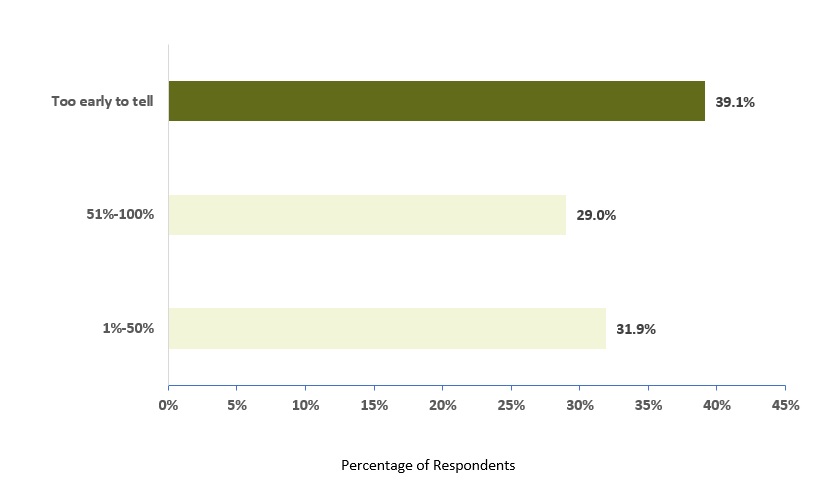
There was mixed evidence on whether the projects are resulting in increased usage of chargers and refuelling stations. Almost one-third of funded proponents indicated that they have experienced up to a 50% increase, another one-third indicated up to a 100% increase in usage, while just over one-third indicated it is too early to tell if usage of EV infrastructure charges is increasing. (Figure 1).
Figure 1. Survey of funded applicants: Reported increase in EV Charger usage
Text version
- 31.9% of survey participants (funded applicants) experienced up to a 50% increase in the usage of electric vehicle chargers.
- 29.0% of survey participants (funded applicants) experienced up to a 100% increase in usage of electric vehicle chargers.
- 39.1% of survey participants (funded applicants) said it was “too early to tell” if usage of electric vehicle chargers is increasing.
While it was highlighted in the case studies and through the survey that some stations were used regularly, the municipal case study revealed that stations situated in community areas, e.g., community centers and sports fields, were used the most. In some cases, it was too early to make any indication as the stations had only been put in place recently or were not yet operational. In other cases, simply no utilization data were available.
Some of the factors that were identified most frequently across the case studies as impacting usage of chargers included availability and reliability of systems, charging costs and seasonality.
None of the hydrogen refuelling stations that were approved for construction through ZEVIP are currently operational.
Achievement of expected final results
NRCan has committed to revise the expected final result of the program
The 2023 CESD report found that attributing an increase in sales of EVs to the program was unrealistic given that, in addition to federal incentives for purchasing a zero-emission vehicle, half of the country’s provinces and territories have other, overlapping rebate programs to increase sales of zero-emission vehicles.
In addition, the department did not establish a clear baseline or target against which to measure this outcome.
Based on this evaluation’s jurisdictional review, experiences indicate that EV sales increases are increasingly impacted more by “incentives” (Norway) to purchase EV’s or “penalties” of continuing to use internal combustion engines (France). There is no evidence from other jurisdictions that more infrastructure leads to more EVs.
Given its findings, the CESD report recommends that “Natural Resources Canada should establish and use appropriate performance indicators along with […] a collaborative approach with stakeholders, including in the exchange of information and data, to inform efforts to address the gap in electric vehicle charging infrastructure by 2030.” In response to this recommendation, NRCan has committed to work to update performance indicators and collect relevant and reliable data to inform effective program tracking and reporting.
Other Jurisdictions Have Detailed Measurement Plans
Similar to Canada, the United Kingdom, France and Norway all have GHG emission reduction targets, EV adoption targets, and charging point targets.
However, the United States and Germany demonstrate leading practices and have implemented monitoring indicators that contribute to providing insights to program effects as well as contributions to strategic jurisdictional priorities.
United States
All State plans under the United State’s National Electric Vehicle Infrastructure (NEVI) Formula program, which provides 80% of the funding and is regulatory in nature, must include a section on how performance will be evaluated to achieve its five-year goals and vision. Evaluation of the effectiveness of this plan includes monitoring performance metrics, such as:
- EV charging infrastructure usage;
- EV charging infrastructure reliability;
- Customer satisfaction;
- Equitable distribution and access to EV charging infrastructure within the State;
- Greenhouse gas emissions; or
- Other metrics that support creating a national network including an assessment of a State’s efficient use of Federal funding, measured by the amount of charging leveraged per Federal dollar.
Germany
Germany’s Charging Infrastructure Masterplan IIFootnote 6 identified 68 measures that would be used to guide the rollout of its charging infrastructure to achieve its GHG emission reduction targets, EV adoption targets, and charging targets. These included measures in the areas of:
- Cooperation and coordination among federal government departments;
- Data-based monitoring and controlling of demand, rollout and use;
- Making financial assistance from the federal Government more effective;
- Empowering and involving municipalities to a greater degree as key stakeholders;
- Making available more plots of land;
- Enhancing charging infrastructure through digitalization;
- Advancing the road, construction and emission control laws for charging;
- Making charging at buildings easier; and
- Charging infrastructure for electric commercial vehicles.
Reflection of Gender-Based Analysis Plus (GBA+) in the program’s design and achievement of results
Program results reflect GBA+ considerations, however, there is more that can be done
The CESD reported that the program had a limited strategic approach and no definition of “underserved areas”.Footnote 7 It found that the department did not take sufficient steps to ensure that all geographical areas would benefit from the program’s funding. Specifically, the CESD reported that there were:
- No specific targets for underserved areas, which would help to ensure the equitable distribution of charging infrastructure across the country.
- No identification or prioritization of specific geographical areas that need more electric vehicle charging infrastructure.
- No weighted criteria in the project assessment process to favour projects in rural, remote, and northern areas or other areas, such as lower-income communities that may have significant gaps in charging infrastructure.
The Program has implemented a strategic approach to assessing underserved areas and is implementing this in subsequent calls for proposals. This is based on a detailed analysis of demand and supply of charging infrastructure. Applications are scored based on their ability to fill gaps. In addition, the Program is analyzing the strength of the business case for private investment in various charging use cases (i.e. multi-unit residential, corridor charging etc.).
This evaluation’s municipal case study found that proponents were in favour of ensuring a geographic distribution of chargers, including not only downtown areas but also the outskirts of cities/municipalities and more rural locations.
The jurisdictional scan highlighted that Norway and the United States are two other jurisdictions that explicitly targeted “remote communities”. However, their goal was to increase use of EVs first and then add the infrastructure once demand went up. Norway suggests that as long as EVs are more expensive than other vehicles, this transition is unlikely to occur in remote areas. Conversely, information from Germany indicates that private sector involvement is predicated on targeting high density, high usage areas which creates challenges in determining how to encourage the private sector to have interest in reaching more rural locations where EV usage is typically less. France identified issues related to a somewhat “random” implementation of chargers with the previous generation of charging kiosks, which had been installed more or less everywhere in the country through an initial roll-out. However, usage was very low in some areas. This resulted in limited turnover in charging equipment that brought little income to operators who are now dealing with obsolescence difficulties. The program should consider these lessons learned in responding to the CESD’s recommendation to define “underserved areas,” and develop a more strategic approach to prioritizing EV charging infrastructure projects across Canada.
The 2023 CESD audit also reported that since the launch of the program in 2019, the program has taken steps to better address underserved areas. The program:
- Launched a continuous-intake request for proposals targeted at charging infrastructure projects in Indigenous communities;
- Increased the funding limit for projects led by Indigenous organizations from 50% to 75% of eligible project costs; and,
- Introduced the third-party delivery model in 2020 that helped local organizations access funding for smaller projects.
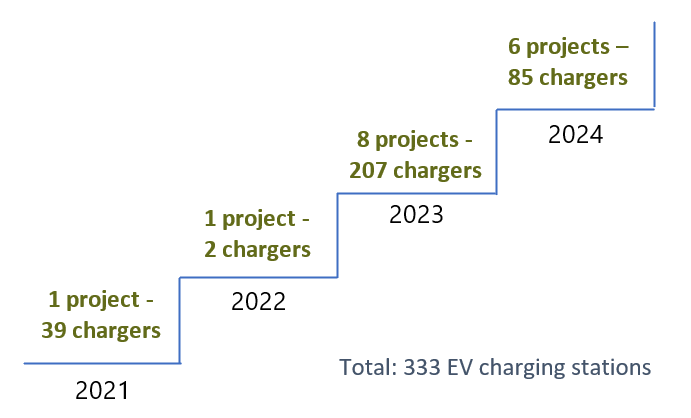
As of April 2024, the number of Indigenous-led projects is increasing (Figure 2.) These projects have resulted in chargers located in Indigenous communities.
Among the comments from respondents to the survey of funded applicants, there was a general sense that sex, gender, or ethnicity had no direct connection to ZEVIP nor was there any concern about official language accessibility.
Figure 2. Indigenous-led Projects
Text version
- 2021: 1 Indigenous-led project resulted in 39 electric vehicle charging stations located in Indigenous communities.
- 2022: 1 Indigenous-led project resulted in 2 electric vehicle charging stations located in Indigenous communities.
- 2023: 8 Indigenous-led projects resulted in 207 electric vehicle charging stations located in Indigenous communities.
- 2024: 6 Indigenous-led projects resulted in 85 electric vehicle charging stations located in Indigenous communities.
- 2021-2024: 16 Indigenous-led projects resulted in 333 electric vehicle charging stations located in Indigenous communities.
The use of third-party delivery agents was recognized as an effective strategy in the municipal case study, enabling continuous intake for smaller projects as opportunities arise. This approach was noted by case study interviewees to eliminate the need to wait for large, joint proposals to be developed and submitted directly to ZEVIP. Third parties were noted for their streamlined processes and faster turnaround times.
Among funded applicants, survey respondents (62%) strongly or completely agreed that the requirement for a Diversity and Inclusion plan and subsequent reporting were clear, where the unfunded applicants agreed less (29%). Very few funded respondents (n=11) identified that ZEVIP funding could impact different underrepresented groups in different ways.
Funded respondents noted that barriers are around EV adoption (e.g., based on socio-economic status, ethnicity, location, small business status, etc.). Case studies identified the observation that EVs tend to benefit the middle to upper class because of their cost, making EV infrastructure a less sustainable transit solution for those outside this socio-economic group. There was also the observation that EV owners in traditionally early adopter neighborhoods are likely disproportionately heavy users of the infrastructure. Norway found this to be the case. One study released in Norway found that people in low-income neighborhoods are more likely to use public transit; and incentives to get EVs may reduce funding available to support other modes of transportation (public transit, e-bikes) for this socio-economic group.
The case study findings also identified that there is a need to further advance the inclusion of GBA+ and equity, diversity and inclusion (EDI) within the program. While several of the funded projects included physical accessibility considerations within their projects, no guidelines or requirements seem to be in place through ZEVIP. Other jurisdictions vet physical accessibility plans during the review process of the application. For example, the United States requires proponents to include descriptions of how they will meet physical accessibility guidelines as part of a program application.
Contributions to the national zero-emission vehicle strategy
ZEVIP has contributed to Canada’s zero-emission strategy; however, gaps and unmet needs still exist in the ecosystem
The deployment and expansion of electric vehicle charging stations are essential for achieving the goals of the Canada’s Action Plan for Clean On-Road Transportation, 2022.
ZEVIP is a complementary component of the federal plan to reduce Canada’s greenhouse gases and contribute to clean on-road transportation, working with and alongside other federal programs, as well as those administered by other levels of government and utilities.
Funding made available through ZEVIP and other federal, provincial and municipal programs (e.g., Canada Infrastructure Bank’s Electric Vehicle and Alternative Fuel Infrastructure Deployment Initiative or the City of Montreal’s subsidy for the installation of electric charging stations) offer incentives to install charging infrastructure and to transition to zero emission vehicles. There is coherence between ZEVIP and these other programs either through collaboration (joint funding), or programs designed to not be duplicative of each other (i.e., smaller/larger funding amounts, targeted recipients or locations, etc.).
In response to the evaluation’s surveys, funded and non-funded applicants identified very little to no overlap of ZEVIP with other funding programs. Municipal case study interviewees noted that overall, larger funding amounts and longer timeframes for implementation were recognized as key advantages compared to other programs, especially benefiting smaller municipalities. The funding was also seen as beneficial by municipalities because it helped to offset upfront costs for installing EV infrastructure.
As an example of collaboration, the program has entered into Specified Purpose Account Agreements with BC and NS. These agreements leverage financial contribution amounts from Canada and the Provincial Government for projects that promote the deployment of electric vehicle fast charging stations.
Complementarity of ZEVIP with other programs was also recognized by respondents to the survey of funded applicants (54%, n=40). A wide variety of organizations and programs were cited as being complementary at both the federal and provincial level. The two most commonly cited as complementing ZEVIP included the CleanBC Go Electric Commercial Vehicle Pilots (CVP) Program, and Ontario’s ChargeON.
Additionally, 86.2% of funded respondents and 51% of non-funded respondents either strongly agreed or completely agreed that the ZEVIP offers opportunities that are well aligned with their organization's needs as it relates to zero emissions, with 70.5% of funded respondents indicating that ZEVIP funding contributed “considerably” to maintaining a focus on zero emission vehicles and supporting technology and infrastructure within their organization. This was also supported by the municipal case study.
Gaps or unmet needs
The environmental scan, document review, jurisdictional review, case studies and surveys uncovered a number of ecosystem gaps that are not solely the responsibility of ZEVIP, nor NRCan, including:
- The sheer number of charging stations to meet Canada’s targets: ZEVIP target of supporting 78,500 by 2029, which is for both public and private chargers, is minor compared to the estimate of the 2024 Dunsky report that states 240,000 public EV chargers are needed by 2030. Other jurisdictions are also having this issue. For example, in Germany, there is a lack of available land becoming a problem and lack of skilled resources (e.g., civic engineers) to implement necessary infrastructure.
- Multi-Unit Residential Buildings (MURB) challenges: The municipal and provincial case studies identified gaps related to MURBs, in particular, the cost to upgrade older buildings that do not have the electric capacity to support charging stations on site. The comparative review shows other jurisdictions have programs specifically targeted at MURBs that recognize and address this issue. ZEVIP had a targeted call for MURB applications in 2020.
- Lack of recognition of the realities of the hydrogen ecosystem: The case study of the private operator focused on installing hydrogen refuelling stations noted that there is a lack of support for the production or distribution of hydrogen for the transportation sector. It also noted that government policies and programs (at the federal, provincial and municipal levels) are not yet well integrated nor aligned with the needs of the hydrogen transportation sector in Canada.
Other factors influencing outcomes
Numerous factors can influence the achievement of outcomes
External factors were identified as the most significant elements that negatively influenced the achievement of expected outcomes. While some were partly as a result of COVID, many are ongoing. The most commonly reported factors hindering progress were:
- A disproportionate number of delays related to supply chain issues;
- Lack of equipment availability, or the delayed delivery of appropriate equipment, particularly in smaller and remote provinces and municipalities for charging stations and in hydrogen refuelling stations;
- The financial cost of delays, in one case estimated at a 7-15% year over year increase in construction costs;
- Time delays require a proponent to carry up-front investments for longer than planned;
- Delays related to infrastructure problems of various types (e.g., capacity of the electric power grid or hydrogen supply chain);
- Reliability of systems;
- Administrative delays and complications stemming from the need to seek approvals with various levels of government, as well as administrative delays associated with contractors; and,
- Delays caused by regulatory requirements at the municipal level (based on a general lack of understanding associated with putting hydrogen refuelling stations in the communities).
A number of unintended positive outcomes have resulted from ZEVIP including increasing awareness of and interest in zero-emission vehicle infrastructure
Unintended benefits to ZEVIP supported projects fell into the following main themes as noted by funded respondents and case studies:
- The development of new partnerships, networks, and growth opportunities as a result of the ZEVIP supported project(s) (n=13).
- Projects have resulted in interest beyond the immediate group it was intended for, thus raising positive awareness about ZEVI and the organization in the greater community (n=12 + case studies). When a site was up and running and visible, it tended to generate additional interest from other parties. This included outcomes like unanticipated additional demand, or unexpected community “buy in”.
- Projects have promoted insight into operations and capabilities at other organizations, raised awareness and interest in EV charging, and discussions contributing to future policies and planning about the role of EVs in the region (n=3).
- 19.5% (n=17) of funded respondents noted that their ZEVIP project generated new projects that were not funded by NRCan.
What we found – performance – efficiency and economy
Governance
The program is managed by NRCan’s Fuels Sector and the evaluation confirmed through internal NRCan interviews that ZEVIP uses an existing governance structure established to deliver similar programs. The joint audit and evaluation of the ZEVIP’s predecessor program, the Electric Vehicle & Alternative Fuel Infrastructure Deployment Initiative (EVAFIDI), conducted in 2019, concluded that EVAFIDI had a sound governance structure in place at that time. Governance bodies provided leadership and oversight, while monitoring the overall state of the program as well as complying with the TB Policy on Transfer Payments and departmental policies.
Extent the delivery model supports achievement of outcomes
For both funded and nonfunded applicants, a majority of survey respondents (61-74%) either strongly agreed or completely agreed that ZEVIP program communications and information were adequate. The top three items with the largest percentage of funded respondents agreeing or strongly agreeing are as follows:
- The information provided by NRCan regarding ZEVIP eligible projects and/or eligible recipients is clear.
- It was easy to find information about the ZEVIP funding opportunities from NRCan.
- The information provided by NRCan regarding the ZEVIP application process is clear.
However, respondents to both the survey of funded and nonfunded applicants identified a few of the program’s processes to be challenging. In total, 20% of funded and 50% of nonfunded respondents indicated that NRCan’s approach to continuous intake proposals, the process of soliciting proposals through announcements, and the effectiveness of communicating about what is available or upcoming regarding ZEVIP funding opportunities could be improved.
Concerns regarding the clarity and fairness of the selection process were also raised. Survey responses of both funded (n=37) and nonfunded applicants (n=17) raised issues in this area.
The majority of feedback concerned various issues around the transparency or consistency of the selection process. Many simply stated that they were unaware of what the selection criteria were, what made them successful applicants, or where they could find out how their application was evaluated. Others were more specific in their suggested improvements to the selection criteria such as:
- Clearer communication of the scoring system, or more quantitative metrics being used to support the evaluation of submissions so as to make it more evident how projects are being selected.
- Clearer selection criteria especially as it relates to technical aspects, and target location zones, or communication of other regional submissions where there might be opportunities for collaboration or synergy.
- The need for more transparency and clearer communication about who was previously selected for funding.
- The provision of feedback to applicants not selected so that they can better understand the selection process. Most stated that they were not provided a reason for their unsuccessful application.
Other jurisdictions (UK and US) publish the evaluation process and evaluation criteria and have much more detailed criteria identified so applicants know how applications will be evaluated. This allows for a more transparent evaluation process and quicker evaluation of applications.
Insights to the reliability of public electric vehicle charging infrastructure is important to increasing user confidence and ZEVIP is investigating how it might be able to provide such information
The 2023 CESD recommended that NRCan “should examine how the criteria to assess the Zero Emission Vehicle Infrastructure Program projects or how the program itself could be adjusted so that future funded public electric vehicle charging ports provide users with an increased level of convenience and confidence in the reliability of the program-funded charging stations.”Footnote 8
The municipal case study identifies that the most important factors impacting the use of the installed recharging and refuelling stations were related to availability (i.e., location) and reliability of systems. This is consistent with a survey of residents conducted in the UK, where it was found a significant 65% of auto buyers cite insufficient charging stations as their top concernFootnote 9.
Through the jurisdictional review and cases studies, the evaluation found that other jurisdictions attempt to track reliability (e.g., through monitoring usage, customer satisfaction, access, etc.), and the United States requires a 5-year operations and maintenance (O&M) agreement in place which includes the reporting of up-time stats by proponents, before they will fund any project. Germany is looking at establishing a portal to show in real-time which charging stations are operational.
A lesson learned from the comparative review identifies a large issue to be standardization and the ability to access and collect common performance data from all organizations, including the private sector. The UK has specifically defined what data elements must be captured in addition to output measures, like number of chargers installed.
The department has committed to evaluating potential program changes to encourage reliability and improve user experience at the deployment phase, through measures such as public disclosure of reliability information and allowing pre-paid maintenance expenditures as an eligible expense for reimbursement. Furthermore, the program has worked with the ZEV Council’s Charging and Refuelling working group to develop criteria and indicators for reliability of EV chargers.
Eligible expenditure categories can be challenging for some proponents
In 2021, the ZEVIP mid-term review identified the need for additional eligible expenditures including coverage for getting buildings EV-ready and infrastructure servicing costs (under the current program Terms and Conditions, the program can not address this gap but did recognize it as a need).
It was noted that many municipalities face difficulties when retrofitting sites. Therefore, incorporating support for site assessments and/or expanding eligible cost categories to include retrofit expenses would be desired.
The application process is identified as an area where improvement is needed
By far the most recurrent theme of the evaluation’s surveys was a variety of issues revolving around the demands of the application process, which respondents viewed as excessive. A majority of funded respondents (52.2%) did not agree at all or only moderately agreed that the level of effort and time required to complete the ZEVIP funding application was reasonable. This view was shared by 72% of nonfunded respondents.
The municipal case study also identified the application process to be perceived as complicated and time consuming. Application criteria were perceived to be unclear or lacking, leading some respondents to inadvertently omit key pieces of information they were not aware were required. The application process was expensive (e.g., requiring staff time and preliminary research), and complicated by a need for subject matter expertise to apply. Lastly, application timelines were seen to be too tight. For example, there could be better coordination between application timelines, and project timelines.
It was suggested by several funded respondents that the high level of knowledge and expertise required to complete program applications and submit the required documents is a challenge for those without technical knowledge. There were several observations noting that small, remote, rural, and Indigenous communities may be at a disadvantage, due to a potential lack of expertise and resources to move forward with an application. There were also concerns about the accessibility of the program opportunities to small organizations. This was driven by a sense that larger organizations are likely to have the expertise and resources to better access program offerings.
The municipal case study revealed that for some smaller municipalities and first-time project implementers, the absence of in-house expertise resulted in challenges with project implementation. These included selecting vendors, scoping sites, accessing technical guidance, determining system operators, setting policies, and budgeting costs. This ongoing issue affects those looking to upgrade to level 3 fast chargers, as some partners lack the capital or capacity for the necessary upgrades.
Every other jurisdiction included in the comparative review has support resources (including workshops, training sessions, consultants) to assist with increasing proponent capacity, the development of proposals and/or rollout of projects. However, unlike many of the other jurisdictions which operate using proportional distribution of funding, ZEVIP is fully competitive. To ensure fairness in the competitive process, ZEVIP’s delivery model limits the ability of NRCan to provide such direct supports to applicants. There are also other organizations in the Canadian EV ecosystem that provide these types of services and information (e.g., resources for planning and best practices for site development, as well as information on codes, standards and bylaws). Additionally, Employment and Social Development Canada (ESDC) launched funding for training projects in March of 2024 through the Sustainable Jobs Training Fund, that focus on electric vehicle maintenance and charging infrastructure.
Reporting requirements can be challenging for some proponents
Several municipal case study interviewees voiced their frustration with reporting requirements, particularly in relation to the financial reporting that is required by the program. In this regard, it was suggested that the reporting requirements need to be more streamlined:
- Quarterly reporting was seen as being too frequent and difficult to complete. Proponents perceived that financial reporting should be less frequent.
- Templates change frequently, with differences between intakes and varying requirements for public and fleet reporting. Previously entered information, such as data from the prior quarter, is not carried over, leading to an administrative burden of re-entering the same information.
Appropriateness of resources for program implementation
Resources have been mostly appropriate to produce the intended outputs and outcomes for the implementation of ZEVIP.
According to the program’s financial data, contributions are being committed generally as planned with some variances appearing over the five-year timeframe, with the program being behind by the end of 2023-24 (Table 5).
| Fiscal Year | 2019-20 | 2020-21 | 2021-22 | 2022-23 | 2023-24 | Total |
|---|---|---|---|---|---|---|
| Planned | 9,350,000 | 11,150,000 | 24,108,267 | 122,543,918 | 118,116,812 | 285,268,997 |
| Actuals | 1,065,500 | 15,702,038 | 25,760,746 | 66,166,300 | 133,535,523 | 242,230,107 |
| Difference | 8,284,500 | -4,552,038 | -1,652,479 | 56,377,618Footnote 10 | -15,418,711 | 43,038,890 |
The program operated with below-budget spending for most of the evaluation timeframe (Fiscal Years 2019-20 to 2023-24). It has not yet filled its planned number of full-time equivalent positions (FTEs), so salary costs are lower than anticipated (Table 6). Operating costs are also lower than budget, with the exception of 2023-24.
| Fiscal Year | 2019-20 | 2020-21 | 2021-22 | 2022-23 | 2023-24 | 2024-25 | 2025-26 | 2026-27 |
|---|---|---|---|---|---|---|---|---|
| FTE Budget | 4 | 4 | 14 | 30 | 35 | 35 | 35 | 35 |
| FTE Actuals | 3 | 6 | 12 | 27 | 30 | - | - | - |
Table 7 shows that actual costs to operate the program (allowing for ramp-up in year 1) as a proportion of committed contribution dollars fluctuated in the first two years, before starting to decline in year four suggesting efficiency in delivery.
| Year | Total Cost | Costs as a Proportion of Contributions | |
|---|---|---|---|
| Administration | Contributions | ||
| 2019-20 | 526,123 | 1,065,500 | 49% |
| 2020-21 | 867,121 | 15,702,038 | 6% |
| 2021-22 | 3,314,084 | 25,760,746 | 13% |
| 2022-23 | 7,056,371 | 66,166,300 | 11% |
| 2023-24 | 8,697,279 | 133,535,523 | 7% |
| Total | 20,460,978 | 242,230,107 | 8% |
Source: Actual expenditures are extracts from SAP.
Proponents are satisfied with the program
The evaluation found that a large majority of funded proponents (respondents to survey and case studies) indicated that they were either mostly satisfied or very satisfied with ZEVIP.
Overall, municipal and provincial case study interviewees were very satisfied with the program. An important factor in satisfaction levels was the accessibility of key contacts at NRCan, and NRCan's flexible approach in accommodating and understanding necessary amendments or modifications to scope and timing.
Despite this, results from the municipal case studies indicate that the response time after submission was excessively long. Long wait times for decisions were also noted by respondents to the survey of funded applicants and surfaced in the provincial case study.
Long turnaround times affect proponents' ability to plan or adjust their projects effectively. It was noted that there is a need to speed up the execution process for finalizing agreements.
The CESD reported that the program did not meet its pre-established service standard for application processing and made a recommendation to review the application process to find efficiencies so that results are communicated to applicants in a timely fashion. The program has committed to doing this.
The ZEVIP has learned from and considered the findings of previous evaluations during the design and delivery of the program
Both the evaluation and the CESD found that NRCan incorporated feedback and lessons learned into the design and implementation of the ZEVIP (e.g., hosting pre-application workshops to increase the quality of proposals), in particular from the Electric Vehicle and Alternative Fuel Infrastructure Deployment Initiative and workshops with stakeholders.
In 2021, NRCan commissioned Dunsky Energy Consulting to undertake a mid-term review of the program. All recommendations that could be addressed were implemented by the program. For example, the department considered the evolution of charging infrastructure technology and modified the minimum project requirements to specify that 2 fast charging ports (level 3) would be equivalent to the pre-existing minimum of 20 level 2 chargers. For the two Dunsky Energy recommendations that could not be implemented, the Terms and Conditions for the program would not permit the areas to be addressed, but the program has noted these as opportunities for potential future iterations of ZEVIP.
Furthermore, NRCan incorporated some general practices from other countries into the program's design, such as public reporting and having a national target for charging ports.
ZEVIP is increasing efficiency by partnering with other funders
ZEVIP has established Memoranda of Understanding with two provinces (British Columbia and Nova Scotia) that provides financial assistance from both parties for projects that promote the deployment of electric vehicle fast charging stations in said provinces. All projects are selected through, and in accordance with, the Terms and Conditions of ZEVIP.
The creation of official partnerships with other entities to share funding costs was noted to be a leading practice by survey responses of both funded and nonfunded applicants. The jurisdictional review also revealed that other international funders partner with others for program delivery.
Conclusion
Overall, the evaluation found that ZEVIP is relevant and is making progress towards its intended immediate and intermediate outcomes.
In 2023, the CESD audit of ZEVIP found that NRCan had made progress by increasing charging infrastructure. This evaluation found that ZEVIP continues to be on track toward supporting its target number of EV charging ports. However, it is too early to tell if increased usage of EV infrastructure is occurring. There are also factors outside the control of the program that limit ZEVIP’s ability to support hydrogen refuelling projects.
The evaluation found that ZEVIP has considered equity, diversity and inclusion goals. It has taken steps to better address underserved areas and to better serve Indigenous organizations and communities. Nevertheless, there remains opportunities for improvement, including an opportunity to better promote physical accessibility of the infrastructure it funds.
The evaluation also found that the program is making efficient use of its resources. However, there are opportunities for improved efficiency in the delivery of ZEVIP including reducing the time taken to review and approve applications, increasing timely insight to program opportunities and transparency of assessment criteria for proponents.
Lastly, the evaluation found that ZEVIP has learned from other evaluations and assessments and is implementing continuous improvement efforts. There are opportunities to incorporate international practices in the program’s design, namely in the area of performance measurement, to ensure effective reporting on program outcomes. ZEVIP’s model of partnering under a Memoranda of Understanding for shared investment in EV charging infrastructure is a leading practice, and it should continue to seek these types of partnerships.
Appendix A: Evaluation matrix
Evaluation of the Zero Emission Vehicle Infrastructure Program (ZEVIP)
| Review Questions | Indicators | Document Review | Environmental Scan | Jurisdictional Comparative Review | Case Studies | Surveys | ||
|---|---|---|---|---|---|---|---|---|
| Successful Proponents | Unsuccessful Proponents | |||||||
| OAG Performance Audit | Other Documents | |||||||
| Relevance | ||||||||
|
1.1 Evidence of a need for the ZEVIP | Yes | No | No | No | No | No | No |
|
2.1 Extent to which the objectives of the program are aligned with the priorities of the federal government and NRCan | Yes | No | No | No | No | No | No |
|
3.1 Extent to which there is recognized legitimate and necessary role 3.2 Extent to which the objectives of the program are aligned with NRCan’s mandate and the federal roles and responsibilities as set out in the federal legal framework |
Yes | No | No | No | No | No | No |
| Performance: Effectiveness | ||||||||
|
4.1 Number of charging and refuelling stations under development or completed by 2024 – (from the Performance Information Profile and leveraged funding from private sector) | Yes | Yes | No | No | No | No | No |
| 4.2 Perceptions of impact on increased capacity among target audiences to supply or install recharging/refuelling stations (from Terms and Conditions) | No | No | No | No | Yes | Yes | Yes | |
| 4.3 Change in context for hydrogen stream | No | Yes | No | No | No | No | No | |
| 4.4 Number of hydrogen projects and status of implementation | No | Yes | No | No | No | No | No | |
|
5.1 Increased usage of chargers and refuelling stations | No | No | No | No | Yes | Yes | No |
|
6.1 Increased sales of new electric and fuel-cell vehicles above business as usual to meet 10% sales target by 2025 | Yes | Yes | No | No | No | No | No |
|
7.1 Evidence of linkages between GBA+ considerations and the program results/outcomes | Yes | Yes | No | No | No | No | No |
|
8.1 Role of the ZEVIP program in Canada’s zero-emission strategy and climate change commitments | Yes | Yes | Yes | No | No | No | No |
| 8.2 Complementarity or overlap with other elements of the strategy | Yes | Yes | Yes | No | Yes | Yes | Yes | |
| 8.3 Evidence of coherence between ZEVIP and other zero-emission vehicle programs | Yes | Yes | Yes | No | No | No | No | |
| 8.4 Evidence of gaps or unmet needs | Yes | Yes | Yes | No | Yes | Yes | Yes | |
|
9.1 Evidence/perceptions of impact of external factors on project (e.g., low uptake, equipment delays) | No | Yes | No | Yes | Yes | Yes | No |
|
10.1 Evidence/perceptions about unintended outcomes resulting from ZEVIP | No | Yes | No | Yes | Yes | Yes | No |
| Performance: Efficiency and economy | ||||||||
|
11.1 Evidence/perceptions about the effectiveness and efficiency of the processes and systems used by the program | Yes | No | No | No | Yes | Yes | Yes |
|
12.1 Extent to which the delivery model supported the achievement of intended outcomes | Yes | No | No | No | Yes | Yes | Yes |
|
13.1 Evidence of GBA+ considerations during the planning and delivery | Yes | No | No | No | No | Yes | Yes |
| 13.2 Stakeholder suggestions for improvements with respect to GBA+ | No | No | No | No | Yes | Yes | Yes | |
| 13.3 Rationale that potential EDI target groups currently not covered by program is well explained | Yes | Yes | No | No | No | No | No | |
|
14.1 Evidence of considerations of the findings of previous evaluations during the delivery and planning | Yes | Yes | No | No | No | No | No |
|
15.1 Evidence of lapsed funding attributed to implementation delays or other factors (e.g., the COVID-19 pandemic) | Yes | Yes | No | No | No | No | No |
| 15.2 Efficiency in cost per output over time (either Contribution Agreements in place or number of ZEV installations) | No | Yes | No | No | No | No | No | |
| 15.3 Comparison of program activities and products delivered by other similar programs | No | No | Yes (minor) |
Yes | No | No | No | |
| 15.4 Evidence that grants application processing time meets the pre-established serviced standard | No | Yes | No | No | No | No | No | |
|
16.1 Alternative options for program delivery | No | Yes | Yes (minor) |
Yes | Yes | No | No |
| 16.2 Evidence of alternative approaches that can achieve similar outcomes at lower cost | No | No | Yes (minor) |
Yes | No | No | No | |
| 16.3 Evidence of considerations given to other options to deliver the program | No | Yes | No | No | No | No | No | |
| Lessons Learned and Best Practices | ||||||||
|
17.1 Lessons learned in the areas of program design and resource allocation/expenditure | Yes | Yes | No | Yes | Yes | No | No |
| 17.2 Approaches for measuring impact being used in other jurisdictions | No | No | Yes (minor) |
Yes | No | No | No | |
Appendix B – Crosswalk of evaluation coverage versus CESD performance audit
The table below identifies where findings from the CESD audit were used to respond to the evaluation question.
| Evaluation Issues and Questions | Evaluation/Performance Audit Coverage |
|---|---|
| Relevance | |
| 1. To what extent is there a continued need for the ZEVIP in the context of other existing programs (NRCan and OGDs). | Covered fully by the performance audit. The evaluation cites these findings. |
| 2. Does the program align with current federal government priorities? | |
| 3. Is there a legitimate and necessary role for the federal government in this area? | |
| Performance: Effectiveness | |
| 4. To what extent have the expected short-term results been achieved? | Mostly covered by the performance audit. The evaluation looked more in-depth at short-term results. |
| 5. To what extent have the expected medium-term results been achieved? | Evaluation |
| 6. To what extent have the expected final results been achieved? | Evaluation |
| 7. To what extent has the achievements of results reflected the GBA+ considerations? | Covered fully by the performance audit. The evaluation cites these findings. |
| 8. To what extent have the program results contributed to the national zero-emission vehicle strategy. | Evaluation |
| 9. What internal and external factors have influenced (positively or negatively) the achievement of the expected outcomes? | Evaluation |
| 10. To what extent have there been unintended outcomes (positive or negative) resulting from the ZEVIP? | Evaluation |
| Performance: Efficiency and economy | |
| 11. To what extent has the governance structure, processes, and tools of the ZEVIP contributed to achieving the intended outcomes? | The performance audit covered processes but did not look at the governance structure. Governance was covered in the EVAFIDI evaluation and there has been limited change. The evaluation addressed this through document review. |
| 12. To what extent has the delivery model of ZEVIP, including the structure of eligible recipient categories and the co-delivery of funding, contributed to achieving the intended outcomes? | Covered fully by the performance audit. The evaluation cites these findings. |
| 13. To what extent has GBA+ been considered in the program design and delivery? | Covered fully by the performance audit. The evaluation cites these findings. |
| 14. To what extend has the implementation of ZEVIP incorporated the recommendations from previous evaluations? | Covered somewhat by the performance audit. The evaluation reviewed additional documentation. |
| 15. To what extent have the resources been appropriate to produce the intended outputs and outcomes for the implementation of the ZEVIP? | Evaluation |
| 16. Are there alternative delivery models that can achieve similar outcomes at the same cost? | Evaluation |
| Lessons learned and best practices | |
| 17. What lessons learned, and best practices could support the design and implementation of similar programming in the future? | Evaluation |
Appendix C – Evaluation team
From Natural Resources Canada:
- Michel Gould, Chief Audit and Evaluation Executive
- Stephanie Kalt, Director of Evaluation
- Olive Kamanyana, Evaluation Manager
- Oluwadamilola Pikuda, Senior Evaluator
From Goss Gilroy Inc.:
- Karen Croteau, Partner, Evaluation Manager
- Ed Marchak, Senior Evaluator
- Anthony DaRos, Survey Specialist
The evaluation team would like to acknowledge those individuals who contributed to this project, particularly program representatives and members of the Evaluation Working Group from NRCan’s Fuels Sector.